
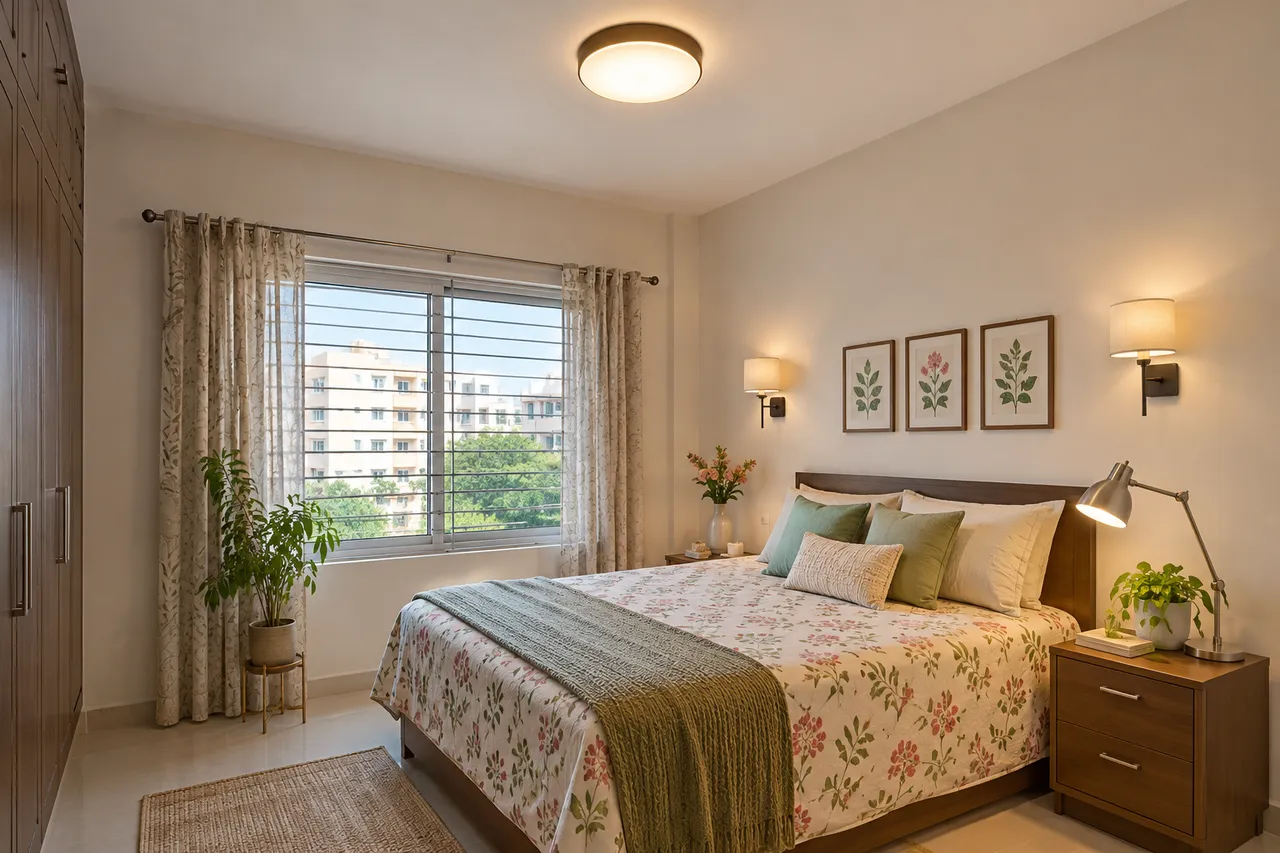
Bedroom Lighting in Uppal Without a Full False Ceiling: Compare Your Options
Plan bedroom lighting in an Uppal home by separating general light, reading light and everyday switching before deciding whether a false ceiling is needed. Compare surface-mounted fittings, wall lights and suitable task lamps against the actual room. Coordinate positions with the bed, storage and qualified electrical work rather than adding decorative layers without a purpose.
Start with your Uppal home
This brief suits an Uppal homeowner who wants to improve an existing bedroom while retaining its ceiling. It does not assume the existing wiring or ceiling can accept new fittings without assessment. Begin with photographs and a room plan for the particular property. The design question is which lighting tasks remain unmet, not whether every bedroom in Hyderabad needs the same decorative treatment.
1. List three separate lighting tasks
Record what you need for entering and dressing, reading or another bedside task, and a lower-light evening setting. Note where each activity happens and who uses it. A bright central fitting may still leave a book in shadow, while a reading lamp alone may not make wardrobe contents easy to see. Match each unmet task to a possible source before considering more fittings.
2. Compare surface, wall and portable options
A suitable surface-mounted fitting can provide general light without a suspended decorative ceiling. Wall lights may serve bedsides where their position, mounting and power arrangement are appropriate. A stable task lamp can be a reversible trial if suitable power access exists. Check actual product information for output, dimensions, glare control and installation; appearance and a label such as warm light do not establish whether a fitting suits the task.

3. Test glare from the positions you use
Assess the view when lying on the bed, sitting to read and standing at the wardrobe. Consider reflections in mirrors and screens as well as direct light. Compare samples or demonstrations where feasible and ask the designer to explain the proposed light distribution. Keep bulky fitting positions coordinated with fans, doors and furniture rather than approving an isolated ceiling drawing.
4. Map switches and required technical work
Mark the desired controls on the measured plan and discuss existing circuits and installation with a qualified electrician. Do not extend or alter fixed wiring as a decorative DIY task. Ask who makes good any surfaces disturbed by new wiring or fittings. A proposal without a false ceiling can still require electrical and repair work, so those items should remain explicit in the quote.
5. Review the bedroom after installation
Have the responsible professional complete the required installation checks. Try the normal tasks with the final bed, curtains and wardrobe in place, and record any glare or awkward controls. Keep the product model and relevant instructions. The useful result is comfortable task coverage and accessible switching, not simply more points of light.
Budget worksheet: define the scope before the total
| Planning item | What to record |
|---|---|
| Separate the scope | Fittings, lamps, qualified electrical work, controls and making good. |
| Owner-set allowance | If you choose a ₹25,000 cap, a trial allocation could be ₹15,000 for selected fittings, ₹6,000 for assessed installation/repairs and ₹4,000 unallocated. This is not an Uppal rate estimate. |
| Compare fairly | Confirm supply, installation, taxes and any excluded wiring separately. |
Timeline: decisions and checkpoints
Start with an evening task-and-glare review, then a professional site assessment and fitting selection. Obtain installation and making-good milestones after the electrical scope is confirmed. The absence of a full false ceiling does not establish a guaranteed installation duration.
Plan the next step with WallsToWonder
Use Design My Room to explore a visual direction, then verify the actual measurements and product requirements. The interior cost estimator can help organise an initial scope; use a measured provider proposal for your commitment. Review inclusions and exclusions with the quotation checker and discuss unresolved items with the responsible professional.
Frequently asked questions
Do I need a false ceiling for layered lighting?
Not necessarily. Surface fittings, wall lights and appropriate lamps can serve different tasks, subject to the room and installation requirements.
Is warm light enough for reading?
Colour appearance alone does not establish task suitability. Assess the actual fitting, light distribution, glare and position.
Can I reuse existing electrical points?
Have a qualified electrician assess the existing installation and proposed fittings. The design plan should record any required changes.
Related practical guides
Turn this idea into a plan for your home
Visualise your space, understand the likely budget, or find a professional who can bring the idea to life.