
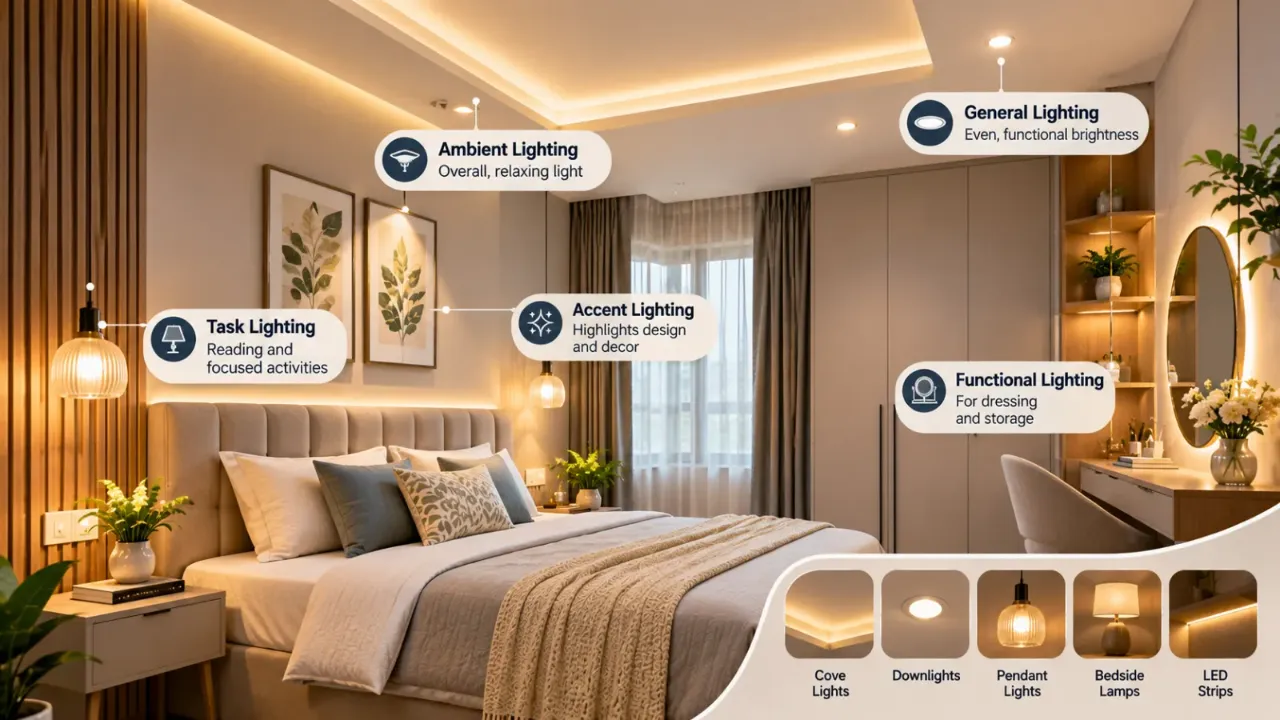
How to Plan Lighting for a Comfortable Bedroom
A bedroom needs more than a bright ceiling light. It is a space where you sleep, read, get dressed, organise belongings and unwind at the end of the day. A single light source may illuminate the room, but it rarely provides the right kind of lighting for all these activities.
A well-planned bedroom lighting design combines different layers. Ambient lighting provides general illumination, bedside lighting makes everyday activities convenient, and reading or task lights provide focused brightness where it is needed. Accent lighting can add depth and highlight selected architectural details.
The important part is not how many fixtures you install, but how effectively they work together. Here is how to plan bedroom lighting that is comfortable, practical and visually balanced.
1. Understand the Different Layers of Bedroom Lighting
Before selecting fixtures, understand what each lighting layer is expected to do.
Ambient Lighting: General Illumination
Ambient lighting provides the overall brightness of the bedroom. It helps you move around safely, find things and use the room comfortably.
Common options include:
- Recessed ceiling lights.
- Surface-mounted ceiling fixtures.
- Flush-mount ceiling lights.
- Cove lighting.
- Indirect ceiling illumination.
For a balanced result, avoid depending entirely on a single harsh ceiling fixture. Distribute the light appropriately and consider how furniture, ceiling height and room dimensions affect illumination.
Task Lighting: Focused Illumination
Task lighting supports activities that need more concentrated light, such as reading, dressing or working at a desk.
- Adjustable bedside reading lights.
- Wall-mounted directional fixtures.
- Table lamps.
- Wardrobe or dressing-area lights.
- Desk lamps.
Task lights should illuminate the activity area without shining directly into your eyes or disturbing someone using the other side of the bed.
Accent Lighting: Highlighting Selected Details
Accent lighting adds visual interest by drawing attention to specific elements.
You can use it to highlight:
- A bed back wall or headboard panel.
- A recessed wall niche.
- Artwork.
- Open display shelves.
- Architectural details.
Concealed LED strips and directional spotlights are common choices. Accent lighting should support the room's overall lighting rather than become its only source of illumination.
2. Choose the Right Ambient Lighting for the Ceiling
Ceiling lighting forms the foundation of the bedroom lighting plan. The right fixture depends on the room's size, ceiling design and the amount of general brightness required.
Recessed Downlights
Recessed lights create a clean ceiling appearance and can distribute light across different parts of the room. Their positions should be planned around the bed, wardrobe, circulation paths and other furniture.
Avoid placing a bright downlight directly above the pillow area, where it may create uncomfortable glare when you are lying down.
Surface-Mounted and Flush-Mount Lights
These fixtures are useful when the ceiling does not have enough depth for recessed fittings. They are available in different sizes and designs, making them suitable for bedrooms with simple ceilings.
Cove Lighting
Cove lighting uses concealed fixtures to direct light onto the ceiling or an adjacent surface. It creates a softer, indirect effect and works well as part of an ambient lighting arrangement.
However, cove lighting alone may not provide enough brightness for all bedroom activities. Combine it with suitable general or task lighting.
Ceiling Fans and Light Fixtures
If a fan and ceiling light are planned together, check their positions and clearances. Ensure that the selected fittings do not interfere with the fan blades or create distracting shadows.
3. Plan Bedside Lighting for Everyday Convenience
Bedside lighting is among the most frequently used lighting arrangements in a bedroom. It should be convenient to operate without requiring you to get out of bed.
Bedside Table Lamps
Table lamps provide local illumination and can add character to the bedside arrangement. Choose a lamp with a suitable height and shade so that the light is comfortable when sitting or lying in bed. Leave enough space on the table for other everyday items.
Pendant Lights Beside the Bed
Pendant lights can create a neat, uncluttered bedside arrangement by keeping the table surface free. Their hanging height and position should be finalised in relation to the mattress, bedside table and people using the room. Make sure the fixtures do not obstruct movement or create direct glare.
Wall-Mounted Bedside Lights
Wall-mounted lights are useful when bedside tables are compact or when you want focused illumination without occupying table space. Adjustable models are particularly useful because they allow you to direct the light where it is needed.
Plan Independent Controls
If two people share a bedroom, consider separate controls for each bedside light. This allows one person to read or use a light without unnecessarily illuminating the entire room.
4. Add Dedicated Reading Lights
Reading lights should provide focused illumination without causing discomfort or disturbing another person.
Consider these options:
- Adjustable wall-mounted reading lights.
- Directional bedside spotlights.
- Flexible-arm reading lamps.
- Table lamps with suitable shades.
Position the fixture so that it illuminates the book or reading surface rather than shining directly into your eyes. The best placement depends on whether you read sitting up, reclining or lying on your side.
For shared bedrooms, individual reading lights with separate switches are especially useful.
5. Do Not Overlook Wardrobe and Dressing-Area Lighting
The bedroom lighting plan should extend beyond the bed. Wardrobes and dressing areas need enough illumination to help you identify clothes, accessories and colours accurately.
Wardrobe Interior Lighting
LED strips or suitable linear fixtures can illuminate wardrobe shelves, drawers and hanging sections.
Consider:
- Positioning lights so that clothes do not block the illumination.
- Using concealed profiles where suitable.
- Keeping drivers accessible for maintenance.
- Choosing a light colour that makes clothing colours easy to distinguish.
- Coordinating sensors and switches with the wardrobe doors and usage pattern.
Dressing Mirror Lighting
A dressing mirror needs even illumination, particularly around the face. Lighting from both sides of the mirror can reduce harsh shadows compared with relying only on a ceiling light above it.
Avoid fixtures that produce excessive glare or noticeably distort colours.
6. Use Accent Lighting to Add Depth
Accent lighting is useful when you want to highlight selected bedroom features without making the entire room brighter.
Some practical applications include:
- Concealed lighting behind a headboard.
- LED strips inside recessed niches.
- Lighting beneath floating bedside units.
- Directional spotlights for artwork.
- Integrated lighting on display shelves.
Keep the effect subtle. Excessively bright LED strips or visible light sources can make a bedroom feel uncomfortable, especially at night.
7. Select the Right Colour Temperature
Colour temperature influences how the bedroom looks and feels. It is measured in kelvin (K).
| Colour temperature | Typical appearance | Suitable use |
|---|---|---|
| 2700K–3000K | Warm white | Relaxation and bedside lighting |
| 3000K–3500K | Soft to neutral white | General bedroom lighting |
| 3500K–4000K | Neutral white | Dressing and task areas |
These are practical starting ranges, not strict rules. The final selection should account for the finish colours, personal comfort and the way the light will be used.
For a visually consistent bedroom, avoid combining too many noticeably different white-light tones in adjacent areas. If you need brighter dressing or reading light, choose fixtures that provide sufficient illumination without making the room feel cold.
8. Reduce Glare and Harsh Shadows
A bedroom should feel comfortable when viewed from different positions, including when you are sitting or lying down.
Common causes of discomfort include:
- Exposed LED strips.
- Bright ceiling lights directly above the bed.
- Unshaded bulbs at eye level.
- Poorly positioned reading lights.
- Reflective surfaces that create distracting light spots.
- Uneven illumination around mirrors.
Use diffusers, suitable shades, indirect lighting and adjustable fixtures where appropriate. Test the lighting from the actual bed position before finalising the installation.
9. Plan Switches and Lighting Circuits Before Execution
A good lighting plan is also an electrical planning exercise. Even attractive fixtures become inconvenient if their switches are difficult to reach.
Before installation, decide:
- Which lights should operate independently.
- Whether bedside lights need separate controls on both sides.
- Whether ambient lights should be dimmable.
- Where the main entrance switchboard should be placed.
- Whether wardrobe lights need door sensors or manual switches.
- Where LED drivers and electrical connections will be accessed.
- Whether a two-way switching arrangement is useful for the room.
For example, you may want to switch on the ambient lights when entering the room, then control the bedside lights separately without leaving the bed.
Coordinate the electrical layout with the lighting designer, electrician and interior designer before ceiling work or panel installation begins.
10. Match Lighting to Different Bedroom Activities
Not every part of the bedroom needs the same kind of light. Think about how the room is used throughout the day.
| Bedroom activity | Recommended lighting |
|---|---|
| Entering and moving around | Ambient ceiling lighting |
| Reading in bed | Adjustable reading light |
| Relaxing before sleep | Dimmable bedside or indirect lighting |
| Choosing clothes | Wardrobe interior lighting |
| Dressing and grooming | Even mirror or vanity lighting |
| Highlighting the bed wall | Subtle accent lighting |
This approach helps avoid unnecessary fixtures and gives each light a clear purpose.
11. Common Bedroom Lighting Mistakes
- Relying on one ceiling light: A single fixture may leave bedside corners, wardrobes and dressing areas poorly illuminated.
- Installing too many downlights: More fixtures do not automatically create better lighting. Poor placement can result in glare and uneven brightness.
- Ignoring reading comfort: Decorative bedside pendants may not provide suitable focused illumination for reading.
- Using inconsistent colour temperatures: Noticeably different light tones can make the bedroom feel visually disconnected.
- Forgetting wardrobe lighting: Dark shelves and hanging sections can make it difficult to find clothes, even when the rest of the room is bright.
- Placing switches inconveniently: Lights should be easy to operate from the entrance and, where needed, from the bed.
- Not planning maintenance access: Concealed LED drivers and electrical connections should not become permanently inaccessible.
12. Final Checklist Before Approving Your Bedroom Lighting Plan
- Ambient lighting covers the main circulation and activity areas.
- Bedside lights can be controlled independently.
- Reading lights are positioned for comfortable use.
- Wardrobe and dressing areas have suitable illumination.
- Accent lighting is subtle and does not create glare.
- Colour temperatures work together.
- Switches are accessible from appropriate positions.
- Dimmers and sensors are included where useful.
- LED drivers and connections remain accessible.
- Ceiling fixtures are coordinated with fans and other services.
- The lighting arrangement suits the room's size and budget.
Final Thoughts
A comfortable bedroom lighting plan is built around the way you use the room. Ambient lighting provides the foundation, bedside and reading lights support everyday activities, and accent lighting adds depth without overwhelming the space.
Plan the fixtures, switches, colour temperatures and electrical connections together rather than treating them as separate decisions. A thoughtful arrangement can make your bedroom more functional during the day and more relaxing at night.
Frequently Asked Questions
1. What are the three main layers of bedroom lighting?
The three main layers are ambient lighting for general illumination, task lighting for activities such as reading and dressing, and accent lighting to highlight selected design features.
2. Which light is best for a bedroom?
There is no single best fixture. A combination of suitable ceiling lights, bedside fixtures and focused task lights generally offers more flexibility than relying on one source.
3. Is warm or cool lighting better for a bedroom?
Warm white lighting, often around 2700K–3000K, is a popular choice for relaxing and bedside use. Neutral white may be useful for dressing and other tasks. Select tones that work comfortably together.
4. Are bedside pendant lights practical?
Yes. They can free up bedside table space and create a coordinated look. Their position, hanging height and glare control should be planned carefully.
5. How can I light a wardrobe without making it complicated?
Concealed LED strips or linear fixtures can illuminate shelves and hanging sections. Choose a suitable placement, protect wiring and keep the driver accessible for maintenance.
6. Should bedroom lights have dimmers?
Dimmers are useful for adjusting ambient or bedside lighting to suit different activities. Check that the selected fixtures, LED drivers and controls are compatible with dimming.
Explore More with Walls to Wonder
Planning your bedroom interiors? Use Walls to Wonder's AI tools to explore design possibilities, understand costs and review your ideas before execution.
- Whole Home Visualizer – Explore how different interior styles can work across your home.
- Design My Room – Visualise ideas for your bedroom and other spaces.
- Interior Design Cost Estimate – Get an initial understanding of your interior budget.
- Interior Quotation Checker – Review and understand your interior quotation.
- Rate My Room Design – Get feedback on your room design.
- Interior Style Finder – Discover an interior style that suits your preferences.
Discover more at Walls to Wonder.
Turn this idea into a plan for your home
Visualise your space, understand the likely budget, or find a professional who can bring the idea to life.