
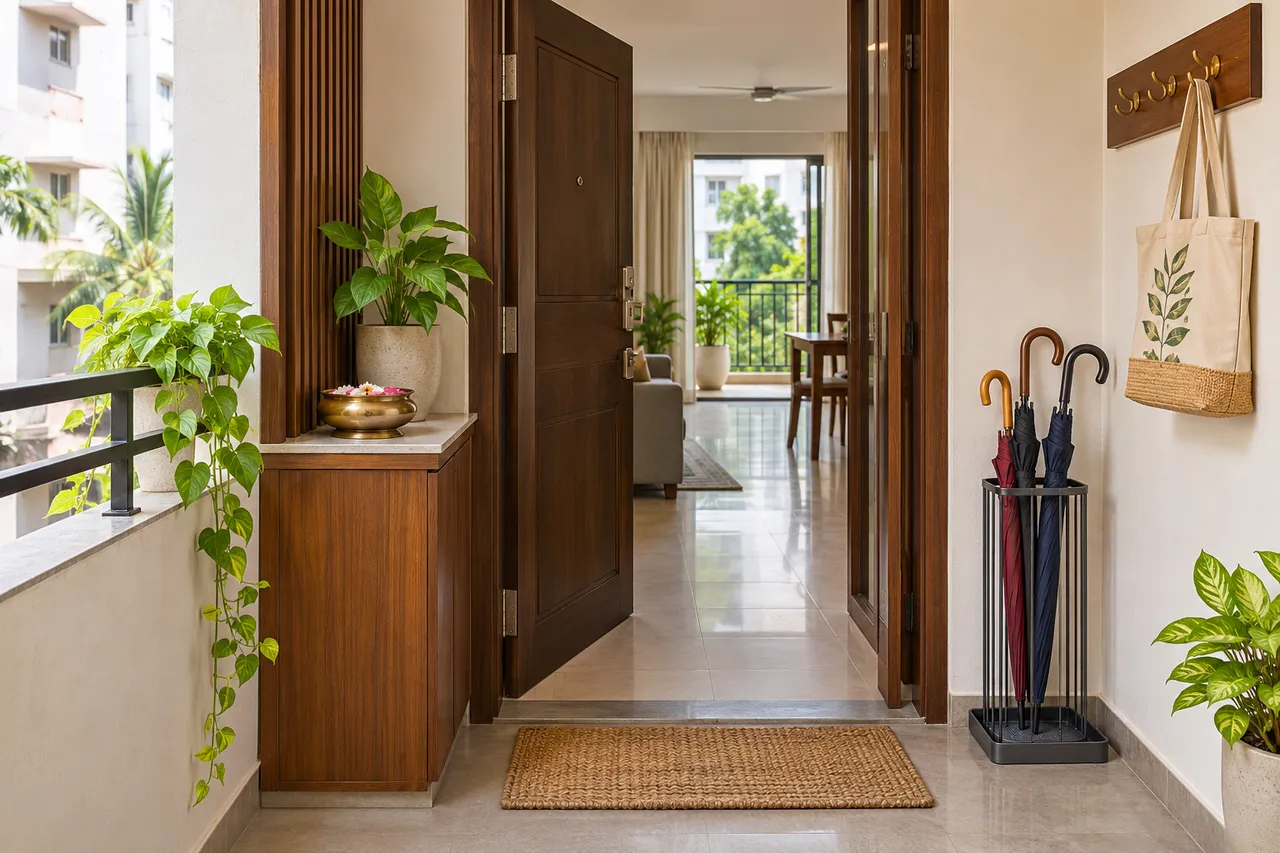
Umbrella Storage in Thoraipakkam Entrances: Separate Wet Items From Everyday Bags
Plan umbrella storage in a Thoraipakkam entrance by separating wet-item handling from everyday bags and the door route. Test a suitable stand or tray with the actual umbrellas and choose surfaces that can be cleaned and dried appropriately. Keep the arrangement inside its agreed space rather than letting damp items collect in the passage.
Prepare the brief
The umbrellas normally used, a suitable removable tray or stand, bag-storage dimensions, floor-care guidance and a sketch of the entry and doors.
Observe what happens on arrival
Notice where an umbrella is closed, where water can collect and what the person carries at the same time. Include bags, keys and the door movement. Do not choose a stand solely because a corner looks empty when the entrance is tidy. A useful position needs to support handling and the reset afterward. Keep shared-building areas subject to their applicable rules rather than assuming the common passage is extra household storage.
Separate wet and dry destinations
Give ordinary bags and other dry items a different place from umbrellas awaiting drying or cleaning. A single deep basket may mix categories and hide moisture. Choose the arrangement from actual umbrella lengths and the household’s normal arrival routine. Keep food, paperwork and sensitive items elsewhere. The separation should be visually clear enough that a person entering with full hands can use it without reorganising several containers first.
Choose a removable water-management component
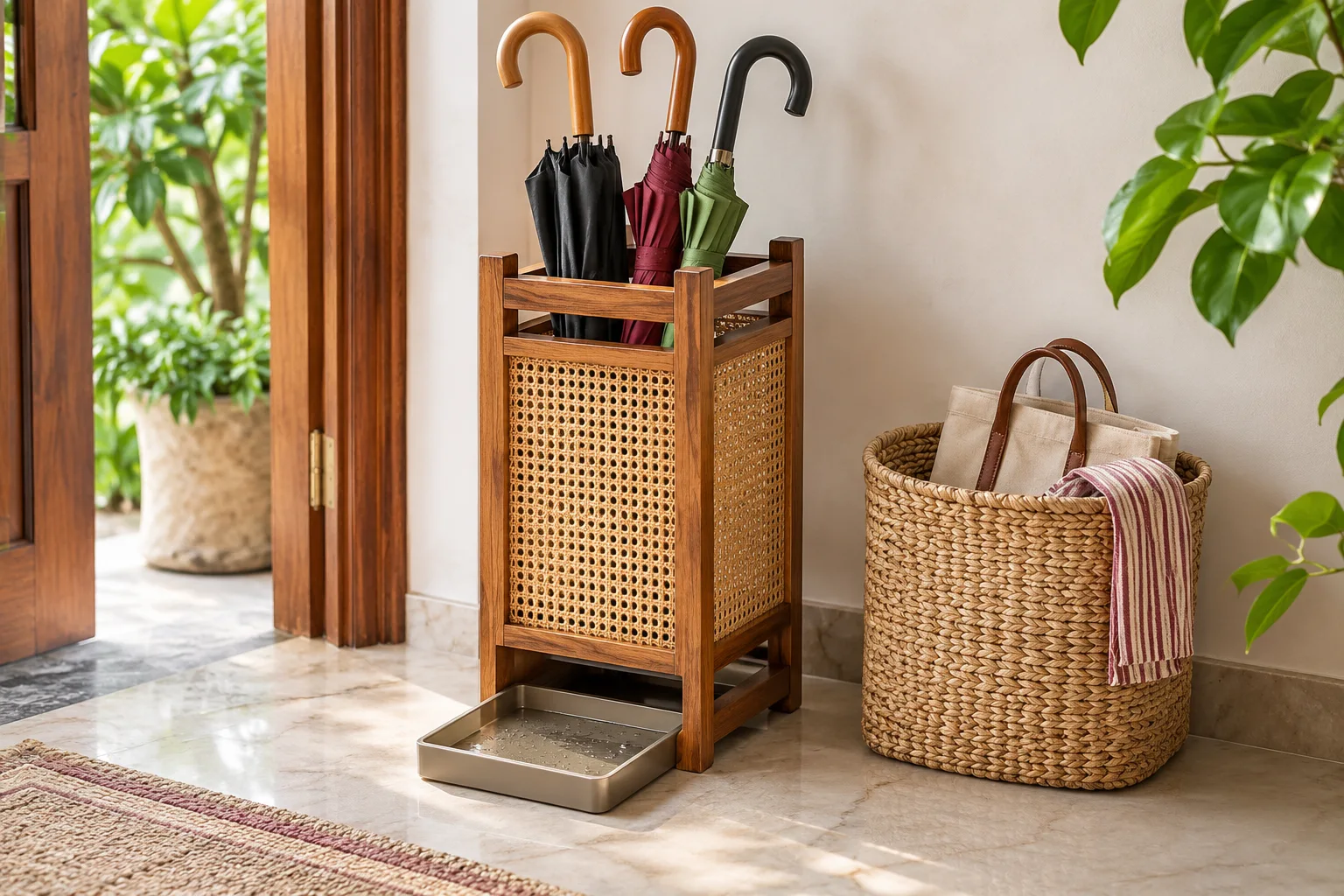
Look for a suitable tray or other product designed for the intended use and compatible with the floor. Ask how it is emptied, washed and dried. Do not allow a decorative container to conceal standing water against finishes. A removable component is only useful when it can be lifted out with ordinary handling and without moving the whole entrance unit. Trial the cleaning process before selecting a fitted niche that makes the back edge hard to reach.
Measure full umbrellas and the occupied stand
Use the longest normal umbrella including its handle, and check whether it remains stable in the selected product. Measure the stand with the contents projecting as they do in use. A narrow base can still create a wider upper obstruction. Check nearby door handles, switches and bags. Do not assume the product’s empty footprint represents the space needed after several family members arrive together.
Keep the opening and walking route usable
Rehearse entering, closing the door and moving into the room with the umbrella arrangement in place. Consider whether a stand is likely to be knocked when shoes or shopping are handled nearby. If the product repeatedly ends up in the passage, revise its location rather than adding a larger built-in cabinet around it. A clear route and practical maintenance can be more valuable than concealing every arrival item behind a matching furniture front.
Decide how items become ready for storage
Agree a suitable routine for drying and returning umbrellas according to their care needs and the property’s usable spaces. Do not treat a closed cabinet as a drying appliance or assume its material label solves persistent dampness. Keep any temporary drying arrangement within appropriate access and property conditions. Assign who checks the tray and returns dry items so the entrance does not become long-term storage for neglected wet equipment.
Use a trial before adding permanent cabinetry
Start with a suitable movable product and observe ordinary use. Record water handling, cleaning, capacity and conflicts with bags or shoes. If custom storage is justified, specify removable components, compatible finishes and actual usable dimensions. At handover, check the maintenance method as well as the appearance. Review the arrangement when the household’s umbrella collection or entrance furniture changes rather than forcing extra objects into the original footprint.
A practical layout trial
Put the longest umbrella and the usual shorter ones in the selected stand, with the dry bag basket beside it. Rehearse a normal arrival while carrying a shopping bag and opening the main door. Then practise removing the tray and cleaning the floor around it. If either task requires moving bags onto a wet surface or blocking the door, change the destinations. The trial should assess the complete arrival and maintenance routine, not just how the empty stand looks.
A useful supplier-briefing question
Ask: “How does the water-management component come out, and where will dry bags remain while it is cleaned?” Use the longest umbrella in the trial. Request the loaded dimensions and compatible finish care, and compare the arrangement with ordinary door movement. A small removable setup can establish the right capacity before any fitted entrance furniture is commissioned.
Compare the options
| Option | Useful when | Check first |
|---|---|---|
| Suitable freestanding stand | A flexible entrance position works | Loaded dimensions and removable tray |
| Tray with separate storage | Wet handling and dry storage are distinct | Reset and cleaning routine |
| Custom niche | A proven arrangement needs fitted work | Water management, access and finishes |
Budget planning
Price the suitable stand or tray, any separate dry storage, delivery and optional cabinetry. Reuse existing appropriate bag storage before commissioning a full entrance unit. Keep moisture-related repairs separate from decorative work and address the cause first. Compare complete maintained arrangements rather than only container size or appearance. Obtain actual supplier costs after the trial establishes the usable capacity and cleaning requirements.
Planning sequence and timing
Observe arrivals, trial a removable setup and review cleaning before choosing fitted storage. Confirm materials and maintenance access before fabrication. Do not treat a newly installed cabinet as ready until the tray and ordinary door movement have been checked together.
Prepare the next decision with WallsToWonder
Use Design My Room to explore visual direction with the room you already have. Take the measured layout, intended use and relevant product requirements into your supplier discussion before ordering. For a wider project, the interior cost planning tool can organise the work categories; replace assumptions with itemised quotations.
For a related planning decision, read Move-In Storage for Warje Apartments: Give Keys, Bags and Deliveries a Place. Apply the checks relevant to your own home rather than copying another property’s dimensions.
Frequently asked questions
Should umbrellas and bags share one container?
Separate wet handling from dry belongings so maintenance and return positions remain clear.
Is any decorative vase suitable as a stand?
Check intended use, stability, capacity and cleaning; do not assume appearance establishes suitability.
Can damp umbrellas go straight into a closed cabinet?
Use an appropriate care and drying routine rather than treating closed storage as a drying system.
What is the main layout test?
Check arrival with full hands, loaded stand dimensions, door movement and removal of the cleaning component.
Turn this idea into a plan for your home
Visualise your space, understand the likely budget, or find a professional who can bring the idea to life.