
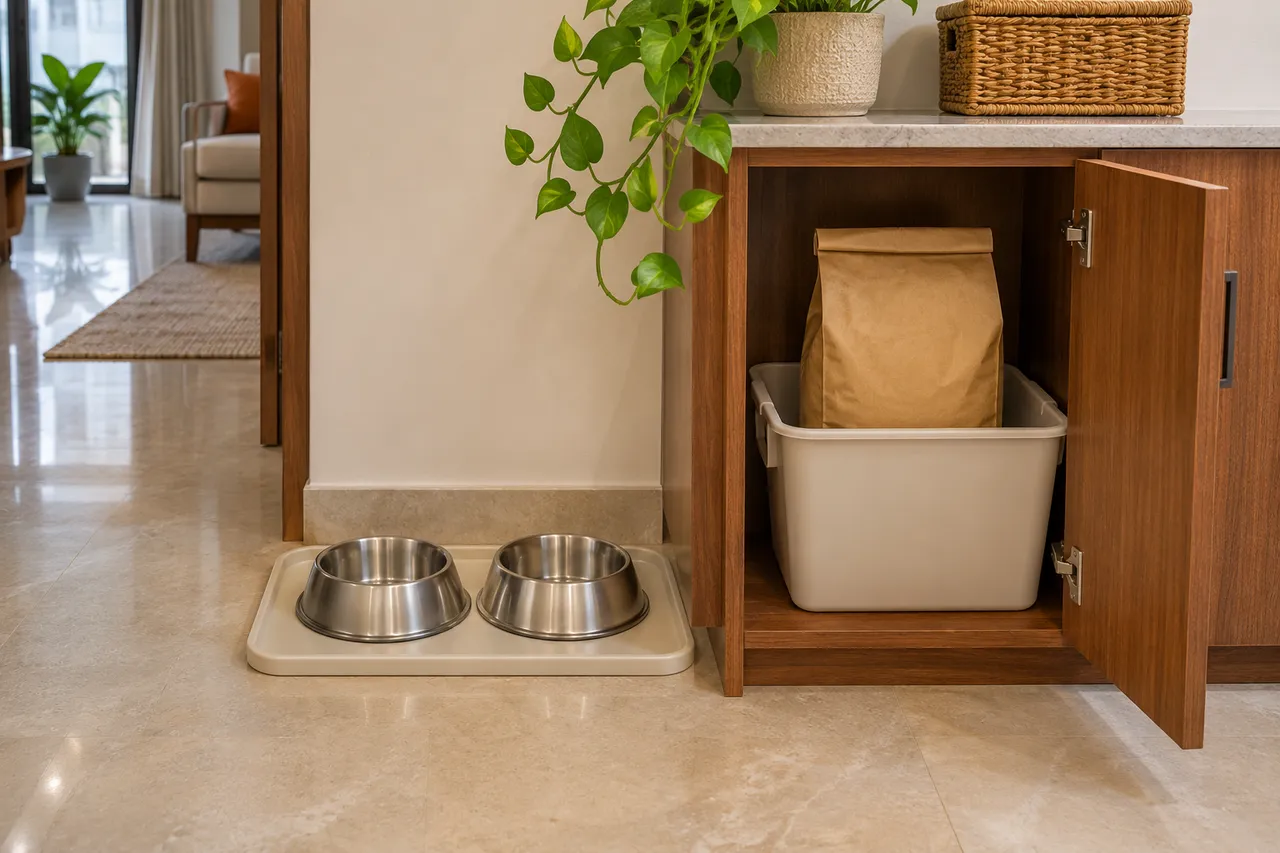
Pet Feeding Corners in Chembur Flats: Plan Bowls, Food Storage and Easy Cleaning
Plan a pet-feeding corner in a Chembur flat by separating the bowls, food storage and cleaning routine from the main walking route. Start with the pet’s existing needs and actual containers, then test a removable arrangement. Choose permanent furniture only after the location works for the household and the feeding routine.
Prepare the brief
Existing bowls, a suitable removable tray, the normal food packaging and container, a tape measure and a sketch of nearby doors and storage.
Choose the location from the actual routine
Observe where feeding happens now and what gets in the way. Include the person carrying food and water, other household members passing through and any doors opening nearby. A quiet-looking kitchen corner can become the busiest route during meal preparation. Mark the bowl area at its actual size rather than treating it as a decorative object on an elevation. Keep the location consistent enough for the household to manage while allowing practical access for cleaning.
Use the existing feeding requirements as your brief
This is an interior-layout guide, not advice on diet, feeding height or a pet’s medical needs. Follow the care plan appropriate to your animal and ask your veterinarian about changes where necessary. Measure the bowls and position already used successfully before selecting a raised station or built-in recess. A furniture supplier’s standard dimensions do not establish suitability for every pet. Storage should support the routine rather than making the animal adapt to a display piece.
Make the bowl area removable and cleanable
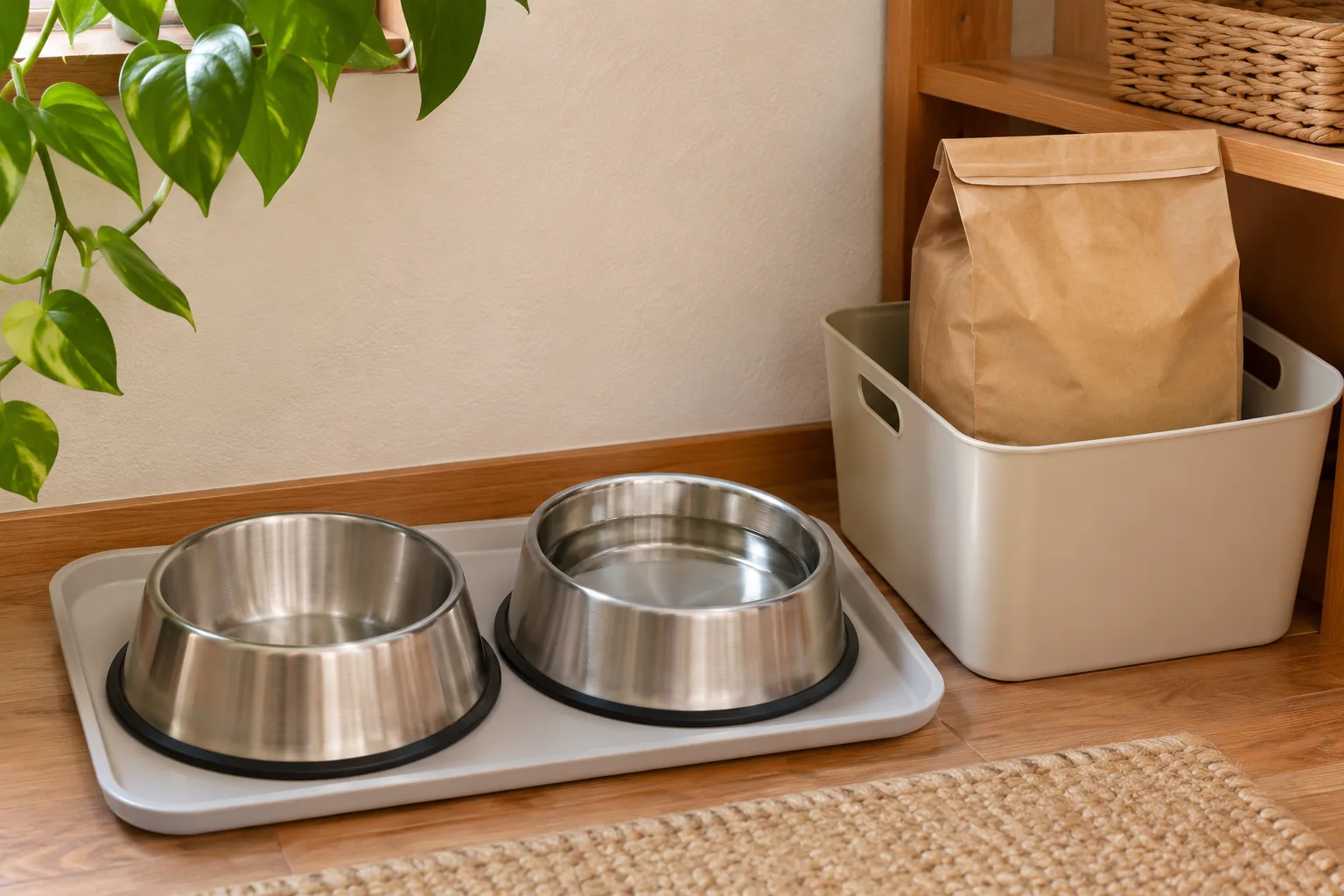
Choose a suitable tray or arrangement that can be lifted and cleaned without dismantling cabinetry. Check the care instructions for bowls, tray and surrounding floor. Include the space needed to reach a spill around the edges. A tightly fitted recess can be awkward to wipe behind even if its front looks neat. Trial the complete arrangement with ordinary use before committing to a cabinet cut-out or a decorative plinth that makes access harder.
Keep food packaging and storage requirements visible
The FDA advises keeping pet food in its original packaging; when using another dry-food container, the original bag can be placed inside it. Follow the food manufacturer’s storage directions and retain identifying information. Measure the whole bag and the chosen container rather than only the amount of food. Keep supplies in appropriate separate storage, with access managed for the household. A pretty decanted display is not a reason to discard instructions or batch information.
Separate feeding supplies from unrelated storage
Give scoops and other appropriate supplies a defined place and keep cleaning products and other incompatible items elsewhere. Check that the cabinet can open while bowls are in use. If the pet and person need the same narrow space simultaneously, change the position or sequence. Avoid turning the feeding corner into overflow storage for delivery packaging and household bags. A modest dedicated compartment can work better than a large mixed cupboard with no clear separation.
Test before commissioning fitted furniture
Use a removable tray and existing suitable storage for a normal week. Note spills, missed items, blocked doors and cleaning difficulty. Ask whether fixed work actually solves an observed problem. A built-in arrangement introduces material, edge, installation and access decisions; it is not automatically an improvement over a movable station. Keep a sketch of the tested footprint and the container dimensions to compare any proposed joinery against the successful routine.
Give the reset an owner
Agree who checks supplies, cleans the area and returns items to storage. Follow product and food-handling guidance rather than relying on a decorative schedule printed on a cabinet. If several people share care, keep the handover simple and avoid duplicate feeding assumptions. Review the location again when household furniture or the pet’s needs change. The corner is successful when it remains easy to use and clean without taking over a shared route.
A practical layout trial
Set out the existing bowls and tray, fill the usual storage container with its original food bag, and open the adjacent door or drawer. Rehearse carrying a shopping bag through the route while another household member prepares the meal. If the arrangement works only when the bowls are moved into the passage, revise the location before ordering anything. Record what changes between feeding and cleaning so a cabinet maker can see the complete routine, not just the tidy resting position.
A useful supplier-briefing question
Ask: “Can you show the bowl tray removed for cleaning and the original food bag inside its storage position?” Take the actual bowls and packaging dimensions to the meeting. Request the clear internal opening and the door movement, not only the external cabinet width. Compare a movable solution with fitted work using the same routine. Keep decisions about feeding needs separate from the furniture specification.
Compare the options
| Option | Useful when | Check first |
|---|---|---|
| Movable tray | Testing a location | Cleaning access and floor compatibility |
| Separate dry-storage cabinet | Supplies need a defined home | Original packaging and access |
| Fitted feeding niche | A proven routine justifies joinery | Usability, edges and removable components |
Budget planning
Separate bowls and accessories from furniture, finishes, delivery and any installation. Begin with suitable existing items and price only the storage problem that remains. A custom niche may cost more without improving cleaning or the route. Compare complete scopes and keep any veterinarian-directed equipment separate from decorative furniture decisions. There is no useful Chembur-wide price without the actual components and work involved.
Planning sequence and timing
Observe the current routine, trial the position for a week and then decide whether fitted work is needed. Confirm materials, cleaning access and the installation scope before accepting a supplier’s date.
Prepare the next decision with WallsToWonder
Use Design My Room to explore visual direction with the room you already have. Take the measured layout, intended use and relevant product requirements into your supplier discussion before ordering. For a wider project, the interior cost planning tool can organise the work categories; replace assumptions with itemised quotations.
For a related planning decision, read Designing for Paws: Material Choices That Work Better With Pets. Apply the checks relevant to your own home rather than copying another property’s dimensions.
Frequently asked questions
Does the feeding corner need a raised platform?
Not automatically. Follow the requirements appropriate to the pet and seek veterinary advice about changes; do not choose height from an interior photograph.
Should dry food be poured into a matching jar?
Follow manufacturer guidance. The FDA recommends retaining original packaging, including placing the bag inside another suitable container.
Is fitted storage better than a removable tray?
Only when it improves an observed problem. Test cleaning and access first.
What should I measure?
Bowls, tray, original packaging, container, nearby door movement and the household’s actual route.
Reference for the technical decision
FDA: proper storage of pet food and treats. Guidance for a particular product or jurisdiction does not replace the requirements applicable to the actual selected system and site.
Turn this idea into a plan for your home
Visualise your space, understand the likely budget, or find a professional who can bring the idea to life.