
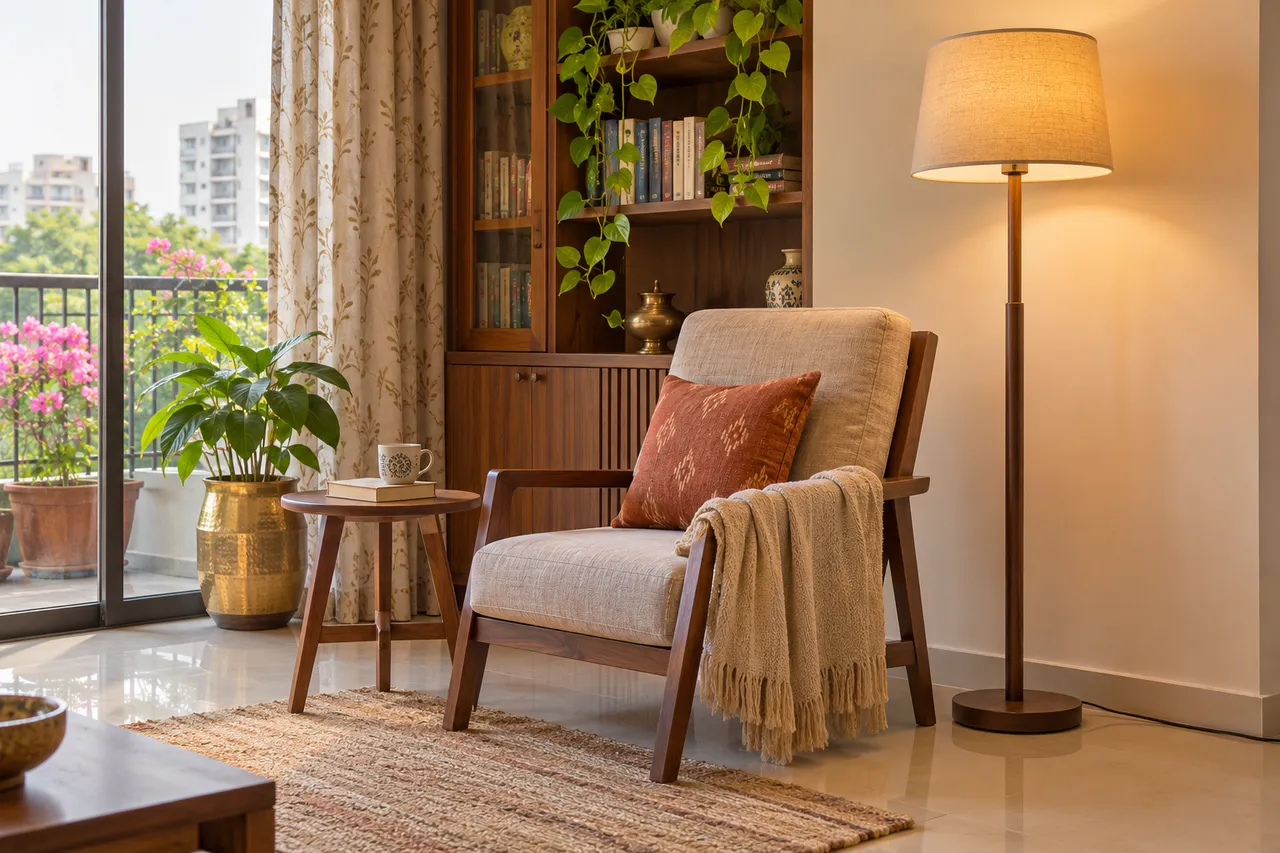
Floor-Lamp Placement in Balewadi Living Rooms: Reading Light Without Cable Clutter
Place a floor lamp in a Balewadi living room by checking the reading position, stability, controls and cable route together. Test the light while seated rather than choosing from the lamp’s height alone. Keep the base and lead out of the normal walking path, and confirm the selected product’s intended use and care guidance.
Prepare the brief
The actual chair or sofa position, a room sketch, nearby socket locations, lamp dimensions and product instructions, and an evening lighting test.
Start with the activity and seat
Decide whether the lamp is for reading, background light or a specific task. Use the chair or sofa where that activity actually happens. A lamp that lights a wall attractively may not illuminate the page from the intended position. Note who uses the seat and how it is adjusted. Compare the light alongside the room’s other lamps rather than imagining it as the only source. Let the activity determine the shortlist before choosing an ornamental shape.
Test the view from the occupied position
Look at the fitting from the normal seat and adjacent positions. Check whether the light source is uncomfortably visible or creates reflections in the television. A shade, head angle or diffuser changes the result, so inspect the selected assembly rather than relying on wattage or height alone. Where the product has adjustment, use only its intended positions. A showroom test is useful, but the final review should account for your room’s actual surfaces and lighting.
Measure the full base and arm projection
Record the base, shade and any extended arm, not just the vertical stem. A compact-looking base can support a wide shade that enters a route or door swing. Check curtains and other nearby objects according to product placement guidance. Do not place the lamp where furniture repeatedly strikes it. If a long arm reaches over the seat, test its full operating envelope and intended stability rather than treating its open floor footprint as the whole requirement.
Plan power without a cable across the route
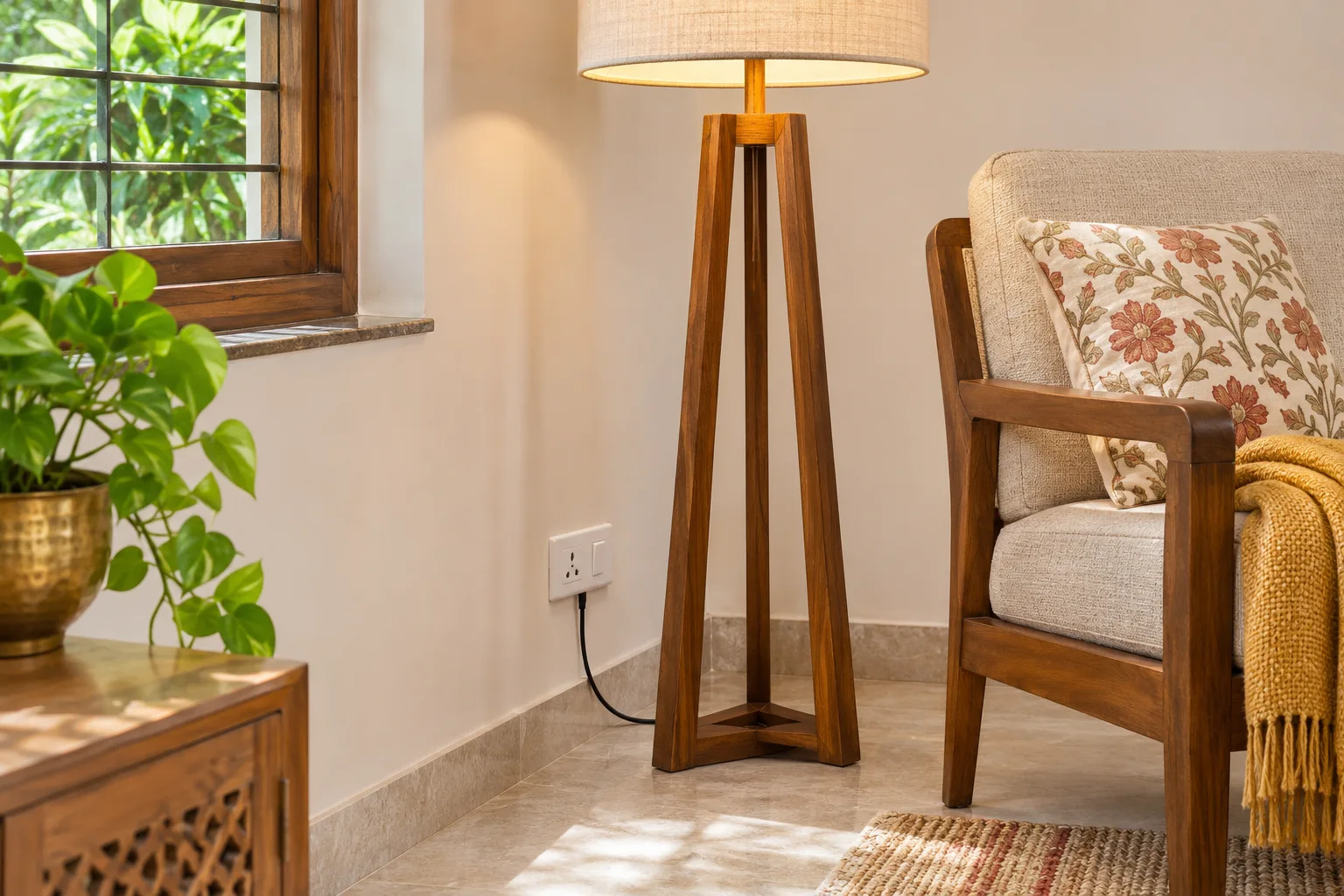
Identify a suitable accessible socket and the selected lamp’s supplied lead. Have any changes to electrical provision assessed and carried out by the appropriate qualified professional. Do not improvise connections to preserve a preferred furniture arrangement. Keep the intended cable route visible on the plan, including how the lamp is moved for cleaning. A photograph with the lead hidden does not show whether the actual setup is practical.
Choose controls that remain usable
Check the position of the switch or dimming control from the seat and when entering the room. A foot switch behind the chair may be inconvenient; another user may prefer a different control. Confirm lamp, light source and any control compatibility according to the selected product information. Do not assume every LED source is dimmable or every dimmer works with it. Keep the accepted combination recorded so a later replacement does not casually change the operating system.
Compare the lamp with simpler lighting changes
Try a suitable repositioned existing lamp, a different appropriate light source or another seat position before buying a larger statement piece. If a floor lamp cannot be placed without obstructing movement, consider a different professionally planned lighting format. The aim is useful light and an accessible room, not adding one of every fixture type. Compare the full arrangement and maintenance needs rather than judging each lamp separately in a catalogue.
Recheck after the room is reset
Put tables, bags and curtains in their ordinary positions, then repeat the evening test. Check that the base is stable in its intended location and controls and leads remain accessible. Follow product guidance for cleaning and replacement components. If children or pets use the room, include those household conditions when choosing suitable equipment and placement. Retain the model information and instructions rather than treating the lamp as an object with no installation or care requirements.
A practical layout trial
Sit with the usual reading material under the room’s normal evening lights. Try the shortlisted lamp from the intended position, then view it from the neighbouring seat and television direction. Mark the base and shade projection and walk past with an everyday bag. If the lead has to cross the route to reach the socket, revise the position or ask a qualified professional about a suitable electrical solution before ordering. Do not solve the layout by concealing a problem cable under decoration.
A useful supplier-briefing question
Ask: “Can I test the lamp from the reading seat using the controls and light source actually supplied?” Record the fitting’s full projection and cable route. Separate professional electrical changes from the product purchase. Compare the lamp with the room’s existing light after dark, so the choice is based on useful illumination and accessible operation rather than only the shade colour.
Compare the options
| Option | Useful when | Check first |
|---|---|---|
| Shaded floor lamp | Local reading and background light are useful | Glare, base and switch position |
| Adjustable task lamp | A focused activity needs directional light | Intended adjustment and stability |
| Another lighting format | A floor base cannot fit practically | Professional installation and service access |
Budget planning
Compare the fitting, compatible light source, delivery and any assessed electrical work. Keep optional decorative upgrades separate from the equipment required for useful light. Ask about replacement parts and care before selecting a proprietary system. A low lamp price can become a larger room change if the only proposed position has unsuitable power access. Obtain current prices for the exact combination rather than comparing height or appearance alone.
Planning sequence and timing
Trial the seat and light after dark, confirm dimensions and controls and then check power access. Complete any required professional electrical work before treating the final lamp position as ready. Keep time for an evening review after the room is furnished.
Prepare the next decision with WallsToWonder
Use Design My Room to explore visual direction with the room you already have. Take the measured layout, intended use and relevant product requirements into your supplier discussion before ordering. For a wider project, the interior cost planning tool can organise the work categories; replace assumptions with itemised quotations.
For a related planning decision, read Bedroom Reading Corner Ideas Beyond a Window Seat. Apply the checks relevant to your own home rather than copying another property’s dimensions.
Frequently asked questions
How tall should a reading floor lamp be?
Test the complete fitting from the actual seat. Height alone does not establish useful light or comfortable glare.
Can any LED be dimmed?
No. Confirm the exact light source and control compatibility with the manufacturer.
Can a lead cross the walking route if hidden?
Plan a suitable route and electrical arrangement instead of concealing a layout problem.
Is a floor lamp necessary in every living room?
No. Choose it only when it improves an actual activity and fits the complete room.
Turn this idea into a plan for your home
Visualise your space, understand the likely budget, or find a professional who can bring the idea to life.