
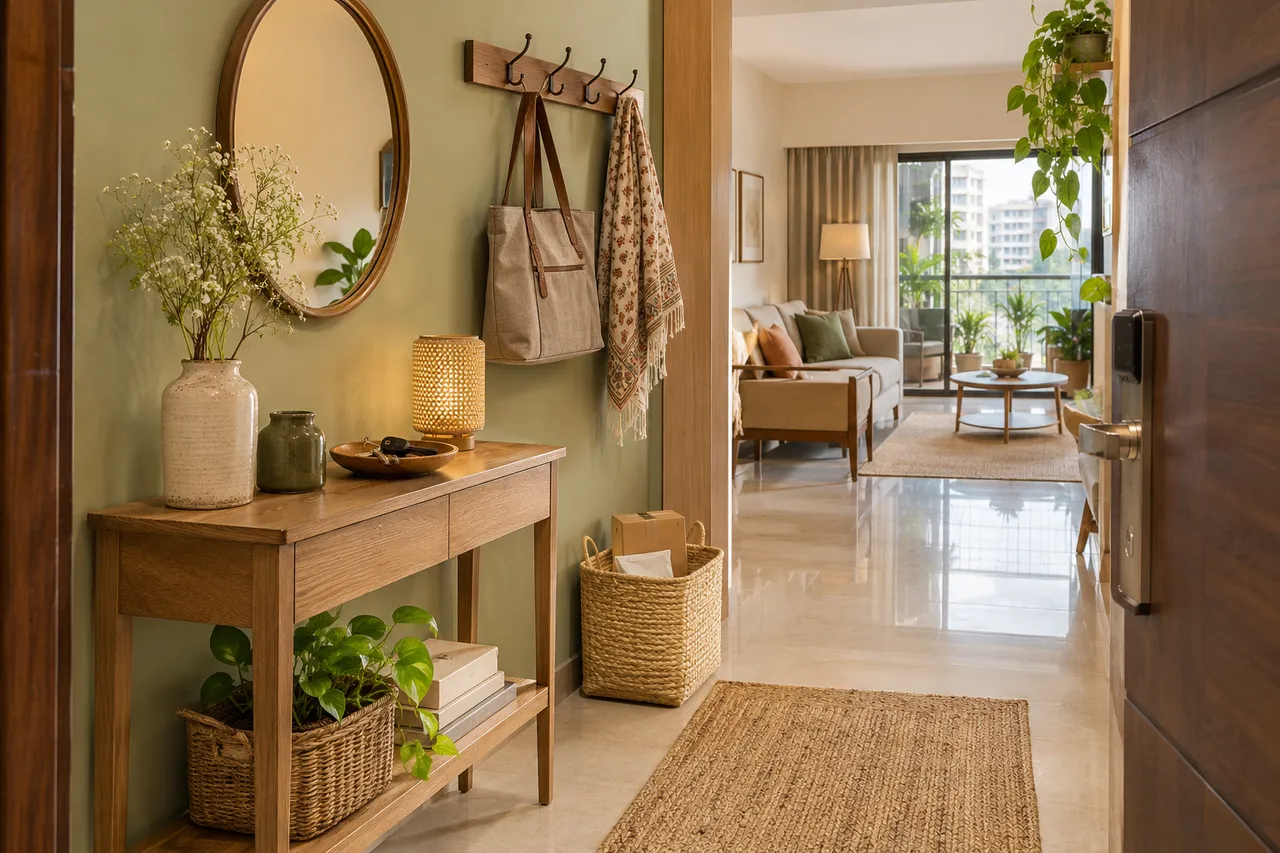
Move-In Storage for Warje Apartments: Give Keys, Bags and Deliveries a Place
For move-in storage in a Warje apartment, give keys, bags, outgoing items and deliveries separate temporary homes before commissioning a full entrance unit. Observe the arrival route, measure door movement and test a small reversible setup. Keep parcels out of the walking path and move contents into their proper storage promptly.
Prepare the brief
An arrival inventory, a tape measure, a key bowl, a suitable bag basket or fitted hooks, a small outgoing tray and one removable parcel container.
Warje: start with your own property
A move-in plan for Warje should follow the actual flat and building arrangements. The entry may connect directly to a living room or have a separate lobby, and neither layout can be inferred from the locality name. Record shared-access and delivery requirements with the building manager where relevant. Within the home, focus on the household’s first few minutes after arrival rather than making the entrance store every category of belongings.
Observe the route during a normal week
Note where each person puts keys, a work bag, shopping and items to return. Include days with school bags or multiple deliveries. Do not choose the cabinet location solely because a wall looks empty. An organiser outside the natural route is likely to be ignored. Mark what needs to stay near the entrance and what should move onward to the kitchen, bedroom or paperwork storage. This reduces the volume the arrival station must carry.
Give keys one obvious return position
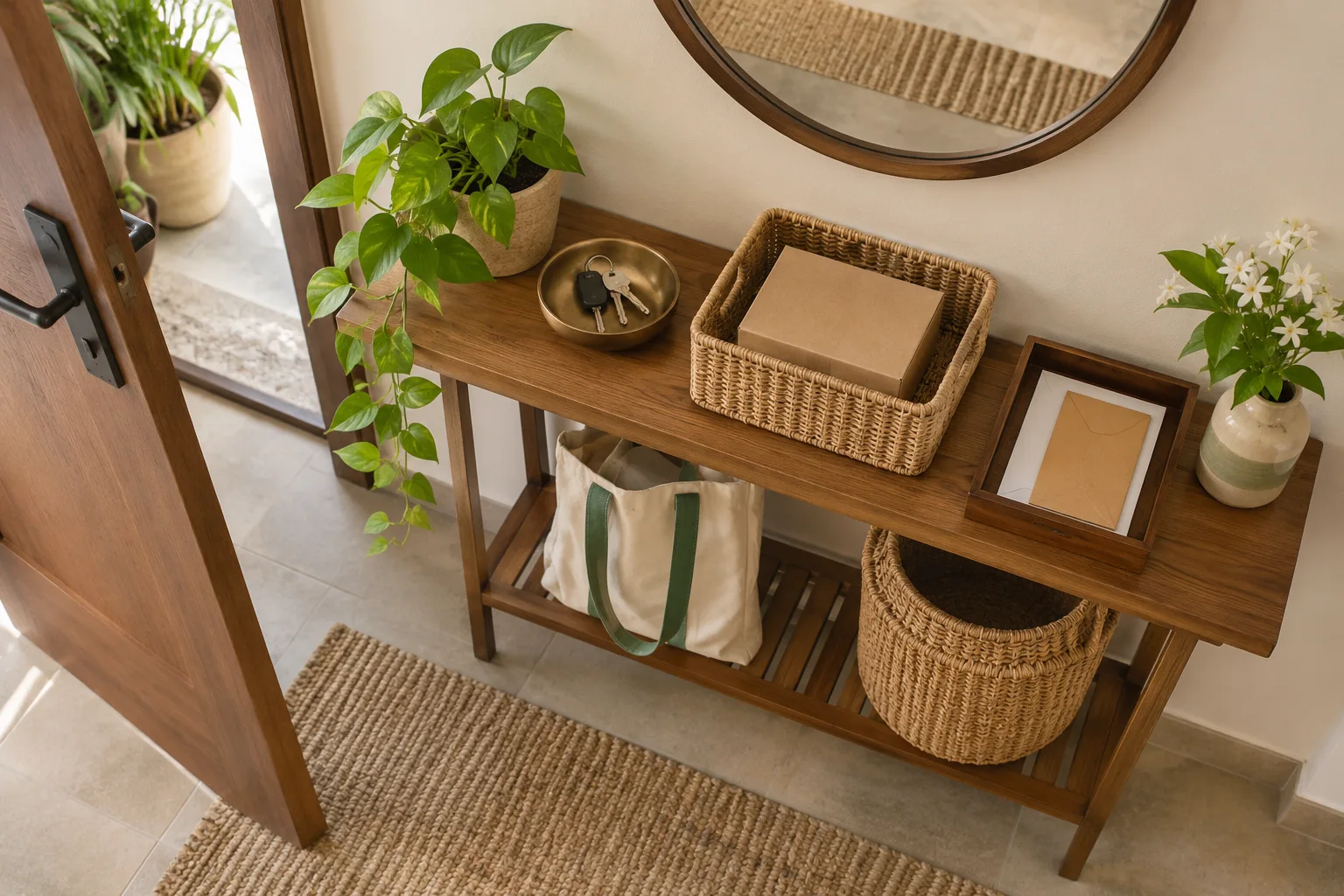
Choose a bowl or suitable hooks that users can see and reach comfortably. Keep separate places for regular sets if a shared container causes searching. Check that hanging keys do not scrape doors or catch on bags. Spare keys and sensitive access information need an appropriate secure home rather than a decorative public display. Test a simple bowl before buying integrated joinery so the final position follows an established habit.
Plan bags by loaded size and weight
Measure the bag when it is full, including handles and the space needed to lift it away. A narrow hook strip can look efficient but create a bulky projection into the route once several bags hang from it. Select fittings intended for the load and the actual wall or furniture. A lower basket may be more practical for a regularly used tote. Keep wet or dirty items in a suitable separate arrangement rather than mixing them with papers.
Treat parcels as a temporary category
Give a small delivery a place while it is checked and unpacked, then move its contents and packaging onward. Choose an area that does not obstruct the entrance or neighbouring doors. A larger parcel needs a temporary location planned for its size, not a permanent assumption that it can wait in the passage. Decide how long items should remain at the arrival station. Without that limit, a useful basket becomes an overflow store for unmade decisions.
Separate outgoing items from incoming clutter
A slim tray or suitable container can hold library books, returns or items needed the next morning. Keep it distinct from incoming letters and delivery packaging. If papers need action, move them into the household’s document system rather than piling them under keys. Choose a location where the intended user sees the outgoing item before leaving. Review the tray daily so an old errand does not conceal the object that must go today.
Measure the footprint with everything in use
Open the main door, cabinet and adjacent room doors. Hang the full bags and place the usual parcel container in position. Walk the route carrying shopping. Include handles, skirting and any switch or service access that must remain usable. If the setup only works when empty, change the format or reduce the entrance inventory. A shallow console, wall-mounted component or movable basket each needs its own installation and operating-space assessment.
Add permanent furniture only after the trial
Use the temporary system for a week and note what repeatedly lands elsewhere. Move the relevant destination before expanding the cabinet. If custom furniture is justified, record usable dimensions, intended contents, fittings and the delivery and installation scope. Keep a simple daily reset rather than a complicated labelling scheme that no one follows. The best move-in storage often starts modestly and becomes more specific after the household has settled into the flat.
A practical layout trial
On a delivery-heavy day, place one ordinary parcel in the temporary basket, hang the loaded work bag and put an outgoing return in its tray. Enter with shopping and close the door. If the parcel prevents the bag being removed, separate their destinations or reduce the furniture projection. If the arrangement works only after moving the outgoing item to the floor, give that item another reachable home. A useful trial reveals collisions between categories that appear tidy when photographed separately.
Compare the options
| Option | Useful when | Check first |
|---|---|---|
| Console and removable trays | Testing arrival habits | Actual surface depth and open route |
| Hooks with a bag bay | Regular bags need defined storage | Loaded projection and suitable fixing |
| Custom entrance unit | The routine is proven | Service access and internal dimensions |
Budget planning
For an illustrative ₹12,000 trial-and-storage envelope, hold ₹6,000 for a suitable small furniture piece, ₹2,000 for trays or baskets, ₹1,000 for fittings or installation and ₹3,000 as a reserve. These are spending allocations, not Warje retail prices. Delay custom upgrades until the temporary arrangement has proved useful, and price wall preparation or electrical changes separately where needed.
Planning sequence and timing
Observe a week, measure the proposed positions and test the setup for another ordinary week. Ready-made furniture may still need delivery and assembly planning. Approve any custom drawing only after full bags, doors and daily movement have been checked together.
Plan the next step with WallsToWonder
Use Design My Room to explore the visual direction alongside your existing room. Take actual measurements and the operating-space tests in this guide into the brief before ordering. For a wider project, use the interior cost planning tool to organise assumptions, then compare itemised supplier quotations.
For the next related decision, read Family Command Centre Cabinet Ideas for Papers, Keys and Devices. Use its relevant checks alongside your own room plan rather than assuming another home’s dimensions apply.
Frequently asked questions
Does an entrance need a full cabinet?
No. A small console or suitable tray system may handle the routine without adding unnecessary bulk.
Where should delivery parcels go?
Use an agreed temporary position inside the home that leaves movement clear. Unpack and move contents onward promptly.
Can bags share a key hook?
Choose fittings and locations suited to each load. A key hook is not automatically suitable for a full work or school bag.
What should stay out of entrance storage?
Long-term paperwork archives, unused packaging and occasional items that consume space needed for everyday arrivals.
Turn this idea into a plan for your home
Visualise your space, understand the likely budget, or find a professional who can bring the idea to life.