
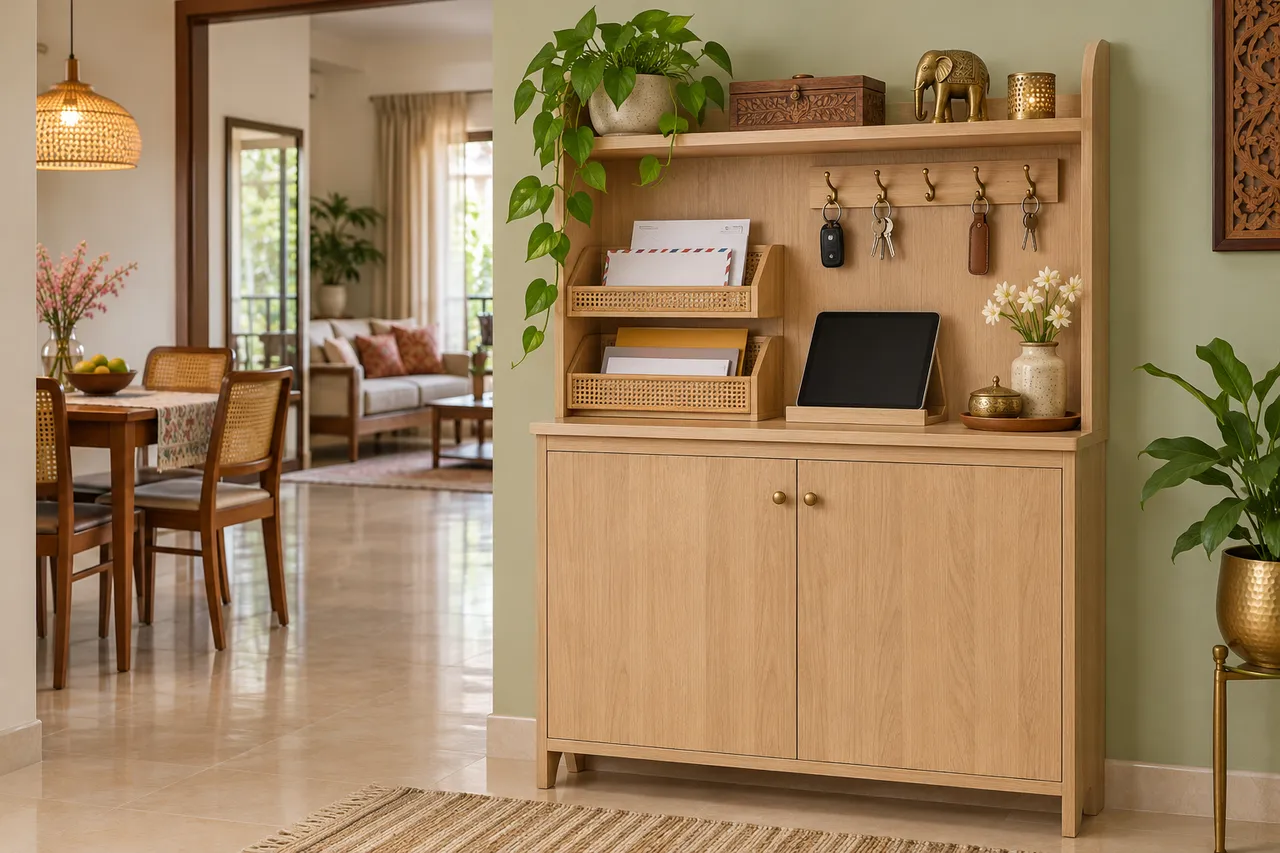
Family Command Centre Cabinet Ideas for Papers, Keys and Devices
A family command centre works best when it gives incoming papers, keys and devices a clear temporary home. Start with a shallow cabinet near an everyday route, assign one tray to each action, and keep only current items inside. The aim is an easy daily reset, with enough space for doors and people to pass comfortably.
What you need
A shallow cabinet or existing shelf; removable paper trays; a small key bowl or suitable hooks; plain folders; a return basket; and a tape measure. Choose fittings compatible with the cabinet and wall construction.
Choose the route before the cabinet
Watch where the family naturally drops belongings for two ordinary days. That may be beside the dining area rather than directly at the front door. Pick a position that people already pass on the way in and out. Keep the cabinet away from door swings, opening windows and routes used to carry shopping. Mark its proposed footprint with paper and walk past it with a bag. A cabinet that looks shallow in a product photo can still obstruct a narrow passage once its handle and an open door are included.
Give papers an action, not just a pile
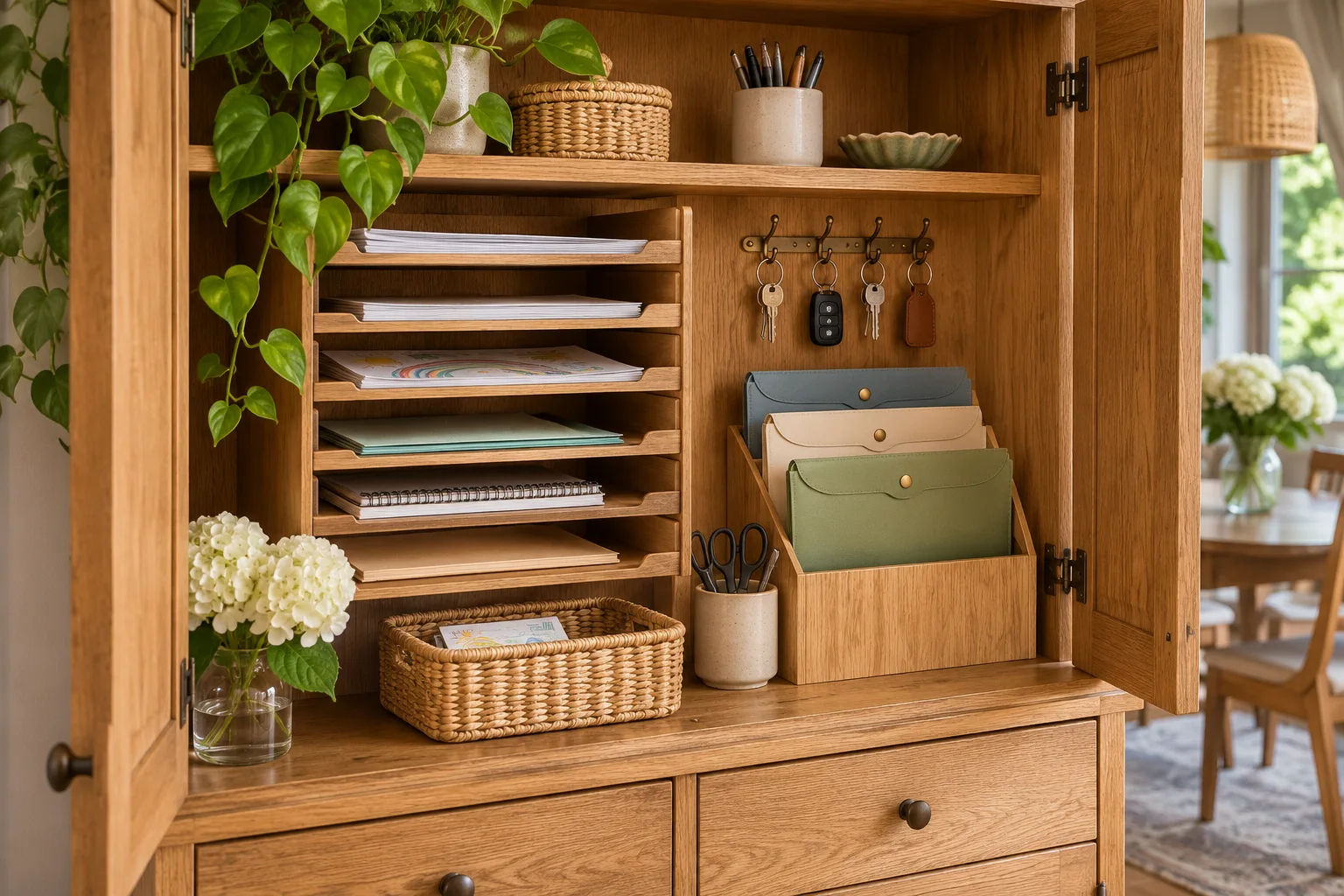
Use three simple destinations: needs action, leaving the house and file elsewhere. A school form that needs a signature belongs in the first tray; a returned library slip belongs in the second. Completed insurance documents should move to the household archive rather than staying here. Make the trays removable so they can be carried to a table. If one tray becomes a permanent mountain, divide its task or reduce what enters it. A fourth miscellaneous tray often delays decisions instead of making the system easier.
Size storage around real objects
Measure your largest current folder, the paper stack you normally keep and the depth needed to lift it out. Include a little practical finger clearance, then compare these measurements with the usable internal dimensions of the cabinet. External dimensions do not account for hinges, shelves or door thickness. Test a cardboard tray before ordering custom joinery. Keep the most frequently used items where their users can reach them comfortably. A cabinet should accommodate the family’s actual routine rather than requiring every paper to be folded into a decorative box.
Make keys easy to return
Give each regular key set its own visible place. A bowl is a useful reversible trial; hooks can work when they are securely fitted to a suitable surface. Check that hanging keys do not scrape a door or tangle with a lower tray. Keep spare keys and sensitive documents in an appropriate secure location instead of on display. If different people leave at different times, use separate small destinations so one person does not have to empty a communal basket to find a single set.
Treat the device shelf as a drop-off place
A resting shelf can reduce phones and tablets scattered across the dinner table. Keep it separate from cups, cleaning liquids and loose metal items. This guide proposes storage, not a hidden charging installation. Do not improvise an enclosed charging drawer from an ordinary cabinet. If you want a powered station, discuss ventilation, access and the selected equipment with the relevant installer and follow device instructions. Begin with an unplugged basket and check whether the family actually uses it before paying for any integrated fittings.
Decide what should stay visible
Open shelves make an item easy to find, but every extra object becomes part of the room’s visual background. Put the active paper tray behind a door if clutter distracts you, while leaving a small key bowl accessible. A mixed cabinet often works better than all-open shelving. Keep heavy or bulky objects in a suitable lower compartment, within the furniture’s stated limits. Avoid displaying addresses, medical letters or children’s personal information on an exposed noticeboard, especially where visitors or a video-call camera can see it.
Build a five-minute reset into the routine
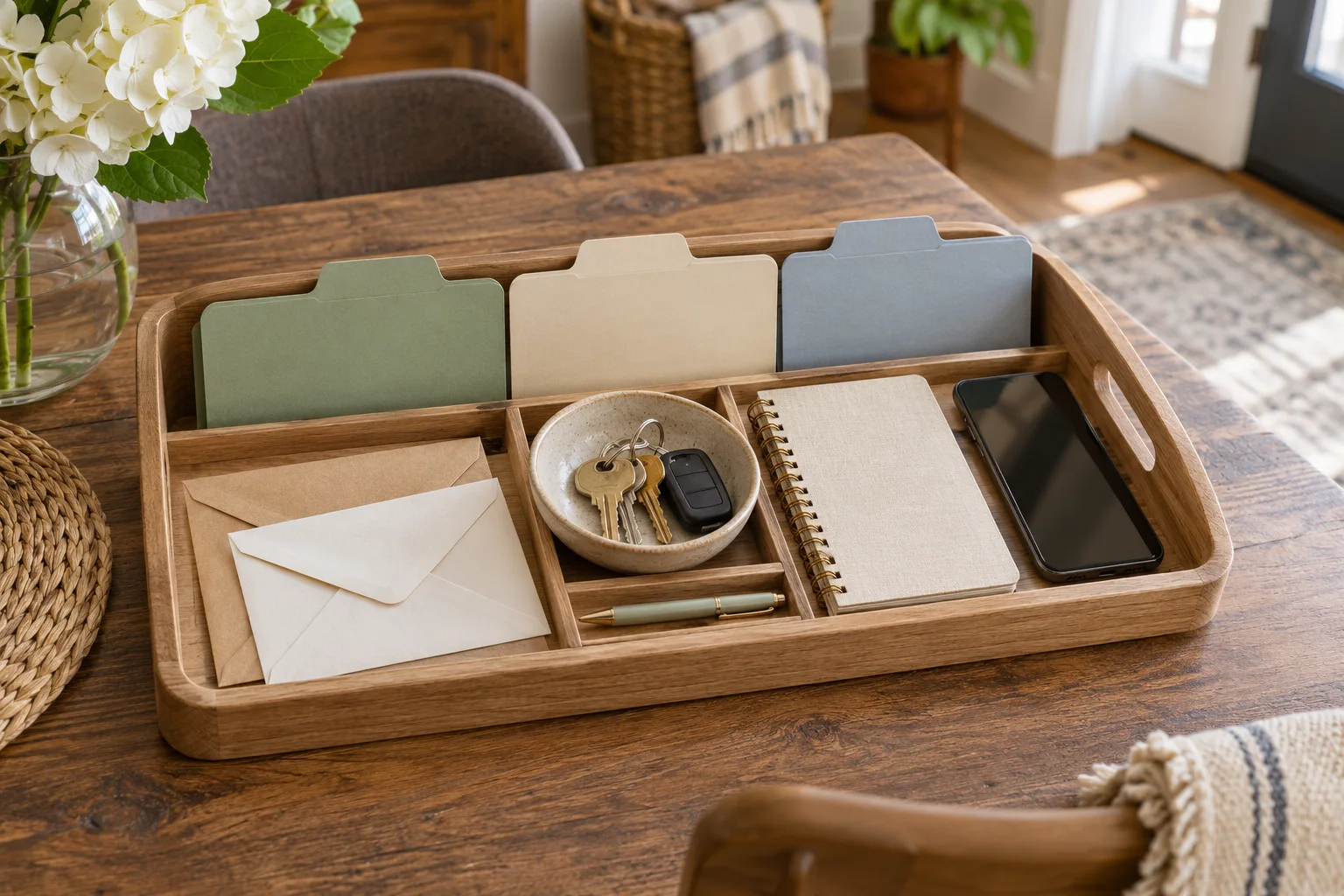
Choose a regular moment, such as after dinner, to check action papers and move outgoing items into bags. Once a week, empty the return basket and remove completed documents. Assign responsibility for a task rather than assuming someone will notice it. A child might return the pencil pouch; an adult might check payment letters. The cabinet does not need to look empty. It needs to make tomorrow’s tasks visible enough that the household can complete them without searching several rooms.
Test a shelf before commissioning joinery
Run the system on an existing shelf for one week. Record which tray overflows, which family member cannot reach a hook and which objects keep landing elsewhere. Adjust those problems before specifying doors or drawer inserts. If the trial works, prepare a sketch with usable shelf dimensions, hardware choices and a finish that can be cleaned according to its care instructions. For taller furniture, follow the manufacturer’s wall-fixing requirements and have the wall and fittings assessed when needed. A custom cabinet is worthwhile only if it improves a proven routine.
Compare the practical options
| Option | Useful when | Check first |
|---|---|---|
| Existing shelf with trays | Testing a new routine | Papers remain visible |
| Shallow closed cabinet | Shared living or dining area | Check door swing and internal depth |
| Custom fitted unit | A proven routine with unusual dimensions | Approve drawings and access first |
Plan the budget before buying
For an illustrative ₹10,000 planning envelope, reserve ₹5,000 for a ready-made cabinet, ₹1,500 for trays and folders, ₹1,000 for suitable fittings or installation, and ₹2,500 as a contingency. These are spending allocations, not market quotes. If a cabinet already exists, price the organisers first and keep the remaining money uncommitted. Custom carpentry, electrical work and wall repairs require separate itemised quotations.
A realistic planning sequence
Spend two days observing the drop-off route, one evening measuring and one week testing temporary trays. Ordering and installation depend on stock, wall condition and the chosen supplier. Do not book a completion date until the cabinet and fixing method are confirmed.
Plan the next step with WallsToWonder
Use Design My Room to explore the look alongside your existing room. Take your actual measurements and storage inventory into the brief before ordering furniture. For a wider project, the interior cost planning tool can help structure an initial budget; compare it with itemised supplier quotations.
For related layout decisions, read No Foyer? Create an Entryway That Still Feels Complete. Apply the relevant checks to your own measurements and existing furniture.
Frequently asked questions
Where should a family command centre go?
Place it along a route the household already uses, with enough space for walking and opening the cabinet. The dining area may work better than a tight entrance.
How many paper trays are useful?
Start with three: action, outgoing and file elsewhere. Add another only when it serves a clear recurring task.
Can devices charge inside an ordinary cabinet?
Do not assume an ordinary closed cabinet is suitable. Follow device guidance and get the proposed powered setup assessed before adding electrical fittings.
Does this need custom furniture?
No. A removable tray system on an existing shelf is a good way to test the arrangement before purchasing furniture.
Turn this idea into a plan for your home
Visualise your space, understand the likely budget, or find a professional who can bring the idea to life.