
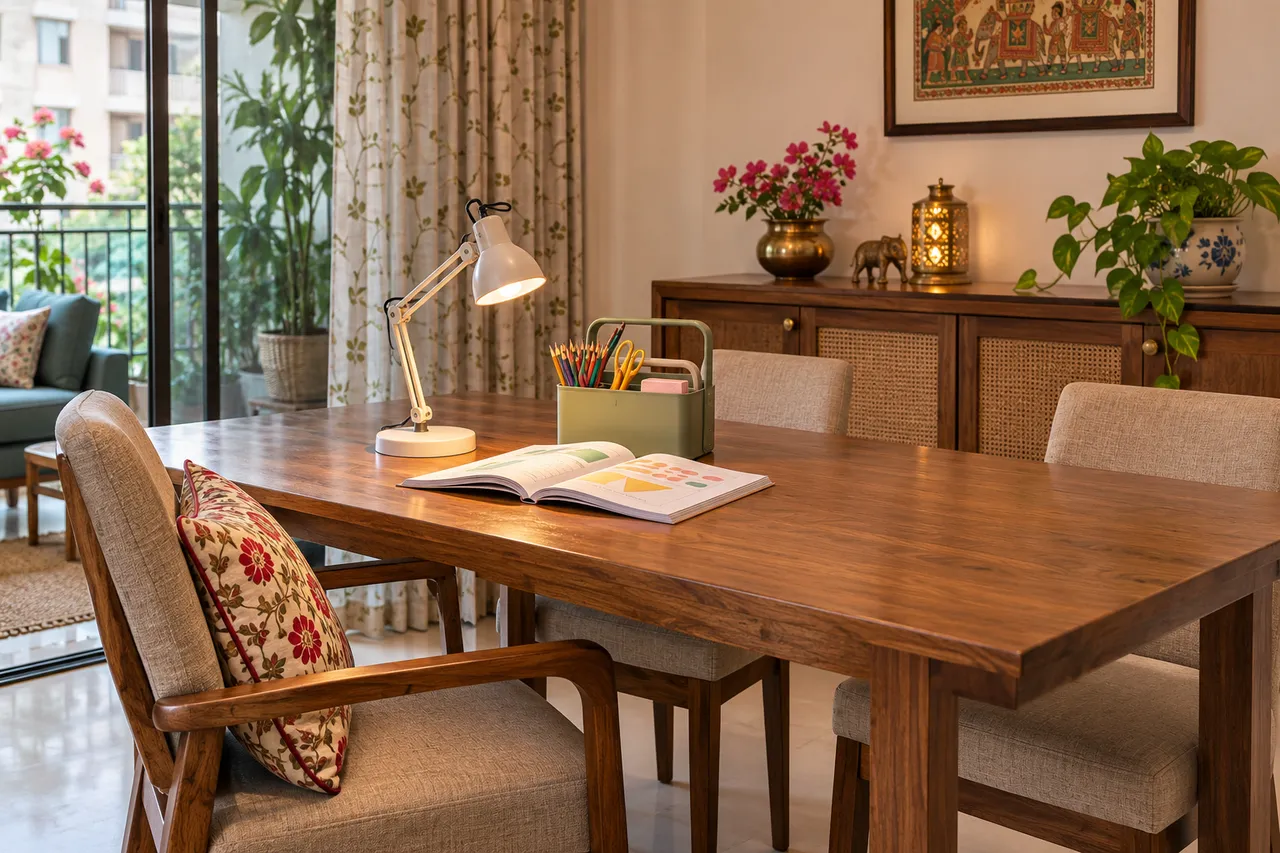
Dining-Table Homework Station Ideas That Pack Away Before Meals
A dining-table homework station works when the learning materials can arrive in one trip and leave in one trip. Use a portable caddy, a separate place for unfinished work and a nearby storage compartment. Test the chair, lighting and reset routine before adding furniture, so the table remains easy to use for meals.
What you need
Portable caddy or small basket; slim paper tray; plain folders; pencil container; a suitable light if needed; and one nearby shelf or cupboard compartment.
Start with the real homework routine
Notice how many people use the table, what materials they bring and when the next meal starts. A short reading task needs less equipment than a craft project or laptop assignment. Choose a regular work position that does not block the household’s main route. If two children share the table, give each a defined working area and a separate place for unfinished pages. The aim is to reduce repeated searching and arguments over supplies, rather than recreating a permanent classroom in the dining room.
Choose a caddy that can travel in one trip
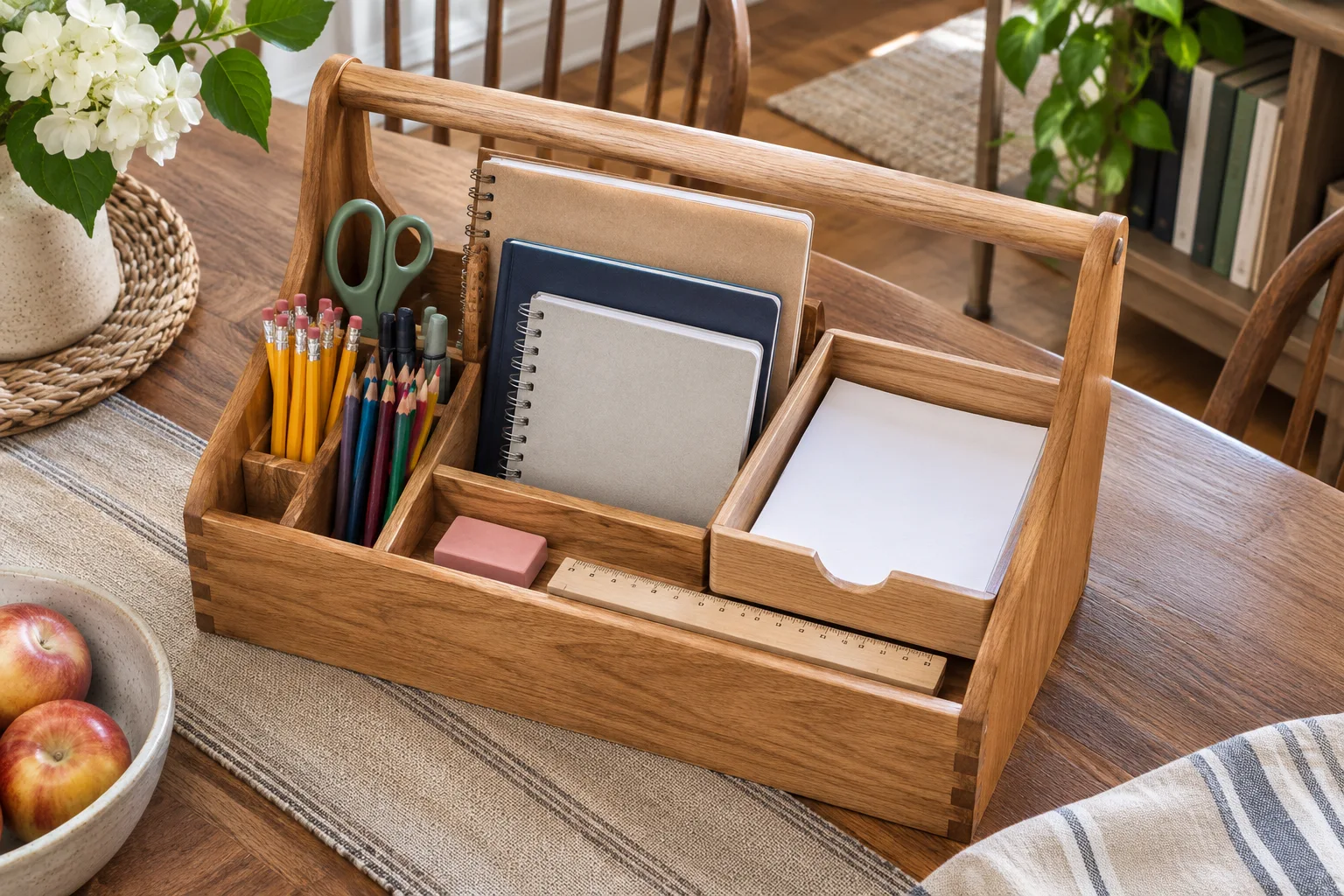
Put only everyday supplies in the portable caddy: pencils, eraser, ruler and the current essentials. Check its weight when full and whether its intended user can move it comfortably. Keep scissors and other tools stored appropriately for the household and the child’s age. Avoid a tall container that tips when one compartment is emptied. A small basket you already own can be a useful trial. Purchase a fitted organiser only after seeing which objects actually return to the table every day.
Give unfinished work a separate flat home
Use a slim tray or folder for pages that must stay in order. Do not stack dinner placemats over an unfinished drawing and hope it will survive the reset. Assign a simple place for work that needs an adult’s attention and another for items ready to go back into a school bag. If projects need to remain flat for longer, plan a suitable temporary shelf nearby. Keep the active workload limited enough that the tray remains portable and the family can see what still needs completion.
Test the seat and work surface together
Sit at the chosen position with the actual notebook or device. Check whether the user can work comfortably without reaching awkwardly across the table. A dining chair that suits an adult may not suit a smaller child; choose age-appropriate furniture or accessories and follow their instructions. Do not improvise an unstable stack of cushions as a permanent solution. If homework sessions are consistently long or the seating never works well, a dedicated suitable workstation may be a better option than forcing every task onto the dining table.
Check the light at the time homework happens
Test the setup in the evening as well as daylight. Move the notebook and chair to see whether the user’s hand casts an awkward shadow. A suitable task light may help, but its base and cable should not obstruct the eating area or walking route. Follow the product’s placement and electrical instructions. Keep drinks away from devices and electrical equipment. If a laptop is used, check reflections from windows and overhead lights before buying extra equipment; a change of seat may solve the immediate problem.
Make the nearby cupboard part of the design
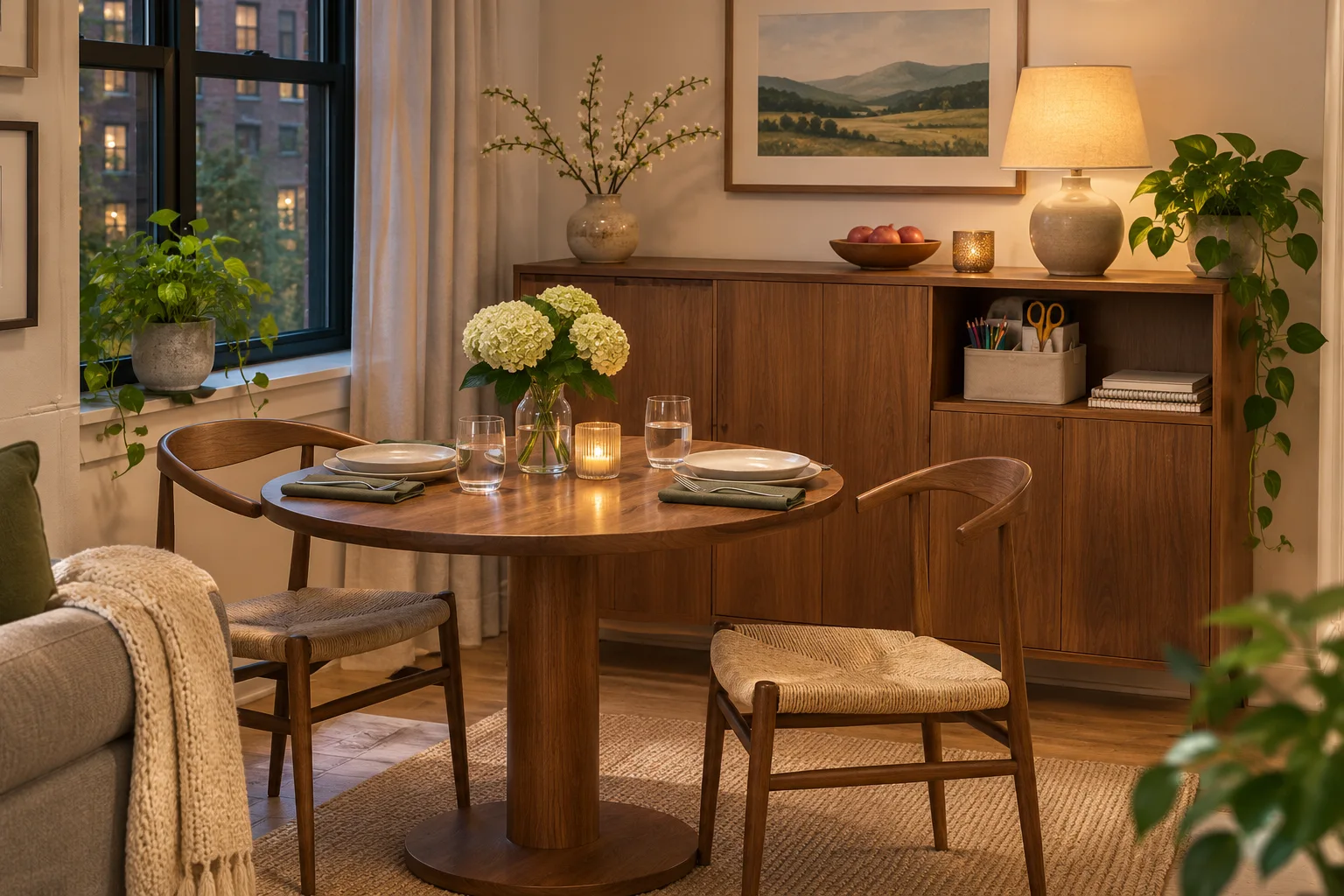
Reserve one accessible compartment in a sideboard or shelf for the caddy and paper tray. Measure the full caddy including its handle, then check the door opening and hinge position. If putting it away requires emptying the container, the storage is too small or poorly positioned. Keep occasional craft supplies elsewhere so the everyday station stays manageable. A cupboard at the far end of the house makes the one-trip routine less likely to happen. The most useful storage is close enough to be used consistently.
Agree a reset that protects the work
Before meals, put loose supplies in the caddy, place unfinished pages in their tray and return the set to its compartment. Wipe the table according to its finish instructions, then bring out the meal setting. Let the child own an appropriate part of the reset while an adult checks sensitive or unfinished work. A brief reminder can help at first. Avoid turning tidying into an elaborate sorting exercise every evening; the system should have few enough parts that it can be completed even on a busy day.
Review after a week of normal use
Ask what kept getting left out and which materials were missing. Remove duplicate supplies, adjust the unfinished-work tray and reconsider the table position if people kept walking through it. If the family regularly needs the table at the same time as homework, agree a timetable or a second suitable work location. Decorative uniformity is less important than a routine everyone can understand. Keep the station flexible as assignments change, and reserve permanent furniture changes for a problem that remains after the portable setup has been tested.
Compare the practical options
| Option | Useful when | Check first |
|---|---|---|
| One portable caddy | Short everyday assignments | Keep the loaded weight manageable |
| Caddy plus flat work tray | Drawings and unfinished pages | Reserve nearby shelf space |
| Dedicated suitable workstation | Long sessions or conflicting table use | Check room layout and seating needs |
Plan the budget before buying
For an illustrative ₹6,000 setup envelope, allocate ₹1,500 to a caddy and paper tray, ₹2,000 to suitable lighting if required, ₹1,000 to cupboard organisers and ₹1,500 as a reserve. This is a spending plan, not a current retail estimate. Seating changes and electrical work need separate assessment and quotes; reuse existing suitable items before buying.
A realistic planning sequence
Set aside one evening to measure and choose a work position, then test the portable setup for a full school week. Adjust the reset routine before purchasing organisers. Supplier delivery and any seating or electrical changes determine the final completion date.
Plan the next step with WallsToWonder
Use Design My Room to explore the look alongside your existing room. Take your actual measurements and storage inventory into the brief before ordering furniture. For a wider project, the interior cost planning tool can help structure an initial budget; compare it with itemised supplier quotations.
For related layout decisions, read Kids’ Study Corner Ideas for Hadapsar Apartments: Space, Light and Storage and Dining Table Sizes: Find the Right Fit for Your Home. Apply the relevant checks to your own measurements and existing furniture.
Frequently asked questions
Can a dining table be used for homework?
Yes, when the seating, light and household routine suit the task. Use portable storage so the table can be reset for meals.
How do I avoid losing unfinished work?
Give it a separate flat tray or folder and a consistent nearby storage place. Keep it separate from loose stationery.
Should I buy a study desk first?
Test the actual routine first. A dedicated workstation may be worthwhile if sessions are long, seating is unsuitable or meal and homework times conflict.
What belongs in the caddy?
Keep only regularly used supplies that its user can carry comfortably. Store occasional craft materials separately.
Turn this idea into a plan for your home
Visualise your space, understand the likely budget, or find a professional who can bring the idea to life.