
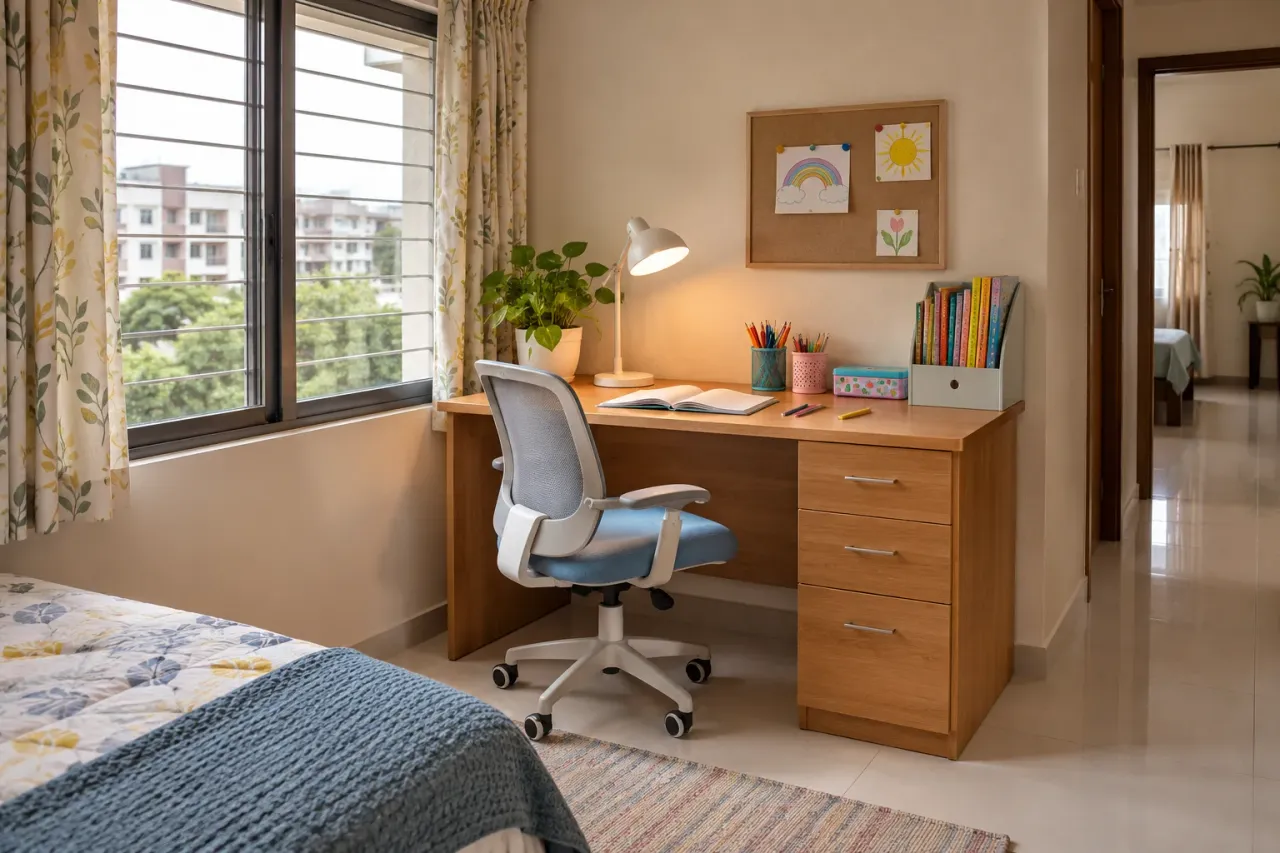
Kids’ Study Corner Ideas for Hadapsar Apartments: Space, Light and Storage
Hadapsar: the practical answer
A useful child’s study corner needs a stable desk, suitable seating, comfortable light and reachable storage for daily materials. In a Hadapsar apartment, choose the location around the child’s routine and the room’s other uses. Test the actual desk and chair together before commissioning a fixed installation.
A study corner should help homework happen with less setup, not just look organised before a photograph. This guide is for a Hadapsar household creating a study area within a bedroom or shared living space. Start with the child’s age, activities and equipment, then allow the arrangement to change as those needs develop.
Choose a location by observing the routine
Identify when study takes place and who else uses the room then. A bedroom corner may be quieter; a shared area may make support easier. Avoid choosing solely because an empty wall is available if it is also the route to the balcony or wardrobe.
Place a temporary desk in the proposed position for several normal sessions. Check daylight, noise, visual distraction and storage access. Let the child take part in testing the space rather than designing around adult assumptions about how it will be used.
WallsToWonder’s Design my room feature can help explore where a study corner might sit within a room photo. Treat the image as a visual brief and test furniture, reach and movement with the child at actual size.
Test the desk and chair as one arrangement
Put the actual books, notebooks and device on the surface. Check that the child can sit comfortably and reach the materials without crowding the workspace. A decorative desk built into a narrow gap may not support the intended activities.
Consider adjustable or replaceable furniture when needs are likely to change. Do not fix dimensions from a generic age chart without trying the arrangement. If the child has individual physical or learning needs, involve the appropriate professionals when preparing the brief.
Check light on paper and on screens
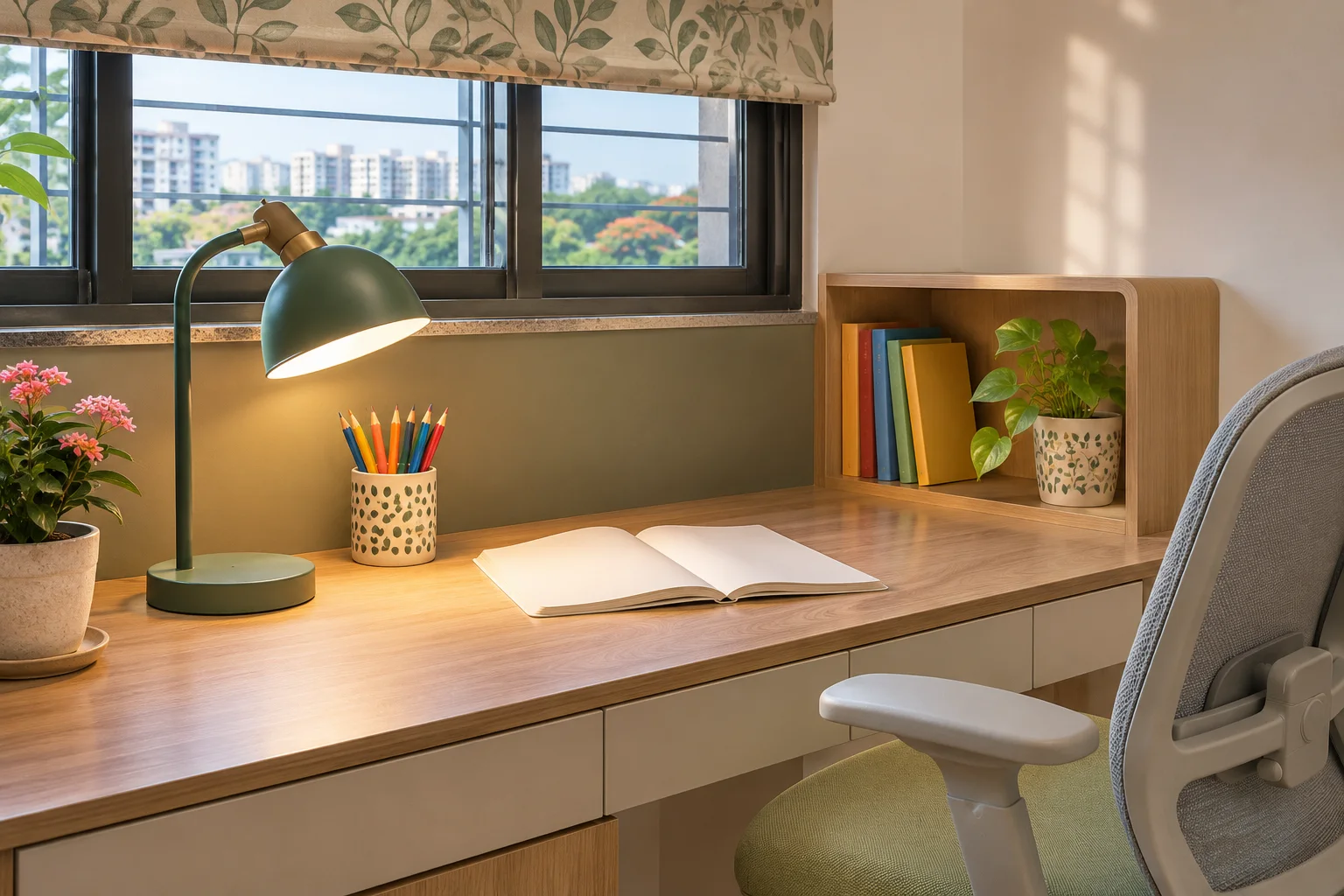
Assess the desk at the time it is normally used. Test reflected glare on screens and whether the child’s hand casts an inconvenient shadow on writing. A ceiling fixture alone may not provide useful light at the work surface.
Compare task lighting with the room’s general light and keep controls reachable. IKEA India’s study-lamp category is a reference for fixture formats, not a guarantee that a lamp suits a particular child or desk. Test the actual setup before approval.
If you need help integrating the corner with the bedroom, browse work and profiles through WallsToWonder’s Pune designer directory. Ask how the proposed arrangement can adapt without replacing the whole room as the child grows.
Make tidying simple and storage safe
Keep daily books and stationery close enough that the desk can be cleared quickly. Use limited categories rather than many small compartments that are hard to maintain. Store occasional items elsewhere so the work area does not become the room’s overflow cupboard.
Assess furniture stability, fixings and cable routes for the actual household. Do not encourage climbing to high shelves or leave cords across a walking route. For the wider home, read Hadapsar storage planning and the local lighting and electrical guide.
Compare the practical options
| Option or priority | Useful for | What to check |
|---|---|---|
| Bedroom corner | A dedicated area within a shared-use room | Bed, wardrobe and door access |
| Shared living-space desk | Supervised study and flexible use | Noise and household timing |
| Movable adjustable setup | Changing needs | Stability, comfortable fit and cable routing |
Your planning checklist
- Observe when and how the child studies.
- Trial the desk and chair with actual materials.
- Check daylight, task light and screen reflections.
- Keep daily supplies within comfortable reach.
- Plan stability, cables and future adjustments.
Frequently asked questions
Does a child need a separate study room?
No. A well-tested corner can work if the furniture, light, routine and storage suit the child. The room label is less important than daily usability.
Should I build a permanent desk into the wardrobe?
Only if it fits the child and allows the wardrobe and room to function. A movable setup can be easier to adjust as needs change.
What is the best desk size for my child?
Select it around the user, seating and activities, then test the combination. A general measurement cannot replace a practical trial or assessment of individual needs.
Images are locality-inspired AI design concepts, not photographs of completed projects or named buildings. Confirm dimensions, material suitability and installation details for your own property.
Turn this idea into a plan for your home
Visualise your space, understand the likely budget, or find a professional who can bring the idea to life.