
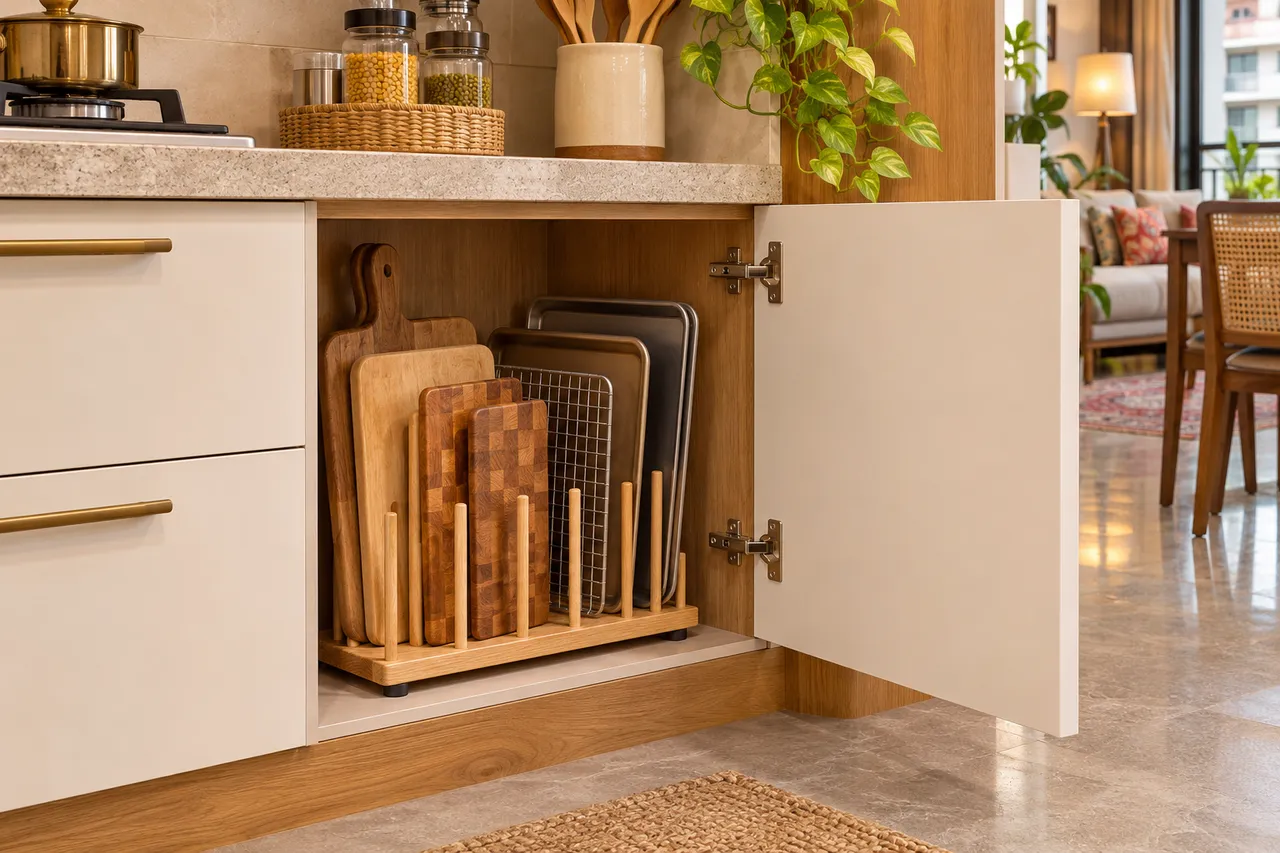
Vertical Kitchen Tray Storage Ideas for Boards, Baking Sheets and Lids
Vertical kitchen tray storage separates baking sheets, dry chopping boards and compatible lids so you can remove one item without lifting a heavy stack. Start by measuring the cupboard and each object, then test a removable rack. Keep items dry, leave space around hinges and handles, and check that the cabinet closes easily.
What you need
Tape measure; paper or cardboard for a footprint test; a suitable freestanding divider rack; removable shelf liner if compatible; and the dry boards, trays and lids you actually use.
Empty one cupboard and sort by use
Work on one cabinet rather than dismantling the entire kitchen. Put everyday boards and trays in one group, occasional baking equipment in another and unwanted items aside. Count duplicates before buying a rack with more slots. A tray used every morning deserves easier access than a large roasting dish used a few times a year. Check the care guidance for each object and deal with damaged items separately. The goal is to make frequently used pieces easy to retrieve, not to force every flat kitchen object into one cupboard.
Measure the usable cabinet opening
Measure the opening between hinges and the clear space behind the closed door. Note shelf supports, pipework and any projecting handle screw. Record the height, depth and thickness of the largest object, including a tray rim or lid knob. A rack can fit on a shelf while a tall chopping board prevents the door from closing. Make a cardboard silhouette of the largest item and move it through the opening. This simple test reveals the difference between storage capacity and a usable retrieval path.
Choose a rack that stays put
A removable freestanding rack makes a useful first trial because you can change its position. Select a product intended for the objects you want to store and follow its load and placement guidance. Check whether it slides or tilts when a heavy board is removed. Avoid assuming that a thin decorative file sorter can support cookware. Fixed dividers may suit custom cabinetry, but their spacing should follow actual objects and the cabinet maker’s construction details. Do not drill into an unfamiliar cabinet without checking the assembly and warranty implications.
Separate boards from sharp or awkward edges
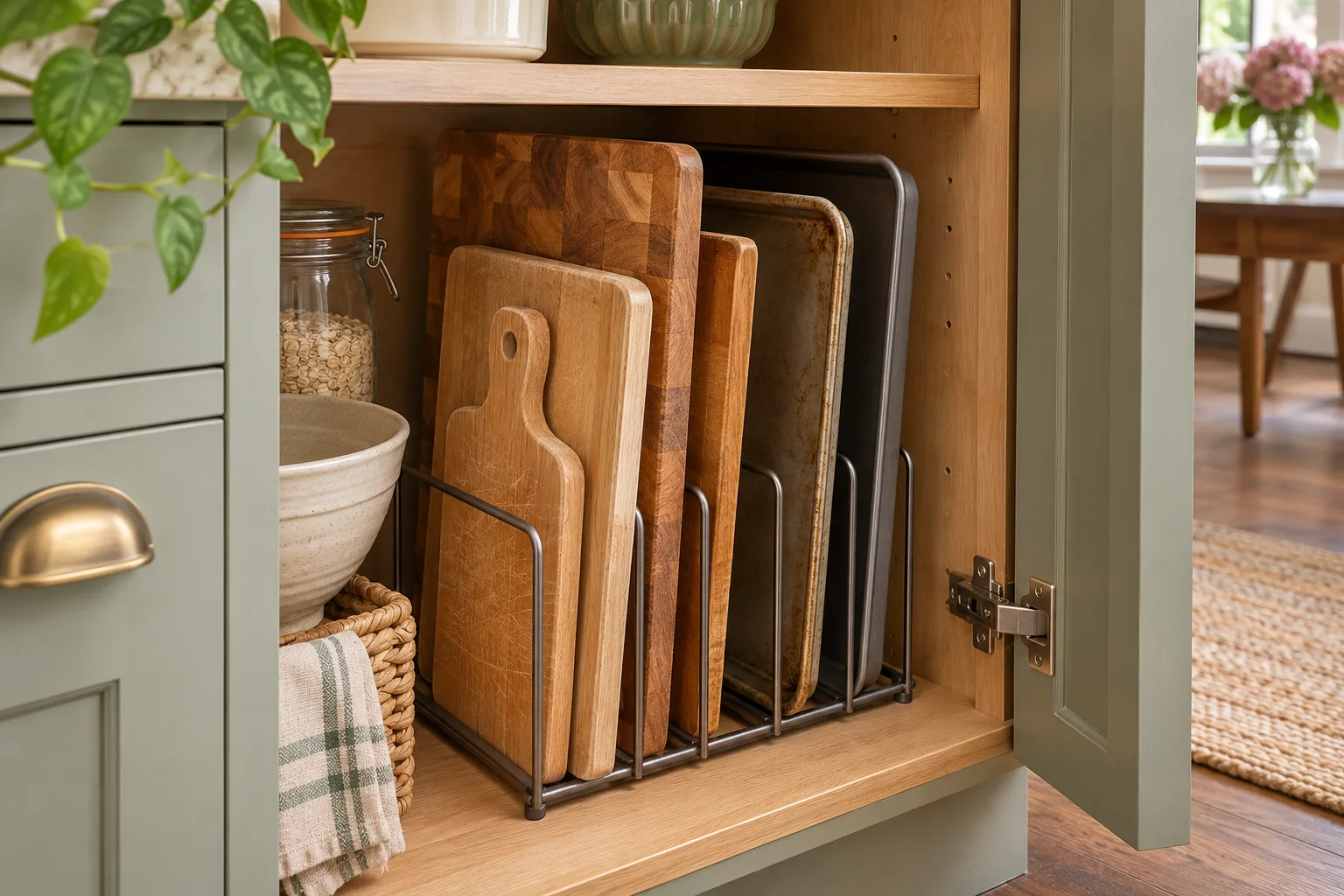
Give a thick board a slot that allows easy lifting without rubbing its finish against a baking-sheet rim. Place the heaviest suitable pieces low and check that the shelf can support the full load. A shallow tray can sit beside a deeper one only if both remain independently accessible. Keep knives in their intended storage rather than slipping them between boards. Where two materials could scratch each other, review their care guidance and use an appropriate divider instead of assuming any felt or liner will be suitable.
Give lids their own fit test
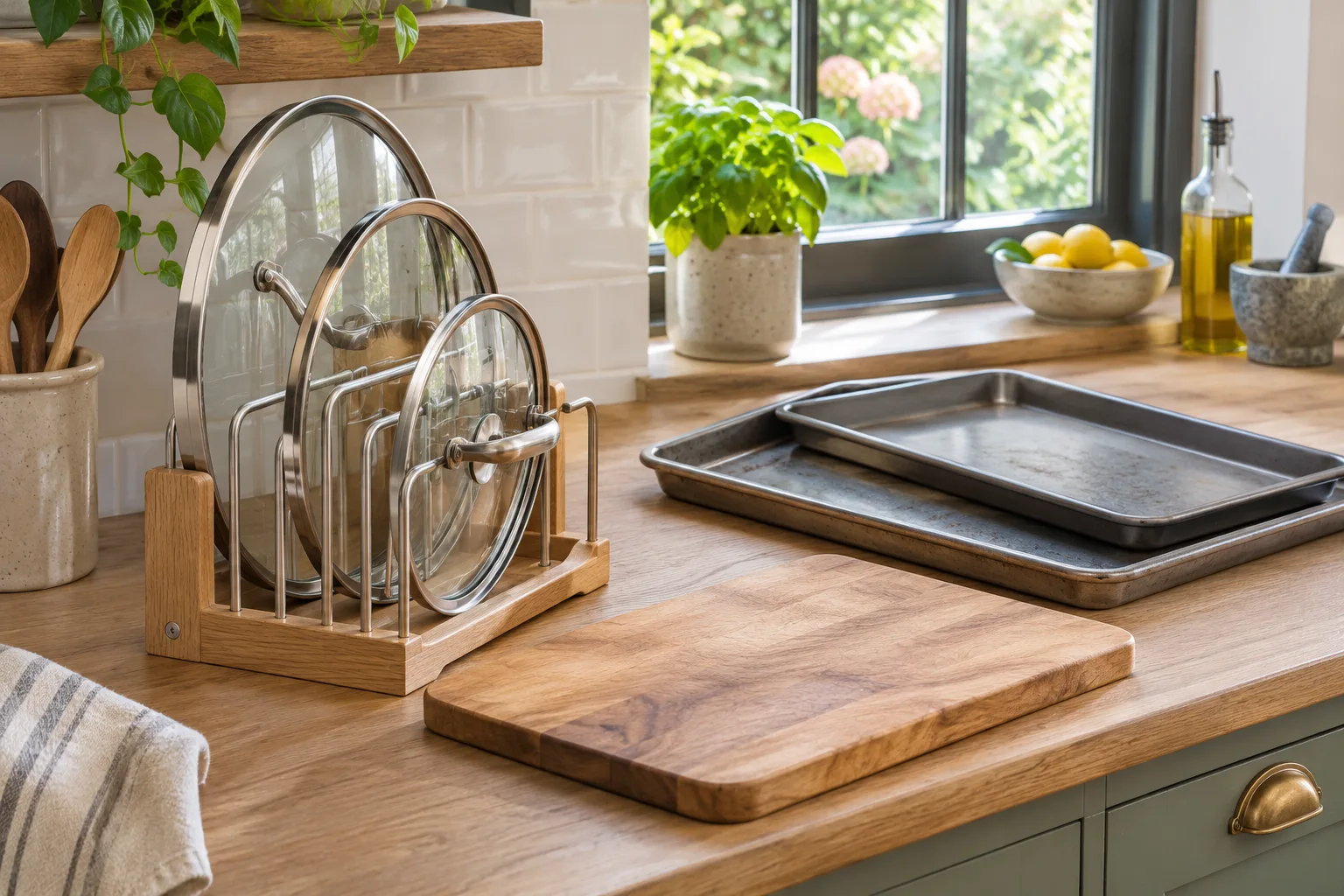
Lid handles change the required depth and spacing. Try each lid in the proposed rack and check that it cannot roll or tip out during normal retrieval. Some racks suit flat baking sheets but are poor choices for domed lids. A separate lid organiser may be more useful than a single crowded arrangement. Pair frequently used lids with their matching pans in a way your household understands. If the largest lid obstructs every other object, move that piece to a different suitable location rather than oversizing the whole system around it.
Store dry items rather than using a cupboard as a drying rack
Allow washed boards, lids and trays to dry as directed before putting them away. A closed storage cupboard is not a substitute for a suitable drying area. Keep the rack accessible enough that crumbs and residue can be removed during routine cleaning. Lift out a removable rack and clean both it and the shelf using compatible methods. Avoid adding absorbent decorative liners that remain damp or hide a leak. If the cupboard has a moisture problem, resolve its cause before filling it with storage accessories.
Position the rack near the relevant task
A baking tray belongs near a workable preparation route and oven access, while everyday boards may fit better near the main prep surface. Keep the cupboard away from places where reaching for a board interrupts a hot-pan movement. Open adjacent drawers and the dishwasher during the layout test. Ask a second household member to retrieve a tray without coaching. If they have to remove several objects or bend a divider, the arrangement needs adjustment. Convenience is about the whole movement, not simply the number of pieces a rack can hold.
Specify custom dividers only after a trial
Use the temporary system through several cooking sessions, then note the slot sizes that work. Give a cabinet maker a list of actual objects, required clear openings and a plan for cleaning. Ask whether dividers can be removed or repositioned when equipment changes. Verify access around hinges and shelf supports in the shop drawing. If an existing cabinet already works with a modest rack, a custom insert may offer little additional value. Keep a photograph of the successful arrangement so the family can return objects to the same positions.
Compare the practical options
| Option | Useful when | Check first |
|---|---|---|
| Removable tray rack | Testing an existing cabinet | Check movement and load guidance |
| Fixed vertical dividers | Custom cabinet with a stable inventory | Check slot width and cleaning access |
| Separate lid organiser | Lids with bulky handles | Trial each lid individually |
Plan the budget before buying
Use an illustrative ₹4,000 organiser budget to compare options: ₹2,000 for a suitable rack, ₹500 for compatible shelf protection if needed, ₹500 for small accessories and ₹1,000 held back until the trial proves useful. These are planning allocations, not current product prices. Bespoke dividers should be quoted separately with material, fitting and finishing clearly stated.
A realistic planning sequence
Allow one sorting session, one measuring session and several ordinary cooking days to test the rack. Custom inserts add drawing approval, manufacture and installation time that varies by supplier. Make no permanent alterations until the objects can be retrieved and the door closes without force.
Plan the next step with WallsToWonder
Use Design My Room to explore the look alongside your existing room. Take your actual measurements and storage inventory into the brief before ordering furniture. For a wider project, the interior cost planning tool can help structure an initial budget; compare it with itemised supplier quotations.
For related layout decisions, read Kitchen Storage Ideas: Smart Ways to Make Your Kitchen More Organized and Functional and Kitchen Appliance Storage in Nallagandla: An Open Counter or Appliance Garage?. Apply the relevant checks to your own measurements and existing furniture.
Frequently asked questions
Can chopping boards and baking trays share a rack?
Yes, when the product suits both and each dry item can be removed without scratching, tipping or obstructing the others.
Should wet boards go straight into the cabinet?
No. Dry them according to their care instructions before putting them into closed storage.
How wide should each divider slot be?
Measure the actual object, including rims and handles, then allow enough room to lift it out easily. There is no single width for every kitchen.
Is a custom insert necessary?
Often a removable rack is enough. Test that first before paying for fixed dividers.
Turn this idea into a plan for your home
Visualise your space, understand the likely budget, or find a professional who can bring the idea to life.