
Kitchen Appliance Storage in Nallagandla: An Open Counter or Appliance Garage?
Choose kitchen appliance storage in Nallagandla by separating where a product is stored from where it is operated. Compare an open counter with a cupboard for disconnected equipment, using each appliance’s instructions for ventilation, placement and power. Measure lids, jars, cables and door movement before designing an appliance garage around a neat closed view.
Start with your Nallagandla home
This guide considers a Nallagandla household organising small countertop appliances rather than replacing the entire kitchen. Your inventory and measured counter determine the solution. A visual appliance-garage concept should not imply that equipment may safely operate inside any enclosure. Keep the decision tied to actual product requirements, cooking habits and the access available in your own home.
1. List frequency and operating footprint
Set out the mixer, toaster, coffee machine or other products actually used. Include removable jars, lids and accessories, and note whether equipment moves during use. Keep product instructions with the inventory. A stored appliance may occupy less space than the operating setup, so measure both states rather than drawing a cabinet around the body alone.
2. Compare an open working position
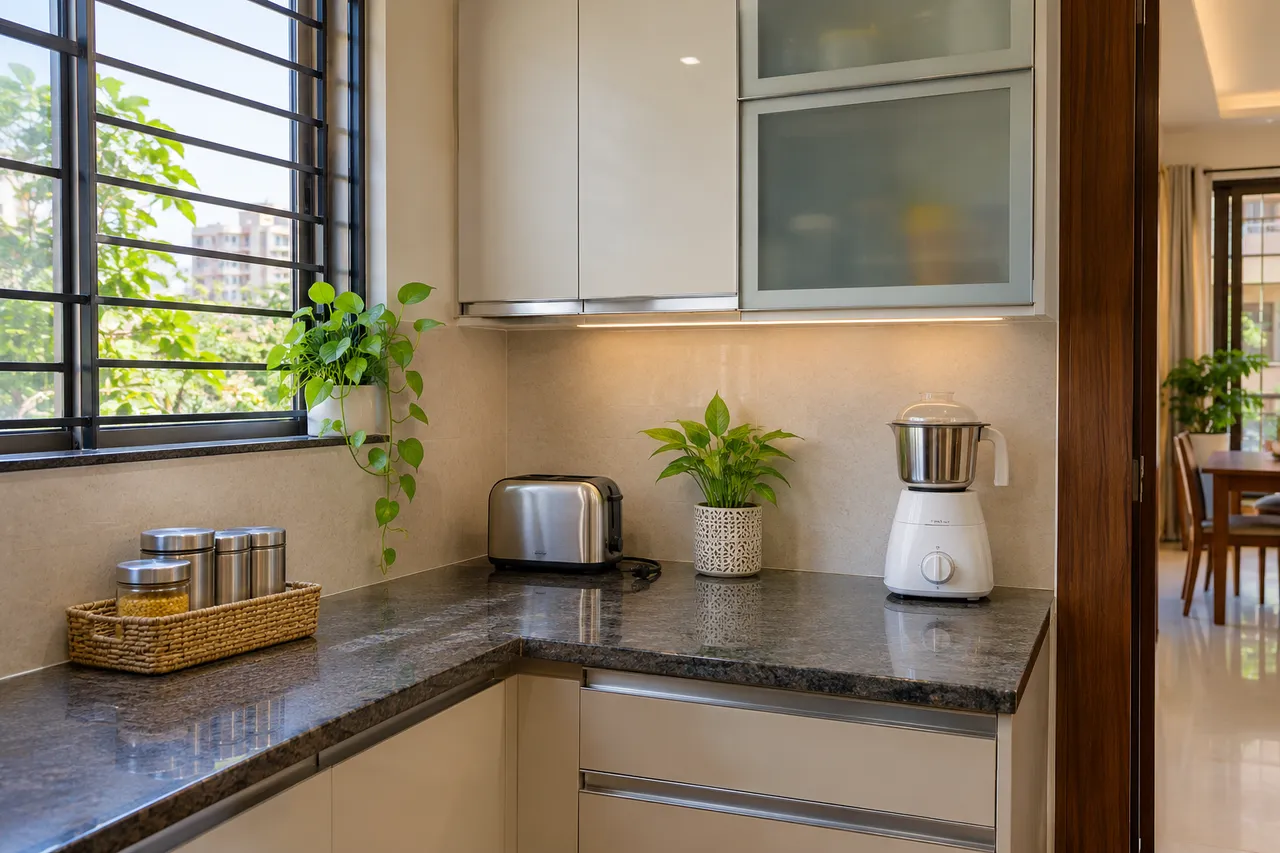
An open counter can keep frequently used equipment accessible, but it uses preparation area and needs appropriate power access and cleaning space. Check the instructions for the actual product and its surroundings. Keep water, heat and cords considered in the layout. Do not solve visible clutter by moving equipment to a position that is unsuitable for operation.
3. Compare closed storage for disconnected equipment
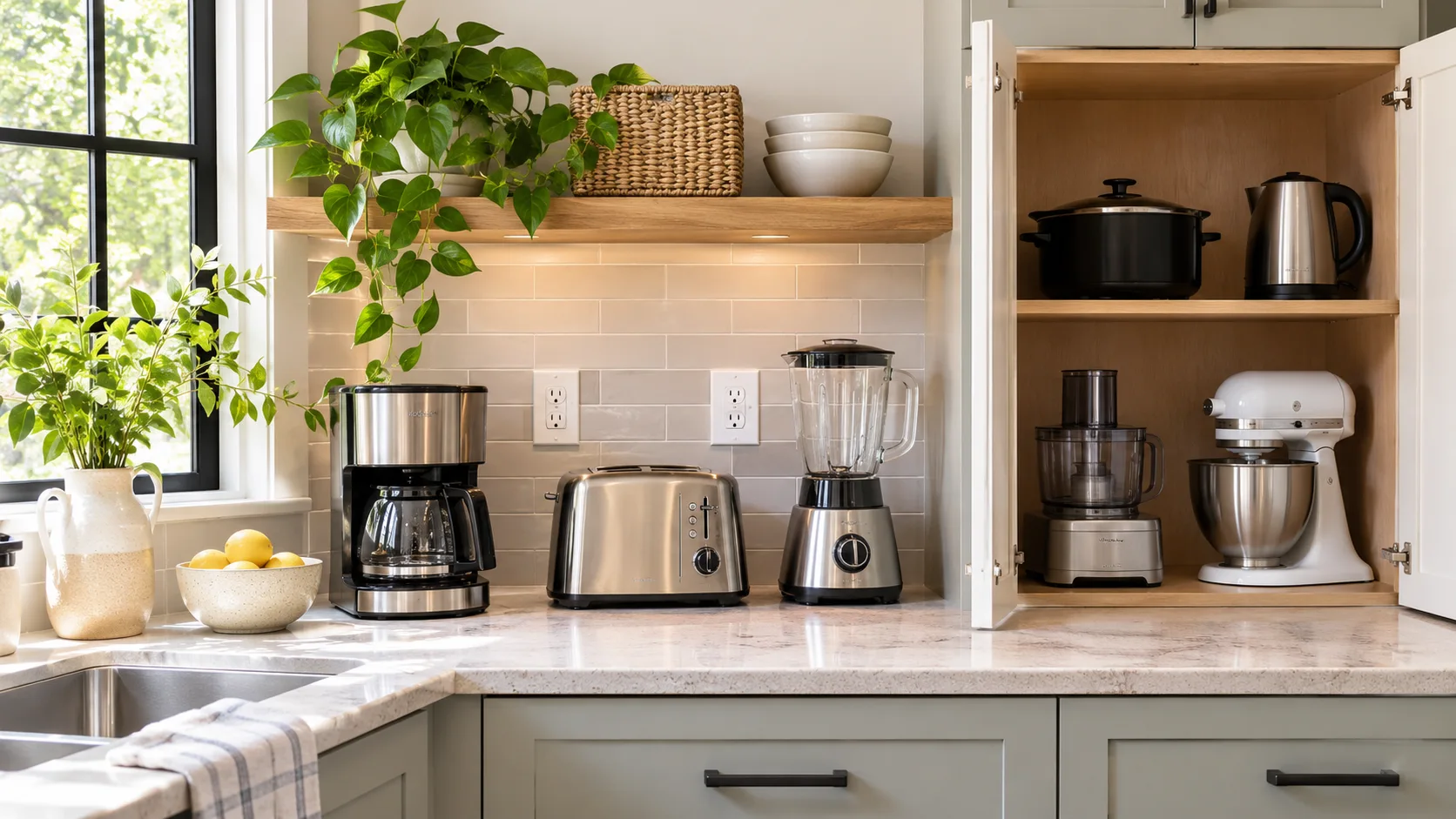
A cupboard can suit equipment that is stored disconnected and brought to a suitable operating position when required. Test the lifting weight, shelf access and landing area. Keep accessories in a separate suitable container rather than loose around the appliance. A decorative closed door should not be treated as permission to operate the product inside the cupboard.
4. Test the garage mechanism and services
For a proposed appliance garage, show the door fully open, any shelf extended and the product in its intended operating state. Ask the designer and supplier to verify suitability using the appliance and furniture instructions. Confirm how sockets and cables remain accessible without pinching or overloading. If fixed electrical changes are required, have a qualified electrician assess and carry them out.
5. Trial the routine before commissioning
Use an existing suitable storage shelf and operating surface for a week where feasible. Record what stays out because lifting or reconnecting is inconvenient. Compare the counter area gained against the effort and extra cabinetry. Commission only the arrangement that works with real use, and keep a written product list with the approved drawing so later appliance changes trigger a fit review.
Budget worksheet: define the scope before the total
| Planning item | What to record |
|---|---|
| Low-change option | Reallocate existing cupboards and suitable accessory containers first. |
| Cap illustration | For a self-chosen ₹18,000 storage-only allowance, ₹12,000 might be held for approved joinery, ₹3,000 for organisers and ₹3,000 left uncommitted. This is not a Nallagandla quote and excludes appliances or unassessed electrical work. |
| Quote checks | Identify mechanisms, load ratings, finishing, installation and the scope of any service work. |
Timeline: decisions and checkpoints
Allow a normal-use trial before selecting a mechanism. Confirm the appliance list, instructions and measured design before ordering joinery. Obtain the provider’s actual material, fabrication and installation dates; a revised appliance model or unresolved power position can change the sequence.
Plan the next step with WallsToWonder
Use Design My Room to explore a visual direction, then verify the actual measurements and product requirements. The interior cost estimator can help organise an initial scope; use a measured provider proposal for your commitment. Review inclusions and exclusions with the quotation checker and discuss unresolved items with the responsible professional.
Frequently asked questions
Can a mixer be used inside an appliance cupboard?
Do not assume so. The operating arrangement must comply with the actual product instructions and furniture design; storage and operation are different uses.
Does an appliance garage always free counter space?
Not necessarily. Door movement, extraction, landing space and the operating setup can use the area you expected to regain.
Should all small appliances be hidden?
Prioritise frequency, suitable operation and comfortable handling. A frequently used product may work better in an appropriate open position.
Related practical guides
Turn this idea into a plan for your home
Visualise your space, understand the likely budget, or find a professional who can bring the idea to life.