
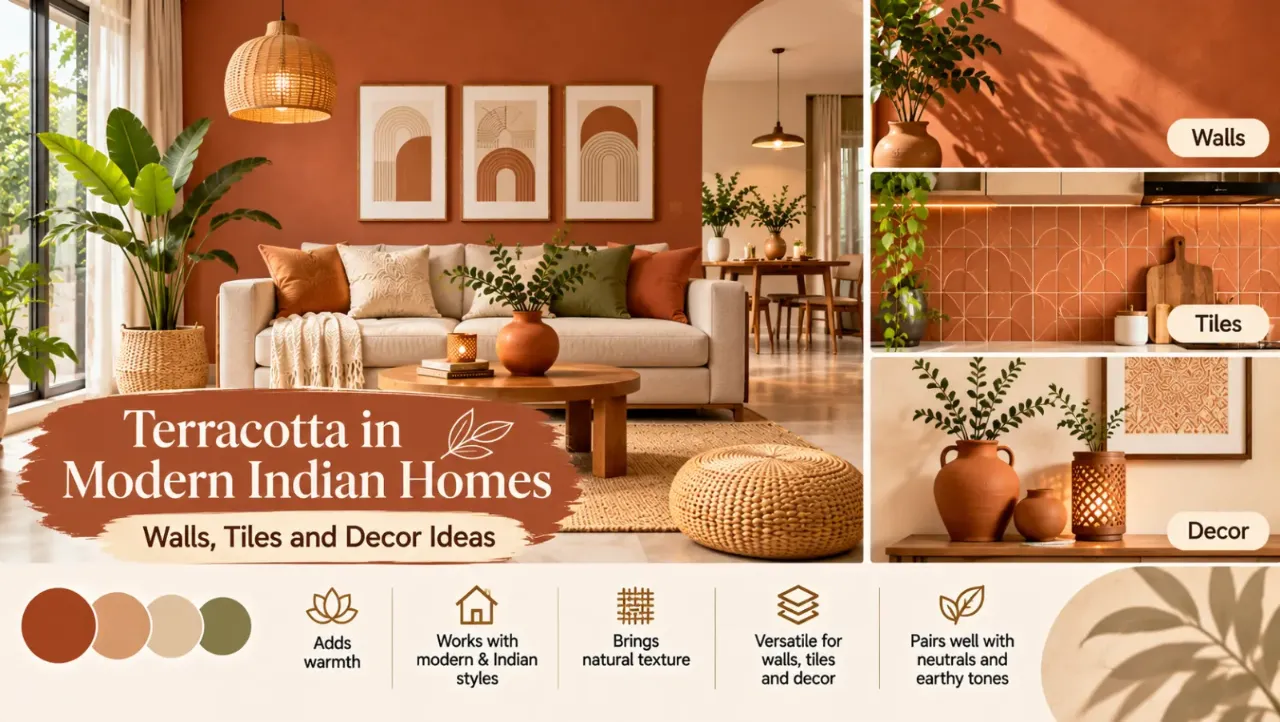
Terracotta in Modern Indian Homes: Walls, Tiles and Decor Ideas
Terracotta has a familiar place in Indian homes. From traditional clay pots and handmade tiles to jaali screens and architectural details, its warm, earthy character has been part of Indian design for generations. Today, this natural material is finding its way into contemporary interiors in more refined ways.
Instead of using terracotta only in rustic or traditional settings, homeowners and designers are combining it with clean-lined furniture, neutral walls, natural wood, stone and modern lighting. The result can feel warm and distinctive without making a home look old-fashioned.
However, terracotta is a strong visual element. Too much of the same reddish-orange shade can make a room feel heavy, while the wrong tile or wall finish can create unnecessary maintenance. The key is to understand where to use it, which form to choose and how to balance it with other materials.
1. Understand the Different Shades of Terracotta
Terracotta is not a single colour. It ranges from soft clay and muted peach to burnt orange, brick red and deep earthy brown. Choosing the right variation is important because each shade creates a different atmosphere.
- Light clay: A soft, subtle option for walls, niches and larger surfaces.
- Muted terracotta: A balanced earthy shade that works well with beige, ivory and natural wood.
- Burnt orange: A stronger accent colour for cushions, artwork, pottery and selected furniture.
- Brick red: A deeper shade that can create a traditional or dramatic feature.
- Rust brown: A subdued variation that pairs well with walnut, charcoal and warm neutrals.
For most contemporary Indian homes, muted terracotta and light clay are easier to use across larger areas. Stronger shades are better introduced through selected accents.
2. Terracotta Wall Design Ideas
Walls are one of the easiest ways to introduce terracotta because the colour can be adjusted through paint, texture, tiles or decorative panels.
Terracotta Accent Wall
A single terracotta wall can become the focal point of a living room, bedroom or dining area. Pair it with ivory, light beige or soft grey on the remaining walls to prevent the room from feeling too dark.
The wall can be finished in matte paint or a subtle textured coating. Keep the furniture relatively simple so that the colour remains the main feature.
Textured Clay-Look Walls
A clay-inspired or mineral-style finish adds depth without relying on a strong colour contrast. Its gentle variations make the surface look more natural than a completely flat painted wall.
This approach works particularly well behind a bed, in a reading corner or around a dining area. Confirm the finish, application method and cleaning requirements before selecting it.
Terracotta Niches and Arches
A terracotta-coloured niche or arched recess can introduce warmth without covering an entire wall.
Use it to highlight:
- A small display shelf.
- A pooja corner.
- A decorative vase or artwork.
- A dining-room console.
- A reading nook.
Keep the surrounding wall in a quieter shade so that the niche stands out.
Terracotta Wall Tiles
Terracotta-look tiles and selected clay-based wall tiles can create a tactile feature. They can be used in a kitchen backsplash, a decorative niche or a carefully selected living-room wall.
Choose the tile based on its intended location, water exposure, cleaning needs and installation requirements. Do not assume that every decorative clay tile is suitable for a wet area.
3. Terracotta Tiles: Where to Use Them
Terracotta tiles bring a natural, handcrafted quality to interiors. However, genuine terracotta and terracotta-look porcelain or vitrified tiles do not behave in exactly the same way.
| Tile Type | Appearance | Best Suited For | Important Consideration |
|---|---|---|---|
| Handmade terracotta | Natural colour variation and earthy texture | Living areas, covered verandahs and selected feature surfaces | Porosity, sealing and periodic maintenance |
| Machine-made terracotta | More consistent shape and colour | Selected floors and wall applications | Check finish, absorption and installation requirements |
| Terracotta-look vitrified tiles | More uniform clay-inspired appearance | Busy living areas and selected kitchens | Choose an appropriate matte or textured finish |
| Terracotta-look porcelain tiles | Consistent colour and pattern | Areas where easier cleaning is important | Check slip resistance and suitability for the application |
| Decorative clay tiles | Handmade patterns and surface variation | Backsplashes, niches and feature walls | Confirm whether the tile is suitable for moisture exposure |
Living Room Flooring
Terracotta flooring can give a living room a grounded, earthy appearance. It works particularly well with neutral upholstery, natural wood furniture and simple décor.
If you choose genuine handmade tiles, check their absorption, sealing requirements and surface finish. If you prefer a more uniform and lower-maintenance option, consider a terracotta-look porcelain or vitrified tile.
Kitchen Backsplash
A terracotta-inspired backsplash can add warmth to a kitchen with cream, ivory, muted green or wooden cabinetry.
For a cooking area, select a surface that can withstand regular cleaning, oil splashes and food stains. A suitable glazed tile or terracotta-look ceramic or porcelain product may be more practical than an untreated porous clay surface.
Bathroom Accent Areas
Terracotta can introduce warmth into a bathroom through selected wall tiles, niches or decorative details.
For wet floors, prioritise appropriate slip resistance, water suitability and easy maintenance. Genuine porous terracotta should not be specified for a wet area without confirming that the product, finish, sealing system and installation are suitable.
Balcony and Covered Sit-Outs
Terracotta tiles can create a natural connection between indoor and outdoor spaces. Their earthy colour works well with planters, wooden seating and woven accessories.
For exposed balconies, confirm that the tile is rated for exterior conditions, water exposure and the expected foot traffic. Also consider drainage, waterproofing and slip resistance.
4. How to Use Terracotta Decor Without Overdoing It
If you do not want to change walls or flooring, décor is the easiest way to bring terracotta into a home.
- Clay and ceramic vases: Use one or two pieces on a console, dining table or open shelf.
- Planters: Terracotta planters add a natural finish to indoor plants and balcony greenery.
- Cushions: Introduce terracotta through one or two cushions against a beige, ivory or grey sofa.
- Rugs and textiles: Choose patterns with small rust or clay accents instead of a completely terracotta-coloured rug.
- Wall art: Use abstract artwork with terracotta, cream, olive and charcoal details.
- Tableware: Handmade clay bowls, trays and ceramic accessories can add texture to dining spaces.
- Pendant lights: Clay-inspired or ceramic lighting shades can introduce the material in a functional way.
Small accessories are especially useful because they can be changed without undertaking a renovation.
5. Colour Combinations That Work with Terracotta
Terracotta becomes easier to use when it is balanced with complementary colours and materials.
| Colour Combination | Overall Effect | Where to Use It |
|---|---|---|
| Terracotta + Ivory + Oak | Soft and welcoming | Living rooms and bedrooms |
| Terracotta + Beige + Walnut | Warm and sophisticated | Dining rooms and lounges |
| Terracotta + Sage Green + Cream | Natural and balanced | Living rooms and bedrooms |
| Terracotta + Charcoal + Light Grey | Contemporary and defined | Feature walls and modern living spaces |
| Terracotta + Navy Blue + Off-white | Rich and contrasting | Accent décor and selected furniture |
| Terracotta + Olive Green + Natural Wood | Earthy and relaxed | Open-plan living and dining areas |
A useful approach is to keep terracotta as the main accent rather than using it on every surface. If the flooring is terracotta, choose lighter walls and restrained accessories. If the wall is terracotta, use neutral flooring and furniture.
6. Room-by-Room Terracotta Interior Ideas
Living Room
Use a muted terracotta accent wall behind the sofa or introduce the colour through cushions, artwork and pottery. Pair it with ivory upholstery, light wood and a neutral rug.
Avoid combining a strong terracotta wall with equally strong orange or red furniture. A little contrast will make the space feel more balanced.
Bedroom
A soft clay or muted terracotta shade can create a warm backdrop behind the bed. Combine it with neutral bedding, simple bedside tables and gentle lighting.
If you prefer not to paint a wall, use terracotta in cushions, a throw or artwork.
Kitchen
Introduce terracotta through a backsplash, selected wall tiles or decorative accessories. It pairs particularly well with muted green cabinetry, natural wood and light stone surfaces.
Keep countertops easy to clean and avoid using untreated porous clay surfaces in areas exposed to frequent cooking splashes.
Dining Area
A terracotta niche or painted wall behind the dining table can create a distinct focal point. Complement it with a wooden dining table, neutral chairs and simple pendant lighting.
A few handmade ceramic pieces can reinforce the theme without overcrowding the table.
Balcony and Sit-Out
Terracotta planters, suitable outdoor tiles and natural-fibre accessories can make a balcony feel connected to nature.
Choose weather-appropriate furniture and finishes, and ensure that planters do not obstruct drainage or cause water seepage.
7. How to Balance Terracotta with Other Materials
Terracotta has a strong earthy character, so the materials around it matter.
- Wood: Oak, teak and walnut bring warmth and create a natural combination.
- Stone: Light beige, cream and subtle grey stone finishes provide contrast.
- Metal: Matte black, brushed brass and bronze details can add definition.
- Fabric: Linen, cotton, jute and woven textures soften the overall look.
- Greenery: Plants introduce a fresh contrast against clay-inspired surfaces.
Try not to combine too many competing textures in one small area. Choose two or three supporting materials and repeat them selectively for a more cohesive interior.
8. Common Mistakes to Avoid
Terracotta can look elegant when used thoughtfully, but some design decisions can make it overwhelming or difficult to maintain.
- Using terracotta on every surface: Too much of the same colour can make the room feel heavy. Balance it with lighter neutrals.
- Mixing too many red and orange shades: Choose one main terracotta tone and use supporting colours carefully.
- Ignoring tile porosity: Genuine terracotta can absorb water and stains. Check sealing and maintenance requirements.
- Using unsuitable tiles in wet areas: Verify slip resistance and suitability for bathrooms, balconies and kitchens.
- Choosing décor without a colour plan: Too many unrelated earthy shades can make the room look inconsistent.
- Ignoring lighting: Test paint and material samples in both daylight and evening lighting before finalising them.
9. Terracotta Design Checklist
Before adding terracotta to your home, use this checklist:
- Decide whether terracotta will be used on walls, floors, tiles or décor.
- Select a shade that works with the existing furniture and flooring.
- Test paint and finish samples in different lighting conditions.
- Check tile suitability for the intended room.
- Confirm sealing and maintenance requirements for natural clay products.
- Pair terracotta with complementary materials such as wood, stone and natural fabrics.
- Keep stronger colours limited to selected surfaces or accents.
- Consider ventilation, drainage and water exposure where relevant.
- Review the full room palette before purchasing materials.
Conclusion
Terracotta is a versatile way to bring warmth, texture and a connection to natural materials into modern Indian homes. It can work as a feature wall, a flooring material, a kitchen backsplash, a decorative niche or simply a collection of handcrafted accessories.
The most successful designs use it with intention. Choose the right shade, understand the difference between genuine clay and terracotta-look products, and balance the colour with neutral surfaces and complementary materials.
You do not need to redesign an entire room to make terracotta work. Even a carefully chosen wall, tile detail or decorative piece can give a contemporary home a more grounded and distinctive character.
Frequently Asked Questions
1. Is terracotta suitable for modern Indian homes?
Yes. Terracotta can complement contemporary interiors through accent walls, suitable tiles, decorative niches, planters and accessories. It works especially well with neutral colours, natural wood and stone.
2. Which colours go well with terracotta?
Ivory, beige, cream, sage green, olive, charcoal, navy blue and natural wood tones can complement terracotta. The best combination depends on the shade and the amount of terracotta used.
3. Can terracotta tiles be used in kitchens?
They can be used when the specific tile is suitable for the location. Genuine porous terracotta needs appropriate sealing and maintenance. For busy cooking areas, suitable glazed or terracotta-look porcelain and vitrified tiles may be easier to maintain.
4. Is genuine terracotta flooring difficult to maintain?
It can require more care than many manufactured tiles because it is porous and may absorb water, oil and stains. Correct installation, suitable sealing and regular maintenance are important.
5. How can I use terracotta in a small living room?
Use a limited amount through a muted accent wall, cushions, artwork, a small niche or pottery. Pair it with lighter walls, simple furniture and uncluttered styling.
6. Can terracotta be used with modern furniture?
Yes. Terracotta works well with clean-lined sofas, wooden furniture, contemporary lighting and simple metal details. The contrast between an earthy material and modern forms can create a balanced interior.
7. What is the difference between terracotta tiles and terracotta-look tiles?
Genuine terracotta tiles are made from fired clay and often have natural variations in colour and texture. Terracotta-look tiles are manufactured products designed to resemble the appearance of clay, often with more consistent patterns and different maintenance requirements.
8. Can I use terracotta in a bathroom?
Yes, through suitable wall tiles, niches and decorative details. For floors and regularly wet surfaces, check the product's water suitability, slip resistance, sealing requirements and maintenance instructions before installation.
Explore More with Walls to Wonder
Planning to introduce terracotta into your home? Explore the Walls to Wonder AI tools to visualise your rooms, explore styles and plan your interior design decisions.
- Whole Home Visualizer – Explore design ideas for your entire home.
- Design My Room – Experiment with room colours, layouts and styling.
- Interior Design Cost Estimate – Get an initial estimate for your interior plans.
- Interior Quotation Checker – Review interior design quotations.
- Rate My Room Design – Get feedback on your room design.
- Interior Style Finder – Discover styles that match your preferences.
Discover more at Walls to Wonder.
Turn this idea into a plan for your home
Visualise your space, understand the likely budget, or find a professional who can bring the idea to life.