
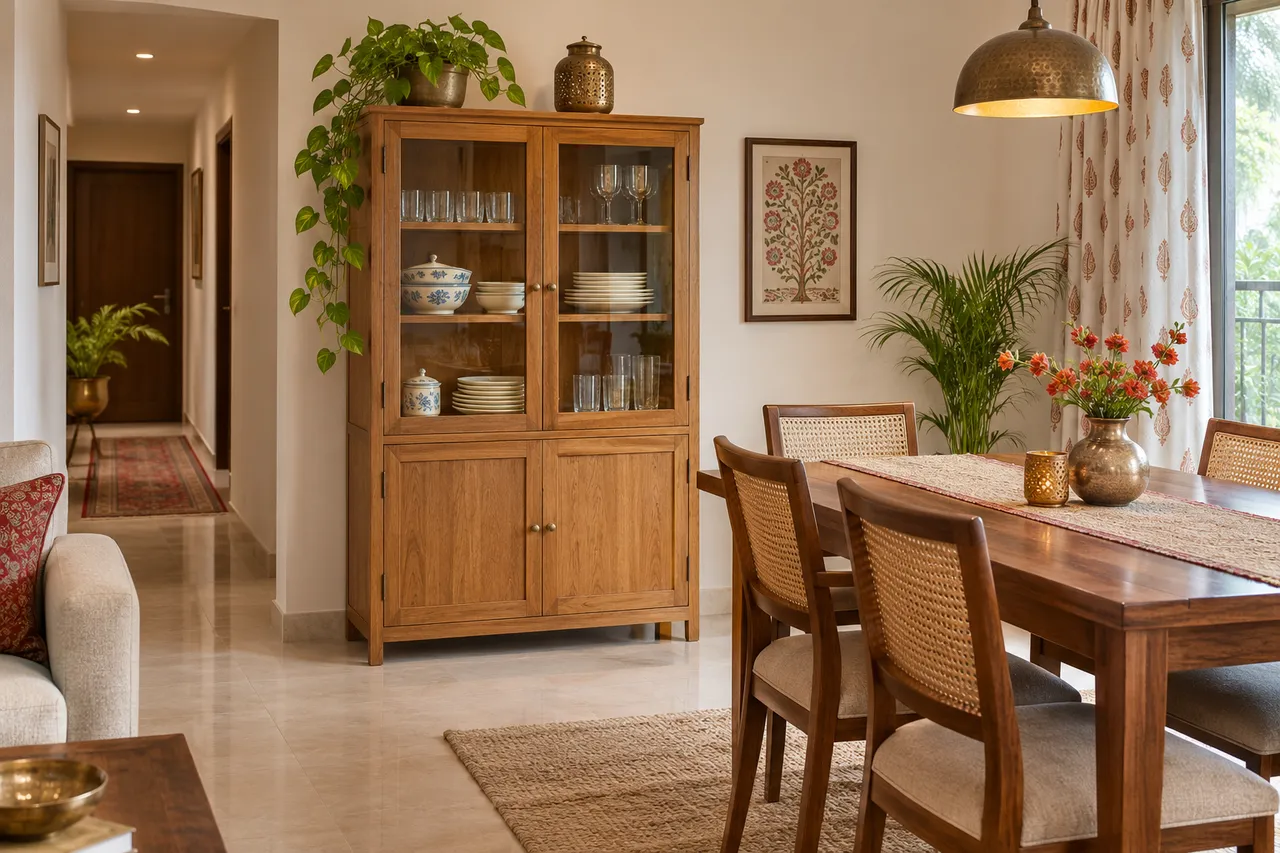
Glass-Front Crockery Cabinet Ideas: Display, Storage and Door Clearance
A glass-front crockery cabinet should make everyday pieces easy to retrieve while keeping the dining area comfortable to use. Plan around the largest plates, shelf limits, cabinet-door swing and nearby chairs. Choose clear glass for a deliberate display or reeded glass for a softer view, then follow the selected furniture’s fixing instructions.
What you need
Tape measure; cardboard for a cabinet footprint; an inventory of plates and glasses; manufacturer dimensions and assembly instructions; and a simple shelf-layout sketch.
Inventory the crockery before choosing a cabinet
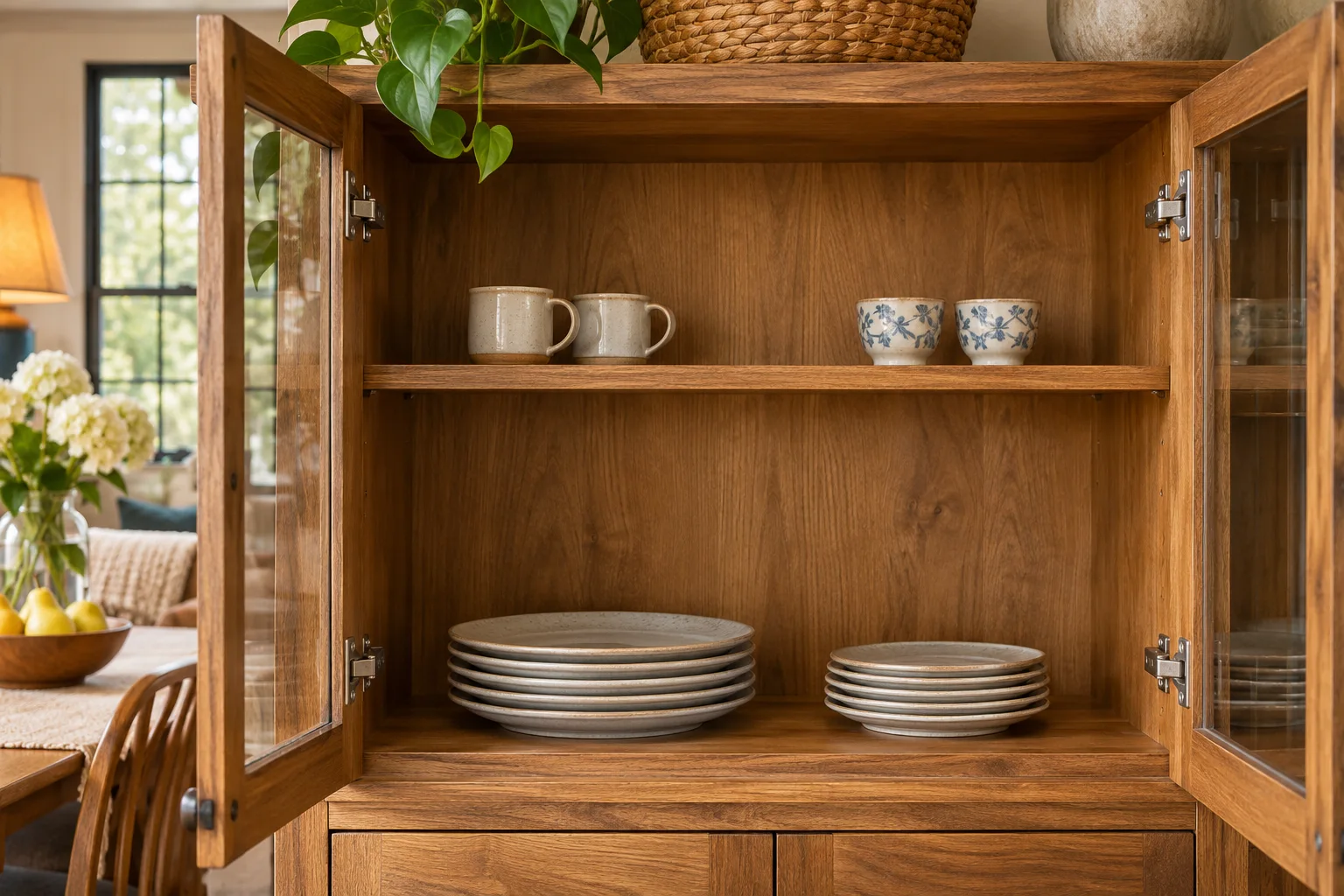
Count the pieces you use regularly and separate them from occasional serving ware. Measure the largest plate diameter, the height of glasses and the size of bulky bowls. A cabinet photograph may show only a few cups, so compare internal shelf dimensions with your actual collection. Decide which pieces should be visible and which belong behind solid doors. If you keep too much display stock, even a large cabinet can feel cramped. Edit unused duplicates before increasing the size of furniture in an already busy dining room.
Test the floor footprint with chairs in use
Mark the cabinet footprint on the floor, including handles where they project. Pull out the nearest dining chair as someone would for a meal. Then simulate opening the cabinet doors and carrying a plate to the table. These movements need to work together, not only when every chair is tucked away. Check access to windows, switches and adjacent doors as well. If the route feels tight, compare a shallower cabinet or a different wall before reducing the usable space around the dining table.
Choose clear or textured glass deliberately
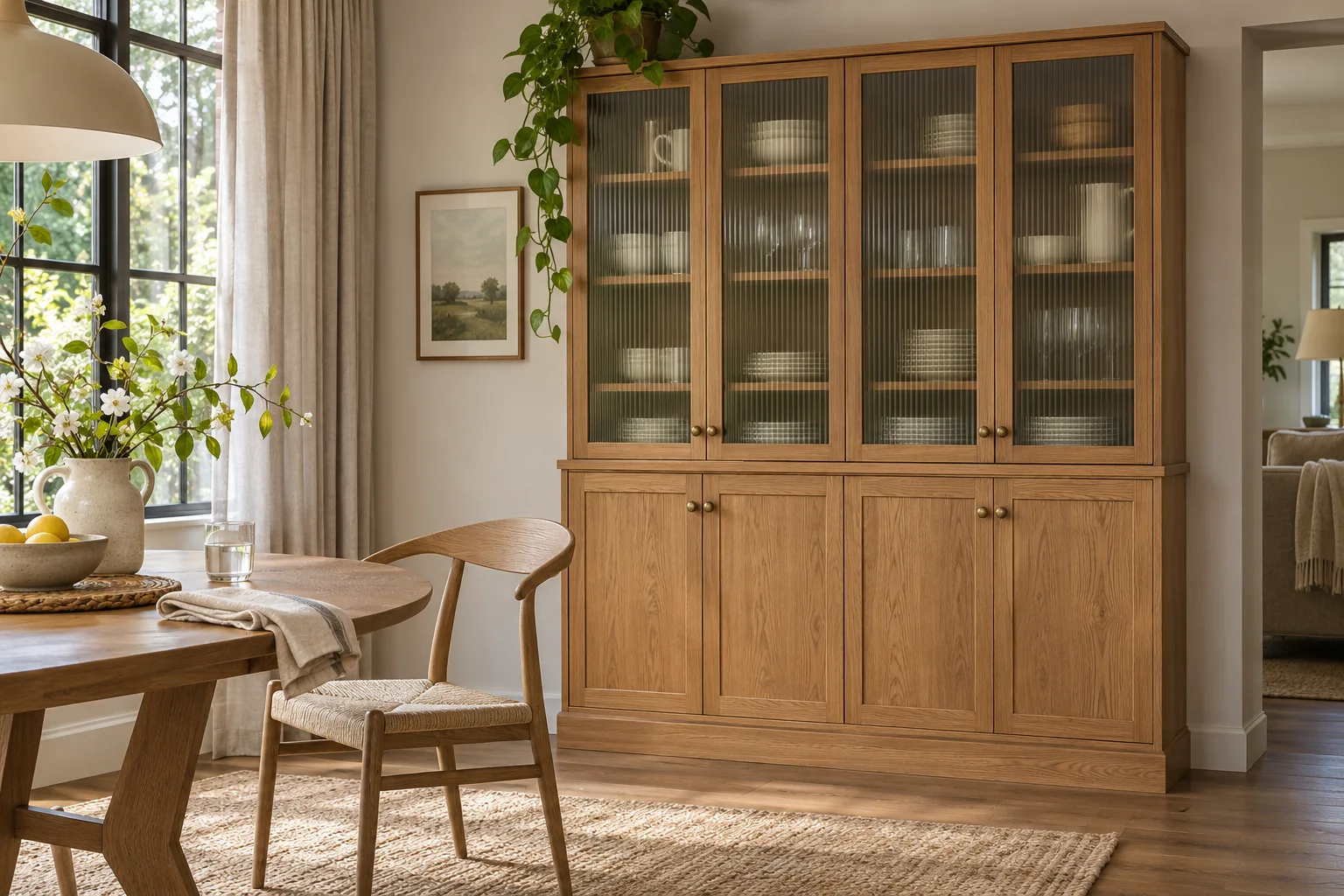
Clear glass makes the contents part of the room’s composition. It works well when you are happy to keep a fairly consistent arrangement. Reeded or other textured glass softens the view but does not remove the need for organisation. See an actual sample where possible: texture, reflection and visibility vary between products. Keep safety and product specifications separate from styling claims. Do not assume that textured glass has a particular impact resistance, thickness or maintenance requirement unless the manufacturer explicitly states it for that product.
Arrange shelves for independent retrieval
Put frequently used plates and bowls where their users can retrieve them comfortably. Keep stacks manageable and within the shelf’s stated capacity; there is no universal safe plate count for every cabinet. Leave enough space above a stack to grasp a piece without scraping the shelf above. Tall glasses need clearance for removal, not merely enough room to stand still. Try a shelf plan with the real crockery before committing to fixed shelf positions. Adjustable shelving is useful when the collection changes, if the selected unit offers it.
Use the lower cupboard for less decorative pieces
A cabinet with solid lower doors can hold items that do not need to become part of the display. Group serving accessories in a suitable removable container so the back of the cupboard remains reachable. Respect the furniture’s load limits and place objects according to its instructions. Avoid forcing oversized platters diagonally into a space that is hard to access. If a large piece cannot be removed without moving the table, it may need a different storage position even though it technically fits inside the cabinet.
Check anchoring and assembly before purchase
Read the selected product’s assembly instructions, including wall-fixing requirements, before placing the order. For example, IKEA’s HAVSTA buying guide specifies wall attachment for its storage furniture; this is a product requirement, not an optional styling detail. The wall construction and suitable fasteners need to be checked for the actual installation. Ask who will assemble and fix the cabinet, whether fittings are included and what wall preparation is needed. Keep the instructions after installation so future shelf changes or a house move can be planned correctly.
Keep lighting optional and serviceable
A well-positioned cabinet can look attractive in room light alone. If you want integrated lighting, choose a system intended for that furniture and arrange the supply and installation appropriately. Check access to switches and replaceable components. Do not hide improvised wiring behind crockery or route a cable through a door that pinches it. View a sample after dark if possible: strong reflections in clear glass can make the contents harder to see. Choose lighting because it improves use or appearance in your room, rather than because every display image includes it.
Leave breathing room in the display
Group a few pieces by use or material and leave some shelf surface visible. This makes it easier to spot a missing cup and return a plate to its place. Avoid balancing delicate pieces against the glass. Follow the product’s cleaning instructions for both the glazing and the finish, and keep hinges and handles accessible. Review the layout after a dinner gathering: if serving required unloading half the cabinet, simplify the display. A successful crockery cabinet supports meals and gatherings as well as looking composed between them.
Compare the practical options
| Option | Useful when | Check first |
|---|---|---|
| Clear glass | A deliberately arranged visible collection | Reflections and daily organisation remain visible |
| Reeded glass | A softened view of everyday crockery | Check the actual glass sample |
| Glass upper with solid lower doors | Mixed display and practical storage | Check both compartments’ usable dimensions |
Plan the budget before buying
For an illustrative ₹40,000 furniture envelope, set aside ₹30,000 for the selected cabinet, ₹3,000 for delivery and assembly, ₹2,000 for suitable fixing or minor preparation and ₹5,000 as a reserve. These are budget allocations, not supplier prices. Confirm glass specification, shelf limits, installation and any lighting costs in the quotation before committing.
A realistic planning sequence
Allow an evening to inventory crockery and another session to test the footprint with chairs. Delivery, assembly and fixing depend on stock and the wall assessment. Custom units require approved drawings and a supplier-confirmed programme. Do not assume a decorative cabinet can be installed without assembly or anchoring work.
Plan the next step with WallsToWonder
Use Design My Room to explore the look alongside your existing room. Take your actual measurements and storage inventory into the brief before ordering furniture. For a wider project, the interior cost planning tool can help structure an initial budget; compare it with itemised supplier quotations.
For related layout decisions, read Crockery Unit with Coffee Counter Ideas for Indian Dining Rooms and Dining Table Sizes: Find the Right Fit for Your Home. Apply the relevant checks to your own measurements and existing furniture.
Frequently asked questions
Is reeded glass better than clear glass?
It depends on the view you want. Reeded glass softens visibility; clear glass shows the collection more directly. Compare samples and product specifications.
How much space should be in front of the cabinet?
Test the actual door swing, chair movement and route while carrying crockery. A single clearance number does not suit every layout.
Does a crockery cabinet need fixing to the wall?
Follow the selected furniture’s instructions. Some products, including HAVSTA storage furniture, require wall attachment.
Where should heavy plates go?
Follow shelf-load guidance and choose a suitable accessible position. Keep stacks manageable rather than relying on a universal plate count.
Product reference: IKEA HAVSTA buying guide and wall-fixing guidance. Check the current instructions for the exact product you buy.
Turn this idea into a plan for your home
Visualise your space, understand the likely budget, or find a professional who can bring the idea to life.