
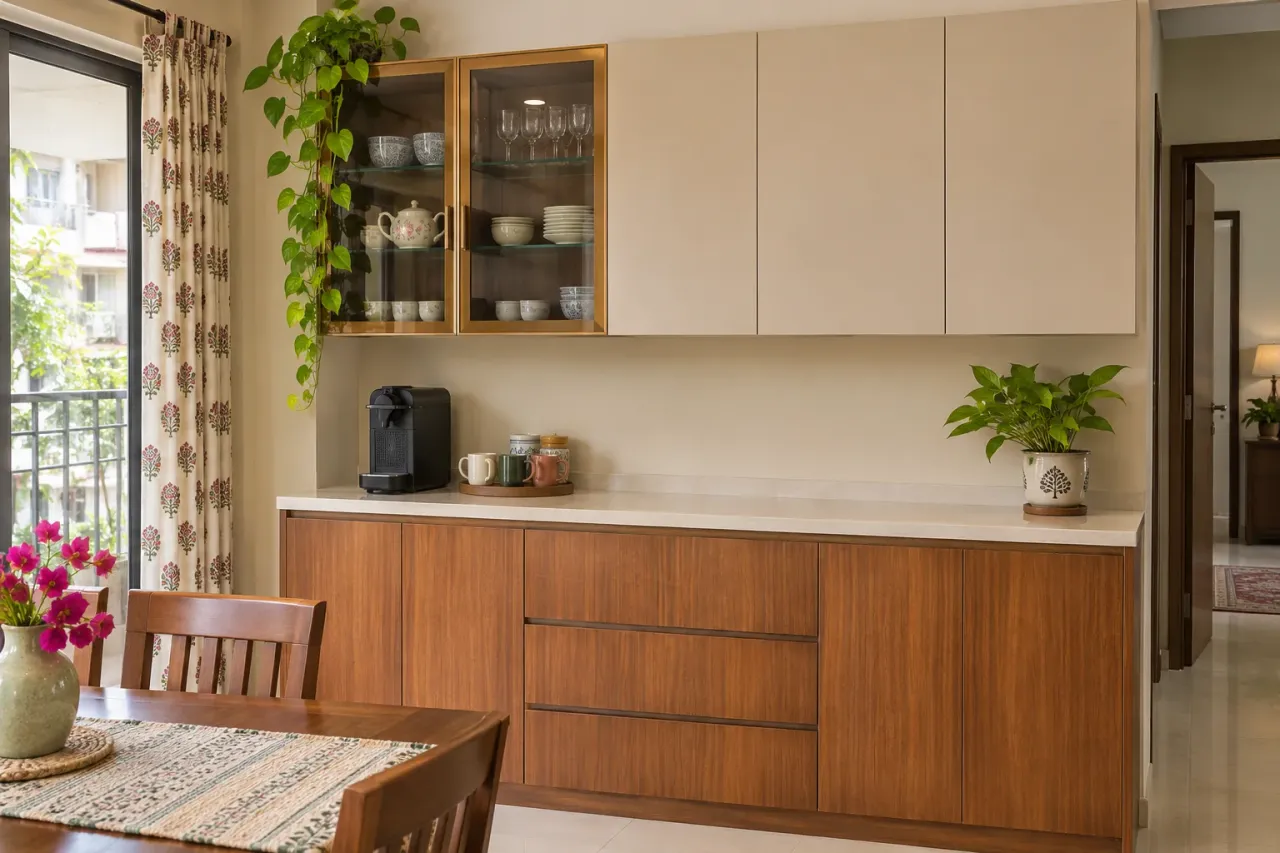
Crockery Unit with Coffee Counter Ideas for Indian Dining Rooms
Crockery unit with coffee counter: the practical answer
A crockery unit with a coffee counter combines closed dish storage with an accessible work surface for serving drinks. Separate display pieces from daily cups, provide a usable landing area and plan outlets for the actual appliances. Heat- and steam-producing equipment must follow its manufacturer’s operating clearances.
Best suited to: Dining rooms with a spare cabinet wall near the kitchen. It is less useful when the new unit narrows dining-chair movement or the main route through the apartment.
Divide the unit into storage, preparation and display
Place daily mugs and spoons within easy reach of the counter. Store occasional serving dishes in closed cupboards rather than filling the work surface. Keep one display area for items you want to see; glass fronts across the whole unit can make ordinary storage visually busy.
Decide which items will be used during breakfast and which only when guests arrive. The layout should support the everyday routine first. A shallow upper cabinet may be sufficient for cups, while larger platters need a different shelf depth and suitable supports.
Give appliances an actual operating location
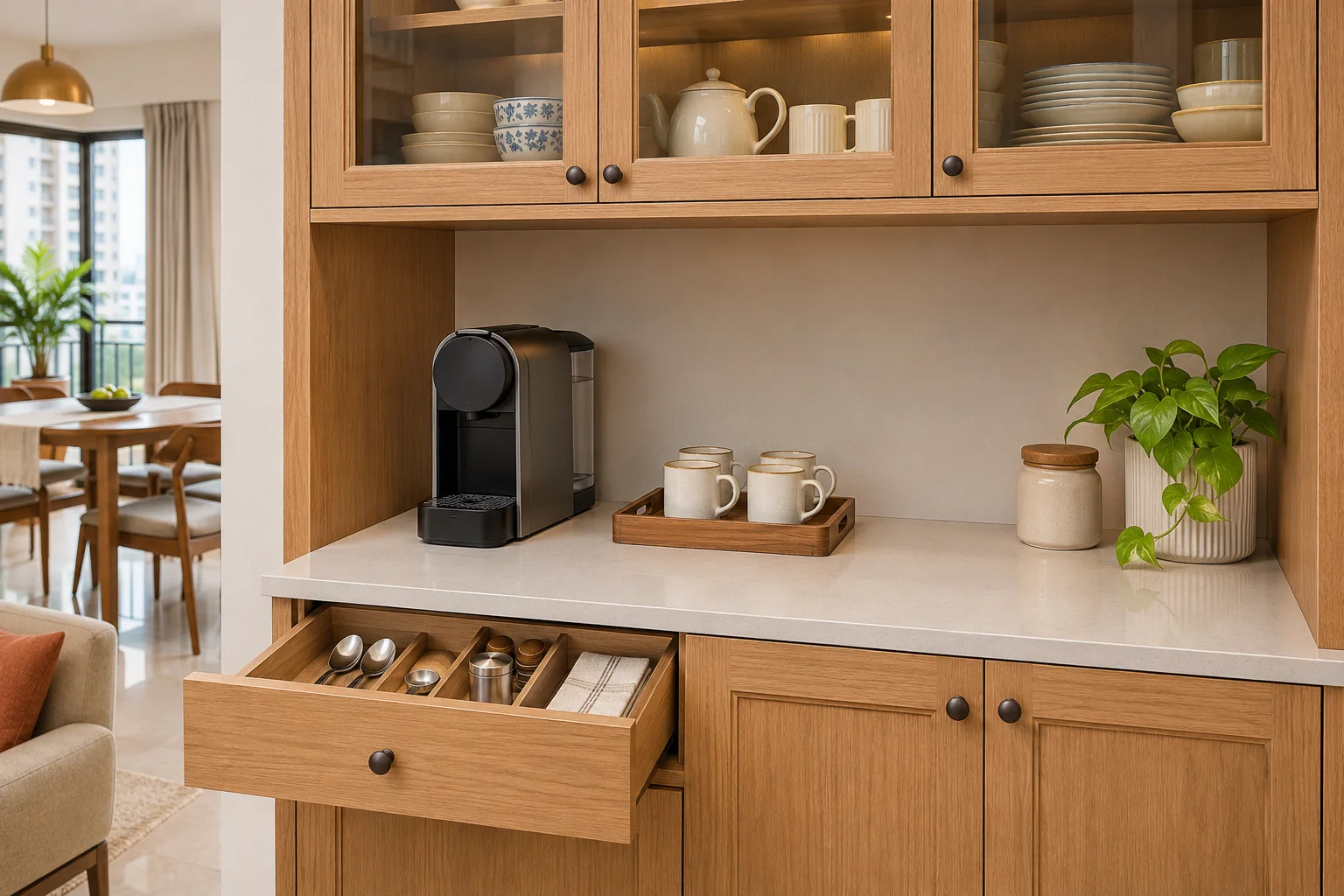
Measure the appliance, plugs, water-tank access and clearance requirements. Do not place a coffee machine under a low shelf simply because it fits when switched off. Follow the manufacturer’s instructions and move equipment to an appropriate open counter when required.
A qualified electrician should assess outlet location and loads. Keep cords clear of door movement and the serving area. Avoid concealed extension leads and arrangements that depend on stretching a cable across the dining room.
Choose the counter for drips and regular wiping
Coffee preparation creates water spots, grounds and cup rings. Ask the surface supplier about cleaning and stain care for the specific material. Use a removable drip tray if it suits the appliance, while keeping enough free surface to put down a tray of cups.
Keep joints and cabinet edges out of the most exposed spill area where feasible. Warm wood fronts can work with a plain light counter, but distinguish the decorative face from the surface that will receive hot cups or frequent wiping.
Check the unit with dining chairs pulled out
Tape the cabinet depth and handle projection onto the floor. Position the table and chairs as they are used at mealtime. A coffee station should not force someone carrying hot drinks into a narrow squeeze behind a seated person.
For scale, compare dining-table dimensions. If most equipment belongs in the kitchen instead, the kitchen storage guide can help distribute items more effectively.
Which option suits your space?
| Option | Useful for | Check before choosing |
|---|---|---|
| Closed lower cupboards | Plates and occasional serving dishes | Shelf loading and access |
| Open coffee counter | Daily preparation and serving | Appliance instructions and spill care |
| Limited upper display | Selected glassware or ceramics | Dusting and visibility of stored items |
Before you approve the design
- Inventory daily cups, occasional dishes and appliances.
- Measure usable counter area and appliance access.
- Confirm outlets with a qualified electrician.
- Test dining-chair movement in front of the proposed unit.
Frequently asked questions
Can I keep a coffee machine inside a crockery cupboard?
Storage and operation are different. Follow the appliance instructions, including ventilation, steam and access requirements. Do not run equipment behind closed shutters.
Should a crockery unit have a sink?
Only if plumbing, drainage, space and usage justify it. A dry serving counter may be simpler; adding a sink requires a complete services plan.
Is glass-front storage necessary?
No. Closed cupboards can keep everyday items visually calm. Use display glazing only where you want the contents to remain visible and are comfortable maintaining it.
Turn this idea into a plan for your home
Visualise your space, understand the likely budget, or find a professional who can bring the idea to life.