
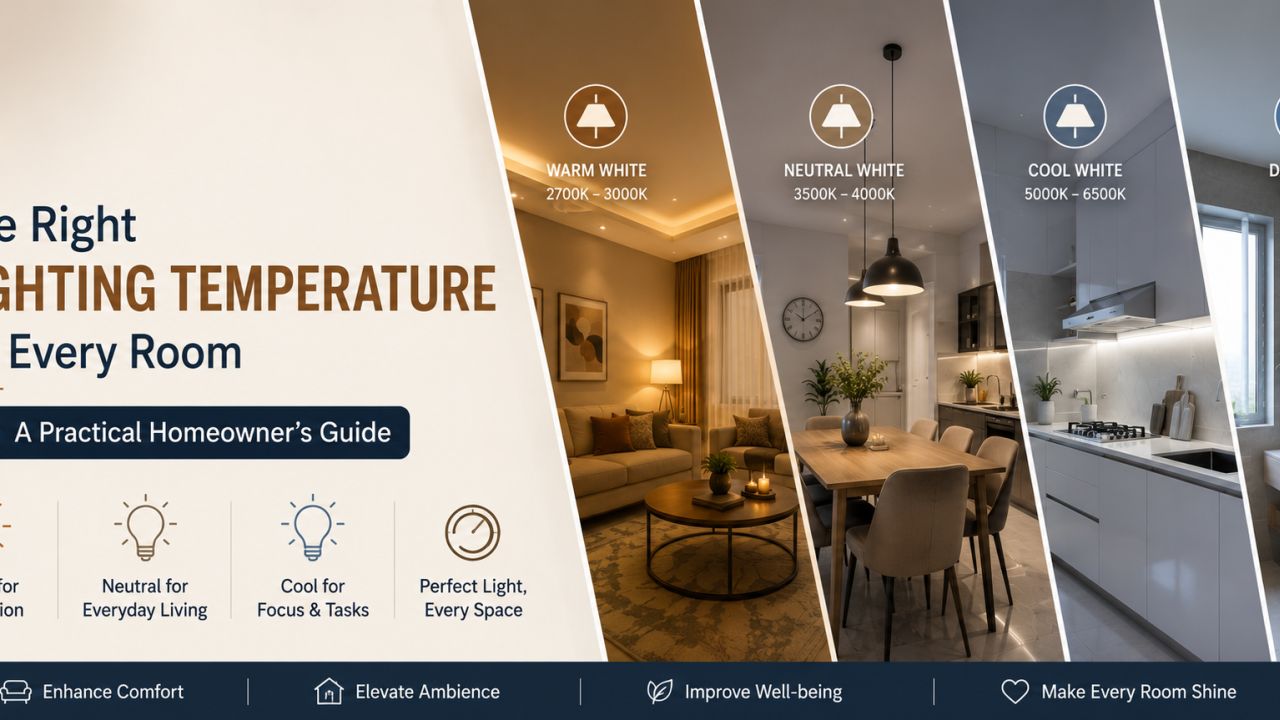
The Right Lighting Temperature for Every Room: A Practical Homeowner’s Guide
It is 7:30 in the morning. The kitchen is bright enough to prepare breakfast, but the same light makes the living room feel flat at night. In the bedroom, a ceiling fixture that looked fine in the showroom now feels harsh when someone switches it on after bedtime. The problem may not be the number of lights. It may be the colour of the light itself.
Lighting temperature for every room is best planned as part of the room’s use, finishes and natural light—not as an afterthought once the false ceiling is closed. A few degrees on a specification sheet can change how white paint, woodgrain, tiles and fabrics appear. This guide explains the practical difference between warm, neutral and cool light, then applies it to common Indian home interiors, from modular kitchens and compact bedrooms to renovations and complete design projects.
If you are still collecting visual references, browse the WallsToWonder design ideas section and note which spaces feel comfortable to you. The goal is not to follow a universal rule; it is to build a lighting plan that works at breakfast, during work, while getting ready and when the home is winding down.
First, understand the three useful temperature ranges
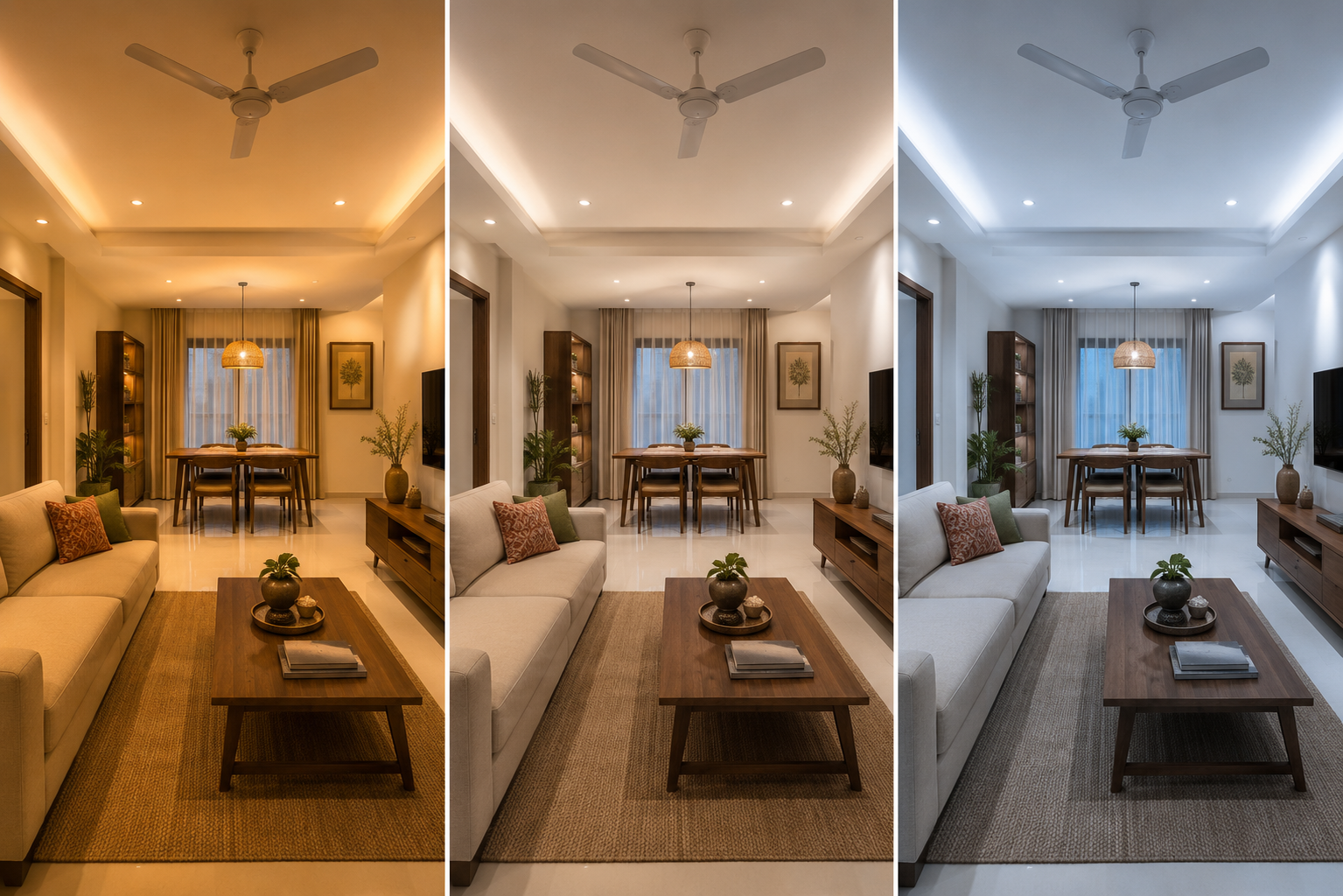
Colour temperature is measured in Kelvin (K). The scale behaves in the opposite way many people expect: a lower Kelvin number looks warmer and more amber, while a higher number appears whiter or bluer. Product ranges overlap, so always check the actual lamp specification and view a sample where possible.
- Warm light is close to the familiar yellowish glow of many residential lamps. It supports relaxation and makes timber, beige, terracotta and warm fabrics feel inviting.
- Neutral light sits between amber and blue. It usually gives a clearer view of surfaces without making a room feel clinical, which is why it is useful for many task areas.
- Cool light looks crisp and energetic. It can help with visual clarity in specific work zones, but too much of it may make a home feel stark or uncomfortable at night.
Temperature is only one part of the decision. Brightness, beam angle, glare, colour rendering, dimming capability and the position of the fixture also matter. A warm downlight pointed directly into a mirror can still be unpleasant; a well-shielded fitting at a suitable height can be comfortable even when it is brighter.
Kitchen: clear work surfaces without a showroom glare
Best starting point: neutral light, with warmer layers where the kitchen opens to dining
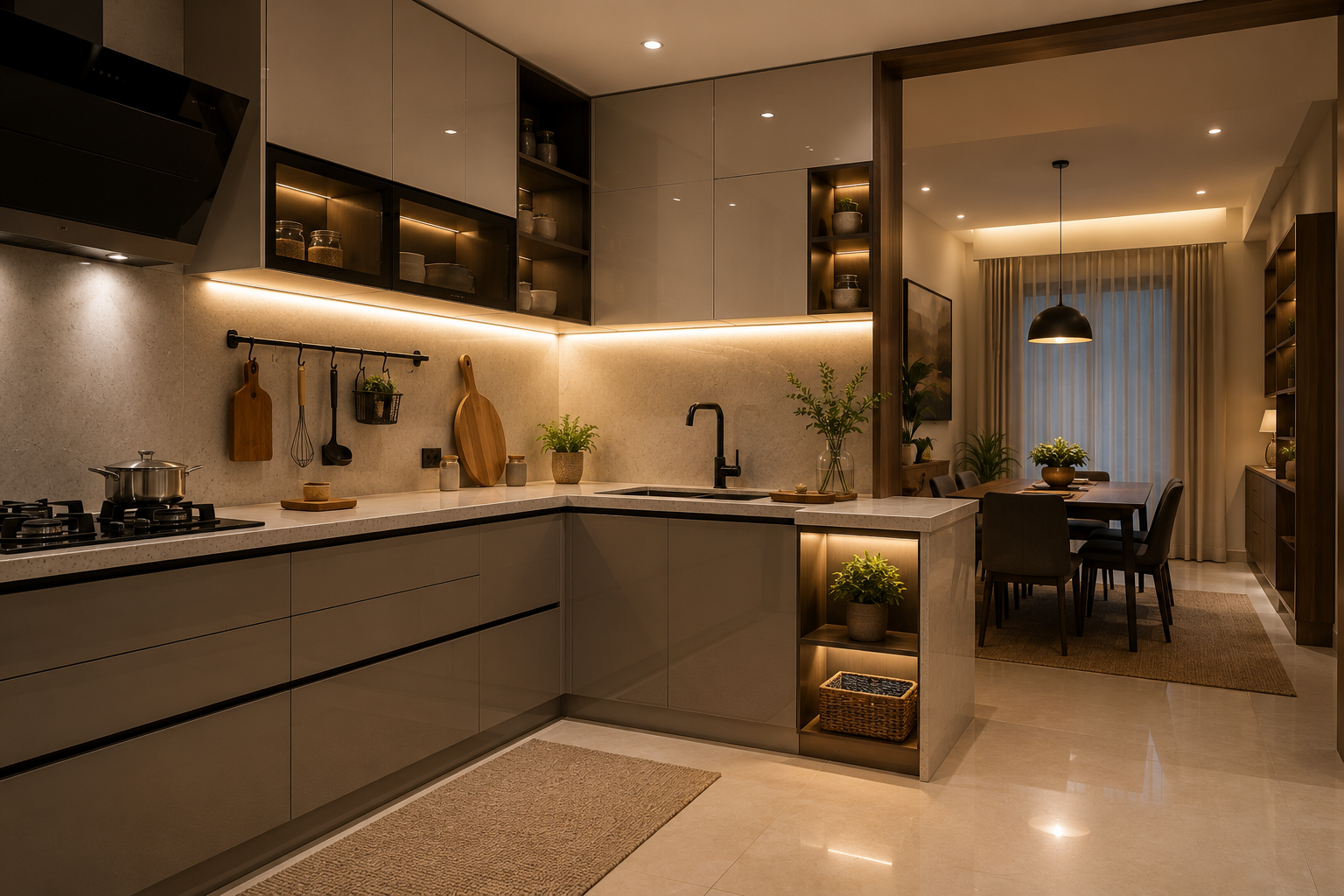
Cooking involves chopping, checking ingredients, cleaning and reading appliance controls. Neutral light around the worktop generally keeps colours and surface details clear. Under-cabinet strips are especially important because an attractive ceiling light can leave the counter in shadow when a person stands in front of it.
For a kitchen that flows directly into a dining or living area, a warmer pendant or decorative layer can soften the transition after cooking is finished. It need not match every source exactly, but visibly different whites can look accidental, so compare samples before finalising the order.
- Place task lighting toward the front of the counter or under the wall cabinets, rather than only at the back.
- Check whether glossy shutters, granite, quartz or glass backsplashes reflect the light into the eyes.
- Keep the hob, sink and preparation areas covered; each may need a different beam position even if the temperature is similar.
In a compact flat, one central cool-white tube may appear bright while still leaving the important work surface poorly lit. A designer should show the proposed lighting points on the kitchen elevation or electrical plan, not just write “LED lights” in a quotation.
Bedrooms: create a restful base and useful reading light
Best starting point: warm light for ambient lighting; separate task lights for reading and dressing
A bedroom has several modes. It may be a place to sleep, dress, read, work occasionally or accommodate a child’s changing routine. Warm ambient light tends to feel calmer in the evening, especially when paired with fabric headboards, wooden finishes and muted wall colours.
Do not rely on a bright central fixture above the bed. Bedside wall lights or pendants can provide focused reading light without flooding the entire room. In the dressing area, a neutral source near the mirror can make clothing and skin tones easier to judge. The fixture should illuminate the face from a useful direction rather than create a strong shadow from above.
For a child’s room, the right choice depends on age and use. A general warm layer can make bedtime gentler, while a separate, well-positioned study light can support homework. Add controls that the child can reach safely, and discuss glare and exposed bulbs with the designer.
Living room and dining area: layer light around how the home is used
Best starting point: warm to neutral, depending on daylight, finishes and activities
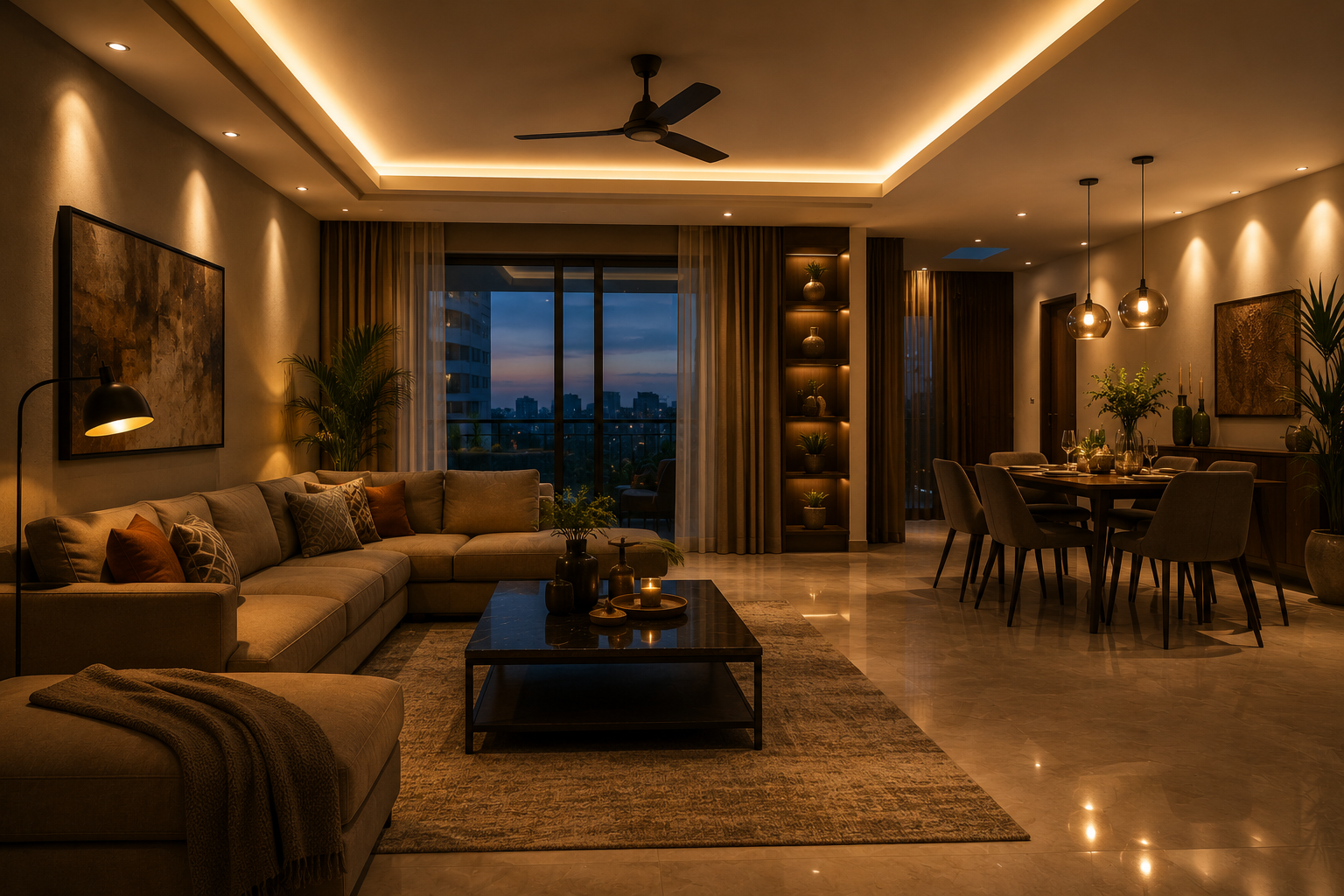
The living room may host television viewing, conversations, children’s play, prayer, reading and guests. A single strong downlight can create pools of brightness and shadows on faces. A more flexible arrangement combines general illumination with wall washing, floor or table lamps, and focused light for a reading chair or artwork.
Warm light often suits evening seating areas. If the room receives little daylight or contains grey, blue and cool-toned finishes, a slightly more neutral choice may preserve clarity without becoming icy. Test the combination at night: a warm cove, neutral downlights and a very cool decorative pendant may compete rather than layer.
Dining light should serve the table. A pendant with controlled glare can make meals feel intimate, while adjustable height and a dimmer improve flexibility. The size and position of the table may change, particularly in homes where a dining table doubles as a work or study surface, so the electrical plan should allow for that reality.
Bathrooms, dressing zones and storage: clarity is the priority
Bathrooms and dressing areas need honest, even light. A warm-only source can make it difficult to distinguish colours while shaving, applying makeup or selecting clothes. Neutral light is often a practical starting point near mirrors and storage, provided the fitting is suitable for the location and installed according to the project’s electrical and safety requirements.
For wardrobes, light placed at the front or inside the cabinet can prevent dark corners. Confirm how doors, drawers and shelves open before fixing the points. In a narrow passage of storage, a series of appropriately spaced sources may perform better than one high-output fixture at the centre.
Use diffusers or concealed sources where possible. Bare, high-intensity points aimed at a mirror create glare and make a small bathroom feel harder to use. The designer’s drawing should identify mirror lighting, ceiling lighting and any niche or shelf lighting separately.
Home office, study and pooja areas need different kinds of focus
Study or home office
Choose a clear, comfortable light for the desk and avoid placing the brightest source directly behind the monitor or in the user’s line of sight. Daylight varies, so a controllable desk lamp or dimmable task fitting can be more useful than simply choosing a cooler lamp. The desk orientation, screen position and window glare should be discussed during planning.
Pooja area
A pooja unit often benefits from a warmer, softer layer that highlights the niche without making the surrounding room look overlit. Concealed strips, small adjustable fittings or a gentle wall wash can be considered, subject to heat, access and maintenance requirements. Do not place a source where it creates an uncomfortable reflection on glass or polished surfaces.
Storage, renovation and complete interiors: plan before the ceiling closes
Lighting decisions become difficult when carpentry, electrical work and ceiling work are handled independently. In a renovation, existing wiring may limit the locations of new points, while a complete interior project offers more flexibility but also creates more decisions. Older apartments, rented homes, builder-finished flats, independent houses and compact studio layouts each call for a different level of intervention.
Start with a room-by-room lighting schedule. Mark the activity, fitting type, approximate position, switching group, temperature, dimming requirement and finish. For wardrobes and lofts, include access for replacing drivers or LED components. For a rental, prioritise reversible lamps, plug-in task lighting and fittings that do not require extensive civil work.
During a renovation, ask whether the proposal includes chasing, patching, false-ceiling changes, painting touch-ups and disposal. A fitting may be inexpensive while the associated installation work is not. These details belong in the scope before you compare totals.
Use WallsToWonder tools before comparing an interior quotation
A lighting discussion is stronger when you know what the entire project may involve. WallsToWonder’s tools can help you organise questions before speaking with designers and companies serving your area. They do not replace a site assessment or an electrical design, but they can make the early conversation more structured.

Start with a scope-led budget
Use the interior design cost estimator to think through rooms, requirements and likely scope. Treat the result as an early planning reference, then ask designers to explain their own inclusions.

Read the quotation line by line
Use the quotation checker to identify items that may need clarification. Confirm every observation with the designer; a tool should prompt questions, not decide whether a quote is suitable.
You can also try Design my room to explore an early visual direction. Save references that show the atmosphere you want, then ask how the proposed temperature, controls and fixture positions will create that effect in real use.
How to compare designers for a lighting-led interior project
Compare the thinking behind the proposal, not only the number of light points. A designer may offer concept design, space planning, electrical layouts, ceiling and carpentry drawings, material selection, vendor coordination, installation supervision and handover support. The exact service varies, so request a written scope.
- Share the same brief. Give each designer the same room list, floor plan if available, storage needs, renovation constraints and preferred atmosphere.
- Ask for a lighting plan. Look for fixture positions, switching groups, task zones, decorative layers and temperature recommendations—not just a mood image.
- Review relevant work. Ask to see projects with similar requirements, such as a compact apartment, open kitchen, home office or partial renovation. A portfolio alone does not prove that every service is included.
- Clarify coordination. Establish who measures on site, coordinates with electricians, checks false-ceiling cut-outs and handles changes after installation.
- Compare deliverables and exclusions. A lower quote may omit controls, drivers, installation, making-good work, decorative fixtures or final testing.
WallsToWonder can help you explore the designer and company directory. Use it as a starting point for comparison, and independently discuss credentials, availability, references, contract terms and project responsibility before appointing anyone.
Pricing factors: why two lighting quotes can differ
There is no responsible single price for a lighting plan without knowing the home, scope and materials. The main cost variables usually include the number and type of fixtures, whether the ceiling is being altered, wiring changes, switch and dimmer systems, concealed strips, drivers, decorative fittings, control complexity, access conditions and installation coordination.
| Quotation area | What to ask | Why it matters |
|---|---|---|
| Fixtures | Is the brand or specification named? Are samples included? | Output, finish, beam spread, warranty terms and colour consistency can vary. |
| Electrical work | Are wiring, conduits, points, labour and testing included? | Changing a point later can involve ceiling or wall repairs. |
| Controls | Are dimmers, two-way switches, smart controls or drivers included? | Control changes how useful a temperature choice is in everyday life. |
| Ceiling and making good | Who handles cut-outs, patching and repainting? | Installation can affect the finished ceiling even when the light itself is supplied. |
Materials matter too. A concealed LED strip requires a suitable profile, driver, access strategy and installation detail. A decorative pendant may require reinforcement or a different mounting arrangement. Ask for quantities, unit descriptions, installation rates, taxes where applicable, delivery assumptions and replacement responsibility. If a quotation says “premium lights” without a model or measurable specification, it is difficult to compare.
Red flags before you pay an advance
- The proposal promises a particular ambience but provides no room-wise lighting or electrical plan.
- Every room is assigned the same temperature without considering tasks, daylight or finishes.
- The quotation uses broad labels such as “complete electrical” or “LED package” with no quantities, exclusions or specifications.
- You are pressured to pay before the scope, timeline, revision process and cancellation or change terms are written down.
- The designer cannot explain who will coordinate with the electrician, ceiling contractor, carpenter and supplier.
- There is no plan for glare, access to drivers, replacement of components or testing at handover.
A simple decision process for your own home
- List what happens in each room at morning, afternoon and night.
- Mark where you need ambient, task and accent lighting.
- Note daylight direction, reflective finishes, dark corners and furniture that may move.
- Choose a starting temperature for each layer, then test a sample rather than judging from a catalogue photograph.
- Confirm brightness, glare control, switching and dimming with the electrical plan.
- Get the specification and exclusions into the quotation before work begins.
For many homes, a practical starting pattern is warmer ambient light in bedrooms and evening seating areas, neutral task light in kitchens, studies, bathrooms and dressing zones, and selective accent lighting where a warmer or more dramatic effect is wanted. It is a starting point, not a prescription. Wall colour, window light, regional climate, personal vision needs and the household’s routine can all change the right answer.
Make the lighting conversation more specific
Save a few reference images, mark the rooms that feel too yellow or too harsh, and write down the activities that need clear visibility. Then compare designers and companies serving your area using the same brief. Revisit the WallsToWonder design ideas collection for references, explore the designer directory, and use the planning tools before approving a quotation.
The best lighting plan is not the one with the most fixtures. It is the one that remains comfortable when the kitchen is busy, the children are studying, guests are at dinner and the house is quiet at bedtime.
Frequently Asked Questions
What is the best lighting temperature for a living room?
Warm to neutral light is usually a useful starting point. Choose warmer ambient light for evening comfort and add neutral or focused light for reading, artwork or other tasks.
Which colour temperature is best for a kitchen?
Neutral light is often practical for food preparation, cleaning and checking colours. Under-cabinet task lighting and glare control matter as much as the Kelvin rating.
Is warm or cool light better for a bedroom?
Warm light generally suits the bedroom’s relaxing and evening functions. Use a separate, well-positioned task light in the dressing or reading area instead of making the whole room bright and cool.
Should every light in a home have the same colour temperature?
No. Consistency within connected visual zones is helpful, but bedrooms, kitchens, bathrooms and work areas may need different temperatures because their activities differ.
What should I ask an interior designer about lighting before paying an advance?
Ask for a room-wise lighting and electrical plan, fixture specifications, controls, installation inclusions, exclusions, testing responsibility, revision terms and the process for product substitutions or changes.