
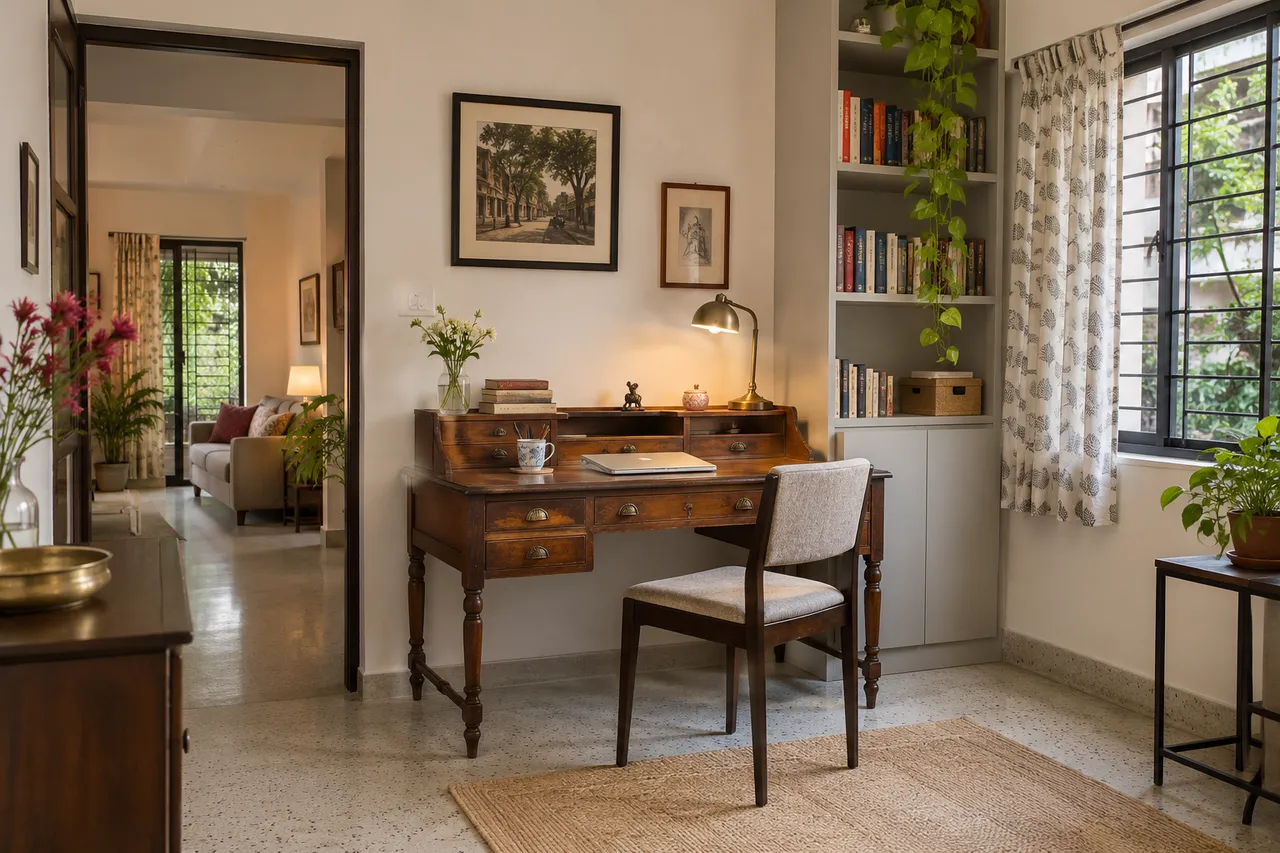
Displaying Inherited Furniture in Tollygunge: Build the Room Around One Existing Piece
Integrate inherited furniture into a Tollygunge home by choosing one meaningful piece, checking its condition and testing how it works in the room. Measure doors and drawers as well as the footprint. Use its colour, scale or function as one reference for new furnishings, while preserving circulation and asking a suitable professional about any repairs.
Start with your Tollygunge home
This guide considers a Tollygunge household that owns an inherited desk, cabinet, chair or similar item. It does not assume that a piece is antique or valuable because of its age or location. Separate personal significance from an appraisal or restoration decision. The planning task is to give the object a useful place without turning the whole home into a matching period-style set.
1. Choose the piece and its purpose
Decide whether it will work as a desk, storage cabinet, seating or a display item. List what it should hold and how often it will be used. A desk retained only for its appearance may need a different position from one used daily for work. Keep the household’s attachment to the object visible alongside practical requirements so the design does not casually replace something meaningful.
2. Assess condition before moving or using it
Photograph existing condition and note visible damage or loose parts for a competent furniture professional to assess. Avoid identifying materials, age or structural suitability by appearance alone. If an item may need specialist conservation, seek appropriate advice before changing its finish or construction. Do not use cleaning chemicals or abrasive treatments simply to make it match new furniture.
3. Test the room around the complete object
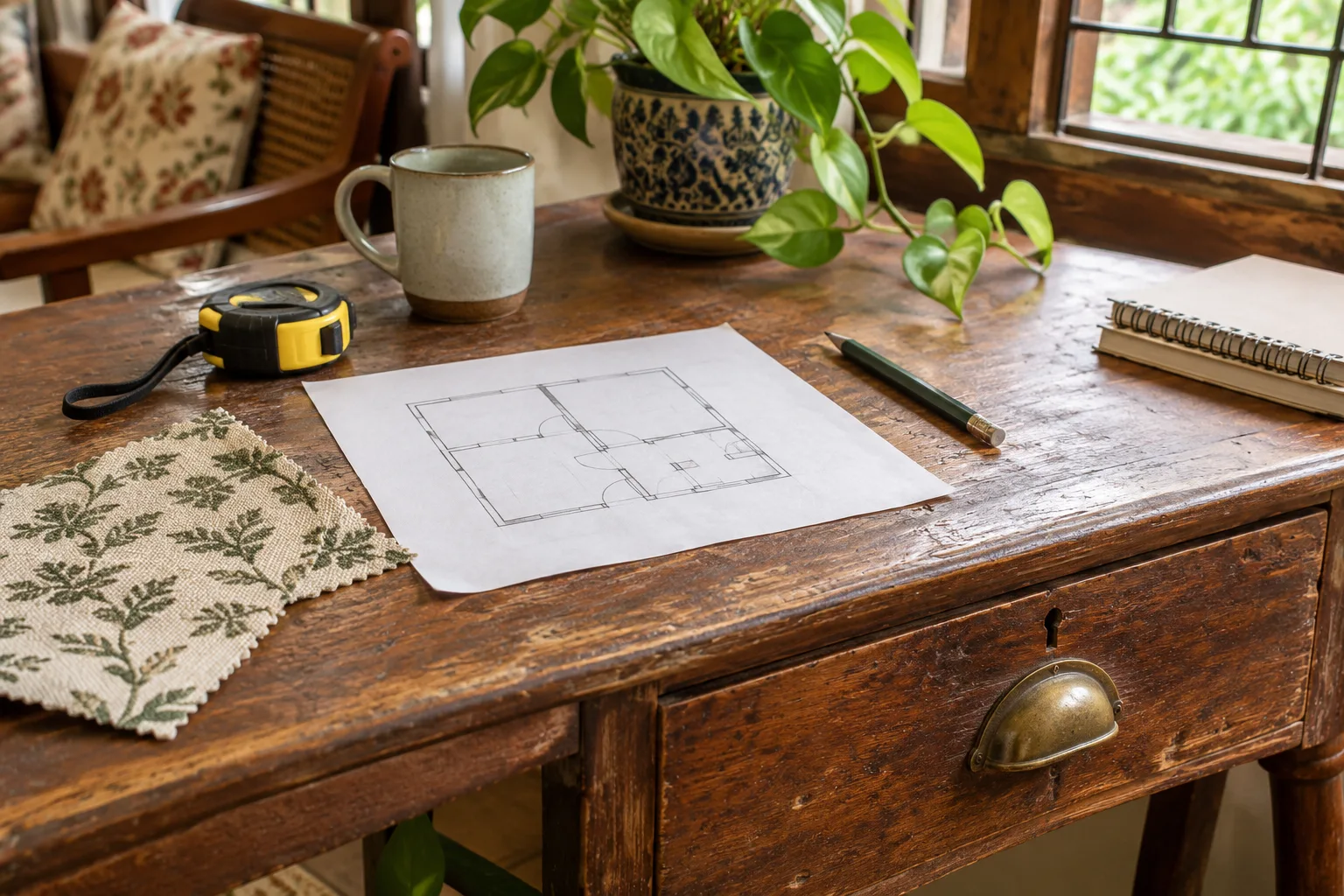
Measure the footprint, handles, doors and drawers. Show an occupied chair where relevant and preserve access to nearby windows and furniture. Try the actual piece in the proposed position when feasible. A retained cabinet needs a clear opening route, not just a wall wide enough for its closed outline. Verify the moving route before building new work around it.
4. Coordinate a few supporting choices
Use the piece’s wood tone, metal detail or upholstery as a reference for selected neighbouring finishes. Keep surrounding furniture proportionate to the room and consider the light in which the old surface will be seen. New items do not need to imitate the original period. Compare physical samples beside the piece instead of ordering several matching-looking finishes from unrelated digital photographs.
5. Plan display, care and future access
If the piece holds a collection, choose what needs to be accessible and how it will be cleaned without overloading the furniture. Record any professional care advice and keep repair information. Arrange lighting and surrounding objects without modifying the retained piece unless that change has been assessed and deliberately approved. Leave enough flexibility to move it again if the household’s routine changes.
Budget worksheet: define the scope before the total
| Planning item | What to record |
|---|---|
| Separate decisions | Room styling and moving costs are different from assessed repair or specialist conservation. |
| Owner-set illustration | For a ₹15,000 styling-and-handling limit, an example is ₹5,000 for appropriate moving/protection, ₹6,000 for selected supporting items and ₹4,000 reserved. These are allocation figures, not Tollygunge restoration prices. |
| Assess first | Do not include unknown repair work in a decorative allowance without a defined proposal. |
Timeline: decisions and checkpoints
Complete condition assessment and a layout trial before ordering surrounding furniture. Agree any professional treatment and moving sequence separately. The time required depends on the piece and proposed work; do not force a meaningful object into a generic room-refresh deadline.
Plan the next step with WallsToWonder
Use Design My Room to explore a visual direction, then verify the actual measurements and product requirements. The interior cost estimator can help organise an initial scope; use a measured provider proposal for your commitment. Review inclusions and exclusions with the quotation checker and discuss unresolved items with the responsible professional.
Frequently asked questions
Does inherited furniture have to match the new furniture?
No. Coordinate scale, colour relationships and function while allowing old and new pieces to retain different styles.
Should I refinish an inherited piece before planning the room?
First assess condition, significance and the intended use with an appropriate professional. A finish change may be unnecessary or unsuitable.
Can I use an old desk for daily work?
Check its condition, working dimensions, support and the actual task. Personal value does not automatically establish suitability for a modern setup.
Related practical guides
Turn this idea into a plan for your home
Visualise your space, understand the likely budget, or find a professional who can bring the idea to life.