

Reusing Solid-Wood Furniture in a Jayanagar Renovation: A Practical Assessment Brief
Reuse solid-wood furniture in a Jayanagar renovation only after checking its condition, fit and repair requirements. Measure the complete piece, note loose joints or damage for professional assessment and test its new position in the room. Compare identified repair and refinishing work with replacement on the same scope, including moving, protection and installation.
Start with your Jayanagar home
This brief is for a Jayanagar household that already owns furniture worth considering for reuse. It does not assume every local home has heritage pieces or that every wood item should be restored. Separate personal value from practical condition. A retained sideboard or chair can guide the renovation only after the room and the object have been assessed together.
1. Make an item-by-item record
Photograph each piece and list dimensions, moving parts, construction information if known and any visible damage. Distinguish a finish mark from a functional issue without diagnosing hidden damage yourself. Ask a competent furniture professional to assess loose joints, movement or suspected pest damage. Keep sentimental value as a separate note so a practical repair decision does not overlook what the piece means to the household.
2. Test the proposed location
Mark the furniture footprint on the new floor plan. Include drawer opening, chair movement, handles and access for cleaning. Check the journey through doorways as well as the final position. A piece that worked in the old arrangement may obstruct a new route. Try the retained item in place where feasible before designing custom cabinets around dimensions taken from memory.
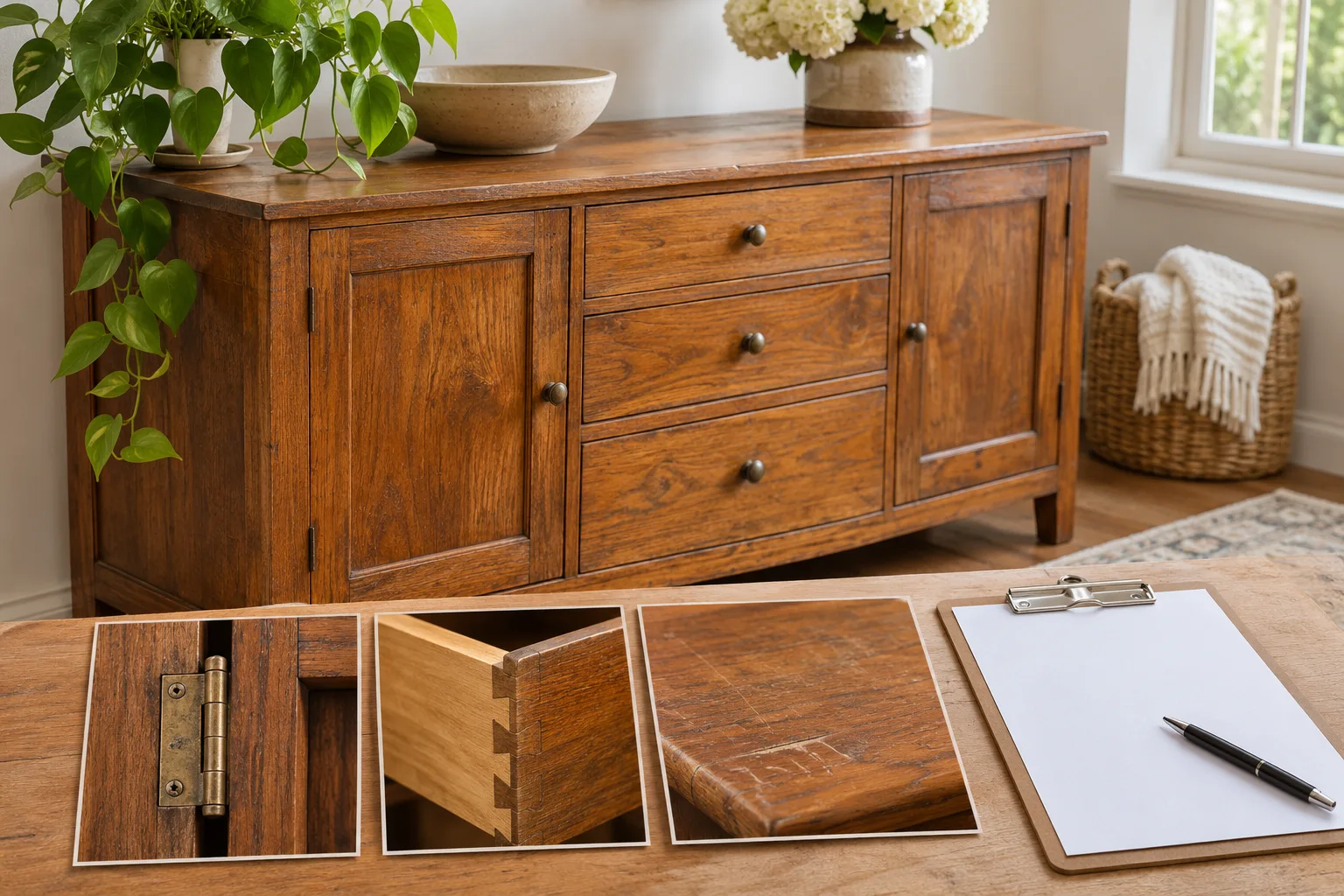
3. Ask for a defined repair proposal
Separate structural assessment, joint repairs, hardware replacement, surface treatment and upholstery as relevant. Ask which parts remain original and which will change. Do not apply random products or undertake destructive tests to establish the finish. Have the provider explain the proposed method, expected appearance and limitations, and request a suitable sample or agreed test area before a large visible surface is treated.
4. Coordinate protection and moving
Decide whether repairs happen on site or elsewhere, how the piece is packed and who handles transportation and storage. Keep it away from work that could damage it, following the professional’s advice for that item. Record existing condition before movement. The renovation programme should state when the furniture leaves, when it can return and whether the room is ready for its final position.
5. Integrate one reference into the new palette
Use the retained wood tone or upholstery as a reference when selecting neighbouring finishes, while allowing the room to remain coherent. A mix of old and new does not require copying the original style everywhere. Compare actual samples beside the piece and check the lighting. Keep repair records, finish information and care instructions so the decision remains maintainable after the renovation.
Budget worksheet: define the scope before the total
| Planning item | What to record |
|---|---|
| Compare complete scopes | Assessment, repairs, hardware, finishing, upholstery where applicable, transport and protection. |
| Owner-set example | If you set a ₹30,000 reuse allowance, you might allocate ₹20,000 to agreed repairs, ₹5,000 to handling and ₹5,000 uncommitted. These are personal allocation examples, not Jayanagar repair rates. |
| Decision rule | Do not call reuse cheaper until the condition assessment and complete quote are available. |
Timeline: decisions and checkpoints
Schedule assessment before the room layout is frozen. Approve a finish reference before the full treatment. Ask the provider to specify handling, repair and return milestones for the actual piece; drying, curing, discovered damage and transport coordination can affect when it returns to use.
Plan the next step with WallsToWonder
Use Design My Room to explore a visual direction, then verify the actual measurements and product requirements. The interior cost estimator can help organise an initial scope; use a measured provider proposal for your commitment. Review inclusions and exclusions with the quotation checker and discuss unresolved items with the responsible professional.
Frequently asked questions
Is solid wood always worth restoring?
No. Condition, construction, repair feasibility, fit and personal value all matter. Obtain an assessment rather than choosing from material name alone.
Can I change the colour of an old piece?
Discuss the existing finish, proposed treatment and achievable result with the furniture professional. Approve a suitable reference before full work.
Should I build new cabinetry around it?
Only after confirming its complete dimensions, moving parts and position in the actual room, with future access preserved.
Related practical guides
Turn this idea into a plan for your home
Visualise your space, understand the likely budget, or find a professional who can bring the idea to life.