
Spare Tiles, Paint Codes and Hardware: What to Keep After Renovation
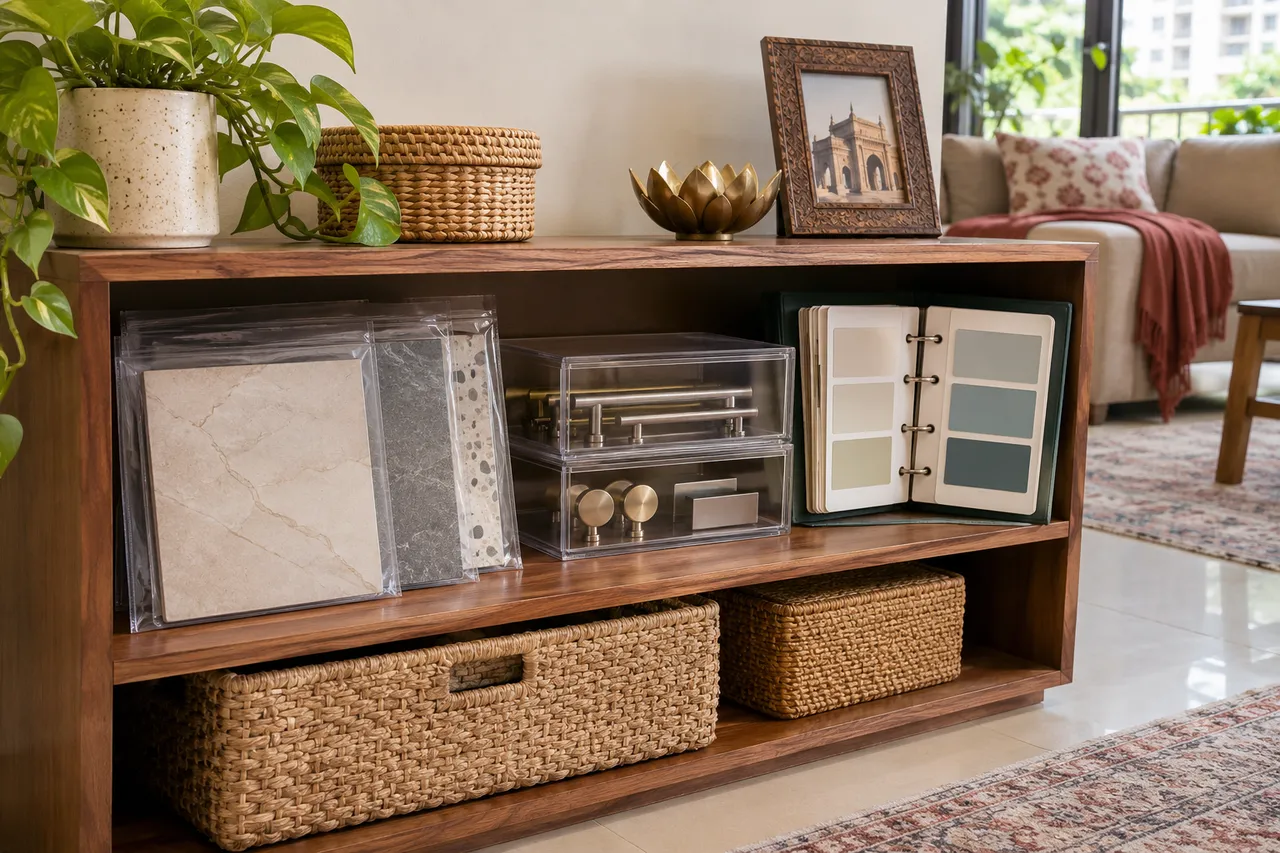
Keep renovation spares that are identifiable, usable and practical to store: selected matching tiles, verified paint references and replacement hardware agreed with your supplier. Record the installed location, product code and quantity. Store heavy items low and protect edges. Follow product storage instructions, and distinguish useful spare parts from leftover waste or unidentified materials.
Before you start
- Collect: Handover inventory, product labels, supplier records and the actual leftover materials.
- Agree quantities: Ask suppliers what is useful for the installed product and foreseeable repairs; there is no universal spare percentage.
- Store safely: Check weight, edges, moisture conditions and product-specific storage requirements.
1. Identify leftovers before the site is cleared
Separate usable matching material from broken, damaged or unidentified leftovers. Record the room and application for every retained item. Ask the installer to connect tiles, hardware and surface references to the specification or invoice. A box marked spare is not helpful if nobody knows which room it belongs to. Agree who owns and removes waste and who hands over retained items as part of the project closeout.
2. Keep tile references with the tiles
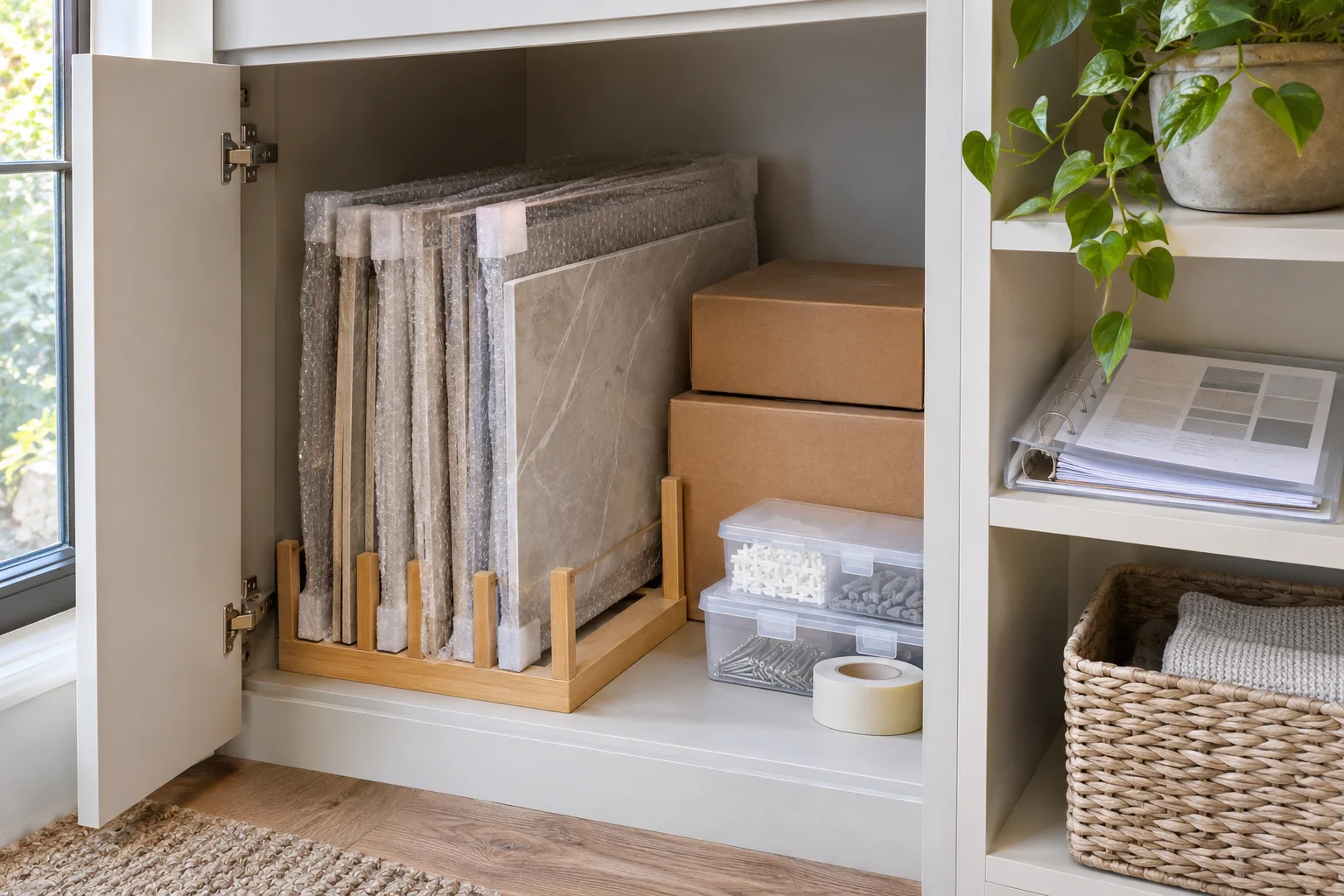
Record manufacturer, range, size and available batch or shade information from the packaging. Keep a packaging label or clear photograph with the inventory. Agree an appropriate quantity with the supplier based on the installation and storage available. Matching stock may be difficult to find later, but keeping excessive heavy material is not automatically useful. Protect edges and use low stable storage suited to the weight, without obstructing access.
3. Record a paint system, not just a colour name
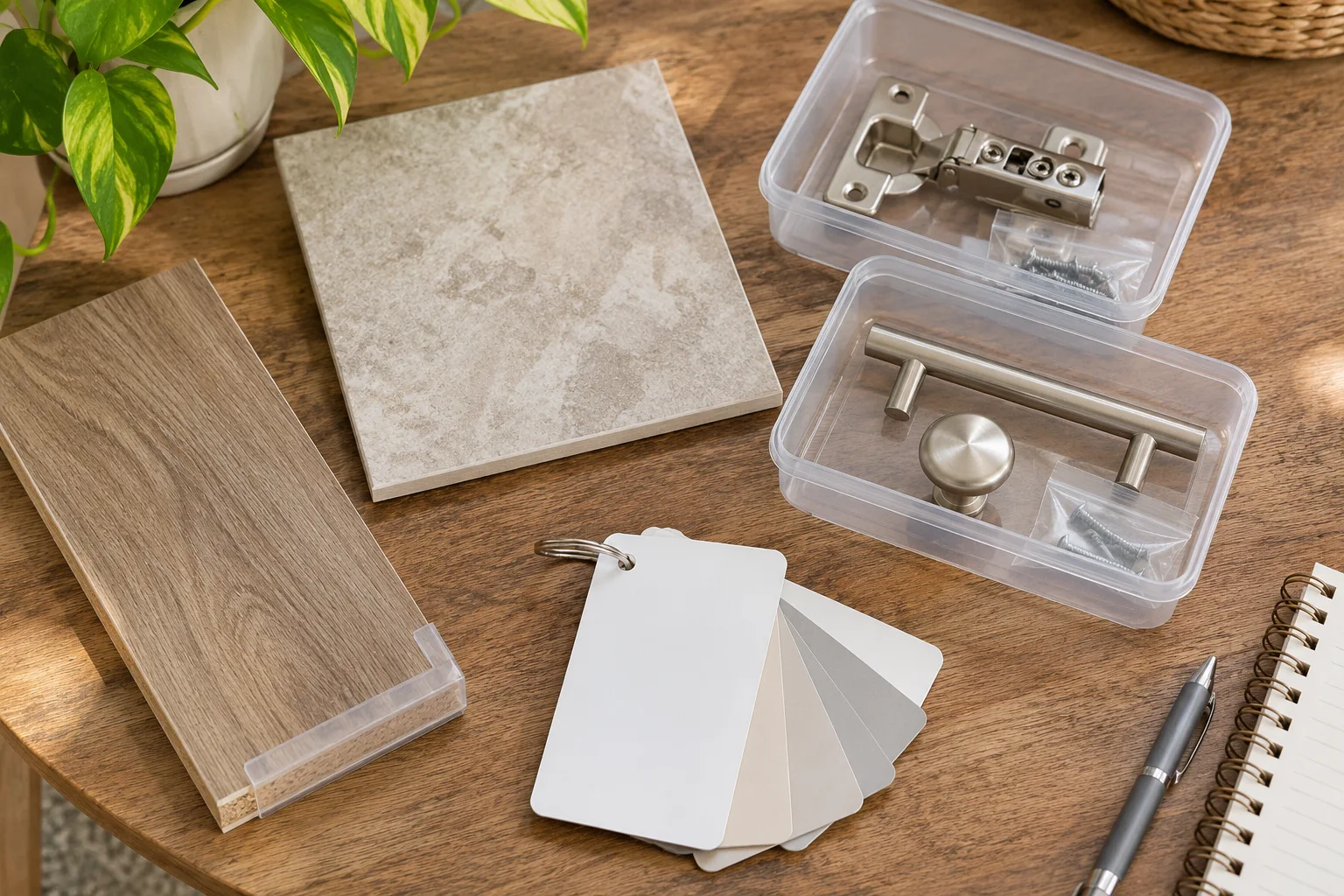
Keep the manufacturer, product range, shade code, finish and location, along with the application date where known. A similar colour name in another range may not produce the same result. Keep a reference sample if useful, but understand that aging, lighting and application can affect a later touch-up. Do not promise an invisible repair from a code alone. Store or dispose of leftover paint according to its label and local requirements.
4. Keep identified hardware in separate containers
Use clearly indexed small boxes or bags for matching handles, hinges and other agreed spare fittings. Record product identifiers and the location where each is installed. Keep screws associated with the fitting rather than combining every loose fastener into one jar. A replacement hinge may need the same dimensions and mounting details, not merely the same appearance. Confirm compatibility with the supplier before installing a spare.
5. Set a limit and maintain an inventory
Use columns for item, installed location, product reference, quantity, storage position and supplier. Check that the storage location is dry and suitable for the products. Keep sharp edges protected and heavy boxes low. Update quantities after a repair so the inventory remains truthful. Review unknown or deteriorated items with appropriate supplier or disposal guidance; a useful spare store should support maintenance rather than become a hidden debris pile.
A record you can use
| Spare inventory field | Example of useful information |
|---|---|
| Item and location | Kitchen floor tile or bedroom wardrobe hinge |
| Product reference | Range, code, size and batch information if available |
| Quantity | Actual retained number, updated after use |
| Condition | Usable, protected and identified |
| Storage position | Low cupboard or suitable shelf reference |
| Supplier record | Invoice link and relevant contact |
Plan the next step with WallsToWonder
Keep this checklist with your project brief. The WallsToWonder quotation checker can help identify questions about scope and exclusions; your agreed documents and the actual product records define the work. Browse interior companies or designers when you need professional help implementing the plan.
Frequently asked questions
How many spare tiles should I keep?
Agree a quantity with the supplier based on tile type, installed areas, repair needs and safe storage space. Avoid treating one percentage as suitable for every project.
Is a paint code enough for a perfect touch-up?
No. Keep the product range, finish and application reference too. Existing paint age, lighting and application can affect the result; consult the product guidance for repairs.
Can I keep tiles on a high wardrobe shelf?
Heavy materials need suitably rated stable storage and manageable retrieval. Prefer a low location and confirm suitability rather than placing heavy boxes above normal reach.
Should I save all leftover hardware?
Keep identifiable usable parts that match the installed products. Record where they belong and confirm compatibility before replacement. Separate waste and unverified pieces.
Related practical guides
Turn this idea into a plan for your home
Visualise your space, understand the likely budget, or find a professional who can bring the idea to life.