
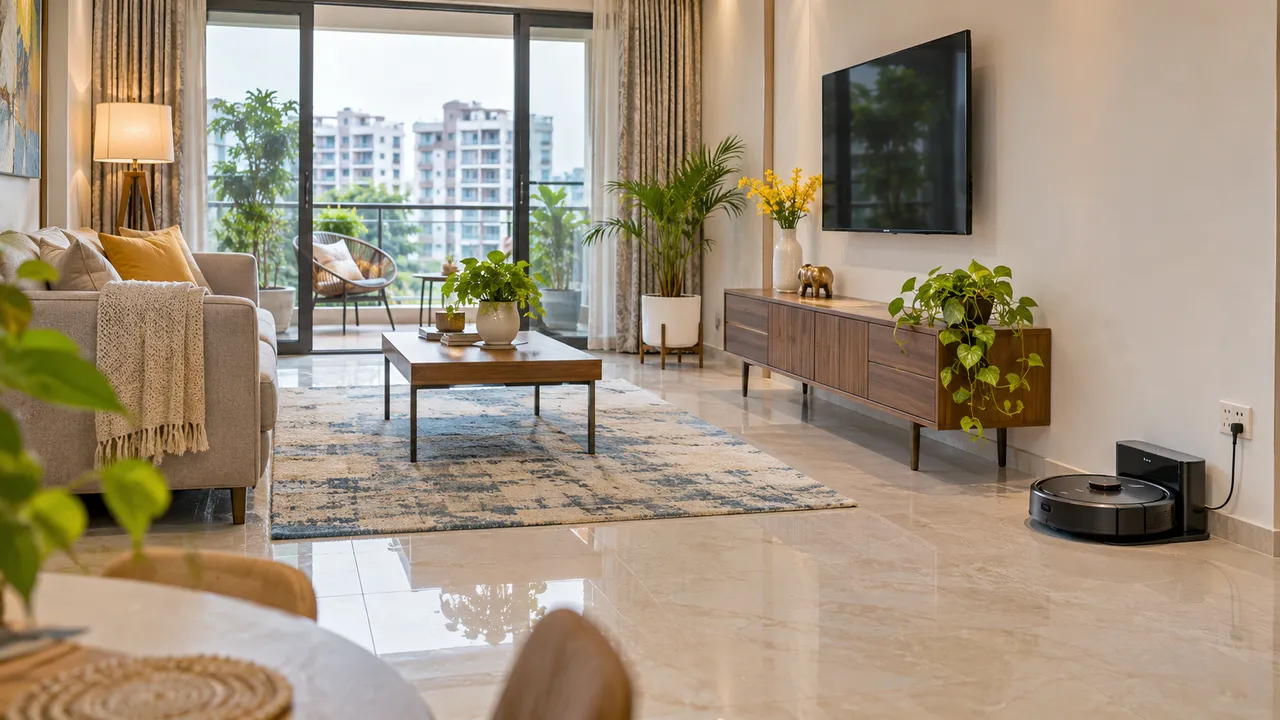
Preparing a Ravet Home for a Robot Vacuum: Furniture and Charging-Dock Checks
Prepare a Ravet home for a robot vacuum using the selected model’s height, docking and floor guidance. Check the actual space beneath furniture, access to each room, cords and suitable power for the dock. Test the robot in the intended layout before ordering furniture changes; another model’s clearance or threshold claim is not a reliable design rule.
Start with your Ravet home
This guide is for a Ravet household planning furniture around a selected robot rather than choosing a brand or promising automatic cleaning in every room. A floor plan can show furniture positions, but real doors, rugs and transitions need a product-specific trial. Keep the existing home and the manufacturer’s current instructions as the basis for the brief.
1. Identify the model and its requirements
Record the robot and dock model, body height, instructions and any stated operating conditions. Include the full dock footprint and the space required for servicing it, not only the robot’s body. Products differ in navigation, maintenance and docking needs. Do not design a narrow niche from a generic robot-vacuum size found online.
2. Check furniture at its lowest usable point
Measure the actual under-furniture route, including braces, fabric, hanging cables and any parts lower than the visible legs. Compare it with the product guidance and a real trial where possible. Do not raise furniture with improvised supports to create a passage. If different legs or furniture are being considered, confirm the item remains suitable, stable and correctly assembled under its own instructions.
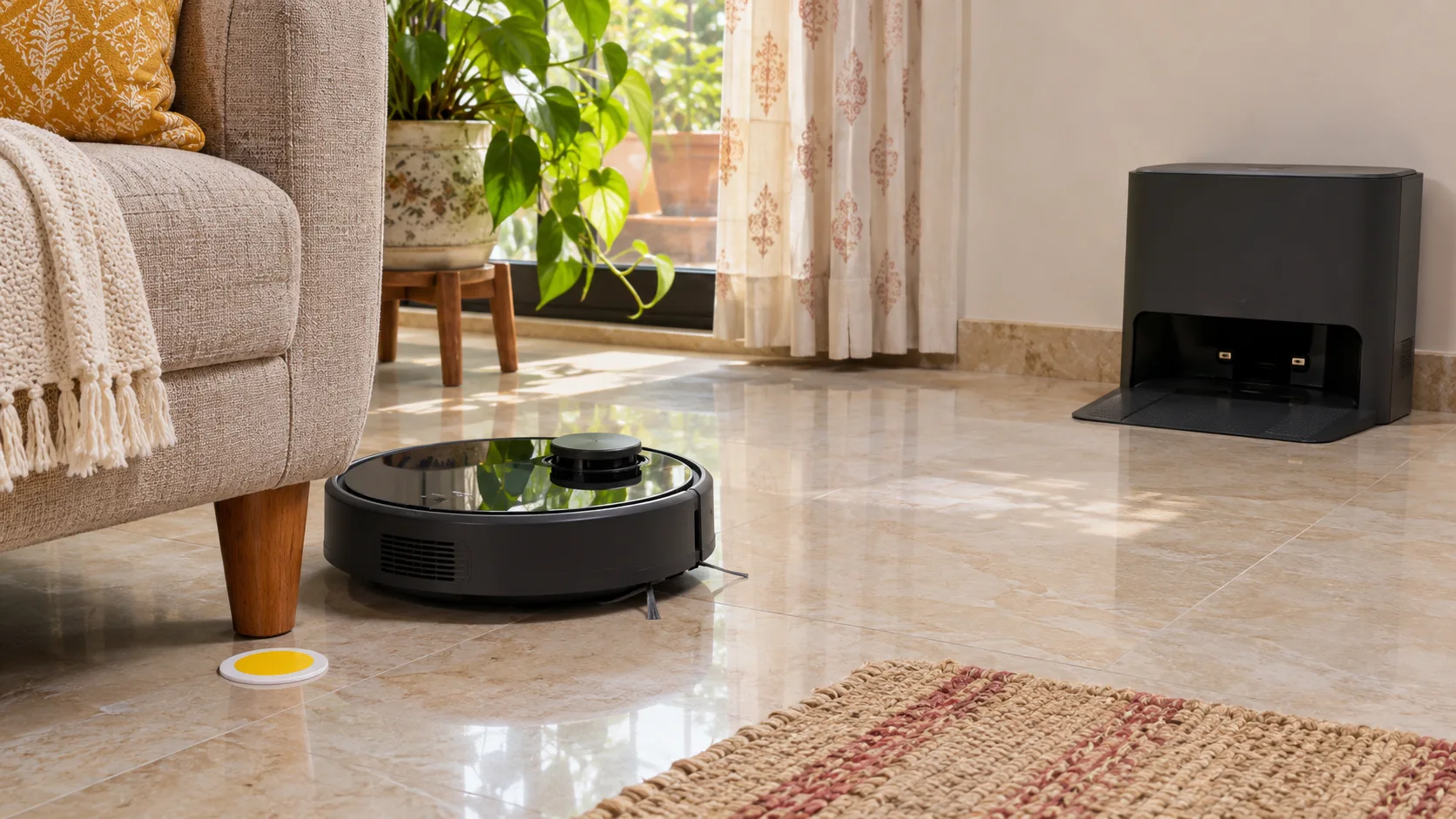
3. Choose an accessible dock position
Use the selected dock’s installation guidance for location, surrounding space and power. Keep it accessible for normal maintenance, with cords managed away from moving parts and walkways. iRobot’s guidance treats an accessible base and suitable connectivity as part of reliable return-to-base operation. That guidance does not establish a universal clearance for every brand or model.
4. Review doors, rugs and transitions
List the rooms expected to be cleaned and check the route between them using the actual product. Follow manufacturer guidance for rugs, cords, liquids, stairs and other conditions, including any required boundaries or exclusions. Do not assume the robot can cross every threshold or handle every floor finish. Keep household objects and small items managed as required by the operating instructions.
5. Trial before committing the furniture plan
Run a normal supervised setup and room trial according to the product instructions. Record where the robot cannot pass, where the dock is awkward to maintain and what must be moved first. Compare modest organisation changes with any proposed furniture purchase. Keep realistic expectations for cleaning and routine maintenance, and retain the model information so later furniture changes can be checked again.
Budget worksheet: define the scope before the total
| Planning item | What to record |
|---|---|
| Keep costs separate | Robot and dock; any suitable furniture changes; cable organisation; assessed electrical work if needed. |
| Organisation cap example | If you reserve ₹10,000 for room preparation only, you might allocate ₹4,000 to suitable organisers, ₹3,000 to approved minor changes and ₹3,000 uncommitted. This excludes the robot and is not a Ravet price estimate. |
| Avoid speculative purchases | Test the product before replacing otherwise useful furniture. |
Timeline: decisions and checkpoints
Choose a candidate product and review its guidance before furniture approval. Allow a real room trial and a maintenance-access check. Obtain actual product delivery and any professional-work dates separately; furniture purchase should follow the trial results rather than an assumed cleaning capability.
Plan the next step with WallsToWonder
Use Design My Room to explore a visual direction, then verify the actual measurements and product requirements. The interior cost estimator can help organise an initial scope; use a measured provider proposal for your commitment. Review inclusions and exclusions with the quotation checker and discuss unresolved items with the responsible professional.
Frequently asked questions
What furniture height suits a robot vacuum?
Use the actual model’s guidance and measure the lowest obstruction along the route. No single clearance works for every robot and furniture design.
Can I hide the dock in a cupboard?
Only consider an arrangement that meets the specific product’s location, operating and service requirements. Do not assume a closed niche is suitable.
Should I replace the sofa before buying the robot?
Test the selected robot and assess the existing furniture first. A new purchase may not be needed, and a nominal leg height does not establish a clear route.
Related practical guides
- Wi-Fi Router Placement During Interiors: Access, Cables and Ventilation
- Soft Design, Smart Living: How to Make Your Home Easier to Maintain
Sources and product guidance
Turn this idea into a plan for your home
Visualise your space, understand the likely budget, or find a professional who can bring the idea to life.