
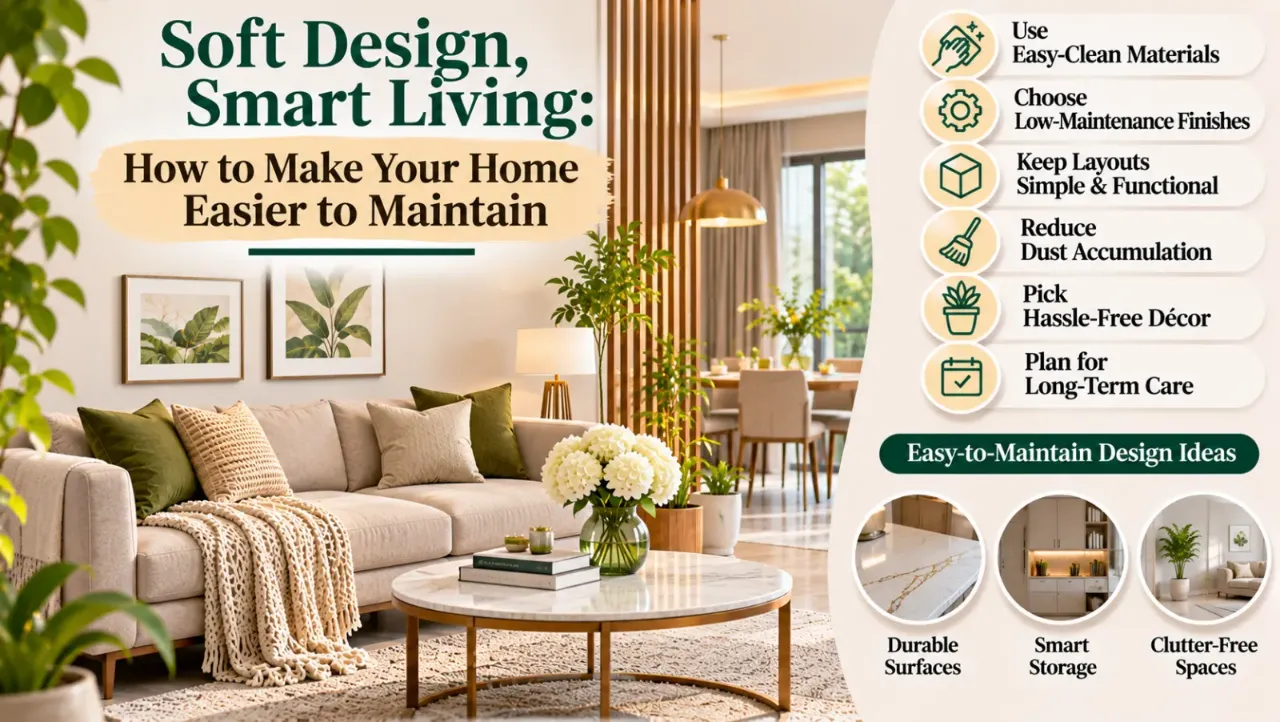
Soft Design, Smart Living: How to Make Your Home Easier to Maintain
A well-designed home should feel comfortable, look inviting and support the way you live. But there is another consideration that often gets overlooked during the design process: how much effort will it take to keep the home looking the way it did on the day it was completed?
A beautiful finish may require frequent cleaning. An elaborate display may collect dust. A large piece of furniture may make everyday cleaning difficult. These small decisions can gradually turn a thoughtfully designed space into one that feels demanding to maintain.
That is where a soft design interior approach can be useful. By combining understated aesthetics with practical materials, uncomplicated forms and functional layouts, homeowners can create spaces that feel calm without requiring constant attention.
The goal is not to remove personality or make every room look plain. It is to choose design elements that remain attractive while fitting naturally into everyday routines.
1. Start With the Way You Actually Live
Before selecting colours, furniture or decorative finishes, consider how the home is used.
A home with young children, pets or frequent visitors will have different maintenance requirements from a home occupied by one or two adults. A kitchen used for daily cooking needs surfaces that can handle regular cleaning, while a guest bedroom may not require the same level of everyday durability.
Think about:
- How frequently each room is used.
- Where dust, fingerprints, moisture and stains are most likely to appear.
- Whether you have children or pets.
- How much time you can realistically spend cleaning.
- Which areas need to stay organised throughout the day.
These answers help establish practical priorities before design decisions become difficult or expensive to change.
2. Choose Materials That Are Easier to Care For
Material selection has a direct influence on the time and effort required to maintain a home. A surface should not be selected only because it looks attractive in a sample or showroom.
For flooring, consider the amount of foot traffic, the likelihood of spills and the cleaning routine. For kitchen counters, compare resistance to stains, heat and scratches, along with the manufacturer's care instructions.
Some practical considerations include:
- Flooring: Select a finish suitable for the room's use and cleaning requirements. Large-format tiles may reduce the number of grout joints, but grout still needs appropriate care.
- Kitchen surfaces: Compare non-porous and porous options, their sealing requirements and their response to common household stains.
- Wall finishes: Washable paints can be useful in busy areas, but check the recommended cleaning method and finish.
- Cabinet finishes: Choose finishes that are easy to wipe and less likely to show fingerprints, depending on the household's usage.
- Bathroom materials: Prioritise suitable slip resistance, moisture performance and accessible cleaning around joints and fittings.
Remember that no material is completely maintenance-free. Always check product specifications and manufacturer instructions before making a final selection.
3. Keep Furniture Practical and Accessible
Furniture should support movement and daily activities, not make cleaning more difficult.
Oversized pieces can restrict circulation and create awkward corners where dust accumulates. Furniture with complicated detailing may also require more time to clean than simpler forms.
Consider:
- Furniture with straightforward shapes and accessible surfaces.
- Adequate clearance around beds, sofas and dining tables.
- Storage that keeps frequently used objects organised.
- Raised furniture only where the space underneath can be cleaned comfortably.
- Upholstery suited to the household's daily use and cleaning needs.
A well-proportioned room often feels more comfortable because movement, cleaning and everyday activities become easier.
4. Design Storage Around Everyday Clutter
Clutter is not always a sign of having too many belongings. Sometimes it means the home does not provide convenient places to put them away.
A practical storage plan reduces the number of objects left on countertops, tables and open shelves.
For example, entryway storage can accommodate footwear, keys and bags. Kitchen drawers can organise utensils and everyday accessories. Bedroom wardrobes can be planned around the actual clothing and storage habits of the people using them.
Useful storage principles include:
- Keep frequently used items within easy reach.
- Use closed storage for objects that do not need to remain on display.
- Avoid deep shelves where items become difficult to access.
- Divide drawers according to the items they will hold.
- Plan storage before finalising furniture dimensions.
Storage should make the home easier to use, rather than simply adding more cabinets.
5. Use a Balanced Colour Palette
A soft interior does not have to be entirely white or beige. It can include muted greens, warm greys, earthy browns, soft blues and other restrained tones.
The important consideration is how the chosen colours behave in the room and how practical their finishes are.
Very light surfaces may show certain marks more clearly, while very dark, glossy surfaces can make dust, fingerprints or water spots more noticeable. The effect varies with lighting, material and finish.
A balanced palette can combine:
- A calm base colour for larger surfaces.
- One or two supporting colours for furniture or accents.
- Natural-looking textures for warmth.
- A limited number of contrasting details.
Test paint and finish samples in the actual room before committing. Daylight, artificial lighting and nearby materials can change how a colour appears.
6. Make Lighting Easy to Use and Maintain
Lighting should be comfortable, functional and straightforward to clean.
Intricate decorative fixtures can look attractive but may collect dust in difficult-to-reach areas. In frequently used rooms, simpler fixtures can make routine cleaning easier.
Plan lighting according to activities:
- General lighting for everyday visibility.
- Task lighting for cooking, reading and working.
- Focused lighting for selected artwork or architectural details.
- Comfortable bedside lighting for evening use.
Also consider access for replacing bulbs, cleaning fixtures and maintaining electrical components. Electrical installation and changes should be handled by qualified professionals.
7. Be Selective With Decorative Details
A soft design interior can still have character. The key is to use decoration intentionally instead of filling every available surface.
Too many small accessories, open displays and layered decorative objects can increase dusting time and make surfaces harder to clean.
Try these approaches:
- Display a few meaningful objects rather than many unrelated pieces.
- Use washable or removable covers where practical.
- Choose rugs that suit the amount of foot traffic and can be cleaned appropriately.
- Keep frequently used surfaces relatively clear.
- Introduce texture through curtains, upholstery and selected natural materials.
A considered arrangement can make a room feel complete without making it difficult to maintain.
8. Pay Attention to Kitchens and Bathrooms
Kitchens and bathrooms often need more frequent cleaning because they are exposed to cooking residue, moisture, soap and everyday spills.
In kitchens, consider easy-to-access corners, backsplash cleaning, cabinet handles, countertop joints and the area around the sink. Select finishes and hardware based on how they will respond to regular use.
In bathrooms, pay attention to ventilation, drainage, shower fittings, tile joints and the accessibility of cleaning areas. Avoid creating unnecessary ledges or narrow gaps that are difficult to reach.
Good ventilation, appropriate waterproofing and correct installation are just as important as the visible finish. These elements should be planned with qualified professionals.
9. Avoid the Mistake of Choosing Looks Over Practicality
A finish that looks beautiful in a photograph may not suit every household. A high-maintenance material can become frustrating if it requires special cleaning or frequent treatment.
Before approving a design, ask:
- Does this material need sealing or polishing?
- Can it be cleaned using products readily available to me?
- Will the finish show fingerprints, water marks or dust?
- Are replacement parts or matching materials accessible?
- Can the area be reached without moving heavy furniture?
- Is the design practical for the people who will use it?
These questions help you compare the long-term ownership experience, not just the initial appearance.
10. Visualise and Review Before Finalising
It is easier to identify impractical choices while a design is still being planned than after materials and furniture have been installed.
Create a room-by-room checklist covering surfaces, storage, lighting, furniture dimensions and cleaning access. Compare different combinations before approving the final scheme.
Walls to Wonder's Design My Room tool can help explore room concepts, finishes and furniture arrangements. The Whole Home Visualizer can help compare how design choices work across different spaces.
For early budget planning, the Interior Design Cost Estimate tool can provide an indicative estimate, while the Interior Quotation Checker can help review the scope, materials, charges and exclusions in a quotation.
These tools can support visualisation and planning, but they do not replace product specifications, professional measurements, installation guidance or technical checks.
Final Thought
A well-designed home should work beyond the first impression. It should remain comfortable, organised and manageable as everyday life unfolds.
A soft design interior is not simply about choosing subtle colours or minimal furniture. It is about making thoughtful decisions that balance appearance with durability, accessibility and ease of care.
When materials, storage, furniture and lighting are selected with maintenance in mind, a home can feel welcoming without demanding constant effort. The best design is one that continues to serve the people living in it.
Frequently Asked Questions
1. What does soft design interior mean?
Soft design interior can describe a calm, understated approach that uses balanced colours, comfortable textures, simple forms and practical details. The exact meaning can vary, so the design should be guided by the homeowner's needs.
2. How can I make my home interior easier to maintain?
Choose suitable durable finishes, plan accessible storage, keep circulation areas clear, select practical furniture and avoid unnecessary decorative details that make cleaning difficult.
3. Which materials are best for a low-maintenance home?
There is no single best material for every room. Compare flooring, wall finishes, countertops and cabinetry based on their intended use, cleaning instructions, moisture exposure and durability.
4. Does a minimal interior always require less maintenance?
Not necessarily. Minimal interiors may have fewer decorative objects, but some materials and finishes still require careful upkeep. Practicality depends on the actual products and layout selected.
5. Can I create a soft interior design on a limited budget?
Yes. Prioritise high-use areas first, choose practical finishes within your budget, use existing furniture where possible and invest in storage that solves everyday problems. A complete renovation is not always necessary.
Turn this idea into a plan for your home
Visualise your space, understand the likely budget, or find a professional who can bring the idea to life.