
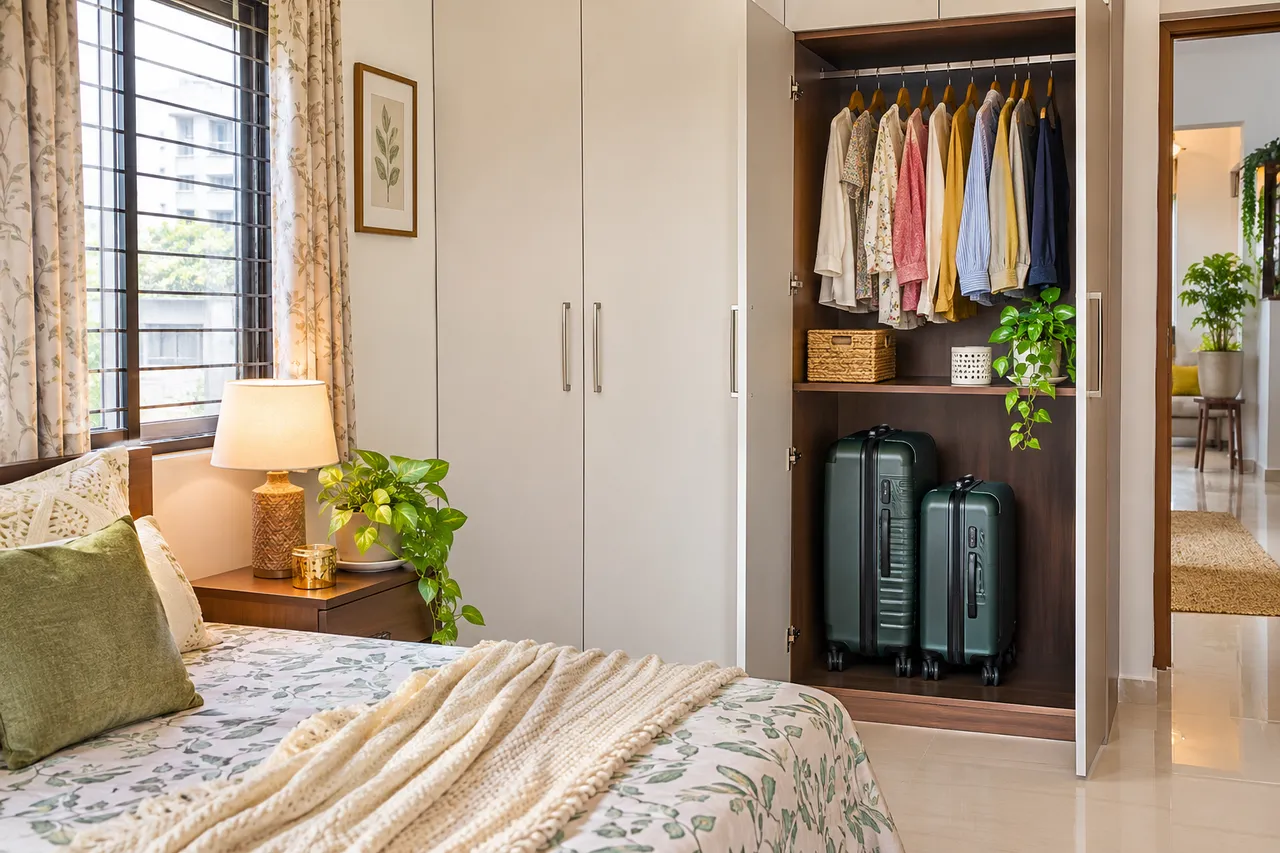
Suitcase Storage Ideas for Apartments Without a Store Room
Store suitcases according to their full outside dimensions, retrieval weight and travel frequency. Try nesting clean, dry cases only when they fit without force. Compare an accessible wardrobe base, a suitable bed compartment or a dedicated low cupboard. Keep daily-use storage and walkways clear, and test lifting and door access before ordering furniture.
Before you start
- Gather: Empty dry suitcases, measuring tape, existing dust covers and a simple list of travel accessories.
- Measure: Include wheels, handles, side bulges and the opening path.
- First decision: Choose a location using the largest case before fitting the smaller ones around it.
1. Measure the case you own
Measure height, width and depth with handles retracted, including wheels and external pockets. Add a separate note if a handle cannot fold fully. Then measure the actual cabinet opening: a spacious internal cavity is irrelevant if the case cannot pass the hinges or bed mechanism. Keep the record with a photograph so a furniture supplier can check the exact object rather than guessing from a nominal luggage size.
2. Test nesting without forcing the shell
Open the largest empty case on the floor and try the smaller one inside only if the shape permits. Do not force zips or compress wheels into the lining. Keep travel pouches or packing cubes together, but avoid filling an outer case with unrelated belongings that must be unpacked for every trip. If nesting makes retrieval awkward, storing cases side by side may be the better use of time.
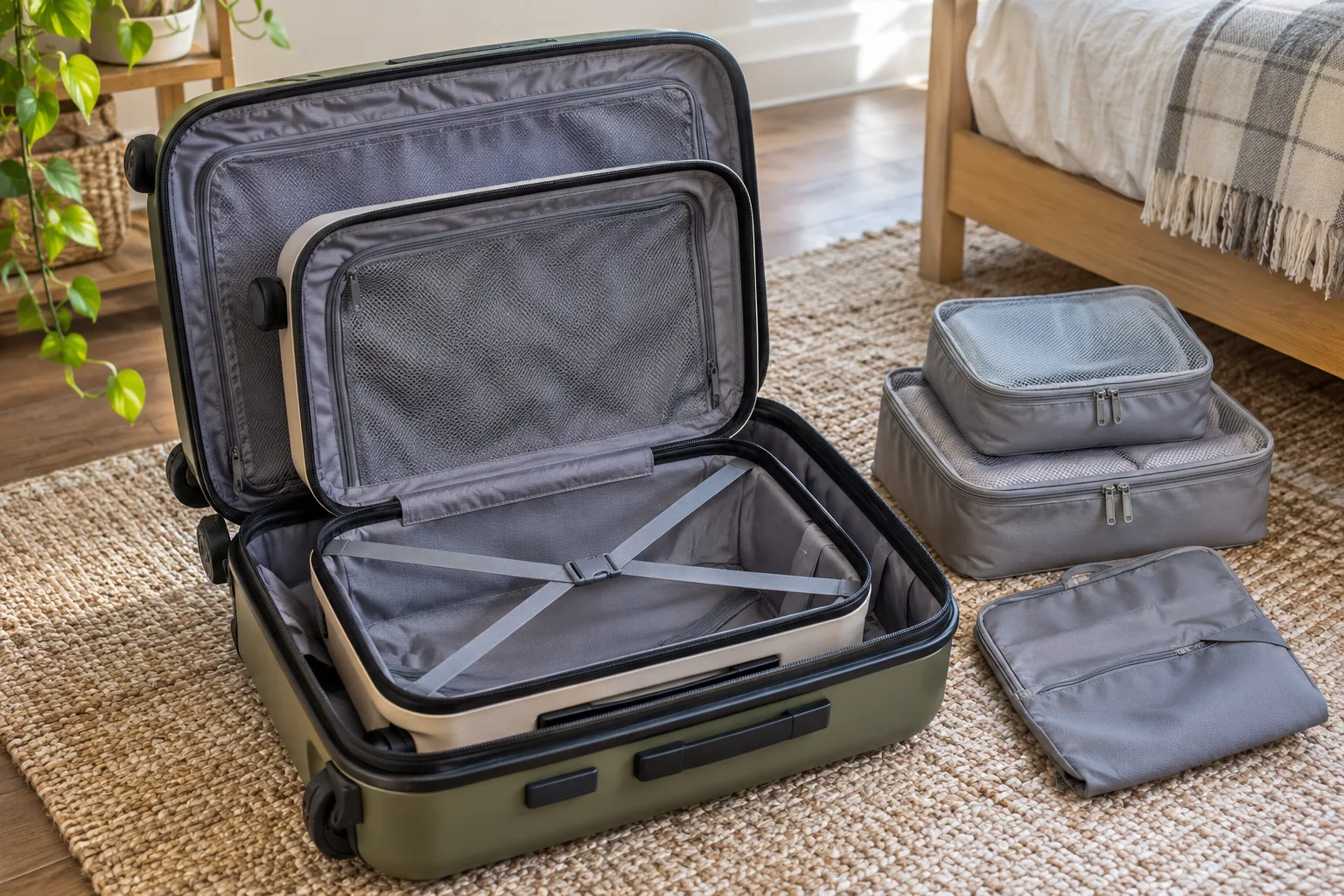
3. Compare low wardrobe and bed storage
A wardrobe base keeps luggage visible and reachable, but may reduce shoe or clothing space. A bed compartment can take bulky items if its usable opening and mechanism allow safe access. A freestanding low cupboard needs a clear door swing and enough floor area to withdraw the case. Test the complete retrieval movement with an empty case before assuming any location works.
4. Keep the case clean, dry and retrievable
Empty pockets and clean the luggage using the product instructions before long storage. Allow it to dry fully. Inspect the proposed space for leaks, dampness or pests rather than masking problems with a cover. Keep the heaviest items low and avoid heavy cases above a doorway or difficult reach. A cover may reduce dust exposure, but it should not hide a damp-storage problem.
5. Design for the next trip
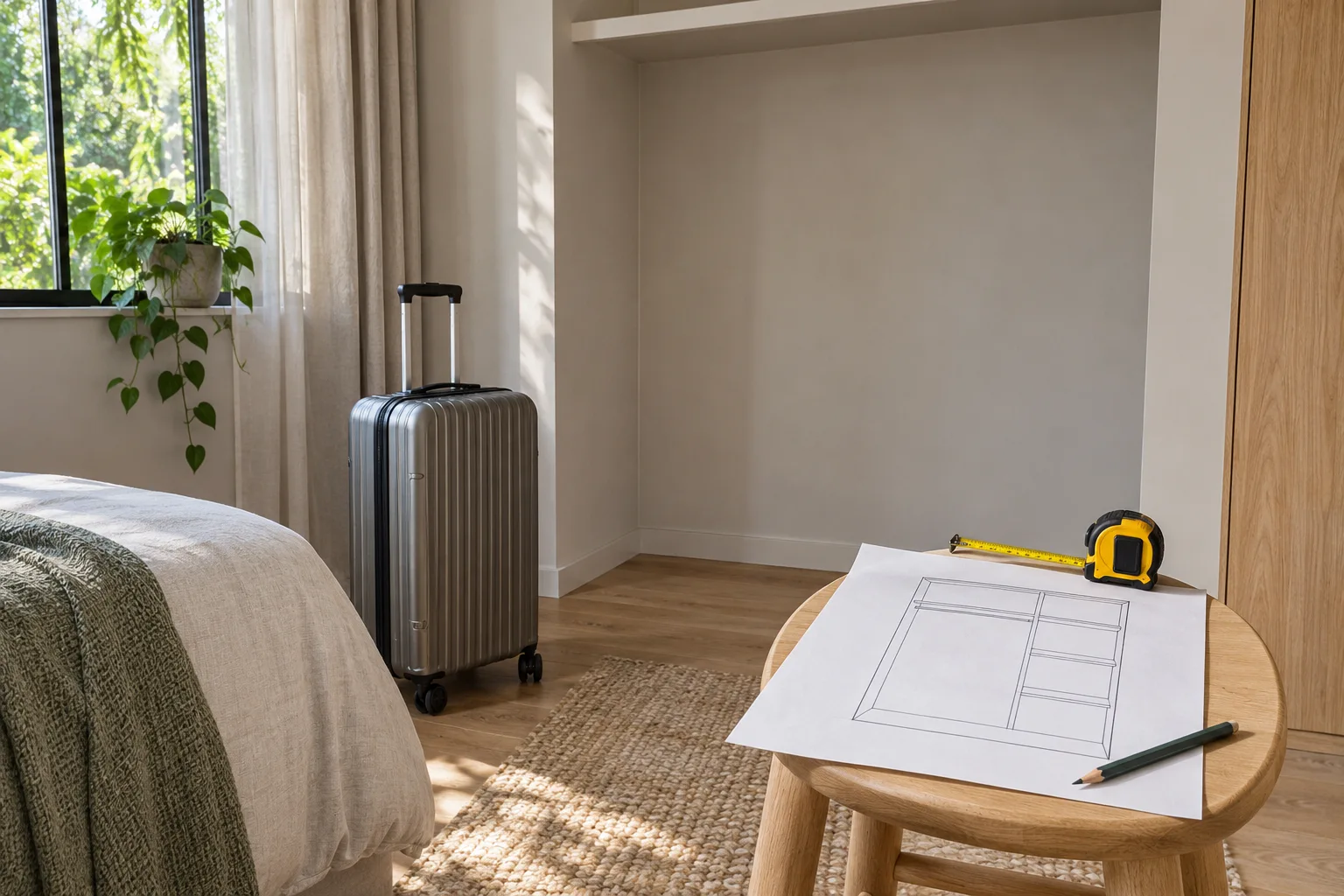
Keep a simple packing checklist and small travel accessories in a separate removable pouch. Place the case used most often nearest the opening. Before specifying a new cabinet, reproduce its footprint with removable floor markers and check surrounding doors. Include a small retrieval allowance based on the real case, not an assumed universal clearance. Recheck the plan when buying new luggage because nominal sizes do not guarantee identical outside dimensions.
Compare the practical options
| Location | Potential benefit | Fit test |
|---|---|---|
| Low wardrobe compartment | Easy retrieval | Full case and cabinet opening |
| Suitable bed storage | Uses existing capacity | Mechanism, lifting and usable opening |
| Dedicated low cupboard | Keeps luggage together | Door swing and floor withdrawal space |
Plan the next step with WallsToWonder
Use Design My Room to explore how the proposed storage or workspace might look. Verify the actual measurements, product requirements and fit before buying. If custom work is needed, use the interior cost estimator to organise an initial scope, then ask a suitable professional for a measured proposal.
Frequently asked questions
Can I store clothes inside a suitcase?
Only store clean, dry items in suitable conditions and check care instructions. Remember that you must remove them when travelling; household bedding may be easier to access on a shelf.
Is a loft the best place for luggage?
Not automatically. Weight, reach, lifting and retrieval matter. A low accessible space is often easier to use than a high compartment that needs awkward handling.
Will cabin-size luggage fit under my bed?
Measure the full case and the usable opening, including the bed frame and mechanism. Airline size categories do not tell you whether your furniture will accommodate it.
Should all suitcases be nested?
Nest only cases that fit comfortably and remain easy to retrieve. Side-by-side storage may work better for cases used by different people at different times.
Related practical guides
Turn this idea into a plan for your home
Visualise your space, understand the likely budget, or find a professional who can bring the idea to life.