
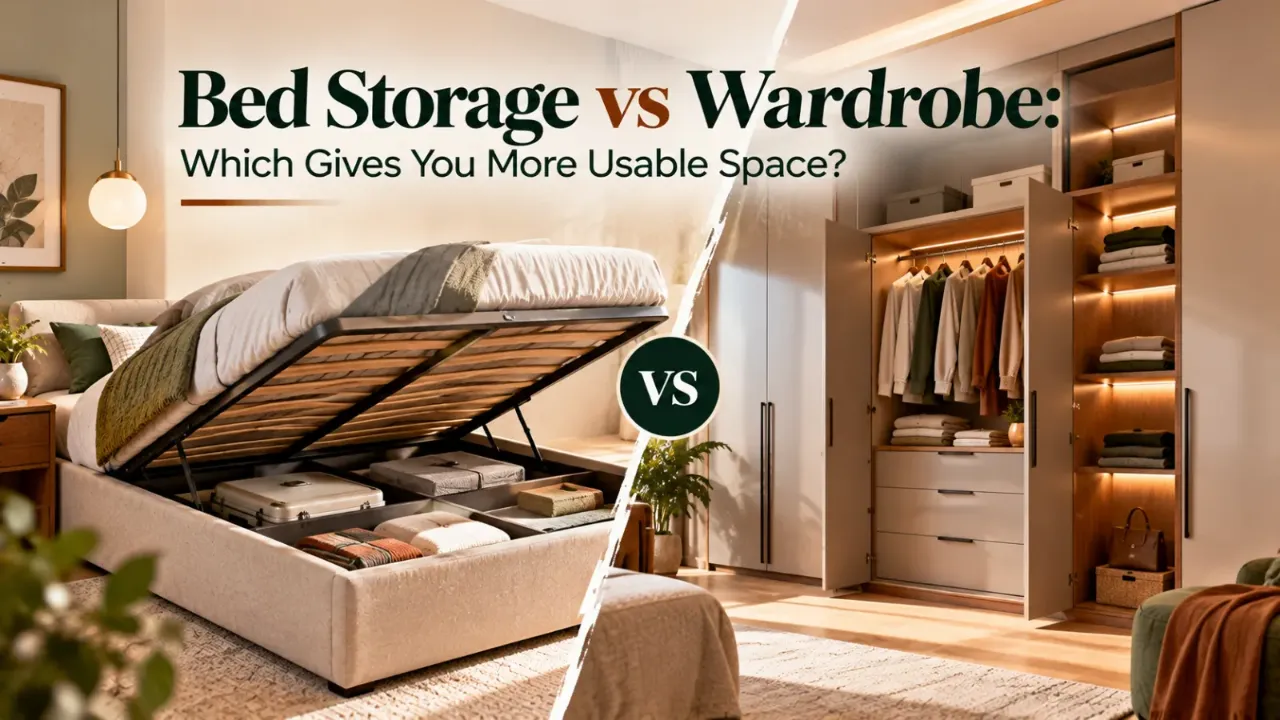
Bed Storage vs Wardrobe: Which Gives You More Usable Space?
When planning bedroom storage, two pieces of furniture often compete for attention: the bed and the wardrobe. A storage bed uses the space beneath the mattress, while a wardrobe creates storage vertically along a wall. Both can help reduce clutter, but they serve different purposes.
The better choice depends on what you need to store, how often you access it, how much floor and wall space your bedroom has, and how you prefer to organise your belongings.
A bed with a large storage compartment may look like it offers plenty of room, but accessing items can be less convenient than opening a wardrobe. On the other hand, a wardrobe can use a substantial amount of wall space and may not be the ideal place for every bulky household item.
Before choosing one over the other, compare their usable capacity, accessibility, cost and impact on the room.
1. Understand What Each Storage Option Offers
A storage bed uses the space beneath the mattress and bed base. Depending on its design, it may have a hydraulic lift-up platform, pull-out drawers or compartments accessible by lifting individual sections.
This space can be useful for spare bedsheets, blankets, pillows, seasonal clothing and other items that do not need to be accessed several times a day.
A wardrobe uses vertical space and typically provides a combination of hanging rails, shelves, drawers and compartments. It is designed to keep everyday clothing, footwear, bags and accessories organised and accessible.
Neither option is automatically better in every bedroom. A storage bed makes use of the area already occupied by the bed, while a wardrobe uses the available wall area. Their practical capacity depends on the furniture's dimensions, internal design and the items being stored.
2. Storage Beds: Make Use of Hidden Space
The main advantage of a storage bed is that it turns the area beneath the mattress into useful storage without adding a separate cabinet to the room.
A hydraulic lift-up bed can provide access to a relatively large under-bed compartment. Drawer-based designs divide the space into smaller sections and may make individual items easier to organise, depending on the available clearance.
This can be especially helpful in bedrooms where there is little room for another chest of drawers or additional cabinets.

Storage beds are generally most useful for:
- Spare bedsheets, blankets and quilts.
- Seasonal clothing and occasional-use textiles.
- Extra pillows and bedding accessories.
- Suitcases or suitably sized storage boxes, depending on the compartment.
- Items that are needed occasionally rather than throughout the day.
However, there are trade-offs. A lift-up bed requires a suitable lifting mechanism and enough clearance to raise the mattress platform. Pull-out drawers need space to open, so they may be inconvenient in a tightly arranged room.
The compartment may also be less convenient for everyday clothing because accessing it can involve lifting the mattress or moving other items. Keeping the area clean and dry matters too, particularly in humid rooms.
3. Wardrobes: Use Vertical Space for Everyday Storage
A wardrobe can turn an available wall into an organised storage system. Its interior can be divided according to the way you dress and the items you own.
Hanging sections can accommodate shirts, trousers, dresses and other garments. Shelves are suitable for folded clothing, while drawers and small compartments can help organise accessories. Depending on the design, a wardrobe can also include footwear storage, luggage space and a full-length mirror.
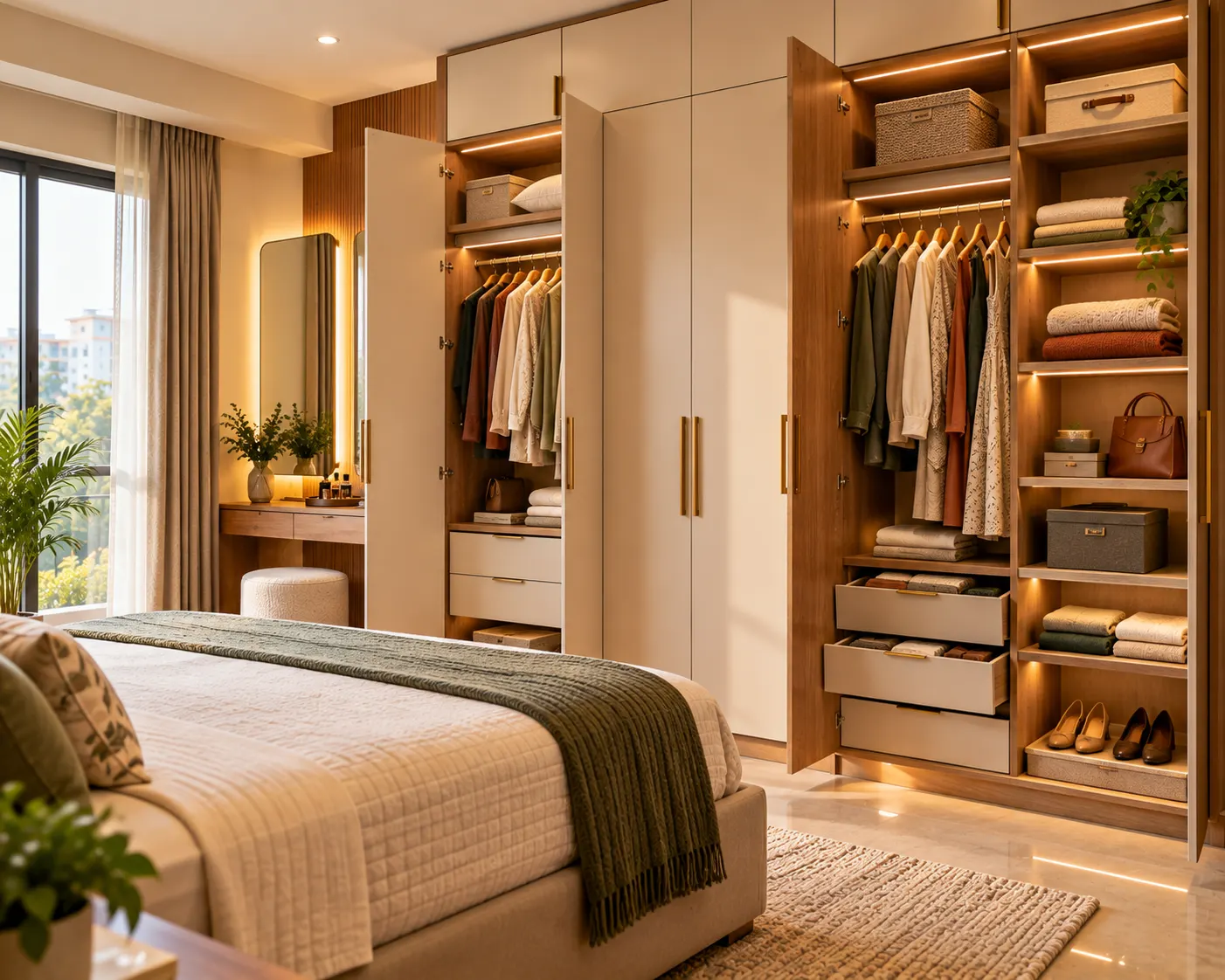
Wardrobes are particularly useful for:
- Everyday clothing that needs frequent access.
- Dresses, shirts, trousers and other hanging garments.
- Folded clothes and accessories.
- Shoes, handbags and personal items.
- Separate storage zones for different household members.
A wardrobe can also make it easier to see what you own and keep different categories of clothing apart. The right internal arrangement matters more than simply having a large cabinet.
The main limitation is its footprint. A wardrobe occupies wall space, and its doors, drawers and internal fittings need to be accessible. A deep or poorly positioned cabinet can make a small bedroom feel crowded.
4. Which Offers More Usable Storage?
There is no universal winner. The answer depends on the bed and wardrobe dimensions, the type of storage inside each unit and how frequently you need to access your belongings.
A storage bed may offer substantial hidden volume beneath the mattress, making it useful for bulky textiles and occasional-use items. A wardrobe may provide more convenient and better-separated storage for everyday garments, particularly when it includes well-planned hanging space, drawers and shelving.
It is also important to distinguish total capacity from usable capacity. A compartment may be large but inconvenient to reach, difficult to organise or unsuitable for certain items. A smaller storage area with a sensible layout can sometimes be more useful than a larger one that becomes cluttered.
For a fair comparison, look at:
- Available capacity: How much of the compartment or cabinet can actually be used?
- Accessibility: Can you reach the items without moving other furniture or lifting heavy bedding?
- Organisation: Can you separate clothing, accessories and household textiles effectively?
- Room requirements: Does the storage need additional floor or wall space?
- Frequency of use: Are the items accessed daily, weekly or only occasionally?
Think about what needs to fit inside before deciding that one option gives you more storage.
5. Compare Floor Space and Bedroom Layout
The amount of storage is only one part of the decision. Your bedroom still needs comfortable circulation and enough room to use the furniture.
A storage bed generally does not require an additional furniture footprint beyond the bed itself, although its mechanism needs clearance above and around it. Drawer-based beds need space to pull their drawers out.
A wardrobe uses wall space and may require additional clearance for hinged doors or open drawers. Sliding doors can help where the room is narrow, although the internal arrangement and access to compartments still need consideration.
Before buying either option, measure the room and mark the footprint of the furniture. Include door openings, windows, side tables, room entrances and walking routes.
If your bed already occupies most of the room, a storage bed may be a useful way to introduce extra capacity without adding a separate cabinet. If there is a suitable wall available, a wardrobe may offer more convenient organisation without using the space beneath the bed.
6. Consider Cost, Construction and Maintenance
The price of a storage bed or wardrobe depends on its size, materials, internal fittings, hardware, finish and construction quality. Neither option is always cheaper.
A basic storage bed may cost less than a large custom wardrobe, but a well-built hydraulic bed with quality hardware can be a significant investment. Likewise, a simple wardrobe may be affordable, while a full-height built-in design with organisers, drawers and premium finishes can cost more.
When comparing quotations, look beyond the exterior appearance. Check the materials used, the quality of the base or cabinet structure, the lifting mechanism or drawer hardware, installation charges and any warranty terms.
Maintenance differs as well. A storage bed needs an accessible, dependable lifting mechanism if it uses one. A wardrobe needs hinges or sliding hardware that operate properly and interiors that remain easy to clean.
Keep stored belongings dry and avoid placing damp textiles inside enclosed compartments. In rooms with persistent humidity or moisture problems, address the source and provide appropriate ventilation before relying on concealed storage.
A sensible choice is one that offers the capacity you need without adding unnecessary cost or ongoing inconvenience.
7. Why Combining a Storage Bed and Wardrobe Can Work Best
For many bedrooms, choosing between the two is not necessary. A combination can provide both hidden storage and organised everyday access.
Use the bed compartment for spare linens, blankets, seasonal clothes and infrequently used items. Reserve the wardrobe for clothing, shoes, bags and accessories that you reach regularly.
This division makes it easier to find things without overcrowding a single storage unit. It also allows you to plan the wardrobe around the garments you actually wear rather than using its space for bulky household textiles.
The key is to avoid overfilling the room. A combination is useful only if you still have comfortable access to the bed, wardrobe, windows and room entrance.
If the bedroom is small, begin with the essential storage needs and choose the furniture that addresses the biggest gap. You can always add organisers or adjust the internal arrangement later.
Common Storage Mistakes to Avoid
Before buying new furniture, watch out for these common mistakes:
- Choosing a bed or wardrobe based on advertised capacity without checking usable internal space.
- Storing frequently needed clothing in a compartment that is awkward to access.
- Buying a hydraulic bed without checking its lifting mechanism, support and ease of use.
- Selecting a wardrobe that blocks windows or restricts comfortable movement.
- Ignoring drawer clearance or the space needed to open hinged doors.
- Storing damp clothing, bedding or shoes in enclosed compartments.
- Filling every available space without considering how belongings will be sorted and retrieved.
Storage should make a bedroom easier to use, not simply give you more places to put things.
A Practical Checklist Before You Buy
Before deciding between a storage bed and a wardrobe, confirm that you have:
- Listed the items that need storage and how frequently you use them.
- Measured the bedroom, bed footprint, available wall space and walking routes.
- Compared the usable capacity of each furniture option.
- Checked access to drawers, cabinets, bed compartments and wardrobe doors.
- Considered whether clothing requires hanging space, shelves, drawers or separate organisers.
- Compared materials, hardware, installation costs and warranty terms.
- Checked that stored items will remain dry and that the room has suitable ventilation.
- Decided whether combining a storage bed and wardrobe would work better than choosing only one.
These checks help you choose furniture that fits both your belongings and your bedroom.
Plan Your Bedroom Storage With Walls to Wonder
A well-organised bedroom starts with understanding the storage you need and the space available. You can use the Walls to Wonder Interior Design Cost Estimator to organise an initial interior budget, or browse interior designers on Walls to Wonder when exploring professional help with your bedroom layout.
Use your room measurements and storage list as the starting point, then compare furniture dimensions and quotations before making a purchase.
Final Thought
A storage bed and a wardrobe solve different storage problems. The bed makes use of hidden space beneath the mattress, while the wardrobe creates organised vertical storage for everyday clothing and accessories.
Choose based on usable capacity, access, room dimensions and the items you need to store—not simply on which piece looks larger. For many households, combining both creates the most practical balance.
The best bedroom storage is the storage you can use comfortably, organise easily and keep accessible over time.
Frequently Asked Questions
1. Does a storage bed hold more than a wardrobe?
Not always. A storage bed may provide a large hidden compartment, while a wardrobe offers vertical storage that is often easier to divide by clothing type. Actual capacity depends on dimensions, design and accessibility.
2. Is a hydraulic storage bed worth buying?
It can be useful when you want concealed storage without adding another cabinet. Check the quality and operation of the lifting mechanism, the support structure, ease of access and the manufacturer's maintenance guidance before buying.
3. Is a wardrobe better for a small bedroom?
A wardrobe can be better for organising everyday clothes, but it uses wall space and needs suitable clearance. A storage bed can add capacity without a separate cabinet footprint. The better choice depends on the room layout and what needs to be stored.
4. What should I store under a storage bed?
Spare bedding, blankets, seasonal clothing and occasional-use items are common choices. Store items only when they are clean and dry, and use suitable containers where appropriate. Avoid keeping damp textiles in an enclosed compartment.
5. Can I use a storage bed and a wardrobe together?
Yes. A practical approach is to use the bed for bulky or infrequently used items and the wardrobe for clothes, shoes and accessories needed regularly. Make sure the combination leaves enough room to move comfortably and open drawers or doors.
6. Which option is more affordable?
It depends on the size, materials, construction, hardware and installation requirements. Compare itemised quotations for similar quality and capacity, and consider long-term usability and maintenance rather than choosing by initial price alone.
Turn this idea into a plan for your home
Visualise your space, understand the likely budget, or find a professional who can bring the idea to life.