
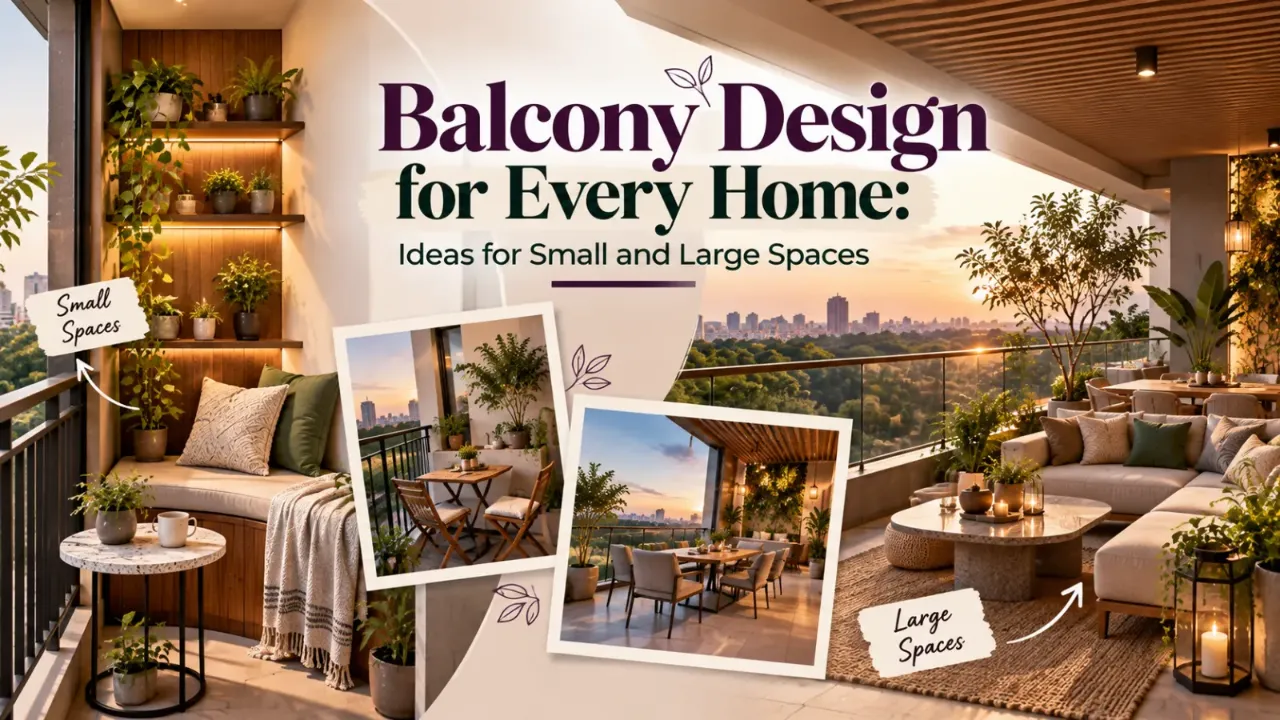
Balcony Design for Every Home: Ideas for Small and Large Spaces
A balcony can be much more than an outdoor extension of your living room. It can become a quiet reading corner, a small garden, a morning tea spot or an additional place to relax after a long day. The challenge is designing it to suit the space you actually have.
In Indian homes, balconies vary considerably. Some are narrow extensions of apartment living rooms, while others are large enough to accommodate lounge seating, plants and even a compact dining area. The best balcony design for home is not necessarily the most expensive or elaborate one. It is the one that makes the available space comfortable, attractive and useful.
Whether you live in a compact apartment or a spacious home, thoughtful furniture, greenery, lighting and material choices can transform your balcony without overcrowding it.
Quick answer: For a small balcony, prioritise compact furniture, vertical greenery and clear walking space. For a medium-sized balcony, combine seating with plants and practical storage. For a large balcony, consider separate zones for relaxing, gardening or outdoor dining while keeping the overall design cohesive.
1. Begin With the Size and Purpose of Your Balcony
Before buying furniture or choosing a colour scheme, measure the balcony and think about how you want to use it. A space intended for morning tea needs a different arrangement from one designed for entertaining guests or maintaining a collection of plants.
Note the usable floor area, the location of doors, the direction in which the balcony opens and the space needed to move comfortably. Also consider how much sunlight, rain and wind the balcony receives. These conditions affect your choice of furniture, fabrics, plants and finishes.
Start with one primary purpose, then add secondary uses if space permits. This approach helps avoid a common mistake: filling the balcony with attractive items but leaving little room to enjoy it.
2. Small Balcony Design: Make Every Inch Count
A compact balcony does not need to feel cramped. It simply requires more deliberate choices. Instead of filling the floor with bulky furniture, look for slim seating, foldable chairs, a small round table or a narrow bench that can also provide storage.
Vertical space is equally valuable. Wall-mounted planters, railing planters where permitted and tiered plant stands can introduce greenery without occupying the entire floor. Keep the central walking area as clear as possible, particularly in narrow balconies.
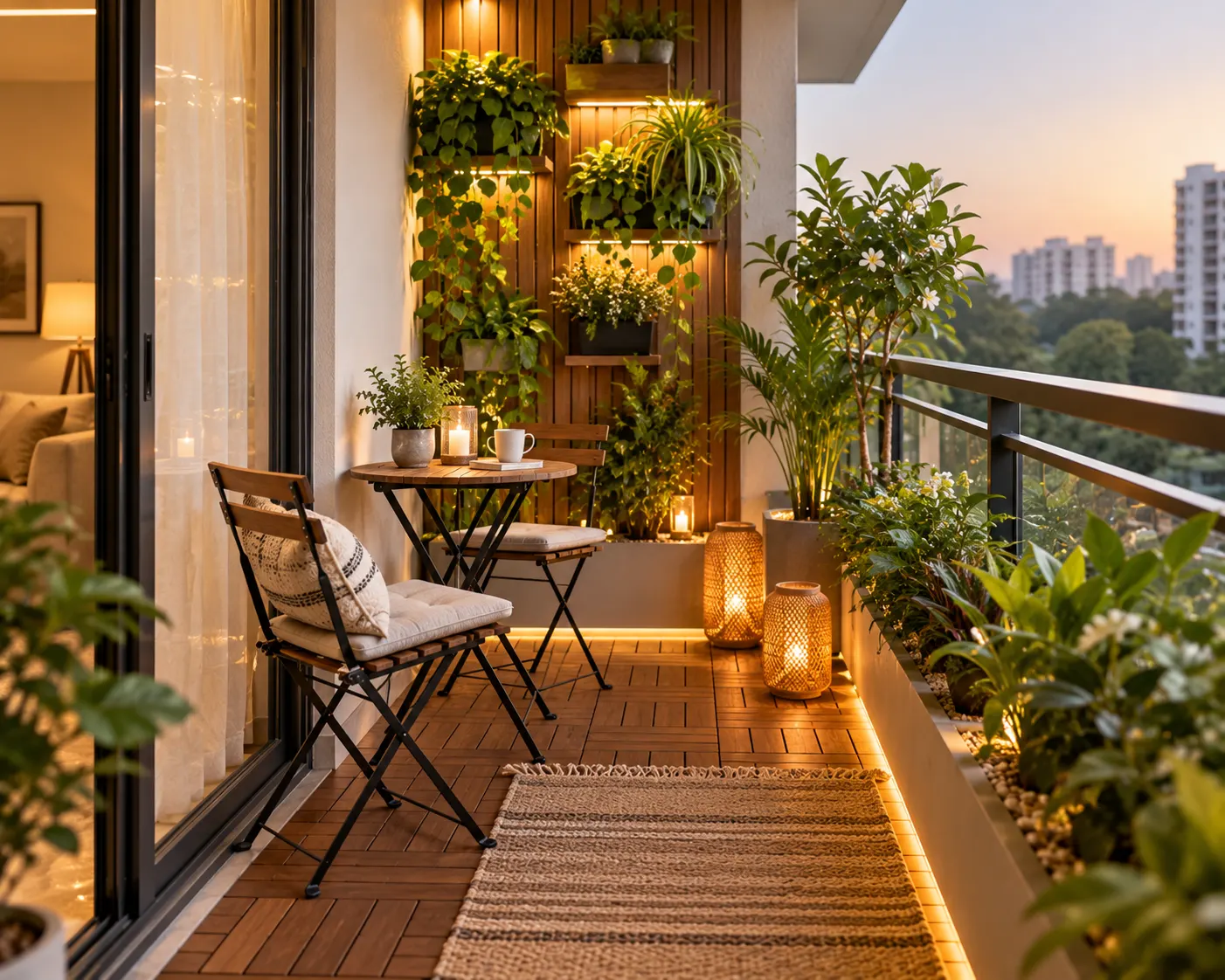
A warm, natural palette can make a compact balcony feel inviting. Wood-look deck tiles, neutral cushions, woven accessories and soft lighting can create a comfortable atmosphere without requiring multiple decorative features.
You do not need every balcony trend at once. Choose a comfortable seat, one useful surface, a few plants and suitable lighting first. Add accessories only when you know there is room for them.
3. Medium-Sized Balcony Design: Balance Seating and Greenery
A medium-sized balcony offers more flexibility, but it still benefits from a clear layout. You may be able to fit two comfortable chairs and a table, a small outdoor bench or a compact lounge arrangement alongside plants.
Think about how the furniture and greenery work together. Place seating where it is comfortable to use, and group plants along an edge or in a designated corner rather than spreading pots randomly across the floor. This keeps the balcony organised and easier to maintain.
A narrow storage bench can hold gardening tools, cushions or other small items. If you enjoy growing plants, use a mix of plant heights to create depth without making the balcony feel enclosed.
The aim is balance. The balcony should offer enough greenery to feel pleasant and enough usable floor space to move around without repeatedly shifting furniture.
4. Large Balcony Design: Create Separate Zones
A spacious balcony can accommodate more than one activity. Depending on its shape, you may be able to create a lounge corner, a small dining area and a dedicated section for plants.
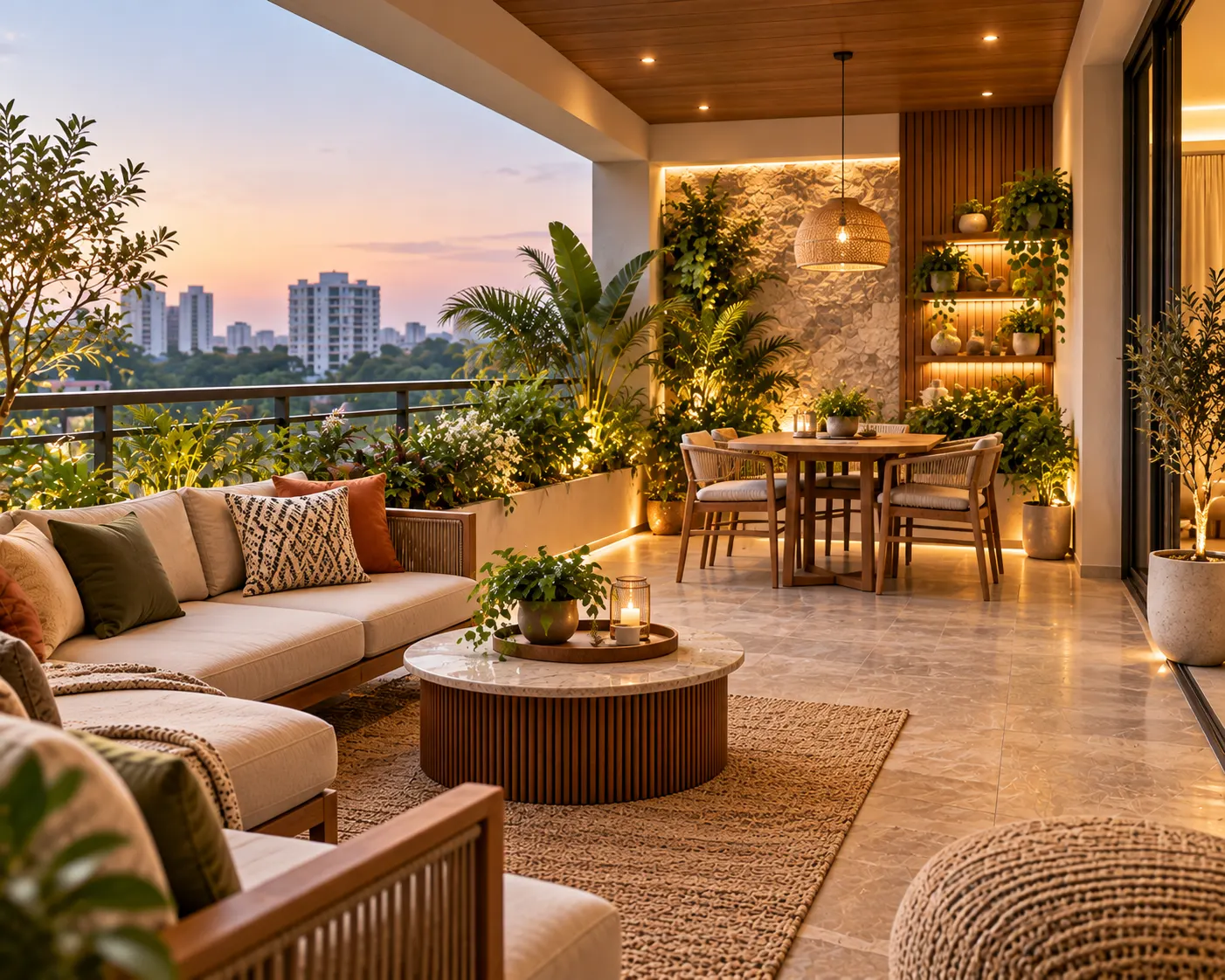
Begin by dividing the balcony into practical zones. Place outdoor lounge seating in one area, position a dining table where chairs can be moved comfortably, and group planters along the perimeter where conditions suit them. Rugs, furniture arrangements and lighting can help distinguish these areas without building permanent partitions.
A larger balcony may also accommodate a statement light, a weather-suitable rug or a feature wall. However, keep the visual language consistent. Matching tones across the furniture, planters and flooring will help the overall space feel intentional rather than like several unrelated settings.
Remember that a large balcony still needs clear circulation, safe access to doors and enough space to maintain plants and clean the floor.
5. Choose Furniture That Fits the Space
Furniture should match both the dimensions of the balcony and its intended use. A beautiful sofa is not practical if it blocks the doorway or leaves no room to walk around it.
For compact balconies, consider foldable chairs, compact benches, nesting tables and slim-profile seating. For medium balconies, a two-seat arrangement or a small bench with movable chairs may work well. Larger spaces can accommodate deeper lounge seating or a dining set, provided the layout leaves sufficient clearance.
Prioritise materials designed for the conditions where the furniture will be placed. Exposure to direct sun, monsoon rain and humidity can affect finishes, fabrics and cushions. Check the manufacturer's care recommendations before investing in an outdoor furniture set.
Measure furniture before purchasing it, including the space needed when chairs are pulled out or tables are in use. Planning these details first can prevent expensive layout mistakes.
6. Use Plants to Add Life Without Creating Clutter
Plants can make a balcony feel calmer and more connected to nature. The most suitable arrangement depends on available sunlight, wind exposure, watering routines and how much maintenance you can manage.
For a small balcony, use a few carefully placed pots, vertical planters or railing planters where safe and permitted. In a medium balcony, group plants of different heights in one or two areas. In a large balcony, create a more layered garden while keeping the seating and walking areas accessible.
Choose plants according to the light conditions rather than appearance alone. Check how much sun the balcony receives throughout the day before buying plants, and consider their mature size so that they do not quickly overwhelm the space.
Use stable, appropriately sized containers and avoid overloading railings or shelves. Make sure drainage is managed so that watering does not create persistent dampness or inconvenience neighbouring homes.
7. Select Flooring, Colours and Materials Carefully
Your choice of materials affects the balcony's appearance, maintenance and comfort. Wood-look deck tiles can create warmth, while suitable outdoor tiles offer a more streamlined finish. Natural textures, neutral colours and a few green accents work across many home styles.
Light colours can help a small balcony feel visually open, especially when combined with simple furniture and uncluttered surfaces. Deeper shades, contrasting planters or textured finishes can add character to larger spaces. You do not have to use the same material everywhere; a limited palette of complementary finishes is often enough.
Before choosing flooring or changing the surface, check slip resistance, drainage, weather suitability and the installation requirements. Do not cover drainage points or make changes that could allow water to collect.
For rented homes, removable accessories and movable furniture may be more suitable than permanent alterations. For owned homes, consider the long-term cost of installation, cleaning and upkeep before committing to a finish.
8. Use Lighting to Make the Balcony More Inviting
Good lighting can make a balcony useful after sunset without making it feel overly bright. Wall lights, suitable outdoor lanterns, rechargeable lamps and discreet accent lighting can create different levels of illumination.
In a compact balcony, a single well-positioned light combined with a small lantern may be enough. A medium balcony can benefit from gentle lighting near seating and plants. In a larger balcony, separate lighting for the lounge and dining areas can help each zone feel comfortable.
Always use fixtures suitable for their exposure to outdoor conditions. Keep electrical connections protected and have permanent electrical work carried out appropriately. Position lights to avoid uncomfortable glare for people seated on the balcony or neighbours in nearby buildings.
Think about how the balcony will look from inside the home, too. A softly lit balcony can become a pleasant visual extension of the living room in the evening.
9. Add Privacy and Weather Protection Where Needed
Balconies can feel exposed because of neighbouring windows, nearby buildings or strong afternoon sun. Privacy screens, outdoor curtains and carefully placed plants may help, depending on the space and building rules.
Choose a solution that does not block necessary airflow, create an obstruction or compromise safety. Screens and hanging accessories should be secured properly, particularly in windy conditions. Before installing permanent coverings, enclosures or fixtures, check the building's rules and any applicable requirements.
For weather protection, consider how much rain reaches the balcony and whether cushions, rugs and furniture can be stored when needed. Use outdoor-suitable textiles and avoid leaving items in positions where wind can dislodge them.
A balcony should remain practical throughout the seasons, not just look attractive in ideal weather.
10. Plan Your Balcony Design Around Your Budget
An effective balcony makeover does not have to happen all at once. Start with the elements that make the biggest difference to everyday use: seating, lighting, greenery and a clear layout. Decorative accessories can be introduced gradually.
For a small balcony, a foldable chair, compact table, a few plants and warm lighting may be enough. A medium balcony may need a bench, coordinated planters and some weather-suitable storage. A large balcony may require a more considered investment in outdoor seating, dining furniture, lighting and durable finishes.
Compare the full cost, including furniture, flooring, installation, cushions, planters and maintenance. If the balcony is exposed to harsh weather, prioritise durability over accessories that may need frequent replacement.
A useful design is one you can maintain comfortably and enjoy regularly, rather than one that looks impressive only in photographs.
A Simple Checklist Before Finalising Your Balcony Design
- Measure the balcony and identify the main purpose of the space.
- Leave clear access to doors and a comfortable walking area.
- Choose furniture that suits the dimensions and weather exposure.
- Select plants according to sunlight and maintenance needs.
- Check drainage, flooring suitability and water management.
- Plan lighting, privacy and safe installation of accessories.
- Set a realistic budget that includes upkeep and replacement costs.
Ready to Plan Your Balcony?
Start with the dimensions and the way you want to use the space. Once the layout is clear, you can explore combinations of seating, greenery, colours and lighting that suit your home. Walls to Wonder can help you think through the overall design direction before you make material or furniture decisions.
A Final Thought
The best balcony design for home is not defined by its size. A small balcony can become a peaceful retreat with just a few well-chosen elements, while a larger one can offer room for lounging, gardening and dining.
Focus on comfort, practical movement, suitable materials and easy maintenance. When every element has a purpose, even a modest balcony can become one of the most enjoyable corners of your home.
Frequently Asked Questions
1. How can I design a small balcony in an apartment?
Use compact or foldable furniture, vertical greenery and a limited colour palette. Keep the walking area clear and start with the essentials before adding decorative accessories.
2. Which colours work well for balcony design?
Light neutrals can create an open, airy feel, while natural wood tones and green plants add warmth. Deeper colours can work as accents or in larger balconies, depending on the light and surrounding interiors.
3. How can I make my balcony look beautiful on a budget?
Start with practical seating, a few healthy plants and suitable lighting. Refreshing cushions or adding a small outdoor rug can also change the look without requiring a full renovation.
4. Which plants are suitable for a home balcony?
The best plants depend on sunlight, wind exposure, local climate and your maintenance routine. Observe the balcony's light conditions and choose plants that suit them rather than selecting plants based on appearance alone.
5. How do I make a balcony more private?
Depending on the layout and building rules, you could use suitable privacy screens, outdoor curtains or carefully positioned plants. Ensure that installations are secure and do not compromise airflow, access or safety.
Turn this idea into a plan for your home
Visualise your space, understand the likely budget, or find a professional who can bring the idea to life.