

POP Ceilings Explained: Durability, Cost and Care
A well-designed ceiling can change the way a room looks. From soft cove lighting and clean geometric borders to decorative curves, POP ceilings offer plenty of scope for creating a polished interior. But appearance is only one part of the decision. Before installing one, homeowners should also understand durability, maintenance requirements and the cost of keeping the ceiling in good condition.
POP, or Plaster of Paris, is commonly used for decorative ceiling work and custom shapes created on-site. Gypsum-board ceilings use factory-made boards attached to a supporting framework, while PVC ceilings use panel systems. All three can serve different needs, but they are not interchangeable in every room or situation.
Quick answer: POP is worth considering when you want custom shapes, decorative detailing or a smooth plastered finish. Its performance depends on sound installation, a stable supporting structure and protection from moisture. Compare the full installed cost—including framing, finishing, painting, lighting and repairs—rather than choosing by the per-square-foot rate alone.
1. Understand What a POP Ceiling Involves
POP stands for Plaster of Paris, a plaster material that can be shaped into decorative elements and applied during on-site ceiling work. It is often chosen for borders, curves, mouldings and designs that require more flexibility than standard flat boards can provide.
A POP false ceiling usually involves a supporting framework and a carefully finished plaster surface. The quality of the framework, preparation, application, drying and final finishing all influence the result.
It is important to distinguish the POP material from the entire ceiling system. The supporting structure, electrical fittings, cove-light grooves, paint and installation labour also affect its performance and price.
2. Consider the Finish Before Choosing the Design
One reason homeowners choose POP is its design flexibility. It can be used to create simple borders, recessed sections, layered shapes and decorative transitions around lighting.
A restrained design can look just as effective as a complex one. In many modern living rooms, a clean ceiling with a well-proportioned recess, a few spotlights and concealed lighting provides enough detail without overwhelming the room.
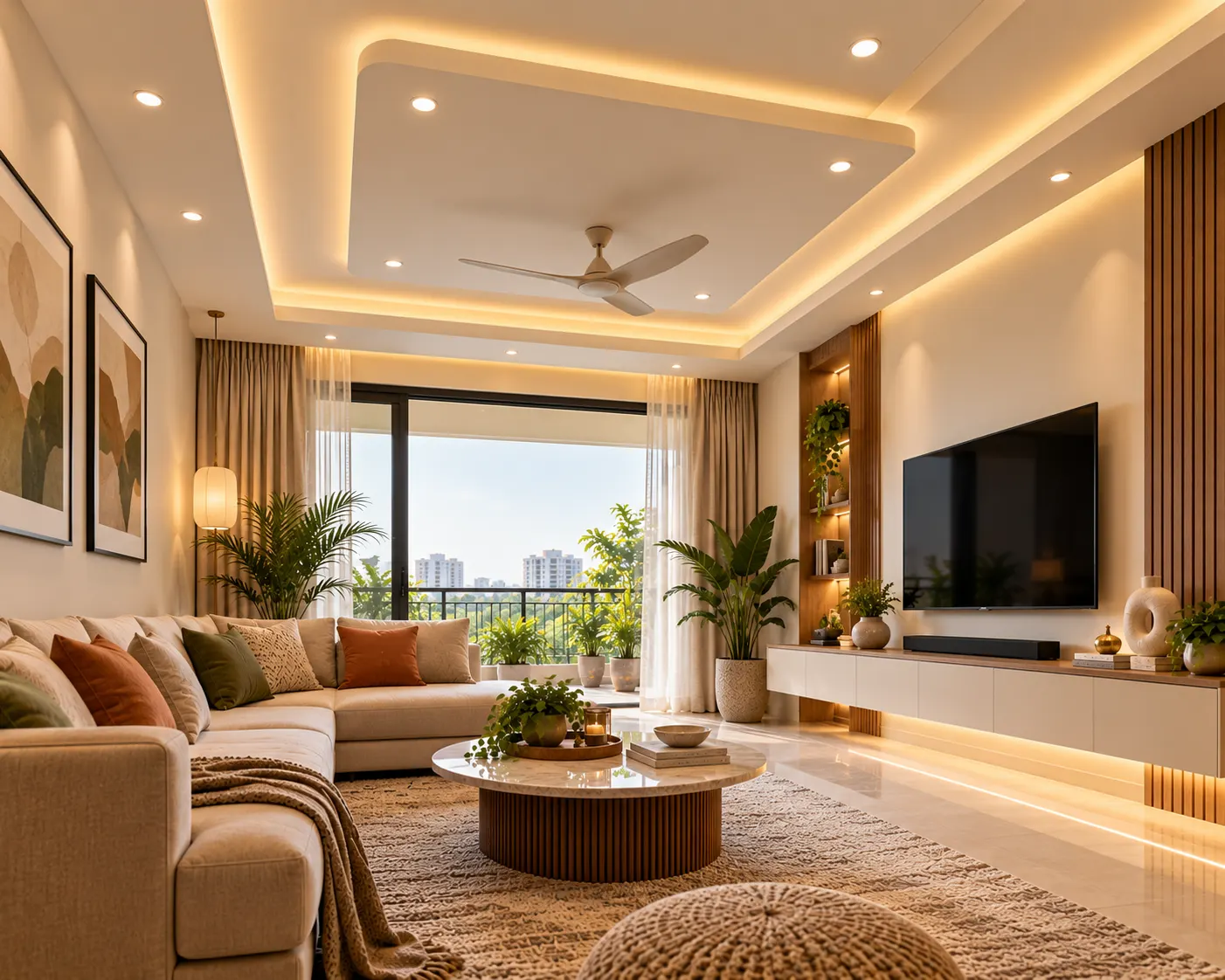
When planning a design, consider the room's ceiling height, furniture arrangement and natural light. A deep or heavily layered ceiling takes away more clear height and may make a small room feel lower. The design should complement the proportions of the room rather than simply copy a reference photograph.
Also decide where the fan, lights, wiring and any other ceiling-mounted fittings will go before work begins. Changes made after finishing can increase costs and leave visible patches.
3. How Durable Is a POP Ceiling?
A POP ceiling can remain in good condition for many years when the materials, supporting framework and installation are appropriate for the space. However, no single lifespan applies to every POP ceiling.
Durability is influenced by several factors: the stability of the structure, the quality of the application, workmanship, movement in the building, moisture exposure and the weight of the fittings attached to the ceiling.
Fine cracks may appear when joints or surfaces move, when the ceiling has not been properly prepared or when installation quality is poor. Water seepage can stain, soften or damage plaster finishes. A decorative design cannot compensate for a leaking slab or an unstable framework.
The important point is that durability depends on the complete ceiling system, not just the plaster material. Before installation, address existing seepage, damp patches or structural concerns instead of covering them with a new ceiling.
4. What Maintenance Does a POP Ceiling Need?
POP ceilings generally do not require complicated daily care, but they should not be treated as maintenance-free. Regular visual checks and prompt attention to moisture or cracks can help prevent minor issues from becoming larger repairs.
For everyday cleaning, use a soft duster or a suitable dry cleaning method to remove dust. Avoid soaking the surface or using aggressive cleaning products. Follow the recommendations for the specific paint or finish applied to the ceiling.
If you notice a crack, stain, blistering paint or a section that appears to sag, investigate the cause before repainting. A crack caused by movement or a stain caused by a leak will not be solved by covering it with paint. Repair the underlying problem first, then have the affected surface properly repaired and finished.
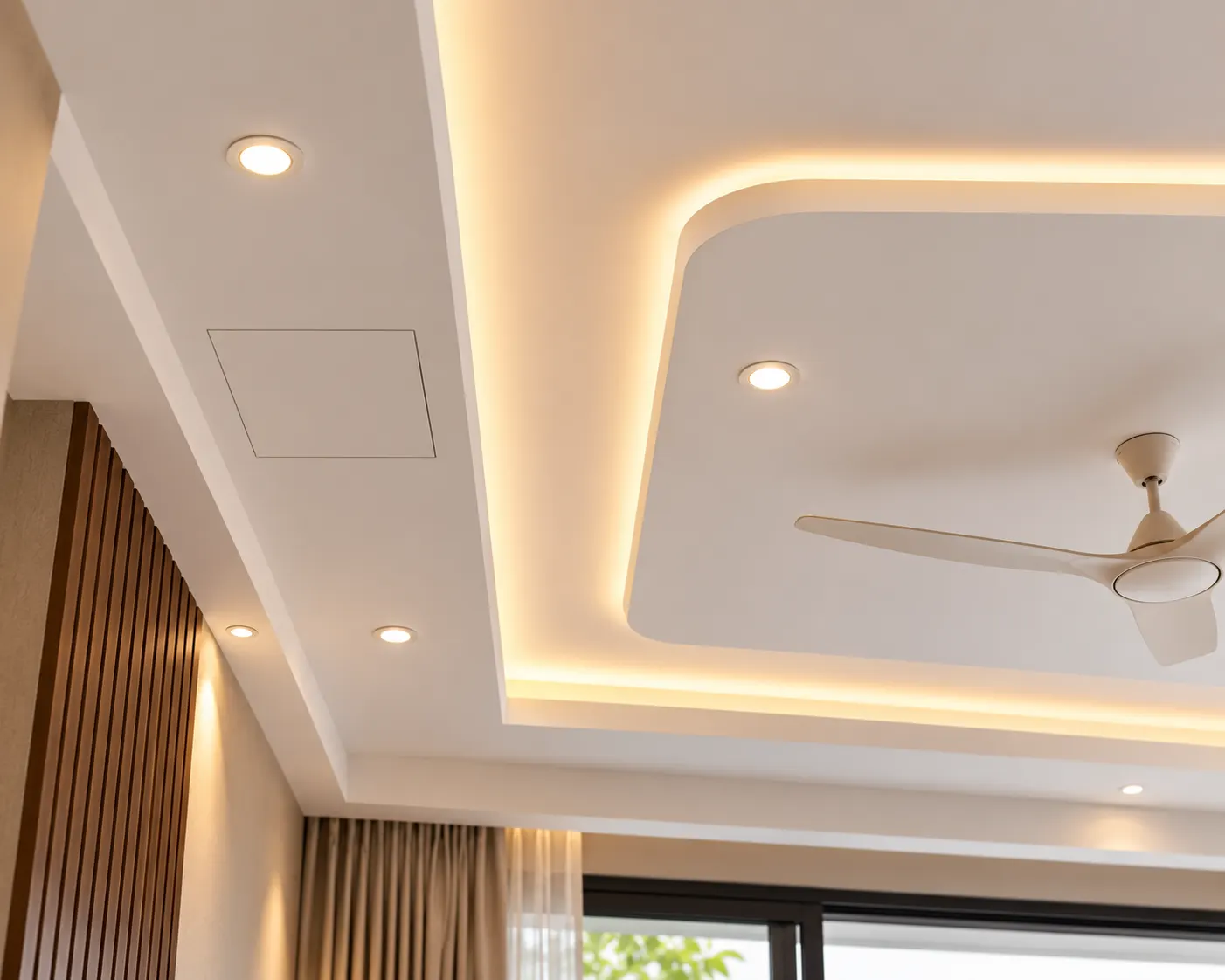
Lighting also affects maintenance planning. Drivers, wiring connections and other components may need attention over time. Plan suitable access wherever required, and make sure electrical work is handled safely. Avoid relying on a decorative ceiling finish to conceal a problem that still needs inspection or repair.
5. POP vs Gypsum vs PVC: Cost and Upkeep Compared
The best option depends on the room, the finish you want and the conditions in which the ceiling will be installed. The following figures are indicative planning rates for basic work in India, not fixed quotations.
| Ceiling type | Indicative cost per sq. ft. | Main advantage | Main consideration |
|---|---|---|---|
| POP false ceiling | ₹90–₹140 | Flexible for curves, borders and custom decorative details | More on-site work, drying time and dependence on skilled finishing |
| Gypsum-board ceiling | ₹75–₹125 | Fast installation and a consistent, smooth finish for many modern designs | Joint quality matters; standard boards are not suitable for persistent moisture |
| PVC ceiling panels | ₹80–₹180 | Useful in selected moisture-prone settings when the product is suitable | Appearance, panel quality, support and fitting details vary |
Actual rates vary by location, material specification, ceiling area, site conditions and what the quote includes. Some quotes cover only the basic ceiling work; others include finishing, painting or additional design elements. Check the scope before comparing prices.
Durability: POP and gypsum can both perform well in appropriate dry interiors when installed correctly. Neither should be used to conceal a leak. PVC panels may suit selected moisture-prone areas, but the product, support system, fire performance and suitability for the location still need to be checked.
Maintenance: POP may need patching and repainting if cracks or surface damage appear. Gypsum-board repairs can involve cutting out and replacing a damaged section, then finishing the joint. PVC panels are often easier to wipe clean, though damaged panels, connections or supporting components may still need repair.
Design flexibility: POP is especially useful for custom curves, mouldings and decorative details. Gypsum boards are well suited to many clean, straight-lined designs and recessed lighting arrangements. PVC offers panel-based finishes, with the appearance depending on the product selected.
6. What Actually Changes the Cost of a POP Ceiling?
The rate per square foot is only a starting point. Two POP ceilings of the same area can have very different final costs because the design, installation conditions and included work are not identical.
- Design complexity: Plain borders and simple forms generally require less work than multiple levels, curves, intricate patterns or custom mouldings.
- Framework and site preparation: Existing ceiling conditions, the required support system and the work needed to achieve a level finish affect the quote.
- Lighting: Cove grooves, spotlights, profile lights, drivers and additional electrical points can add to the overall budget.
- Finishing and painting: Putty, primer, paint, sanding and final touch-ups should be clearly accounted for.
- Labour and location: Skilled labour rates, transport, site access and local pricing can change the final amount.
- Repairs and exclusions: Removal of old work, fixing seepage, electrical changes and future repairs may sit outside the basic installation rate.
A layered design with integrated lighting may cost considerably more than a simple ceiling. The appropriate comparison is the complete installed cost for the same room and scope, not just the price of the main material.
7. Common POP Ceiling Problems to Watch For
Knowing the warning signs makes it easier to address a problem before it affects a larger area.
- Fine cracks: Check whether the cause is surface finishing, a joint, movement or a wider structural issue before repairing.
- Water stains or peeling paint: Investigate leakage or dampness first. Do not simply cover the stain.
- Sagging or loose sections: Stop treating the issue as a cosmetic defect. Have the supporting system and affected area inspected.
- Uneven finishing: Poor alignment, visible joints or inconsistent edges may point to problems with preparation or workmanship.
- Lighting problems: Flickering fittings, inaccessible drivers or poorly planned wiring should be checked safely by a qualified professional.
Not every hairline crack means the entire ceiling must be replaced. Equally, a large crack or sagging area should not be dismissed as normal settling. The right response depends on the location, severity and underlying cause.
8. When Should You Choose POP—and When Should You Consider Another Option?
Choose POP when custom shapes, decorative borders or site-formed details are important to the design and you have access to skilled installation.
Consider gypsum board when you want a clean, contemporary ceiling and a relatively quick installation with predictable board dimensions. Good joint finishing and the right board specification remain important.
Consider suitable PVC panels where moisture exposure is a concern and the selected product is appropriate for the location. Do not assume that every PVC panel is suitable for every wet, hot or enclosed area; check the manufacturer's specifications.
For any option, resolve moisture problems first, assess the available ceiling height and plan wiring and fixtures before the installation starts. If the room is already low, a heavy false ceiling may not be the best choice at all.
9. What Should a POP Ceiling Quotation Include?
A detailed quotation makes it easier to compare contractors and avoid unexpected additions later.
Pre-installation checklist
- The total measured ceiling area and the exact design scope.
- The supporting framework and relevant material specifications.
- Details of levels, curves, borders and decorative elements.
- Lighting cut-outs, cove grooves, electrical points and included fittings.
- Surface preparation, finishing, primer and paint.
- Material, labour, transport, taxes and any removal of existing work.
- Expected timeline, repair responsibilities and applicable warranty or service terms.
Ask each contractor to quote against the same scope. If one quote includes painting and lighting preparation while another excludes them, the lower headline rate may not represent the better overall value.
Planning Your Ceiling Budget?
A false ceiling is one part of the overall interior budget. Before finalising decorative details, compare the proposed ceiling with the money needed for furniture, storage, lighting and other essential work.
Walls to Wonder's Interior Design Cost Calculator can help you prepare a broader room-wise interior budget. Treat the estimate as a planning aid and confirm the final scope and price with a site-specific quotation.
A Final Thought
A POP ceiling should be judged by more than how it looks on installation day. Its design, supporting framework, workmanship, exposure to moisture and ease of repair all matter to its long-term value.
Choose POP for the kind of detail it does well, compare alternatives for your room's conditions and ask for a complete quotation. A simpler, properly executed ceiling may serve your home better than an elaborate design that stretches the budget or becomes difficult to maintain.
Frequently Asked Questions
1. How long does a POP ceiling last?
There is no single lifespan that applies to every POP ceiling. Its condition over time depends on installation quality, the supporting structure, moisture exposure, building movement and maintenance.
2. Does a POP ceiling crack easily?
Cracks can develop because of poor workmanship, movement, inadequate preparation or other underlying issues. Correct installation and addressing structural or moisture problems can reduce the risk, but no ceiling finish is entirely immune to damage.
3. Is POP cheaper than gypsum?
Not always. Indicative rates overlap and vary according to location, design and quote inclusions. Compare the complete installed scope—including finishing, painting, lighting work and labour—before deciding.
4. How do I maintain a POP ceiling?
Remove dust gently, inspect the surface periodically and investigate cracks, stains or peeling paint promptly. Repair the underlying cause before patching or repainting, and arrange electrical work safely.
5. Is POP suitable for bathrooms or damp rooms?
Ordinary POP finishes should not be treated as waterproof. Persistent moisture and leakage can damage them. Resolve water problems first and choose a ceiling system specifically suitable for the location and its moisture conditions.
Get a personalised estimate for your home
Choose your rooms, materials and preferences to understand a practical interior budget before you commit.