

A Better Almari: Balancing Style, Storage and Daily Use
An almari is one of the most frequently used pieces of furniture in a bedroom. It stores clothes, accessories, bags, bedding and countless everyday essentials. Yet when choosing a design, it is easy to focus on the exterior finish and overlook how the wardrobe will function once it is filled.
A beautiful wardrobe can become frustrating if shelves are difficult to reach, drawers are too shallow or there is insufficient hanging space. On the other hand, a practical almari that clashes with the bedroom's colours and finishes can make the entire space feel disconnected.
The best almari design balances appearance with the way you actually live. Whether you are planning a compact wardrobe for a small bedroom or a floor-to-ceiling built-in for a spacious home, the layout, doors, finishes and internal storage should work together.
Quick answer: Start by listing what you need to store, measuring the available wall and deciding how the wardrobe doors will open. Then choose a suitable internal layout, durable finishes and hardware that complement the bedroom without compromising everyday access.
1. Start With Your Storage Needs, Not the Exterior Design
Before choosing shutter colours or browsing wardrobe inspiration, take stock of what the almari needs to hold. The storage requirements of a couple sharing a bedroom may differ from those of a person who needs space for workwear, occasionwear, accessories and seasonal clothing.
Think about the clothes you hang rather than fold, the number of drawers you need, and whether you store bags, shoes, bedding or valuables in the wardrobe. Consider whether these items need to be reached every day or only occasionally.
This simple exercise helps you allocate the right amount of space to hanging rails, shelves, drawers and upper storage. It also prevents a common design mistake: creating a beautiful exterior around an internal arrangement that does not suit your belongings.
2. Measure the Bedroom Before Choosing the Almari
The wardrobe should fit the room without making movement around the bed difficult. Measure the available wall width, floor-to-ceiling height and depth you can accommodate. Also account for skirting, electrical switches, windows, curtains and any architectural projections.
The position of the bed matters just as much. A wardrobe that looks proportionate on a floor plan may feel bulky if it crowds the bedside area or blocks a doorway.
Leave sufficient space for the type of doors you choose. Hinged shutters need room to swing open, while sliding shutters require their own track and access considerations. Remember to check whether you can stand comfortably in front of the wardrobe, pull out drawers and reach the contents without moving other furniture.
Plan around the actual room dimensions rather than relying only on standard wardrobe sizes.
3. Choose a Door Style That Suits Your Room
Almari doors influence both the visual appearance and the way the bedroom functions. The choice should depend on your available space, preferred look and storage access.
Hinged doors open outward and can provide access to the full width of an individual compartment. They work well when there is enough clearance in front of the wardrobe.
Sliding doors move along tracks rather than swinging into the room. They can be useful where bed placement or a narrow passage makes outward-opening shutters inconvenient. However, you generally access only the section exposed by the open sliding panel at a time.
Handleless or recessed-pull designs create a cleaner exterior, while conventional handles can provide a more defined decorative detail. Choose hardware that feels comfortable to use and is suitable for the door's size and weight.
Before deciding, compare access, installation requirements, cleaning and hardware quality—not just how the shutters look in a photograph.
4. Design the Interior Around Your Everyday Routine
A well-planned almari should make it easy to find and put away things. Instead of dividing the inside into identical compartments, assign space according to the items you own and how you use them.
Hanging sections work for garments that crease easily or need to be kept ready for use. Shelves suit folded clothing, bags and bedding, while drawers can organise smaller items and accessories. Upper compartments are useful for seasonal belongings and items you do not need every day.
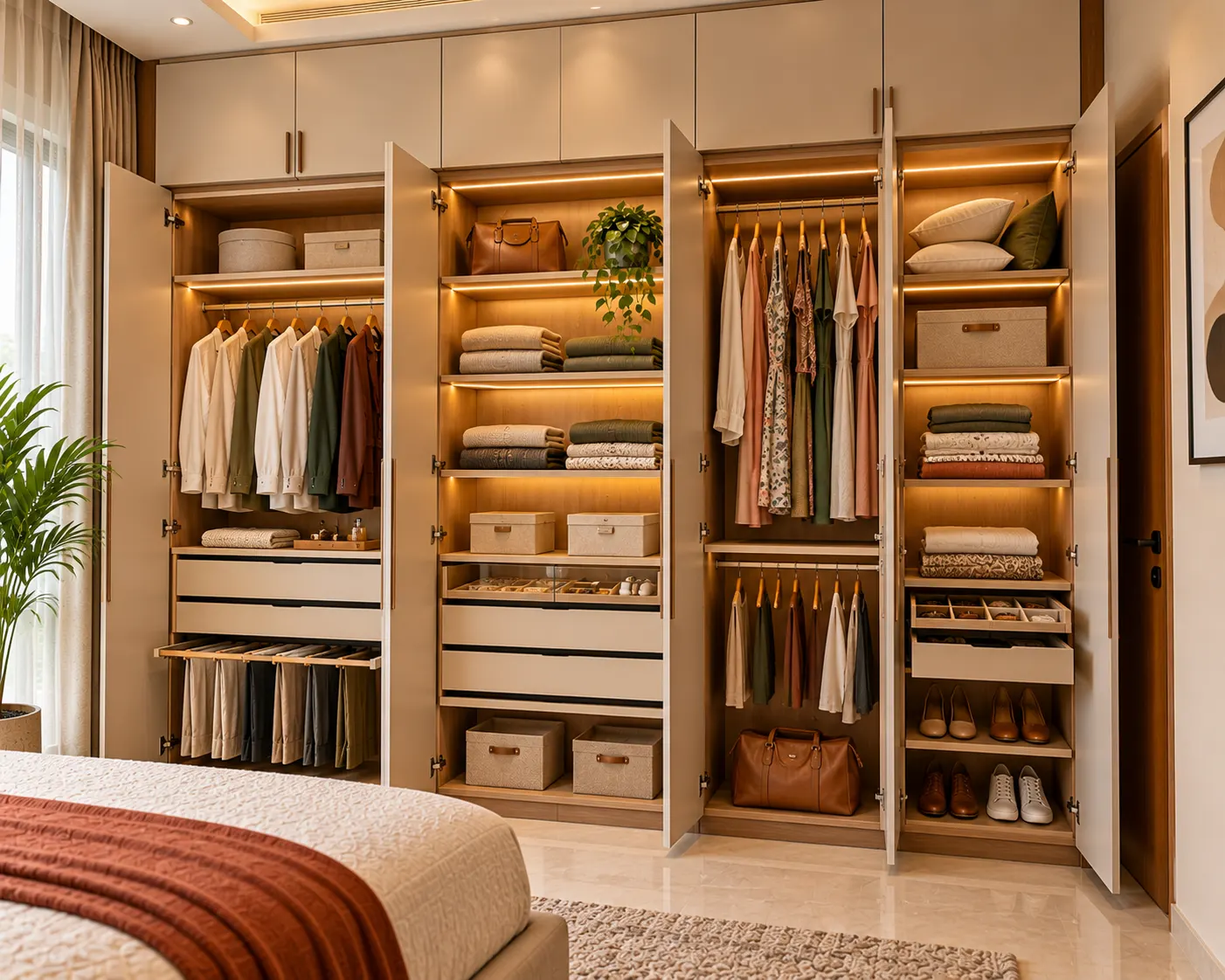
Adjustable shelves can help the wardrobe adapt as your storage needs change. If two people share an almari, consider dividing the layout into clear zones while allowing enough flexibility for items that take up more room.
Avoid adding compartments merely because they look sophisticated. Every section should have a purpose, be accessible and fit the things it is meant to store.
5. Match the Almari Finish to the Bedroom
The exterior of the wardrobe should work with the bed, flooring, wall colour, bedside tables and lighting. It does not need to match every finish exactly, but the colours and materials should feel connected.
Light neutrals such as warm white, beige and greige can create a calm appearance. Wood finishes introduce warmth, while darker tones can add contrast when balanced with sufficient light and simpler surrounding surfaces.
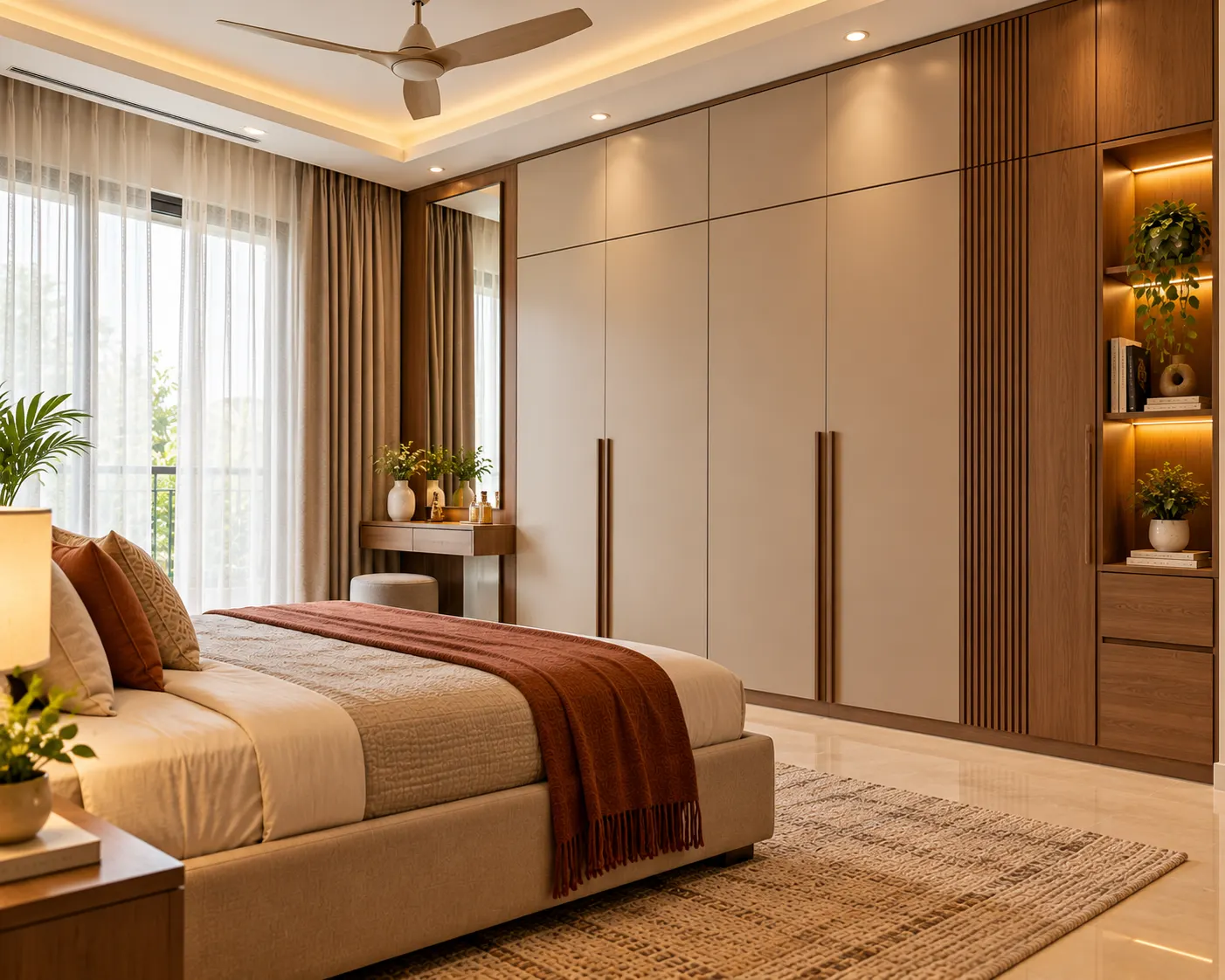
For a small bedroom, a restrained finish and uncomplicated shutter pattern can help the wardrobe feel less visually dominant. In a larger room, you may have space to combine finishes, introduce a mirror panel or add a carefully planned decorative detail.
Mirrored shutters can serve a practical purpose in some bedrooms, but consider reflections, cleaning and their position relative to the bed and windows. The goal is a wardrobe that belongs to the bedroom rather than competing with every other element.
6. Make Every Shelf, Drawer and Compartment Count
Internal organisation is where an almari becomes genuinely useful. Think about accessibility as well as total capacity.
Place frequently used clothes and accessories within comfortable reach. Reserve higher shelves for items that are accessed occasionally, and use drawers for things that tend to become untidy when left on open shelves.
- Hanging space: Plan the height and width around the clothes you actually wear, including longer garments.
- Shelves: Size them to suit folded clothing, bags or bedding without creating awkward, underused gaps.
- Drawers: Choose appropriate depth and consider dividers for smaller items.
- Accessories: Add dedicated storage for belts, jewellery or other items only when you need it.
- Upper storage: Use loft compartments for seasonal or infrequently used belongings that can be lifted safely.
The most efficient wardrobe is not necessarily the one with the greatest number of compartments. It is the one where your belongings fit comfortably and remain easy to access.
7. Pay Attention to Materials, Hardware and Finish Quality
The visible finish may influence the first impression, but the construction determines much of the wardrobe's day-to-day experience. Ask what materials are being used for the carcass, shutters, shelves and back panel, and confirm that the specifications are appropriate for the room and expected use.
Inspect the quality of the edging, alignment of the shutters and smoothness of the drawer movement. Hinges, sliding tracks, handles and other hardware should be appropriate for the size and weight of the components.
Bedroom wardrobes can also be affected by moisture, especially where walls have seepage or dampness. Address the underlying problem before installing furniture against the affected wall, and ask the installer about suitable materials and ventilation for the conditions.
Do not evaluate a quotation by the exterior finish alone. Two wardrobes that appear similar may differ in internal materials, hardware, fittings and installation quality.
8. Use Lighting and Mirrors Thoughtfully
Lighting can make the wardrobe easier to use, particularly in deep compartments or bedrooms with limited natural light. Depending on the design, you could consider integrated wardrobe lighting or a well-placed light source near the storage area.
Plan electrical connections before installation and ensure that any integrated fixtures can be accessed for maintenance. Lighting should improve visibility without producing uncomfortable glare or unnecessary heat.
Mirrors can also be useful, especially when a separate dressing area is not available. A mirror on a shutter or nearby wall may serve the purpose without requiring an additional piece of furniture.
Avoid adding lighting and mirrors simply for a premium appearance. Choose them where they improve everyday use or help the room's layout work better.
9. Balance the Design With Your Budget
A wardrobe's final cost depends on more than its overall size. The internal layout, material specifications, shutter finish, hardware, lighting, accessories and installation can all influence the total.
A simple wardrobe with a well-planned layout may be more useful than an elaborate one with decorative panels and compartments that you rarely use. Prioritise storage capacity, reliable hardware, suitable materials and a finish that works with the bedroom before adding optional features.
Ask for a detailed quotation that identifies the wardrobe dimensions, internal configuration, materials, shutter finish, hardware, accessories, installation and any applicable taxes or additional charges.
Compare quotations against the same specifications. A lower price may reflect a different material, fewer drawers, simpler hardware or exclusions that appear later as additional costs.
10. Keep the Almari Easy to Use and Maintain
A practical wardrobe should remain easy to operate after months and years of daily use. Keep frequently accessed sections organised, avoid overloading shelves and drawers, and follow the manufacturer's cleaning recommendations for the chosen finish.
Wipe surfaces with a suitable soft cloth and use cleaning products recommended for the material. Avoid excessive moisture, particularly around edges and joints. Check hinges, handles and sliding tracks periodically, and have loose or misaligned hardware adjusted before it causes further wear.
It is also worth reviewing your storage habits from time to time. If a shelf is always overloaded or a drawer is difficult to use, the issue may be the organisation rather than the exterior design.
A wardrobe designed around real routines is easier to maintain and less likely to become a source of daily frustration.
A Simple Checklist Before Finalising Your Almari Design
- List the clothes, accessories and other items the wardrobe must store.
- Measure the wall, ceiling height and available space in front of the wardrobe.
- Choose hinged or sliding doors based on access and room layout.
- Plan hanging sections, shelves, drawers and upper storage around your needs.
- Compare materials, shutter finishes, edging and hardware specifications.
- Check lighting, mirror placement and access to electrical connections.
- Get a detailed quotation with materials, fittings, installation and exclusions.
Ready to Plan Your Bedroom Storage?
Before finalising the almari, think about how its size, finish and layout will work with the rest of the bedroom. Walls to Wonder's Design My Room tool can help you explore a visual direction for your space. Use it as a planning aid, then confirm measurements, internal storage requirements and material specifications before installation.
A Final Thought
A good almari should make the bedroom look more considered while making everyday life simpler. Its exterior sets the visual tone, but the internal layout, door access, hardware and material quality determine how well it serves you.
Start with what you need to store, plan around the room's dimensions and invest in the features you will actually use. When appearance and function work together, the result is a wardrobe that feels right every time you open it.
Frequently Asked Questions
1. Which almari design is best for a small bedroom?
A wardrobe with a simple exterior, efficient internal compartments and doors suited to the available clearance is a good starting point. Sliding doors may help where hinged shutters would obstruct movement, provided the track arrangement and access work for your needs.
2. Are sliding wardrobe doors better than hinged doors?
Neither option is universally better. Sliding doors can save swing space, while hinged doors can offer full access to an individual compartment. Choose based on room dimensions, access requirements, hardware quality and maintenance.
3. How should I organise the inside of an almari?
Plan hanging space, shelves, drawers and upper storage around the items you own. Keep everyday essentials within comfortable reach and reserve less accessible areas for seasonal or infrequently used belongings.
4. Which wardrobe colours work well in a modern bedroom?
Warm white, beige, greige and wood finishes are versatile choices. Darker or contrasting finishes can work too, provided they complement the bedroom's lighting, flooring and other furniture.
5. What should I check before ordering a custom almari?
Confirm the measurements, materials, internal layout, shutter style, hardware, finish, accessories, installation scope and total quotation. Also resolve dampness or seepage on the intended wall before installation.
Turn this idea into a plan for your home
Visualise your space, understand the likely budget, or find a professional who can bring the idea to life.