
Sports Equipment Storage Ideas for Family Apartments
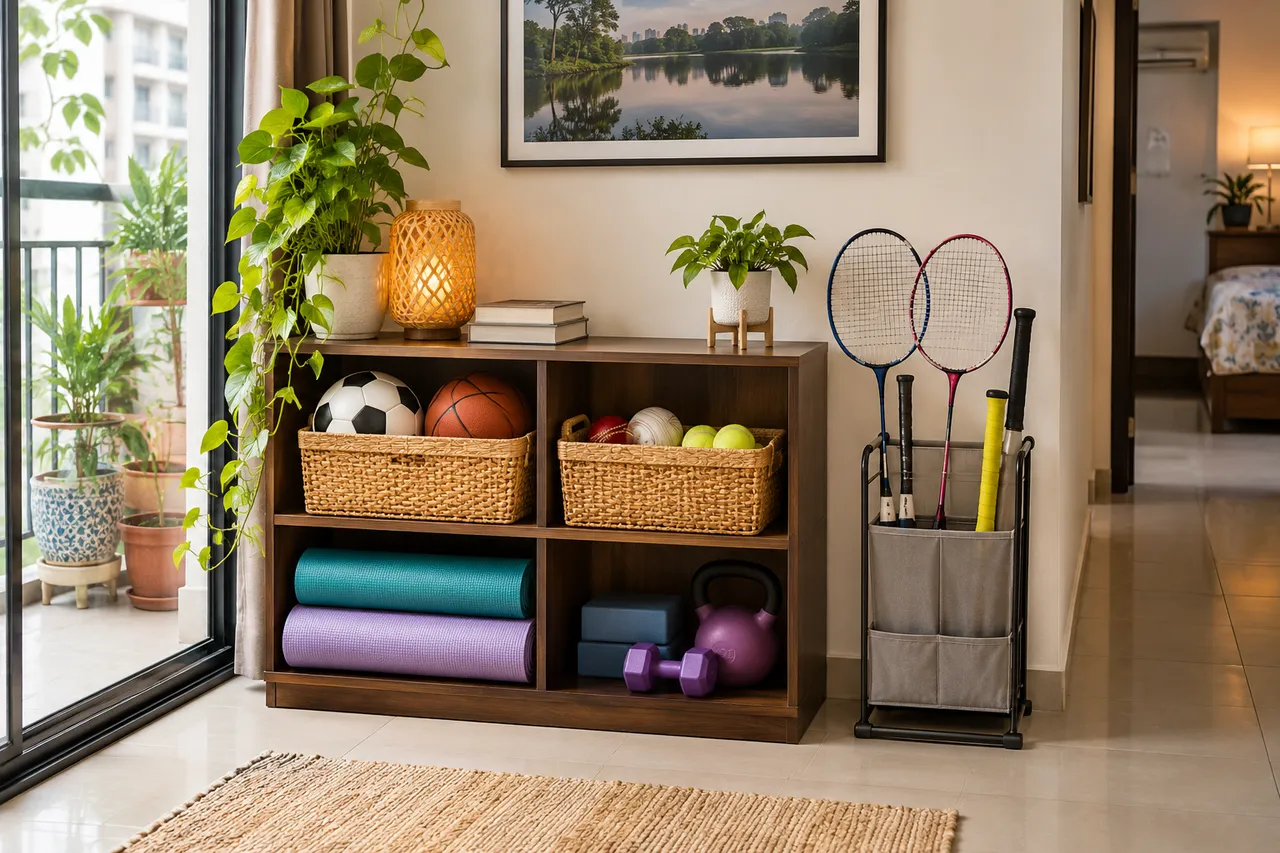
Store sports equipment in a low ball basket, a slim racket compartment, a dedicated mat cubby and a separate shoe tray. Choose storage around the gear you own and measure it with covers or bags included. Keep heavy equipment low, allow suitable drying space and preserve clear access through the apartment.
Start with a gear inventory
Gather the equipment used in a normal week, including shoes, covers, protective gear and bags. Separate occasional equipment from daily kit. Measure each item in the condition in which it will be stored: a racket bag can be larger than its contents, and a rolled mat needs its own usable opening. Record who retrieves each item and what comes home wet or dirty. These details determine the storage arrangement more reliably than the number of shelves in a catalogue.
1. A low ball-storage bench or basket unit
Use a low open basket in a stable floor-supported unit to stop balls rolling through the room. If the furniture will also serve as seating, choose a unit expressly designed and rated for that use; a storage shelf is not automatically a bench. Materials to consider are an existing suitable low cabinet, a removable basket and an easy-clean liner. Measure the largest ball, the basket opening and the space needed to pull it out. Keep the unit where the entrance door and passage remain clear.
2. A slim compartment for rackets and sports bags
A narrow vertical compartment can keep badminton or tennis rackets from being crushed under heavier kit. Try an existing wardrobe bay or a stable floor-supported organiser before ordering custom work. Measure the longest racket with its cover and check handle access. Let the bag retain its shape rather than forcing a zip closed around the storage opening. If a wall fitting is proposed, the installer should confirm the product rating, fixing method and wall suitability. A narrow unit saves space only when it remains stable and easy to use.
3. A dedicated mat-and-accessory cubby
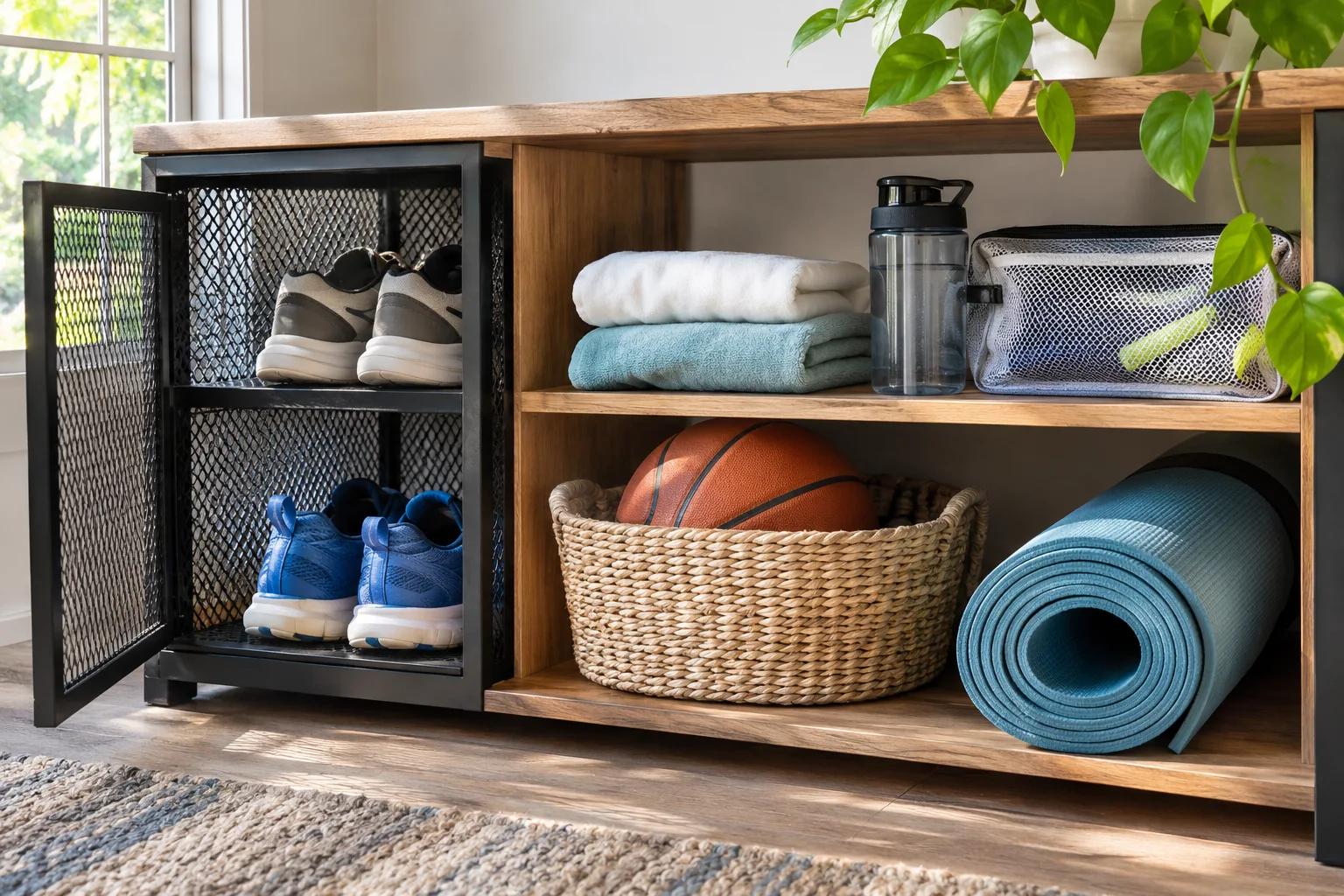
A low open cubby can organise a rolled mat beside a separate pouch for bands or other small accessories. Follow the equipment’s instructions for cleaning, drying and storage; do not assume every mat or resistance product can be folded. Materials include a suitable existing shelf, removable divider and small identified pouch. Measure the actual roll diameter and length, then test removing it without dragging other items out. Keep heavy exercise equipment in separately rated low storage rather than stacking it above the mat.
4. A removable sports basket inside an existing cupboard
A basket can turn part of an existing cupboard into a portable kit store without replacing the furniture. It suits light clean accessories that need to travel together. Measure the internal width after hinges, basket handles and door opening are considered. Test a full basket at its intended lifting height; divide the contents if it becomes awkward. Keep dry clean kit separate from shoes and equipment awaiting cleaning. The basket should simplify one activity, not become a container for every object in the household.
5. A shoe-and-kit return station
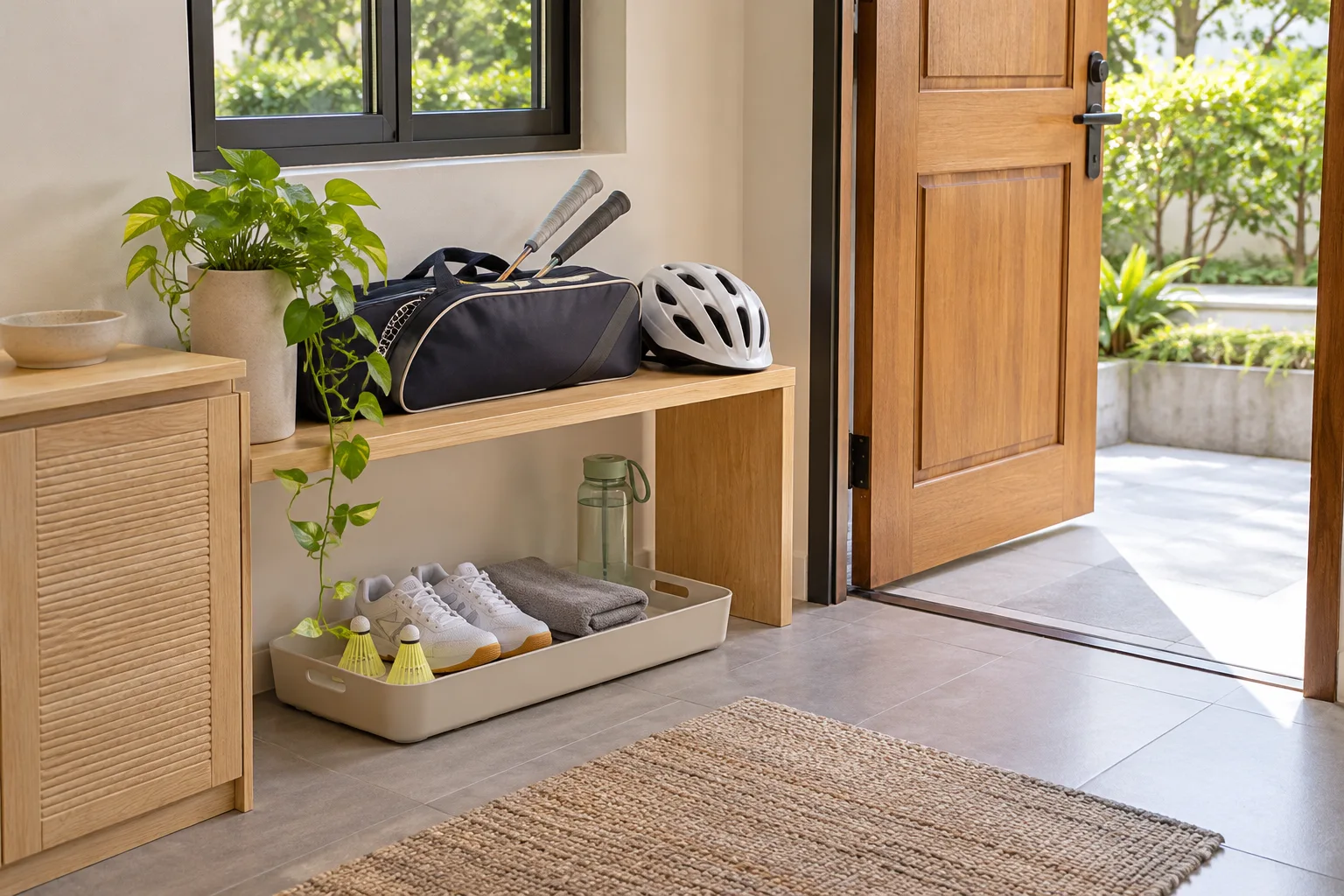
Place an easy-clean removable tray beside suitable low storage inside the home. Give shoes a separate position from clean towels and accessories. Allow equipment to dry as directed before putting it away; a closed cupboard is not a solution for a damp bag. Check the entrance with the door open and someone using the storage. Preserve shared corridors and required access rather than extending the station outside the apartment. A successful return station is quick to reset after play and easy to clean without moving a heavy cabinet.
Compare the options before buying
A ball basket suits rolling items; a tall slim compartment suits long lightweight gear; a mat cubby suits one specific shape; a removable basket suits portable clean accessories; a return station suits the cleanup routine. Choose one or two arrangements that solve the actual inventory. First try existing furniture with removable organisers. Ask for a measured, itemised quote only if a suitable location and retrieval test show that custom work is needed. Budget separately for the unit, organisers, any installation and finish, rather than accepting an unexplained storage package.
Check the layout during a normal return from play
Bring the equipment home, clean or dry it as instructed and put it away. Note anything left on the floor because the storage is inconvenient. Test retrieval by the people who will use it, including children where appropriate. Keep age-appropriate items reachable and secure unsuitable or heavy items separately. After a week, change the arrangement before adding more capacity. A clear route, manageable lifting and a repeatable routine matter more than displaying every piece of kit.
Quick planning record
| Option | Materials to consider | Measure and test |
|---|---|---|
| Low ball unit | Rated low unit and removable basket | Largest ball, basket withdrawal and door access |
| Racket compartment | Stable organiser and protective covers | Covered racket length and retrieval |
| Mat cubby | Suitable shelf and removable divider | Roll size and product storage guidance |
| Portable kit basket | Existing cupboard and light basket | Hinges, handles and full basket weight |
| Return station | Suitable low unit and easy-clean tray | Open door, cleanup and clear route |
Frequently asked questions
How do I store sports equipment in a small apartment?
Start with a measured inventory and use low baskets, slim racket storage or a dedicated mat cubby. Reuse suitable furniture before adding a new unit, and keep circulation clear.
Can sports equipment go inside a closed cupboard?
Store it in appropriate condition according to its care instructions. Separate shoes and do not seal damp equipment into a crowded compartment.
Can a shoe bench hold sports equipment?
It may work if its compartments fit the gear. Use it as seating only if the unit is designed and rated for sitting, and keep its door or basket movement clear.
Where should exercise weights be stored?
Use low stable storage expressly suitable for the load. Confirm unit and floor suitability where needed and avoid overhead shelves or improvised hooks.
Do I need to buy a custom sports cabinet?
Not necessarily. A suitable existing cupboard and removable organisers may solve the problem. Measure and test access before commissioning new furniture.
Related practical guides
- From Guest Room to Yoga Sanctuary: A Flexible Design Plan
- Storage Planning for Baner Homes: Wardrobes, Utility & More
Plan the next step with WallsToWonder
Explore an arrangement with Design My Room, then verify the measured fit, equipment care and installation requirements before buying.
Turn this idea into a plan for your home
Visualise your space, understand the likely budget, or find a professional who can bring the idea to life.