
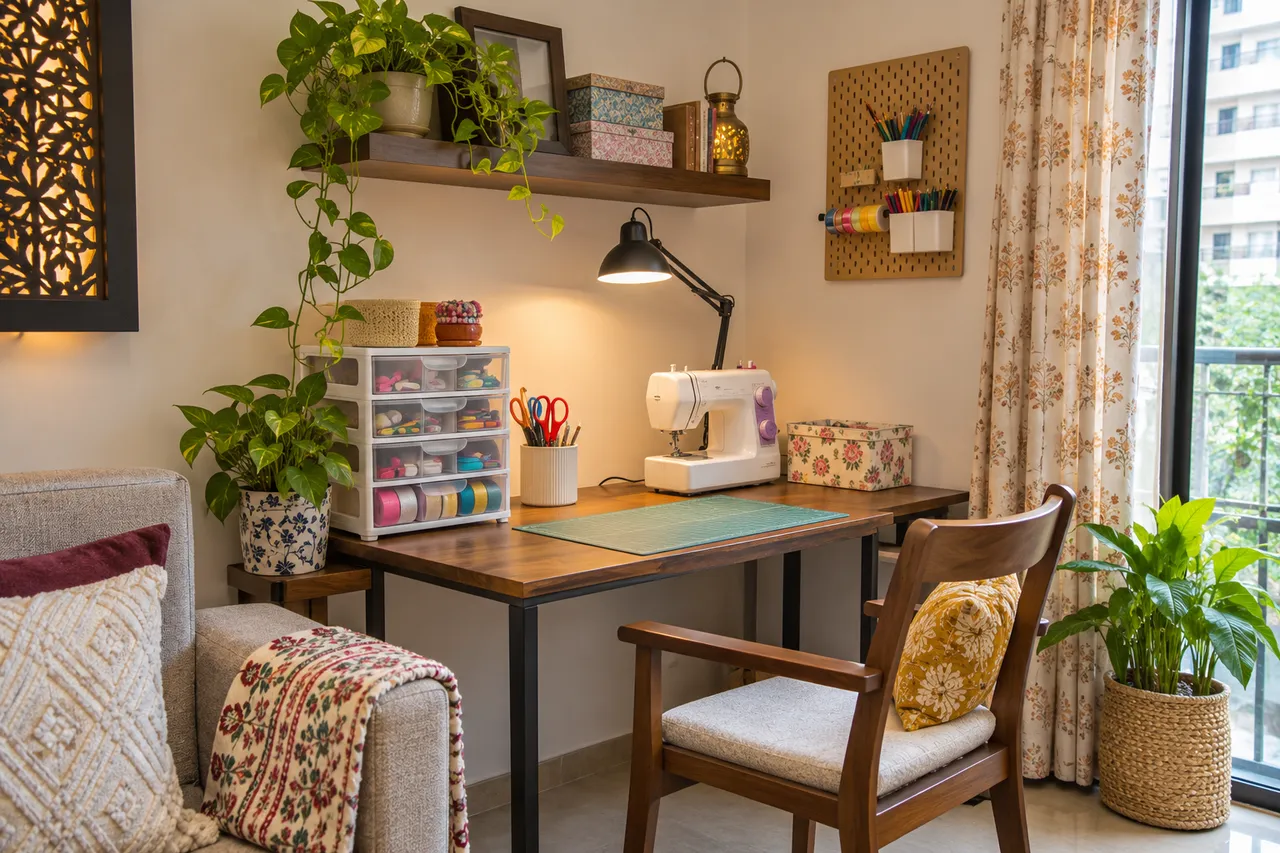
A Compact Hobby Corner for Sewing, Crafts and Creative Work
A useful hobby corner needs a stable work surface, task lighting, space for the activity and storage that keeps unfinished work together. Plan around one main hobby before combining several. Test the chair and tool layout using existing furniture, keep sharp tools secured and give the workspace a repeatable pack-away routine.
Before you start
- Gather: Actual tools, one current project, measuring tape, a suitable chair and existing containers.
- Set priorities: Separate sewing, cutting, paper craft and occasional activities so one surface is not expected to do everything.
- Start small: Arrange a temporary setup first; specify custom furniture after a real work session.
1. Begin with the activity footprint
Set out the equipment and material for a typical task. A sewing machine needs a stable surface and room to handle fabric; cutting larger pieces may need another suitable area. Paper crafts need room for the project and the tools in use. Measure the occupied setup, not just the machine or cutting mat. If a fold-down surface is proposed, check its rated capacity and suitability for the equipment rather than assuming every folding desk can handle it.
2. Check sitting, reach and light together
Try the chair and work surface while performing the task. Keep frequently used tools within comfortable reach without constant twisting. Arrange task lighting to reduce shadows over the work and check glare from the actual sitting position. Daylight can help, but the corner must also work when you normally use it. Keep leads away from moving equipment, chair wheels and the route through the room.
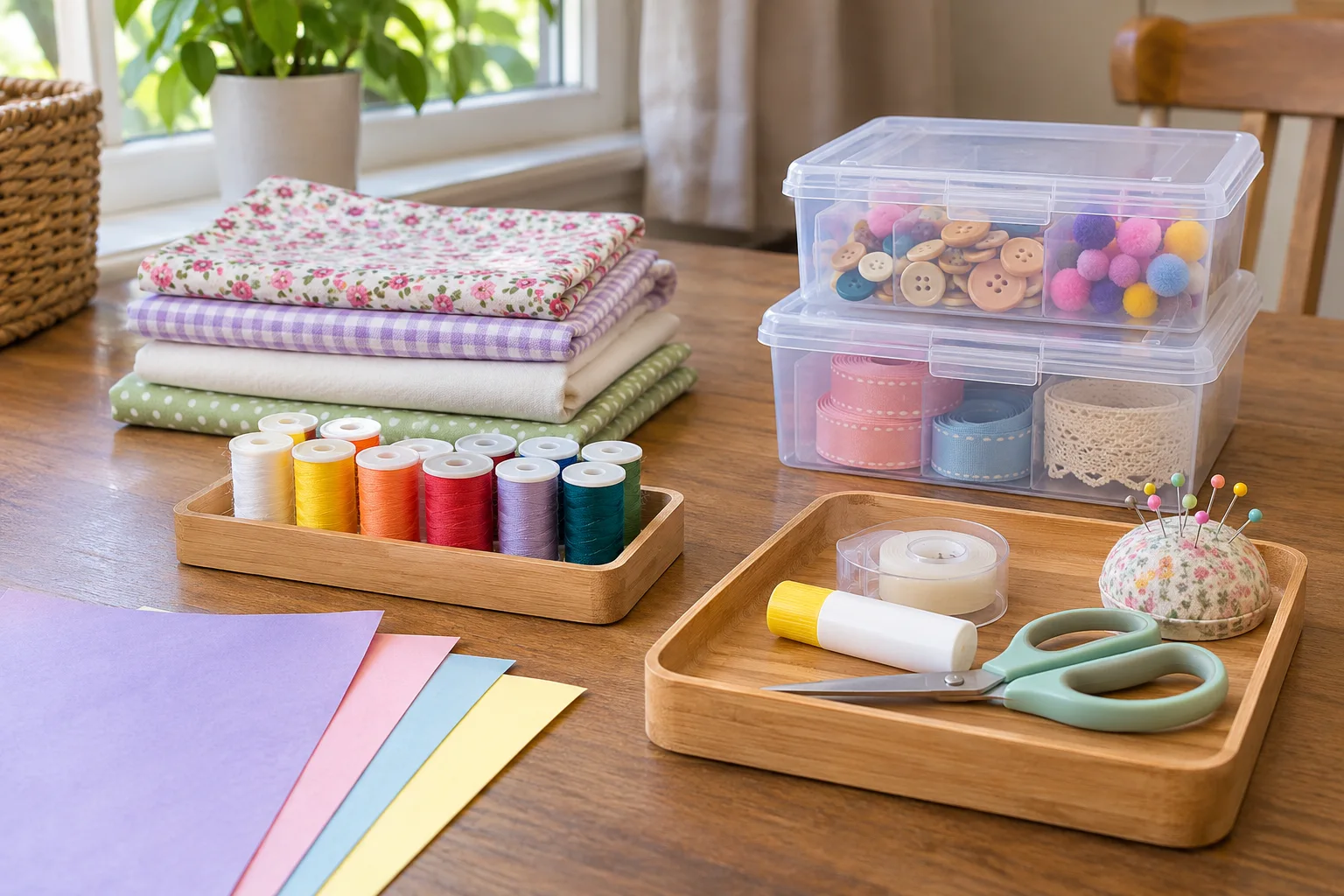
3. Store one project as a complete kit
Use a tray or box for the current project, with fabric, paper, notes and small parts together. Separate everyday tools from backup supplies so the worktop remains available. Clear containers may help identify contents, while opaque boxes may suit visually busy shared rooms. Choose the system based on whether you can locate and return an item quickly, not on whether every container matches.
4. Plan secure tool and material storage
Keep scissors, needles, blades and small parts secured where children or pets cannot access them. Follow product instructions for glues, paints and other supplies; a decorative cupboard is not a substitute for required ventilation or suitable storage. Disconnect powered equipment as instructed after use. Do not turn an active craft surface into a dining surface until tools, residues and supplies have been cleared.
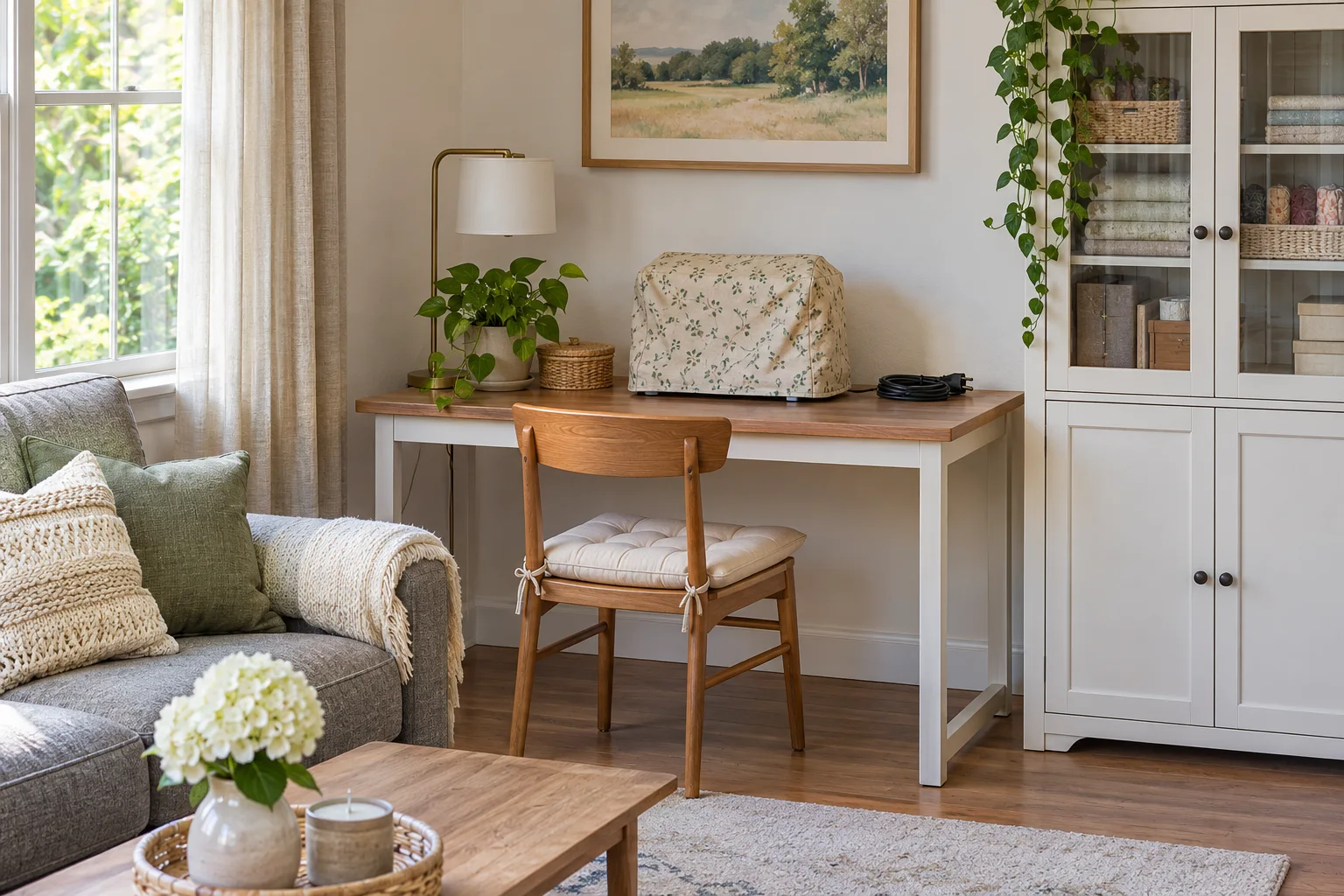
5. Make the last five minutes part of the design
Decide where the work-in-progress tray goes, where disconnected equipment lives and how the chair is parked. After a session, restore the shared space without dismantling the entire setup. If returning everything takes longer than the hobby itself, simplify the number of containers or relocate frequently used supplies. Expand storage only when the trial shows a genuine need. This keeps a small creative corner from becoming a permanent pile.
Compare the practical options
| Work stage | Space needed | Storage decision |
|---|---|---|
| Set up | Stable surface and suitable light | Daily tools nearest the task |
| Work in progress | Room for project and equipment | One project tray or box |
| Pack away | Clear surrounding route | Secure tools and disconnected equipment |
Plan the next step with WallsToWonder
Use Design My Room to explore how the proposed storage or workspace might look. Verify the actual measurements, product requirements and fit before buying. If custom work is needed, use the interior cost estimator to organise an initial scope, then ask a suitable professional for a measured proposal.
Frequently asked questions
Can a hobby desk share the living room?
Yes, if the activity, storage and pack-away routine preserve circulation and other uses. Check noise, lighting and tool security for your household.
Can I put a sewing machine on a folding desk?
Check the desk’s rated load, stability and suitability for vibration, and follow equipment guidance. A machine fitting on the surface does not establish that the desk is appropriate.
Should every supply be on an open pegboard?
Keep only suitable frequently used items accessible. Sharp tools, small parts and materials with specific storage requirements need an appropriate secure place.
How do I store unfinished crafts?
Give each active project a tray or container that fits its contents. Keep notes and required small parts with the project so restarting is easy.
Related practical guides
Turn this idea into a plan for your home
Visualise your space, understand the likely budget, or find a professional who can bring the idea to life.