
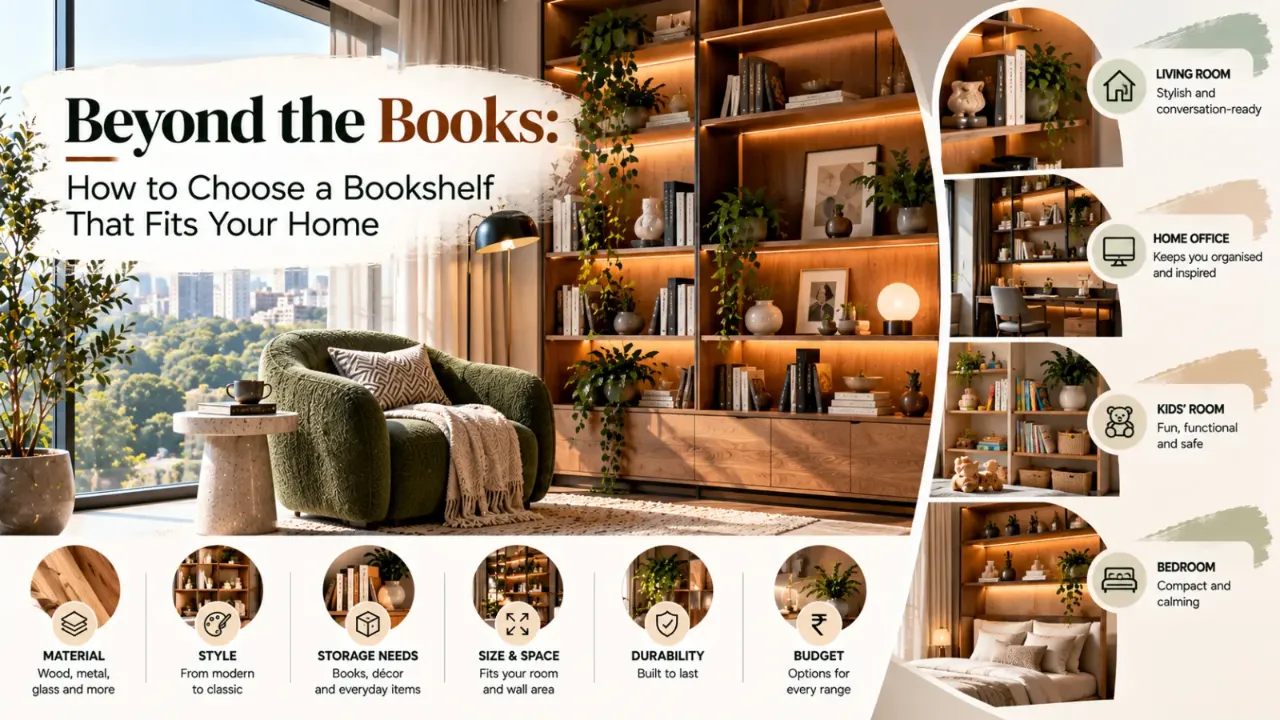
Beyond the Books: How to Choose a Bookshelf That Fits Your Home
A bookshelf can do much more than hold books. It can bring character to an empty wall, organise everyday essentials, display treasured objects and create a visual anchor in a living room or study. But the right bookshelf is not simply the one that looks attractive in a catalogue. It is the one that fits your available space, storage needs and daily routine.
Quick answer: Choose a bookshelf by assessing what you need to store, measuring the available space, comparing materials and selecting a design that works with your interior style and everyday habits.
1. Start With What You Need to Store
Before comparing designs, take stock of what will go on the shelves. A collection of paperbacks has different requirements from oversized art books, files, board games or decorative objects.
If you own many books, prioritise sturdy shelves, useful depth and enough vertical clearance for taller volumes. If the unit will serve as both storage and display, plan a combination of open shelves and closed cabinets. Families may need lower shelves for frequently used books, while a home office may benefit from compartments for documents and supplies.
Measure your collection rather than estimating from memory. Leaving a little room for future additions can prevent the bookshelf from becoming overcrowded soon after installation.
2. Choose a Bookshelf Style That Suits Your Space
- Wall-mounted shelves: These create a light, open appearance and keep the floor clear. They work well in compact rooms, above a desk or in unused wall areas. Secure fixing and suitable wall support are essential, particularly for heavier books.
- Freestanding bookcases: These are flexible options for renters and homeowners who may rearrange furniture later. They come in different heights and widths, making them suitable for bedrooms, studies and living rooms.
- Built-in bookshelves: Custom units can make use of awkward corners, alcoves and full-height walls. They can also be designed around windows or other architectural features, but measurements and installation need careful planning.
- Corner bookshelves: A corner unit can turn an overlooked area into useful storage. Check that it does not obstruct doors, windows or comfortable movement through the room.
- Bookshelves with cabinets: Combining open shelves with closed storage helps keep less attractive items out of sight while leaving space for books and carefully selected displays.
3. Get the Size and Placement Right
A bookshelf should fit the room without overwhelming it. Measure the available wall width, height and depth, and account for skirting boards, switches, sockets, doors and nearby furniture.
In a small room, a tall, narrow unit may use vertical space more efficiently than a wide bookcase. In a larger living room, a longer unit can help anchor a wall. However, the visual scale matters: a bulky unit can make a compact room feel crowded, while a very small shelf may look lost on a large wall.
Think about how you will reach the upper shelves and whether doors or drawers can open fully. Keep walkways clear, especially where the bookshelf sits near a desk, sofa or dining area. If the unit is tall, consider appropriate anti-tip fixing.
4. Select Materials for Durability and Appearance
The material influences the bookshelf's weight, finish, maintenance and cost.
- Solid wood: Offers natural grain and can suit traditional, contemporary or warm minimalist interiors. Its cost and maintenance requirements vary by wood species and finish.
- Plywood: Can be a practical option for custom furniture when the grade, thickness, edge treatment and finish are chosen appropriately.
- MDF and particleboard: Commonly used for manufactured furniture and finished panels. Quality, thickness, edge sealing and exposure to moisture affect how well they perform over time.
- Metal: Creates a slim, industrial or contemporary look. It is useful for certain open-frame designs, provided the structure is stable and the shelves are suited to the intended load.
- Glass: Can make a display feel visually lighter, but it needs suitable support and careful cleaning. It is generally best chosen for objects and books within the shelf's specified load capacity.
Do not select a material based on appearance alone. Ask about shelf thickness, maximum load, hardware, finish quality and how the unit should be maintained.
5. Make the Design Work With Your Interior Style
A bookshelf should feel connected to the room without needing to match every piece of furniture.
For a modern interior, consider clean lines, simple geometry and restrained finishes. A natural wood finish can bring warmth to a neutral room, while a painted bookshelf can create contrast or coordinate with an existing accent colour.
Traditional spaces may suit detailed joinery, richer wood tones or symmetrical arrangements. Minimalist rooms often benefit from simpler shelves with enough empty space to let each object stand out. In a home office, function may take priority over decorative styling.
Repeat one or two finishes already present in the room—such as wood, metal or a cabinet colour—to create cohesion without making the space feel overly coordinated.
6. Balance Open Display With Hidden Storage
Open shelves make books easy to access and allow personal objects to be displayed. They also show every item, so a crowded arrangement can quickly look untidy.
Closed cabinets help conceal files, cables, stationery and other everyday clutter. A combination of open and closed storage often provides the most flexibility.
For styling, group books by subject, size or colour if that helps you find them easily. Mix upright books with a few horizontal stacks, and leave some empty space between groups. Add a small number of framed photographs, planters or meaningful objects rather than filling every gap.
Keep decorative items from making frequently used books difficult to reach. A bookshelf should support your routine, not turn ordinary tasks into rearranging exercises.
7. Avoid Common Bookshelf Design Mistakes
A beautiful bookshelf can still disappoint if practical details are overlooked. Watch out for these common mistakes:
- Choosing shelf depth without checking the size of your books.
- Using shelves that are not rated for the weight they will carry.
- Ignoring wall strength and appropriate fixing hardware.
- Placing a unit where it blocks natural light, doors or movement.
- Filling every shelf and leaving no room for new books.
- Choosing a finish that clashes with the room's existing materials.
- Forgetting cable access when the bookshelf includes a work or media area.
- Overlooking dusting, cleaning and access to the upper shelves.
A little planning before purchase or fabrication can prevent expensive adjustments later.
8. Plan the Budget Before Customising
Bookshelf costs depend on dimensions, material, finish, hardware, design complexity and installation. A simple ready-made bookcase may cost less upfront than a custom built-in unit, while a bespoke design can make better use of unusual spaces.
Compare options based on the complete requirement, not just the shelf price. Ask whether delivery, installation, wall fixing, lighting, cabinet hardware and finishing are included in the quotation. For a custom unit, confirm dimensions and the agreed material specifications before production begins.
If you are planning a wider room makeover, use the Walls to Wonder Interior Design Cost Estimate to explore an indicative budget. Treat the result as a planning guide and confirm final prices with your chosen professional.
9. Visualise the Bookshelf Before You Commit
It can be difficult to judge proportions from a product photo alone. Before finalising a design, consider how the unit will look beside your existing furniture, flooring, wall colour and lighting.
You can explore a room concept with Design My Room using a photo of your space. If the bookshelf is part of a larger home project, the Whole Home Visualizer can help you explore a coordinated interior concept.
These visualisations are useful for exploring ideas, but verify measurements, structural support, materials and installation requirements before ordering or building the unit.
A Final Thought
The best bookshelf is not necessarily the biggest or most elaborate one. It is the one that holds what you need, fits comfortably into your room and feels natural alongside the rest of your home.
Start with your collection, measure your space, choose durable materials and leave room for everyday use. When storage and style are planned together, a bookshelf becomes more than furniture—it becomes a useful part of the way you live.
Frequently Asked Questions
Which bookshelf design is best for a small room?
Wall-mounted shelves, tall narrow bookcases and carefully planned corner units can make effective use of limited space. Choose a design that preserves clear walkways and does not make the room feel crowded.
Are built-in bookshelves better than freestanding bookcases?
Neither is universally better. Built-in shelves can use awkward spaces efficiently and create a seamless appearance, while freestanding bookcases are generally easier to move or replace. The right choice depends on your layout, budget and plans for the home.
What is the best material for a bookshelf?
There is no single best material for every home. Solid wood offers natural character, plywood can work well for custom units, manufactured panels can be cost-conscious, and metal suits some contemporary designs. Consider load capacity, finish, moisture exposure and maintenance.
How deep should a bookshelf be?
The appropriate depth depends on what you plan to store. Measure your largest books and allow enough space to place them comfortably without unnecessary overhang. Follow the manufacturer's specifications for the selected unit.
How can I make a bookshelf look stylish without cluttering it?
Combine books with a few meaningful objects, vary the arrangement of upright and horizontal books, and leave some visible space. Keep everyday items accessible and use closed storage for objects you do not want on display.
Turn this idea into a plan for your home
Visualise your space, understand the likely budget, or find a professional who can bring the idea to life.