
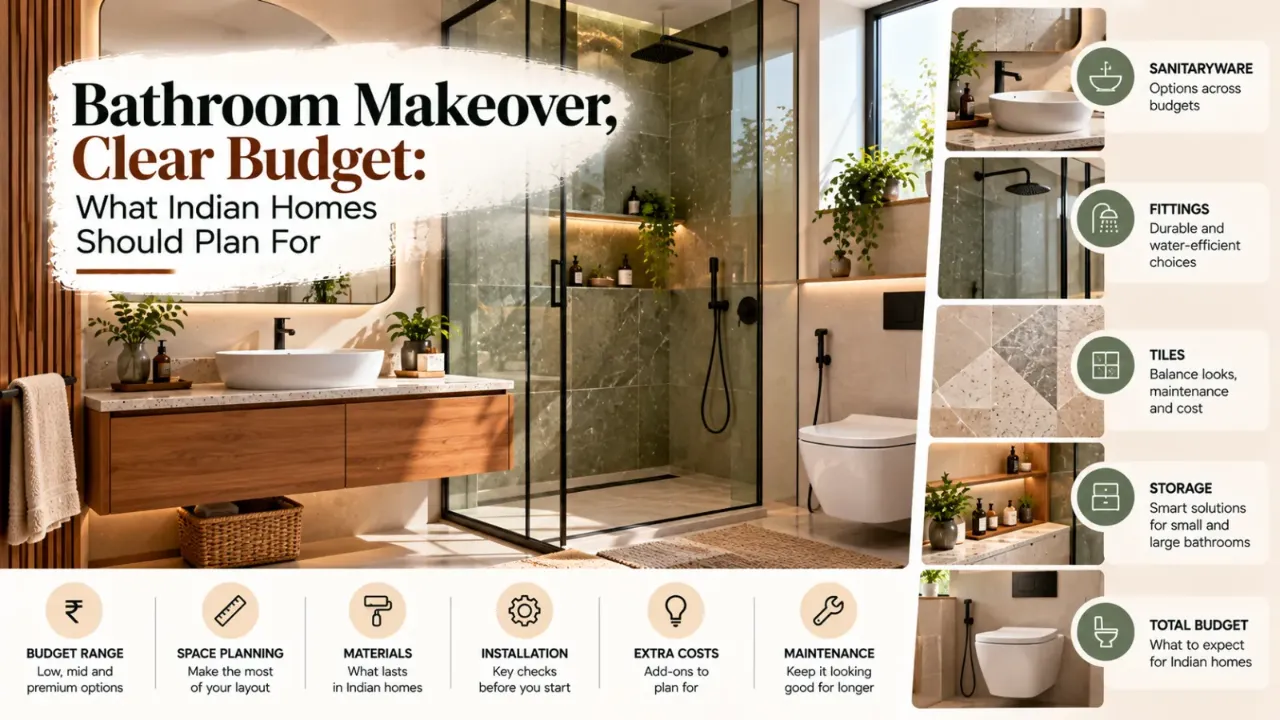
Bathroom Makeover, Clear Budget: What Indian Homes Should Plan For
A bathroom renovation can involve much more than replacing old tiles and choosing new taps. Behind the finished look are plumbing, waterproofing, demolition, electrical work, labour and installation costs that can significantly affect the final bill.
Quick answer: Bathroom remodel costs in India depend on the room's size, material choices, plumbing condition and renovation scope. Budget for essential repairs first, then allocate money to tiles, fittings and decorative upgrades.
1. How Much Does a Bathroom Remodel Cost in India?
There is no single price that applies to every bathroom. As a broad planning guide, a small cosmetic refresh may cost around ₹50,000–₹1,00,000, a mid-range renovation may fall around ₹1,00,000–₹2,50,000, and a premium remodel can cost ₹2,50,000–₹5,00,000 or more.
These are indicative ranges, not contractor quotations. A bathroom that needs extensive plumbing repairs, waterproofing or a layout change may exceed them. A smaller job that retains the existing tiles and plumbing may cost considerably less.
Before comparing prices, define what the work includes. Replacing taps and a mirror is very different from demolishing old tiles, replacing concealed pipes and installing new sanitaryware throughout.
2. Decide Between a Refresh, Partial Renovation and Full Remodel
Your renovation scope is one of the biggest influences on the budget.
- Cosmetic refresh: Keep the existing layout and serviceable tiles, then update selected items such as taps, shower fittings, mirror, lighting, accessories or paint suitable for the bathroom environment. This can be appropriate when the underlying surfaces and plumbing are in good condition.
- Partial renovation: Replace selected wall or floor tiles, upgrade certain fittings or improve storage while retaining other elements. The condition of the waterproofing and surfaces must be assessed before new finishes are installed.
- Full remodel: Remove old finishes, repair the base where needed, renew waterproofing and plumbing as required, and install new tiles, sanitaryware and fittings. This offers more scope for improvement but generally requires a larger budget and more time.
- Layout change: Moving a toilet, basin, shower or concealed plumbing lines adds complexity. Drainage slopes, pipe routes, electrical points and access to existing services must be considered before the design is finalised.
Choose the smallest scope that properly solves the problem. Saving money by covering up an active leak or damaged waterproofing can lead to more expensive repairs later.
3. Understand the Main Cost Components
A useful bathroom renovation budget separates the work into clear categories.
- Demolition and debris removal: Removing old tiles, sanitaryware and damaged finishes takes labour and generates waste that must be carried out and disposed of.
- Waterproofing: This is a critical part of a bathroom renovation, particularly around wet areas. Surface preparation, waterproofing details and testing all matter. Do not treat waterproofing as an optional decorative upgrade.
- Plumbing: Costs depend on whether existing pipes and connections can be retained or need replacement. Concealed plumbing changes may require additional breaking, repairs and testing.
- Tiles and installation: The total depends on the area covered, tile type, size, finish, wastage, adhesive, grout and labour. Decorative patterns or large-format tiles may require more specialised installation.
- Sanitaryware and fittings: Toilets, basins, taps, shower sets, wastes and accessories are available across a wide price range. Compare the complete set of items and check compatibility before buying.
- Vanity, mirror and storage: Ready-made units may be economical, while custom cabinetry can make better use of awkward layouts. Select moisture-suitable materials and finishes.
- Electrical work and ventilation: Lighting, exhaust fans, geyser connections and other electrical changes should be planned with appropriate bathroom safety requirements in mind.
- Labour, finishing and supervision: Tiling, plumbing, installation, painting, sealing and coordination all contribute to the final cost. Clarify which tasks are included in the quotation.
4. Choose Tiles and Fittings Without Losing Control of the Budget
Tiles and fittings are visible, so it is easy to spend too much on them before considering the essential work underneath.
Start by deciding where premium finishes will make the greatest difference. You might choose a distinctive wall tile for the shower area while using a simpler tile elsewhere. Alternatively, keep the tile design restrained and invest in durable taps or a well-made vanity.
Compare tiles by their installed cost, not only the price printed per square foot. Include the quantity needed, cutting and wastage, adhesive, grout, edge trims and labour. For flooring, check that the selected tile is suitable for wet conditions and offers appropriate slip resistance.
When comparing sanitaryware and taps, check dimensions, installation requirements, warranty terms, replacement-part availability and water performance. A low initial price may not represent the best value if the product is difficult to maintain or repair.
5. Keep the Existing Layout Where It Makes Sense
Moving plumbing fixtures can increase the complexity of a renovation. New pipe routes, drainage connections, floor breaking and reinstatement may add both cost and time.
If the existing toilet, basin and shower positions work well, retaining them may be one of the simplest ways to keep the budget manageable. Improve the experience through better storage, lighting, fittings and carefully chosen finishes instead.
A layout change can still be worthwhile when the existing bathroom is uncomfortable or inefficient. The important point is to evaluate the practical benefit before committing to the additional work.
6. Budget Differently for Small and Large Bathrooms
A larger bathroom usually requires more surface materials, but size alone does not determine the total cost. A compact bathroom with expensive fittings, complex tile patterns or relocated plumbing can cost more than a larger room with straightforward finishes.
For a small bathroom, prioritise the shower area, ventilation, waterproofing, practical storage and comfortable clearances. Wall-mounted storage or a compact vanity may help preserve usable floor space.
For a larger bathroom, decide whether you need extra storage, a separate shower enclosure, additional lighting or more elaborate finishes. Each feature should have a clear purpose in the plan.
Measure the floor and wall areas carefully, and account for openings, niches and the height of the tiled surfaces. Accurate quantities help reduce material shortages and unnecessary over-ordering.
7. Account for Labour and City-Level Differences
Labour charges, transport, debris removal and contractor availability vary by city and neighbourhood. Renovating an occupied apartment may also involve building rules, restricted working hours, lift protection or permissions for removing debris.
Ask for an itemised quotation that separates materials, labour and installation. Confirm whether demolition, disposal, surface preparation, waterproofing tests, grouting, sealing, cleaning and final fittings are included.
For a fair comparison, give each contractor the same scope, measurements and material specifications. A lower quote may simply exclude important work that another contractor has included.
8. Keep a Contingency for Hidden Problems
Some issues become visible only after the old finishes are removed. Damaged pipes, loose screed, water seepage, deteriorated surfaces or previous waterproofing failures may require repairs before new materials can be installed.
As a planning approach, consider reserving around 10–15% of the estimated project budget for unexpected work. The appropriate allowance depends on the age and condition of the bathroom and how much of it will be opened up.
Ask the contractor to explain how additional work will be priced and approved. Agree that changes to the scope should be documented before the extra work proceeds, except where immediate action is necessary to prevent further damage.
Do not reduce the contingency to afford decorative upgrades. Essential repairs protect the finished renovation and help avoid repeating the work.
9. Build a Practical Budget Before Work Starts
Before approving a renovation, prepare a checklist covering:
- Demolition and waste disposal
- Plumbing inspection and repairs
- Waterproofing and testing
- Wall and floor tiles, adhesive and grout
- Toilet, basin, taps and shower fittings
- Vanity, mirror and accessories
- Lighting, electrical work and ventilation
- Labour, installation and finishing
- Delivery, transport and building-related charges
- Contingency for unexpected repairs
Use the Walls to Wonder Interior Design Cost Estimate to explore an indicative budget for your wider interior project. For a visual concept, Design My Room can help you explore colours, finishes and layout ideas from a photo of your space.
Treat estimates and visualisations as planning tools rather than final construction specifications. Confirm the bathroom dimensions, material quantities, installation requirements and final quotations with the professionals carrying out the work.
A Final Thought
A successful bathroom remodel is not simply about choosing beautiful tiles or premium fittings. It is about balancing visible upgrades with the essential work that keeps the room functional, safe and durable.
Decide your renovation scope, understand each cost category, compare itemised quotations and keep a contingency for surprises. With careful planning, you can make informed choices and create a bathroom that suits your home and budget.
Frequently Asked Questions
What is the average cost of remodelling a bathroom in India?
Costs vary with bathroom size, materials, location and the extent of the work. As a broad planning guide, a cosmetic refresh may cost ₹50,000–₹1,00,000, a mid-range renovation ₹1,00,000–₹2,50,000, and a premium remodel ₹2,50,000–₹5,00,000 or more. Obtain a site-specific quotation before setting a final budget.
Is it cheaper to renovate a bathroom without changing the layout?
Usually, retaining the existing toilet, basin and shower positions can reduce plumbing changes and associated civil work. However, the existing pipes and waterproofing must be in suitable condition.
What should I prioritise in a limited bathroom renovation budget?
Prioritise leak repairs, waterproofing, plumbing condition, safe electrical work, suitable floor tiles and essential sanitaryware. Decorative upgrades can follow once the functional requirements are covered.
How much extra should I keep for unexpected costs?
A contingency of around 10–15% is a useful starting point for planning. Older bathrooms or full remodels may require a different allowance depending on the condition of concealed pipes, surfaces and waterproofing.
How long does a bathroom renovation take?
The duration depends on the scope, material availability, site conditions and the time needed for waterproofing, testing, tiling and installation. A cosmetic refresh can be quicker than a full remodel. Ask the contractor for a schedule that includes drying and curing periods.
Get a personalised estimate for your home
Choose your rooms, materials and preferences to understand a practical interior budget before you commit.