
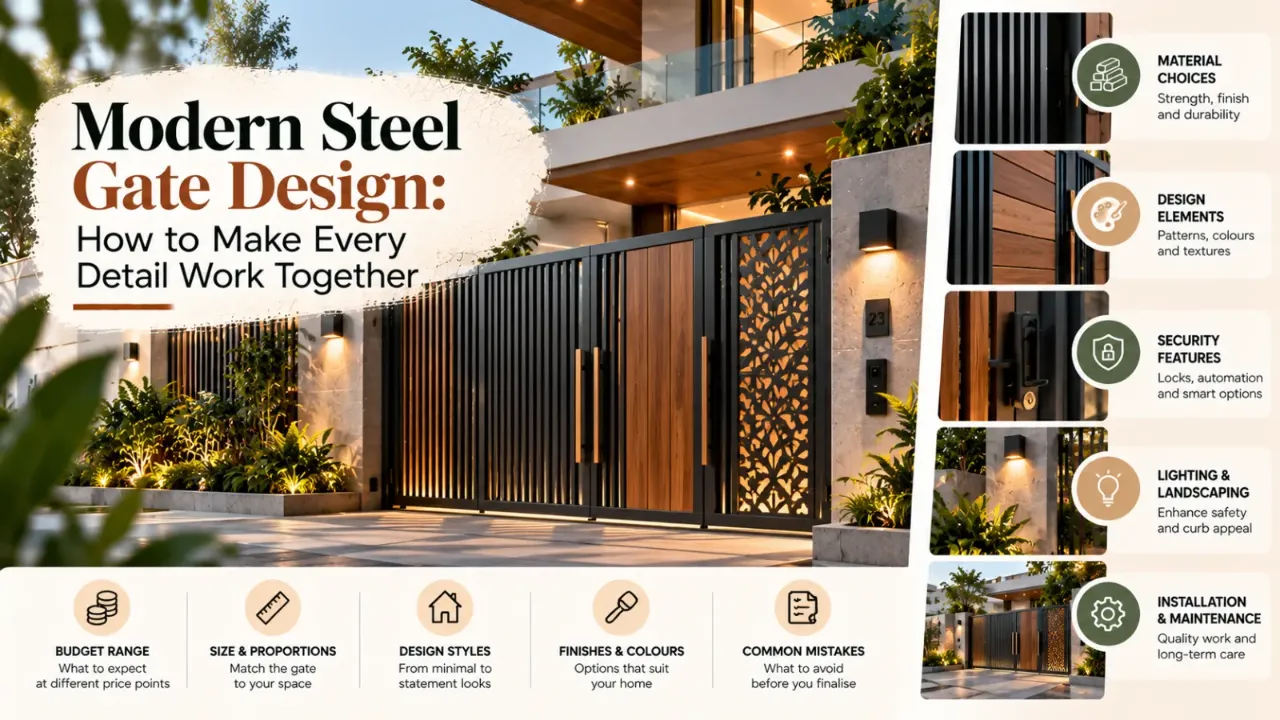
Modern Steel Gate Design: How to Make Every Detail Work Together
A main gate does more than mark the entrance to a home. It sets the tone for the entire exterior, creates a sense of privacy and security, and introduces the architectural style of the property before anyone steps inside.
Modern steel gates offer considerable design flexibility. They can be sleek and understated, bold and geometric, or detailed enough to complement a more decorative home façade. However, a gate does not look cohesive simply because its individual elements are attractive. The pattern, colour, finish, proportions, hardware and surrounding boundary wall need to work together.
Quick answer: For a cohesive modern steel gate design, coordinate the gate pattern, colour, finish, proportions and hardware with the house façade and boundary wall. Confirm measurements, security needs and operating clearances before fabrication.
The key is to make deliberate choices rather than combine too many design ideas. Here is how to plan a modern steel gate that feels balanced, looks appropriate for the house and remains practical for everyday use.
1. Start With the Architecture of the House
Before choosing a gate pattern, look at the house itself. The entrance should feel like a natural extension of the architecture, not an unrelated feature added at the end.
A home with clean lines, flat roofs and a restrained exterior usually pairs well with a gate featuring horizontal slats, slim vertical bars or simple geometric divisions. A home with textured stone, traditional detailing or a more elaborate façade may suit a slightly more decorative steel design.
Consider the overall shape of the building, the visual weight of the façade and the materials already used around the entrance. Repeating one or two of these elements can create a stronger connection between the boundary and the house. The goal is not to match every detail exactly, but to establish a consistent design language.
2. Choose a Pattern That Has a Clear Direction
The pattern is often the most noticeable feature of a modern steel gate. It determines whether the entrance feels structured, open, private or visually busy.
- Horizontal slats: Can make a boundary feel wider and complement contemporary architecture.
- Vertical bars: Create a taller, more formal appearance.
- Geometric panels: Introduce a stronger visual statement.
- Solid sections: Offer greater screening and a more enclosed appearance.
Choose one dominant pattern and repeat it consistently across the gate. If you introduce diagonal cuts, laser-cut motifs or contrasting inserts, keep them controlled rather than layering several unrelated designs.
Also consider visibility and airflow. Closely spaced or solid panels can provide greater screening, while open bars allow more light and visibility. The right choice depends on your privacy needs and the conditions around the entrance.
3. Coordinate the Gate With the Boundary Wall
Even a well-designed gate can look disconnected when the boundary wall has a different style, colour or visual weight.
Look at the wall finish, pillars, coping, cladding and entrance surround as one composition. A simple steel gate can look refined against a clean plastered wall, while a stone-clad entrance may benefit from a restrained metal pattern that does not compete with the texture.
The gate does not need to copy the wall material. Connect the two through a shared colour, a repeated line, a similar geometric form or complementary finishes.
Pay particular attention to the gate pillars. Their width, height and finish influence how the gate is framed. Oversized pillars beside a delicate gate, or a heavily patterned gate within a visually busy wall, can make the entrance feel unbalanced.
4. Select a Colour Palette Before Finalising the Finish
Colour has a major influence on the character of a steel gate. Black and charcoal create a crisp, contemporary appearance. Graphite and deep grey can feel more understated, while muted bronze or carefully selected metallic accents may complement stone and warmer exterior materials.
The best colour depends on the façade, boundary wall, window frames and other visible metalwork. If the home already uses several prominent colours and textures, a restrained gate colour can help bring the entrance together.
A useful approach is to choose one main gate colour and, only if necessary, one accent. For example, a charcoal gate with a small amount of wood-look infill can work with neutral plaster and natural stone. A fully black gate with elaborate gold detailing may be less suitable for a minimalist exterior.
Review physical finish samples outdoors when possible. Sunlight can change how a colour appears, and a shade that looks subtle indoors may seem much stronger in direct light.
5. Match the Finish to the Conditions
A modern gate must withstand more than visual scrutiny. Dust, rain, humidity, sunlight and regular handling all affect its long-term appearance.
The coating system matters as much as the colour. Depending on the steel, location and exposure, suitable options may include a properly prepared and primed surface with an exterior-grade coating, or a suitable powder-coated finish. Corrosion protection, edge coverage, weld treatment and maintenance requirements should be discussed with the fabricator.
For homes in areas with heavy monsoon exposure or persistent humidity, pay particular attention to water-trapping joints, the bottom edge and any areas where the finish may be damaged during installation. A decorative finish cannot compensate for poor surface preparation or inadequate corrosion protection.
Ask the fabricator to specify the proposed coating, preparation process, corrosion-protection method and maintenance expectations in writing. This makes it easier to compare quotations accurately.
6. Balance Solid and Open Sections
A cohesive gate balances privacy, visual weight and ventilation. A completely solid panel may feel secure and private, but it can also appear heavy. A gate made entirely of widely spaced bars can feel lighter but may not provide the screening you want.
A combination design can offer a useful middle ground. For example, the lower portion may use more closely spaced sections while the upper portion remains more open. Alternatively, a solid central panel can be balanced by simpler open sections at the sides.
Keep the transitions deliberate. Changes in spacing, panel height and material should follow a clear design logic rather than appear arbitrary.
Before finalising the design, consider what can be seen from the street, how much airflow is needed, and whether the chosen pattern affects the gate's weight or structural requirements.
7. Make Hardware Part of the Design
Hinges, handles, locks, latches, tracks and automation components influence both the appearance and operation of the gate. They should be considered during the design stage rather than added as afterthoughts.
For a clean contemporary look, choose hardware that complements the gate's finish and does not interrupt its main pattern unnecessarily. Handle placement should be convenient, and locking points should be accessible without compromising security.
If you prefer a sliding gate, allow for the full travel path, track or cantilever system, and space needed beside the opening. A swing gate requires adequate clearance so its leaves can open without hitting vehicles, steps or other obstructions.
Motorised systems may also require suitable power provision, controls and safety features. Confirm these requirements with the installer before fabrication so that the finished gate does not need avoidable modifications.
8. Get the Proportions and Movement Right
A gate can have an attractive pattern and still feel wrong if its proportions do not suit the entrance.
The opening width, gate height, number of leaves and surrounding pillars all affect the final appearance. A narrow entrance may look crowded with oversized decorative panels, while a very wide gate may need additional structural planning to control weight, sagging and movement.
Measurements should be taken on site, including the clear opening, ground level, slope, driveway gradient and available swing or sliding space. Do not rely solely on approximate dimensions from a drawing or photograph.
The fabricator should determine suitable frame sections, bracing, hinges, rollers and support details based on the actual gate dimensions, material and use. A visually slim design still needs adequate structural support.
9. Keep Security and Everyday Use in the Brief
A gate should look good, but it also needs to function reliably. The required level of security depends on the property, street conditions, boundary layout and how the entrance is used.
Review the height, spacing, locking arrangement, frame strength and accessibility of the gate. Check that the design does not create unnecessary climbing points or compromise visibility where that matters for safe vehicle movement.
For family homes, consider pedestrian access, ease of opening, safe operation around children and older residents, and convenient entry for deliveries. If vehicles enter frequently, make sure the gate can be operated without obstructing the footpath or road.
Security features should be integrated into the design from the start. Retrofitting them later can disrupt the pattern, finish or hardware placement.
10. Review the Complete Entrance Before Approval
Before approving fabrication, look at the gate and its surroundings together. A small sample of the steel finish, a pattern drawing and an elevation showing the gate within the boundary wall can help reveal mismatches early.
Use this checklist before signing off:
- Does the pattern suit the architecture of the house?
- Do the gate colour and finish complement the wall and façade?
- Are the spacing and solid sections appropriate for privacy and airflow?
- Are the pillars and surrounding finishes visually balanced?
- Are the opening dimensions and movement clearances verified on site?
- Are the frame, supports, hinges, locks and tracks specified?
- Is corrosion protection suitable for the local exposure?
- Are automation, electrical requirements and safety features addressed if needed?
- Does the quotation identify materials, coating, hardware, installation and exclusions?
- Have the final drawing and operating details been approved before fabrication?
Taking time to review these details can prevent avoidable changes once the steelwork has been made.
A Final Thought
A successful modern steel gate design is not about adding the most decoration or choosing the most expensive finish. It is about making the pattern, colour, proportions, boundary wall and hardware feel like parts of the same design.
Start with the architecture, limit the number of competing elements and confirm practical requirements before fabrication. When appearance and function are planned together, the entrance can feel distinctive without becoming visually overwhelming.
Frequently Asked Questions
1. Which steel gate design looks most modern?
Simple horizontal slats, clean vertical bars and restrained geometric patterns are common choices for contemporary homes. The best option depends on the façade, privacy needs and entrance proportions.
2. Which colour is suitable for a modern steel main gate?
Black, charcoal and deep grey are versatile options for contemporary exteriors. Muted bronze or other accent finishes may work where they complement the boundary wall and existing materials. Always assess samples in outdoor light.
3. Is a solid steel gate better than an open design?
Neither is universally better. Solid panels offer greater privacy but can look heavier, while open patterns allow more visibility and airflow. A combination design can balance both needs.
4. What should I check before ordering a steel gate?
Confirm the site measurements, opening direction, driveway clearance, frame and support specifications, coating system, hardware, installation scope and final price. Have the fabricator verify the design before fabrication begins.
5. How can I help a steel gate last longer?
Choose appropriate corrosion protection and an exterior-suitable finish, ensure good surface preparation and drainage, and inspect the coating and moving parts periodically. Repair damaged coatings promptly and follow the fabricator's maintenance guidance.
Turn this idea into a plan for your home
Visualise your space, understand the likely budget, or find a professional who can bring the idea to life.