
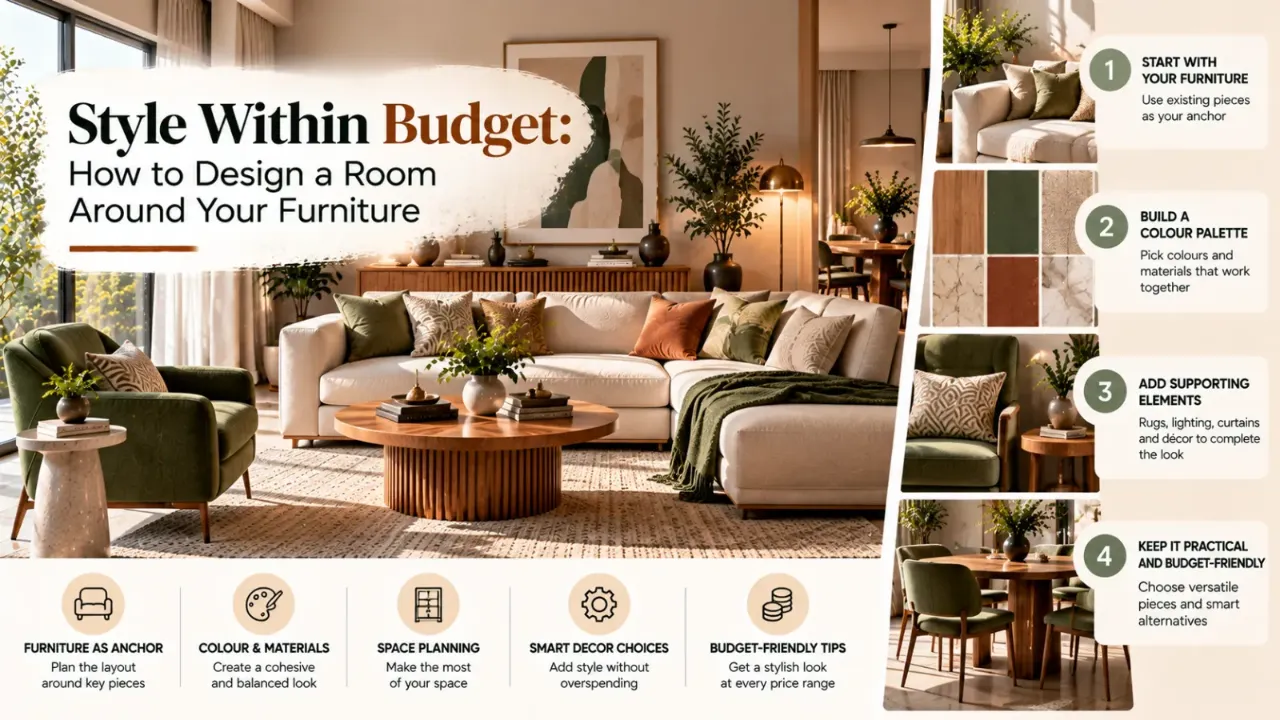
Style Within Budget: How to Design a Room Around Your Furniture
Designing a beautiful room does not necessarily mean buying expensive furniture or following every new interior trend. The real challenge is finding the right balance between appearance, comfort, durability and cost. A well-planned room can look cohesive even when you combine existing furniture, affordable additions and a few carefully chosen statement pieces.
Quick answer: Set your budget first, measure the room, decide what furniture to keep or replace, and prioritise comfortable, durable pieces. Use complementary colours and finishes to create a cohesive design without overspending.
1. Set a Realistic Budget Before Choosing Furniture
Start by deciding how much you can comfortably spend on the room. Divide the budget into practical categories such as essential furniture, storage, lighting, furnishings, decoration and delivery or installation.
Keep a small contingency for unexpected expenses, especially if the room requires electrical changes, painting or custom furniture. Without this allowance, even a seemingly affordable makeover can become expensive.
It also helps to separate essentials from optional upgrades. A comfortable bed, functional wardrobe or suitable sofa may be more important than decorative wall panelling or a premium coffee table. Prioritise what you need to use the room comfortably before spending on extras.
2. Measure the Room Before You Shop
Furniture that looks perfect online can overwhelm a small room or appear undersized in a larger one. Measure the room's length, width and height, along with doors, windows, passages and existing fixtures.
Then measure the furniture you plan to buy or retain. Consider how doors, drawers and wardrobe shutters will open, and leave enough space to move around the room comfortably.
A simple floor plan can help you compare different arrangements before committing to a purchase. It can also prevent the cost of returning oversized furniture or changing the layout after delivery.
3. Decide What to Keep, Replace and Add
You do not need to replace every piece of furniture to create a new look. Review what you already own and divide it into three groups: keep, improve and replace.
Furniture in good condition may work well with a new layout, updated handles, a fresh finish or reupholstered fabric. A familiar wooden table, for example, can feel different when paired with new chairs and better lighting.
Replace pieces that no longer meet your needs, are uncomfortable, are unsafe or take up too much space. This approach lets you direct more of the budget towards items that genuinely improve the room.
4. Choose Furniture According to Your Budget
Different budgets call for different strategies, but every price range can benefit from careful planning.
- For a tight budget: Focus on essential, multi-purpose furniture, simple layouts and affordable updates. Reuse suitable pieces, choose ready-made options and introduce character through textiles, artwork or lighting.
- For a moderate budget: Balance ready-made furniture with selected custom pieces where the fit matters most. You might invest in a better sofa or mattress while choosing simpler side tables and decorative accessories.
- For a larger budget: Consider custom storage, higher-quality finishes and furniture designed for your exact layout. Spend on features that improve daily use rather than adding costly details simply because they are available.
Whatever your budget, compare total value—not just the initial price. Durability, maintenance, comfort and replacement costs all affect how economical a piece will be over time.
5. Invest in the Furniture You Use Most
Not every item deserves an equal share of the budget. Spend more thoughtfully on furniture that supports daily comfort or receives frequent use.
In a living room, this may mean prioritising a well-made sofa. In a bedroom, the bed and mattress may deserve more attention. In a home office, a suitable desk and supportive chair can matter more than decorative storage.
For occasional-use furniture, such as a small accent table or display stand, a simpler option may be sufficient. The aim is not to buy the most expensive item, but to choose a piece that performs well for its intended purpose.
6. Match Materials and Finishes for a Cohesive Look
A room can feel disconnected when every furniture piece has a different finish, colour or visual weight. You do not need a matching furniture set, but you do need a clear design direction.
Choose a small palette of complementary colours and repeat a few materials across the room. Natural wood, neutral upholstery, matte finishes or restrained metal details can help create consistency.
If you already own prominent furniture, use it as the starting point. Select new pieces that complement its tone and style instead of replacing everything to follow a trend. This can make the room feel intentional while keeping costs under control.
7. Make Small Rooms Work Harder
When space is limited, furniture selection becomes especially important. Oversized pieces can restrict movement, while too many small items can create visual clutter.
Consider a bed with storage, a nesting table, a compact dining table or a desk that also serves as a study area. Wall-mounted storage can free up floor space, while furniture with visible legs may create a lighter visual effect.
Multi-purpose furniture is useful only when it meets your actual needs. Check that mechanisms are easy to operate, storage is accessible and the piece fits the room's measurements before buying it.
8. Use Lighting and Accessories Strategically
A room's appearance depends on more than its furniture. Lighting, curtains, rugs, cushions and artwork can help connect different pieces and create a finished look.
Instead of buying many accessories at once, identify the gaps in the room. A well-positioned lamp may improve a dark corner, while curtains or a rug can help establish a colour scheme. Artwork or a few meaningful objects can introduce personality without filling every surface.
Layer lighting where possible, combining general illumination with task or accent lighting suited to the room. Check the cost of fittings, bulbs and installation before finalising your budget.
9. Avoid Budget Mistakes That Add Up
Small decisions can cause a room makeover to become more expensive than expected. Watch out for these common mistakes:
- Buying furniture before measuring the room and access routes.
- Spending heavily on decorative items before covering essential needs.
- Choosing the lowest price without checking construction or material quality.
- Replacing furniture that could be reused or refreshed.
- Forgetting delivery, installation, assembly and maintenance costs.
- Buying a matching set when a few complementary pieces would work better.
- Following a trend that does not suit your room or everyday routine.
- Leaving no contingency for unexpected expenses.
Planning the entire room before purchasing individual pieces makes it easier to see where your money will have the greatest impact.
10. Visualise the Room Before Making Final Decisions
Before buying furniture, picture how the pieces will work together. Think about their proportions, colours, finishes and placement—not just how each item looks on its own.
The Walls to Wonder Interior Style Finder can help you explore a style direction that fits your preferences and budget. You can then use Design My Room to explore a room concept from a photo of your existing space.
For budget planning, the Interior Design Cost Estimate can help you explore an indicative cost range. Use visual concepts as planning aids, then confirm dimensions, product specifications and final quotations before purchasing.
A Final Thought
A well-designed room is not defined by how much money you spend. It is defined by how well the furniture supports your routine, fits the space and works together visually.
Start with a realistic budget, measure carefully, reuse what still works and invest in the pieces that matter most. When every purchase has a purpose, you can create a room that feels considered, comfortable and personal without overspending.
Frequently Asked Questions
How do I design a room on a small budget?
Begin with a spending limit, keep useful furniture, prioritise essential purchases and use affordable updates such as new textiles, lighting or hardware. Measure carefully to avoid costly mistakes.
Should I buy all my furniture from one set?
Not necessarily. Coordinating colours, materials and proportions can create a cohesive room without buying a complete matching set. Combining pieces can also help you stay within budget.
Which furniture should I spend more money on?
Prioritise pieces used frequently or essential to comfort, such as a sofa, bed and mattress, dining chairs or an office chair. The right priorities depend on how you use the room.
How can I make a small room look bigger?
Choose furniture that fits the room, preserve clear walkways, use vertical storage and avoid overcrowding surfaces. Furniture with built-in storage can reduce the need for extra pieces.
How can I estimate my room design budget?
List furniture, storage, lighting, furnishings, delivery and installation separately. Add a contingency and compare quotations on the same scope and specifications. An online cost estimate can provide an initial planning range, but final costs depend on your selections and project conditions.
Get a personalised estimate for your home
Choose your rooms, materials and preferences to understand a practical interior budget before you commit.