
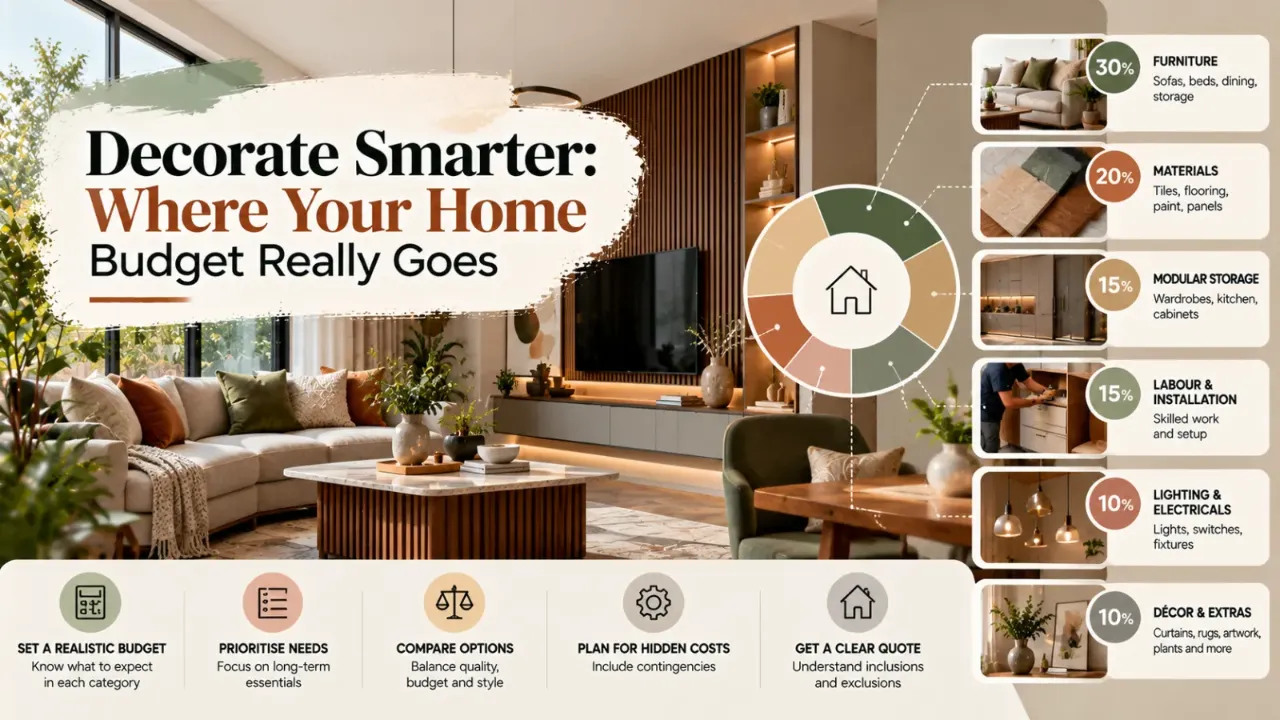
Decorate Smarter: Where Your Home Budget Really Goes
Decorating a home can begin with a simple plan: refresh the living room, add better lighting, choose curtains, or make a bedroom feel more inviting. But once you start selecting furniture, finishes, accessories and storage, the budget can grow faster than expected.
The reason is that home decor costs are not determined by the number of items you buy alone. They depend on the materials you choose, the size of the space, whether you buy ready-made or customised products, how much installation is involved and how many changes you make along the way.
Quick answer: To manage your home decor budget, prioritise essential furniture and lighting, compare ready-made and customised options, select durable materials, plan purchases in stages and keep a reserve for unexpected costs.
The good news is that a well-decorated home does not have to be the most expensive one. The key is understanding which decisions drive costs, where compromises make sense and which savings could create problems later.
1. Understand What Actually Drives Home Decor Costs
Before shopping, divide your planned spending into a few broad categories: furniture, soft furnishings, lighting, wall treatments, decorative accessories, storage and installation.
Furniture can take up a significant share of the budget, especially when you choose large pieces or custom-made designs. Curtains and blinds vary with fabric quality, window size, lining and stitching. Wall finishes range from a simple paint refresh to textured coatings, wallpaper or decorative panelling. Lighting costs depend on the fixtures, electrical work and installation involved.
Customisation is another important cost driver. A ready-made console may cost less than a built-in unit designed to fit a particular wall. However, custom work may offer better use of space where standard dimensions do not fit.
The first step is to list what the room needs before deciding what it should look like. This helps separate essential purchases from attractive additions that can wait.
2. Prioritise Spending by Impact, Not by Price
Not every item contributes equally to how a room looks and functions. A poorly sized sofa can affect the entire living room, while a carefully selected lamp or cushion can often be changed later without major expense.
Start with the elements that influence everyday use: seating, beds, essential storage, window coverings and adequate lighting. Once these are resolved, consider artwork, decorative objects, accent pieces and seasonal accessories.
A useful question to ask before every purchase is: Will this item improve comfort, solve a problem or create a meaningful visual difference?
If the answer is no, it may not deserve a place in the current budget. This does not mean that decorative items are unnecessary. It simply means that they should be chosen intentionally instead of purchased to fill every empty surface.
3. Decide Where Customisation Is Worth Paying For
Custom furniture and built-in features can make a home feel tailored to its occupants. They can also increase costs because of measurements, material selection, fabrication, hardware, labour and installation.
Customisation is often worth considering when a room has an awkward layout, limited storage space or a specific functional requirement. A built-in wardrobe that uses the available height efficiently may provide more value than a standard unit that leaves difficult-to-use gaps.
For simpler requirements, ready-made furniture can be a sensible choice. Side tables, occasional chairs, bedside tables and decorative shelving are often easier to replace or update later.
Before commissioning custom work, compare the complete quotation rather than the headline price. Check the material specification, finish, hardware, delivery, installation and any excluded work. A lower initial quote may not represent a lower final cost if important items are missing.
4. Choose Materials That Balance Appearance and Durability
Material choices influence both the initial budget and the amount of maintenance a room may require.
Premium natural materials can create a distinctive look, but they may involve higher purchase, installation or upkeep costs. More affordable alternatives can work well when their quality, finish and suitability match the intended use.
For example, decorative laminate can offer a practical finish for some furniture applications. Washable paint may be a sensible option for frequently used walls. Hard-wearing upholstery may be more useful than delicate fabric in a busy family living room.
The right choice depends on where and how the material will be used. A surface that works well on a decorative console may not be suitable for a high-use kitchen or a damp area.
Do not compare materials on appearance alone. Ask about cleaning, repair, wear, moisture resistance where relevant and expected maintenance. Saving money at the buying stage is less useful if the finish needs frequent replacement.
5. Use Colour and Lighting to Create More With Less
A room can feel more considered without adding expensive finishes. Colour coordination, lighting placement and a few well-chosen focal points can make a noticeable difference.
Start with a limited colour palette. Choose a base colour for the larger surfaces, a complementary shade for furniture or textiles, and one accent colour if the room needs more character. Repeating these colours in a few places helps the room feel connected.
Lighting deserves similar attention. A single overhead light may provide general illumination, but a combination of ambient, task and accent lighting can make a room more comfortable and visually layered. You do not necessarily need expensive fixtures; placement, light quality and suitability for the task matter too.
Before adding decorative panels or multiple wall treatments, consider whether a fresh coat of paint, better curtains or a well-positioned floor lamp could achieve the effect you want with less work.
6. Know Which Trade-Offs Are Worth Making
A realistic home decor budget involves compromises. The important thing is choosing them deliberately.
You might select a simpler sofa and invest in a comfortable mattress. You might use a standard wardrobe in a secondary bedroom while reserving custom storage for a room where space is difficult to manage. You could choose one statement light instead of buying several decorative fixtures.
Other trade-offs may be less worthwhile. Reducing the quality of frequently used hardware, ignoring proper installation or choosing a finish unsuitable for the environment can create problems that outweigh the initial saving.
Think about each decision in terms of frequency of use, replacement difficulty, durability and visual impact. Spend where a mistake would be costly or inconvenient to correct. Be more flexible with items that are easy to update, such as cushion covers, smaller accessories and inexpensive decorative accents.
7. Save Through Planning, Not Just Discounts
Discounts can help, but they should not be the foundation of the budget. A discounted item that does not fit the room or meet a real need is still an unnecessary expense.
Measure the room and note the position of doors, windows, switches and walkways before buying furniture. Check dimensions carefully, including depth and clearance for opening drawers or doors. This reduces the risk of returns, awkward layouts and replacement purchases.
Prepare a shopping list with a budget range for each category. Compare the full cost of similar options, including delivery, assembly, installation and maintenance requirements. Keep a record of what has been purchased and what remains.
It can also help to complete the room in stages. Buy essential furniture first, then add lighting and window treatments, followed by artwork and accessories. A phased approach gives you time to understand how the room works before committing to every decorative detail.
8. Avoid the Small Expenses That Add Up
Home decor budgets can be stretched by purchases that seem inexpensive individually. Extra cushions, decorative trays, small storage boxes, candles, planters and wall accessories can accumulate without making the room noticeably better.
Before buying an accessory, consider where it will go and what it will contribute. Avoid purchasing several items that perform the same visual role. A single large artwork may create a stronger focal point than a collection of unrelated small pieces.
Also account for hidden expenses. Delivery charges, installation fees, additional electrical points, curtain alterations, wall repairs and last-minute changes can all increase the final amount.
Keep a contingency reserve rather than allocating the entire budget to planned purchases. The appropriate amount depends on the scale and uncertainty of the project, but even a modest reserve can make unexpected expenses easier to manage.
9. Build a Budget That Reflects Your Priorities
A useful budget should be specific enough to guide decisions but flexible enough to accommodate changing needs.
Begin with the maximum amount you can comfortably spend. Divide it into categories such as furniture, lighting, window treatments, wall finishes, accessories, labour and contingency. The exact allocation will depend on the room and the condition of the existing space.
For every major purchase, record the preferred option, a more affordable alternative and the reason for choosing one over the other. This makes trade-offs easier to evaluate when quotations arrive.
Review the total after every major decision, not just at the end. If one category exceeds its allowance, decide what can be simplified elsewhere without affecting comfort, safety or long-term usefulness.
The objective is not to spend every rupee available. It is to create a home that meets your needs while keeping the overall cost under control.
A Final Thought
Good home decoration is less about buying more and more about choosing well. Costs rise when materials, customisation, installation and last-minute changes are not considered together. A clear plan helps you identify where spending creates genuine value and where a simpler solution will work just as well.
Start with function, establish a realistic budget, compare complete costs and leave room for the unexpected. With these decisions in place, you can create a home that feels personal, comfortable and polished without overspending.
Frequently Asked Questions
1. What affects the cost of home decoration the most?
The main cost drivers usually include furniture, material quality, customisation, wall treatments, lighting, window coverings, installation and delivery. The size and condition of the room also influence the total.
2. How can I decorate my home on a limited budget?
Prioritise essential furniture, use a coordinated colour palette, compare ready-made and customised options, reuse suitable existing items and add accessories gradually. Measure before buying to avoid costly mistakes.
3. Is custom furniture always better than ready-made furniture?
No. Custom furniture can solve unusual layout or storage problems, but ready-made options are often more economical for standard needs. Compare fit, material quality, hardware, installation and the complete price.
4. Where should I avoid cutting costs?
Be cautious about compromising on safety, structural support, installation quality, frequently used hardware and materials that need to withstand regular wear or moisture. The right priorities depend on the item's purpose and location.
5. Should I decorate the whole house at once?
Not necessarily. Completing one room or priority area at a time can help you manage cash flow, understand what works and avoid rushed purchases. Make sure the overall colour and style plan remains reasonably consistent as you progress.
Get a personalised estimate for your home
Choose your rooms, materials and preferences to understand a practical interior budget before you commit.