
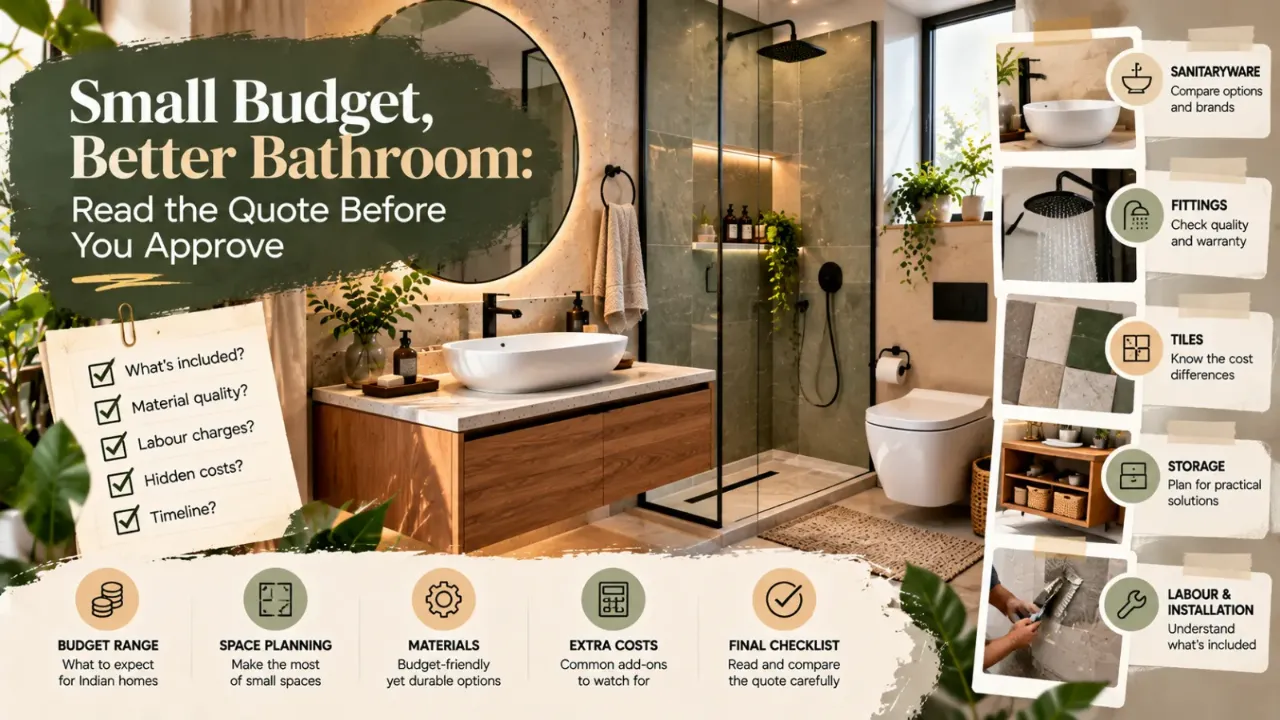
Small Budget, Better Bathroom: Read the Quote Before You Approve
A bathroom makeover on a limited budget requires more than finding affordable tiles and fittings. The quotation you approve determines what work will be done, which materials will be used, what is excluded and how extra expenses will be handled.
Quick answer: Before approving a bathroom renovation quote, confirm the scope of work, material specifications, waterproofing, plumbing, labour, exclusions, payment schedule and warranty terms. Compare quotes using the same requirements, not just the total price.
1. What Exactly Is Included in the Quote?
Start by asking the contractor to explain the complete scope of work. A quote should describe the tasks included, rather than simply state a lump-sum price for a bathroom renovation.
Confirm whether it covers demolition, removal of old fittings, surface preparation, plumbing, waterproofing, tiling, sanitaryware installation, electrical work, painting, sealing and final cleaning.
Ask whether the price includes materials, labour or both. If certain items will be purchased separately, list them clearly so you can calculate the likely total expense.
For a small-budget project, a written scope is especially useful because it helps prevent misunderstandings and makes it easier to compare competing quotations.
2. Which Materials Are Included, and What Are Their Specifications?
A quote that says "tiles included" does not tell you enough to make an informed decision. Ask for the tile type, approximate price allowance, quantity, finish and installation method.
Do the same for taps, shower fittings, the toilet, basin, vanity and accessories. Confirm the intended product models or agreed specifications, and ask whether delivery is included.
If you select materials that cost more than the allowance in the quotation, find out how the difference will be calculated. Also clarify who is responsible for ordering, checking and replacing damaged or incorrect items.
You can often keep costs under control by choosing simple, coordinated finishes rather than upgrading every visible element. However, low-cost materials should still be appropriate for wet conditions and regular use.
3. Is Waterproofing Included?
Waterproofing is one of the most important questions to ask before approving a bathroom renovation quote. New tiles do not solve an underlying leakage problem.
Ask whether the quote includes surface preparation, the waterproofing system, treatment of corners and pipe penetrations, and any required testing before tiling begins. Confirm which areas will be treated and whether the contractor provides documentation or a written warranty for the work.
If the bathroom has a history of seepage, ask how the cause will be investigated and repaired. Do not assume that waterproofing is included simply because the quote mentions new flooring or tiles.
When working with a limited budget, prioritise essential repairs over decorative upgrades. Reducing the scope of unnecessary styling is safer than cutting corners on moisture protection.
4. Are Plumbing Repairs and Fixture Changes Included?
Ask whether the contractor plans to retain the existing plumbing or replace any pipes, connections, drains or concealed fittings.
If you want to move the toilet, basin or shower, confirm whether the quote includes the associated plumbing changes, floor breaking, reinstatement and testing. Relocating fixtures can increase costs because drainage routes and connections may need additional work.
For a more affordable makeover, retaining the existing layout may help reduce labour and civil work—provided the plumbing is serviceable and the layout meets your needs.
Ask the contractor to identify any plumbing work that cannot be assessed until old finishes are removed. Agree in advance how such additional work will be quoted and approved.
5. Does the Price Include Labour, Installation and Waste Removal?
Materials are only one part of the renovation cost. Installation, skilled labour, transport and disposal can all affect the final amount.
Ask whether the quote includes tile laying, grouting, sanitaryware installation, tap fitting, sealing, mirror mounting, accessory installation and electrical work. Confirm whether debris removal and disposal charges are included, especially in apartments where building rules may apply.
Check whether delivery, parking, lifting materials to the floor and protection of shared areas will incur extra charges.
A detailed breakdown helps you identify omissions before work starts and reduces the risk of paying unexpected amounts during the renovation.
6. What Is Excluded From the Quotation?
Exclusions can be just as important as inclusions. Ask the contractor to list any work or purchases that are not covered.
Common exclusions may include concealed pipe replacement, repairs to damaged screed, electrical upgrades, replacement of a bathroom door, custom cabinetry, exhaust fans, geyser work, premium fittings and building-related fees.
Also clarify whether the quote includes taxes, transport, finishing materials and any professional or supervision charges that may apply.
Once you understand the exclusions, prepare a separate allowance for them. This gives you a more realistic project budget than relying on the headline quote alone.
7. How Will Extra Costs Be Approved?
Unexpected issues can emerge after old tiles, fittings or wall finishes are removed. The important question is not whether surprises are possible, but how they will be managed.
Ask the contractor to explain the process for dealing with additional repairs. Ideally, the contractor should describe the issue, provide the proposed solution and confirm the additional price before proceeding, except where immediate action is necessary to prevent further damage.
Agree on how labour and material rates will be calculated for work outside the original scope. Keep written records of changes and revised totals.
Consider maintaining a contingency of around 10–15% of the planned budget as a starting point. Older bathrooms or projects involving extensive demolition may need a larger allowance depending on their condition.
8. What Is the Timeline, and When Are Payments Due?
A low quote may not be the right choice if the timeline is unclear or the payment terms expose you to unnecessary risk.
Ask for an estimated start date, major work stages and expected completion date. The schedule should allow appropriate time for waterproofing, curing, testing and installation. Delays can occur if selected materials are unavailable or hidden damage is discovered, so ask how changes to the schedule will be communicated.
Clarify the payment schedule and what each instalment corresponds to. Make sure the amounts and milestones are documented, and avoid paying the entire amount upfront without clear contractual safeguards.
Before making the final payment, agree on a practical handover checklist covering completed work, functioning fittings, visible defects, outstanding tasks and any agreed warranty documents.
9. What Warranty or After-Sales Support Is Provided?
Ask what support is available if a leak develops, a fitting fails or an installation problem appears after completion.
Clarify whether any warranty applies to waterproofing, workmanship or supplied products, and request the terms in writing. Product warranties and contractor workmanship commitments may be separate, so understand who is responsible for each item.
Keep copies of the quotation, invoices, product details, change approvals and any waterproofing or installation records. These documents can make follow-up repairs easier to arrange.
A clear after-sales commitment is particularly valuable when choosing a contractor for a budget renovation.
10. How Can You Compare Quotes Fairly?
Collecting several quotations can help you understand the options, but compare them using the same scope and specifications.
- Are the same renovation tasks included?
- Are the material types, quantities and quality allowances comparable?
- Is waterproofing clearly described?
- Are labour, installation and debris removal included?
- Are exclusions, taxes and potential extra charges stated?
- Is the timeline realistic and documented?
- Are payment milestones and warranty terms clear?
- Does the contractor explain how additional work will be approved?
The lowest quote is not always the most economical. A more complete quotation may offer better value if it includes essential work that would otherwise become an extra expense.
11. Plan the Makeover Around Your Budget
Once you understand the quotations, decide which upgrades are essential and which can wait.
Keeping the existing fixture layout, retaining serviceable fittings, choosing straightforward tile patterns and avoiding unnecessary custom features may help reduce costs. At the same time, protect the budget for plumbing repairs, waterproofing, suitable flooring and safe electrical work.
Use the Walls to Wonder Interior Design Cost Estimate to explore an indicative budget for your project. You can also use Design My Room to explore possible colours, finishes and layouts before making final selections.
These tools can support early planning, but they do not replace a site inspection or a detailed contractor quotation. Finalise material quantities, installation requirements and costs with the professionals responsible for the work.
A Final Thought
A budget bathroom makeover can deliver meaningful improvements without requiring every surface and fitting to be replaced. The key is knowing exactly what you are paying for before work begins.
Ask about the scope, materials, waterproofing, plumbing, labour, exclusions, payment terms and warranties. Compare quotations on the same basis, document any changes and keep money aside for unexpected repairs. A clear agreement is one of the most practical ways to protect both your budget and your finished bathroom.
Frequently Asked Questions
What should a bathroom renovation quote include?
It should clearly describe the work, materials, labour, installation, waterproofing, plumbing, waste removal, exclusions, payment terms and expected timeline. The exact scope depends on the renovation.
How many bathroom renovation quotes should I compare?
Comparing two or three detailed quotations can provide a useful starting point. Make sure each contractor prices the same scope and material specifications so you can compare them fairly.
Is waterproofing necessary for a low-budget bathroom makeover?
If the renovation involves wet areas, damaged waterproofing or an existing leak, appropriate waterproofing and repairs should not be sacrificed to reduce costs. The required scope should be assessed for the bathroom's condition.
Should I pay the full renovation amount upfront?
Understand the payment terms before signing. A documented schedule tied to agreed stages of work can provide greater clarity than paying the entire amount upfront without safeguards.
How much contingency should I keep for a bathroom renovation?
Around 10–15% can be a useful initial planning allowance, but the amount depends on the bathroom's age, condition and renovation scope. Projects with significant demolition or uncertain plumbing may need more.
Get a personalised estimate for your home
Choose your rooms, materials and preferences to understand a practical interior budget before you commit.