

Colour Drenching Bedroom Ideas: Walls, Ceiling and Wardrobe Together
Images in this article are AI-generated design concepts for inspiration, not photographs of completed projects. Confirm dimensions, materials and installation details for your home.
Colour drenching bedroom ideas bring the walls, ceiling and selected joinery into one colour family. Instead of making the wardrobe stand out as a separate block, the approach treats the room as a coordinated envelope. Bedding, wood and lighting then supply texture and contrast.
The most useful starting point is a colour you enjoy living with at night as well as in daylight. In an Indian apartment, existing flooring, a ceiling fan, an air-conditioner and large wardrobes all influence the result. Include them in the brief before choosing the paint.
What does colour drenching include?
You can carry a shade across walls, ceiling, skirting and doors, then coordinate the wardrobe in a compatible finish. It does not require painting every object. Keeping the bed linen lighter or retaining a wood headboard gives your eye a place to rest.
For the underlying technique, Bunnings explains colour drenching as using one shade across multiple room surfaces. The ideas below adapt that approach to bedrooms with substantial built-in storage.
1. Muted terracotta for a warm, cocooning bedroom
Start with a softened clay shade rather than a strongly saturated orange. Carry it onto the ceiling and choose a wardrobe sample that sits comfortably beside the wall sample. Cream bedding and medium wood bedside tables can stop the room from feeling visually uniform.
In a room that receives strong late-afternoon sun, test the shade on more than one wall. The same paint can look quite different beside the window and behind the bed. Do not assume the colour in the concept image will translate directly to a named paint shade.
2. Sage green for a softer daytime scheme
A greyed green offers another way to wrap the room in colour. Pair it with off-white textiles, a quiet wood grain and simple handles. If the existing flooring is cool grey, place the green sample beside it before approval; undertones that seem subtle in isolation may become more noticeable together.
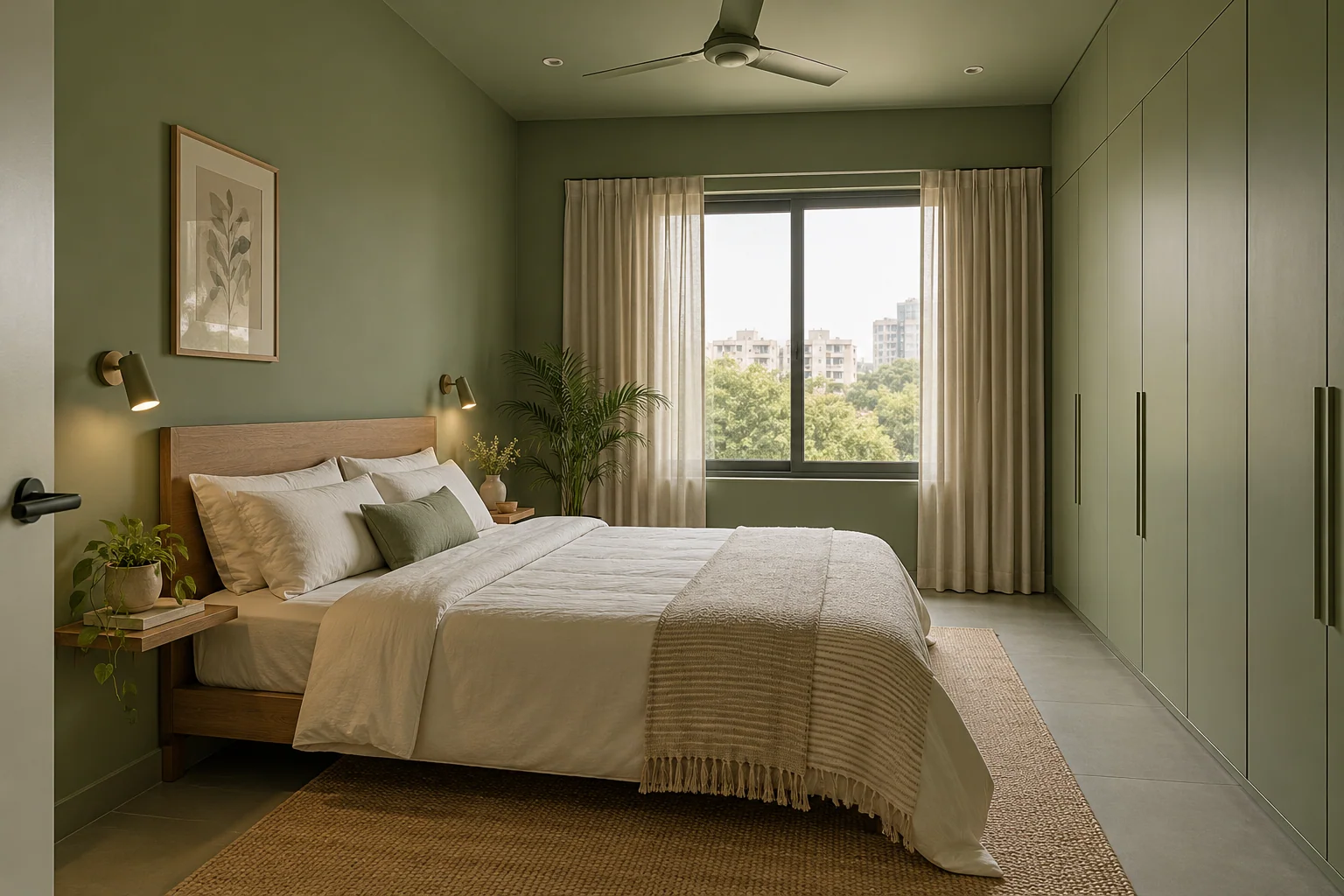
Keep curtain selection within the same sample exercise. A very bright white curtain may become the strongest contrast in the room, while a softer neutral can keep the transition gentle. Neither choice is automatically better; decide how much contrast you want.
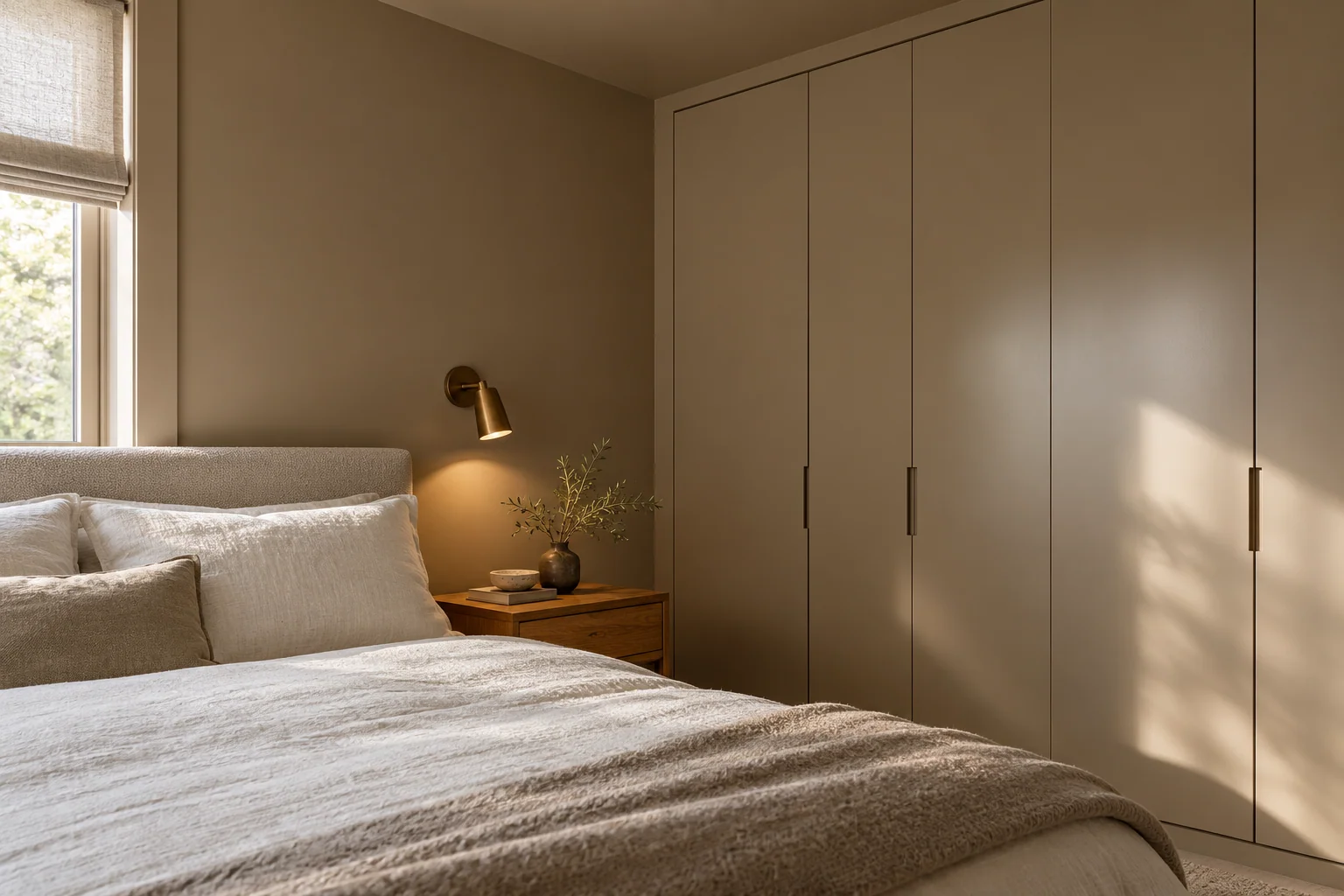
3. Warm mushroom for a restrained version
Colour drenching can be quiet. A warm mushroom or stone shade may be easier to coordinate with existing cream flooring and wood furniture than a deep colour. Choose textured bedding or a woven shade so the room has depth without relying on many colours.
How to coordinate painted walls and wardrobe shutters
Wall paint, laminate and factory-finished shutters reflect light differently. A matching colour name does not guarantee a matching result. Ask for physical samples large enough to see the surface, then stand them vertically next to the painted wall sample.
| Surface | What to check | Useful decision |
|---|---|---|
| Walls | Surface condition and required cleanability | Select the paint system after checking the substrate |
| Ceiling | Unevenness and reflections from lights | Test the intended colour and sheen overhead |
| Wardrobe | Colour shift, finger marks and edge treatment | Approve a shutter sample beside the wall sample |
| Door and trim | Existing coating and suitability for recoating | Specify preparation and a compatible finish |
There is no need to force identical sheen across materials. Choose finishes that suit each surface and assess them together. If an exact match is impossible, a deliberate tonal variation usually gives a clearer brief than an almost-match approved from a screen.
Test the palette with your actual lighting
- Make large movable sample boards using the intended paint and application method.
- View them near the bed, wardrobe and window in morning and evening light.
- Check again with the lamps and ceiling lights switched on.
- Compare the boards with flooring, fabric and shutter samples together.
- Approve the complete set before ordering all finishes.
Read why light changes the appearance of paint if a sample seems unexpectedly grey, yellow or pink. Judge colour in the actual room rather than trying to correct it with phone-camera photographs.
Common mistakes to avoid
Do not paint over dampness or peeling coatings to meet a colour brief. Resolve the surface problem first. Avoid buying all paint before testing the ceiling, and do not omit the existing fan or AC unit from visual planning. Decide whether those items will blend in or remain as practical contrasts.
If the bedroom opens directly into another strongly coloured room, check the doorway view. Your whole-home colour palette can link the rooms without requiring the same shade everywhere.
Frequently asked questions
Will colour drenching make a small bedroom look bigger?
It can soften visible boundaries, but it does not guarantee a larger-looking room. Daylight, furniture scale, colour depth and contrast all affect perception. Test before committing.
Can I keep my existing wardrobe?
Yes. Choose the paint around its existing finish, or ask a qualified finisher whether the shutters are suitable for refinishing. Do not assume all laminate or coated shutters accept ordinary wall paint.
Should I paint the ceiling the same colour?
That is one version of the look. If a full wrap feels too strong after sampling, try a lighter coordinated ceiling. Your comfort in the room matters more than following the technique rigidly.
What to put in the painter's brief
Record the surfaces included, approved samples, preparation work, finish for each substrate and areas excluded from painting. Keep a labelled sample for touch-ups and final inspection. This prevents a coordinated concept from turning into several unplanned near-matches.
Turn this idea into a plan for your home
Visualise your space, understand the likely budget, or find a professional who can bring the idea to life.