
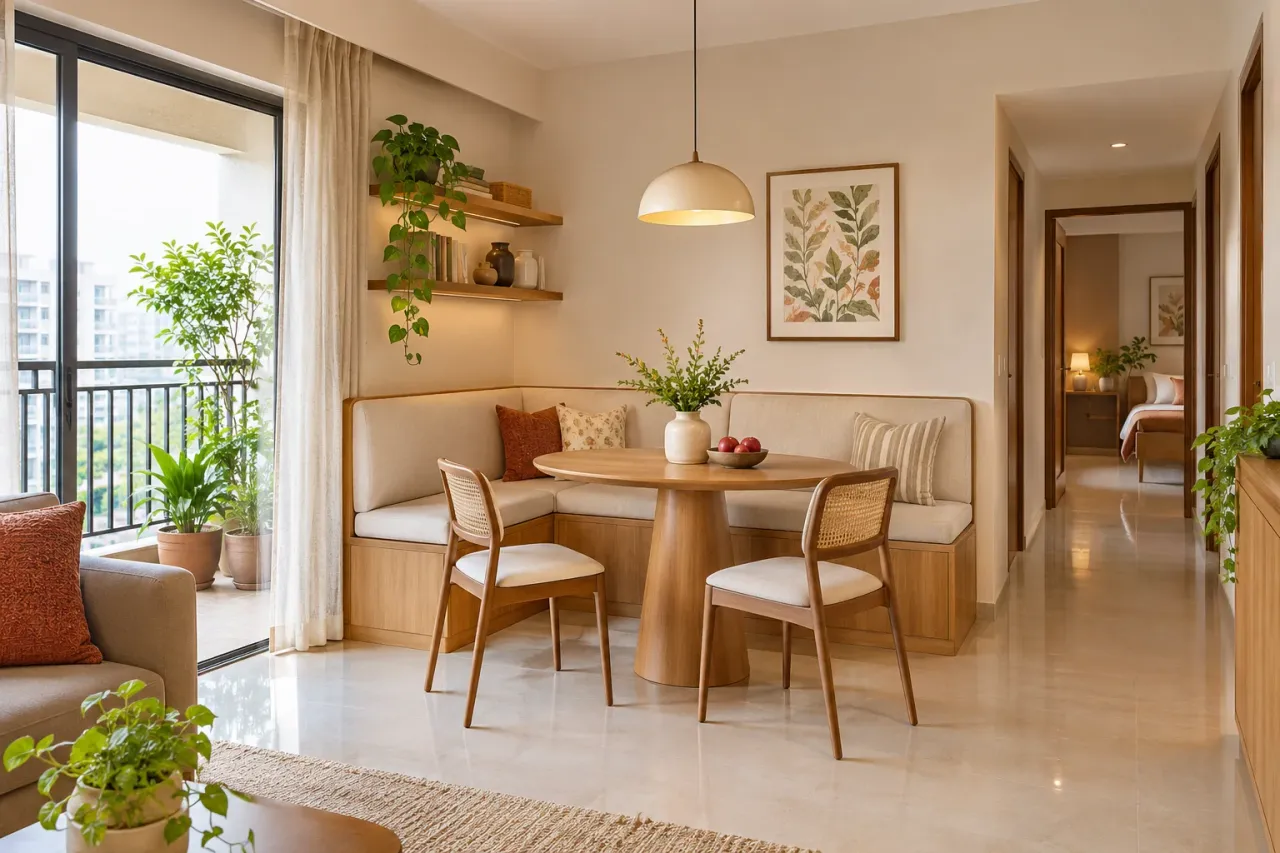
Banquette Seating Ideas for Small Indian Dining Corners
Banquette seating ideas: the practical answer
A banquette is a bench arranged against a wall or into a corner for dining. In a small apartment, combine a supportive bench with a pedestal table and movable outer chairs. It works when people can enter the seats and use storage without blocking the main walking route.
Best suited to: Apartments with an underused dining wall or corner. Reconsider a fixed bench if family members need easy independent access to every seat.
Choose a straight bench or an L-shaped corner
A straight bench is easier to leave from either end and often suits a narrow living-dining room. An L-shaped bench uses a genuine corner, but the innermost person may need others to move. Draw the dining group with the seats occupied, not just as furniture outlines.
Place the bench along the quieter wall rather than across the route to the kitchen or balcony. If the apartment has only one main circulation path, protect it first. A compact table with a loose bench may be more useful than a built-in corner that makes every meal awkward.
Pair the bench with a table that allows knee room
A pedestal base can reduce conflicts with bench access, but inspect the actual base footprint and stability. Oval or rounded table ends can feel softer beside a passage. Neither shape automatically saves space; compare the complete tabletop and chair footprints at full size.
Tape the table outline onto the floor and place the intended chairs beside it. Sit at the bench position with a cushion representing the final seat thickness. Check reach to the table, knee space and whether a person can stand without catching the table edge.
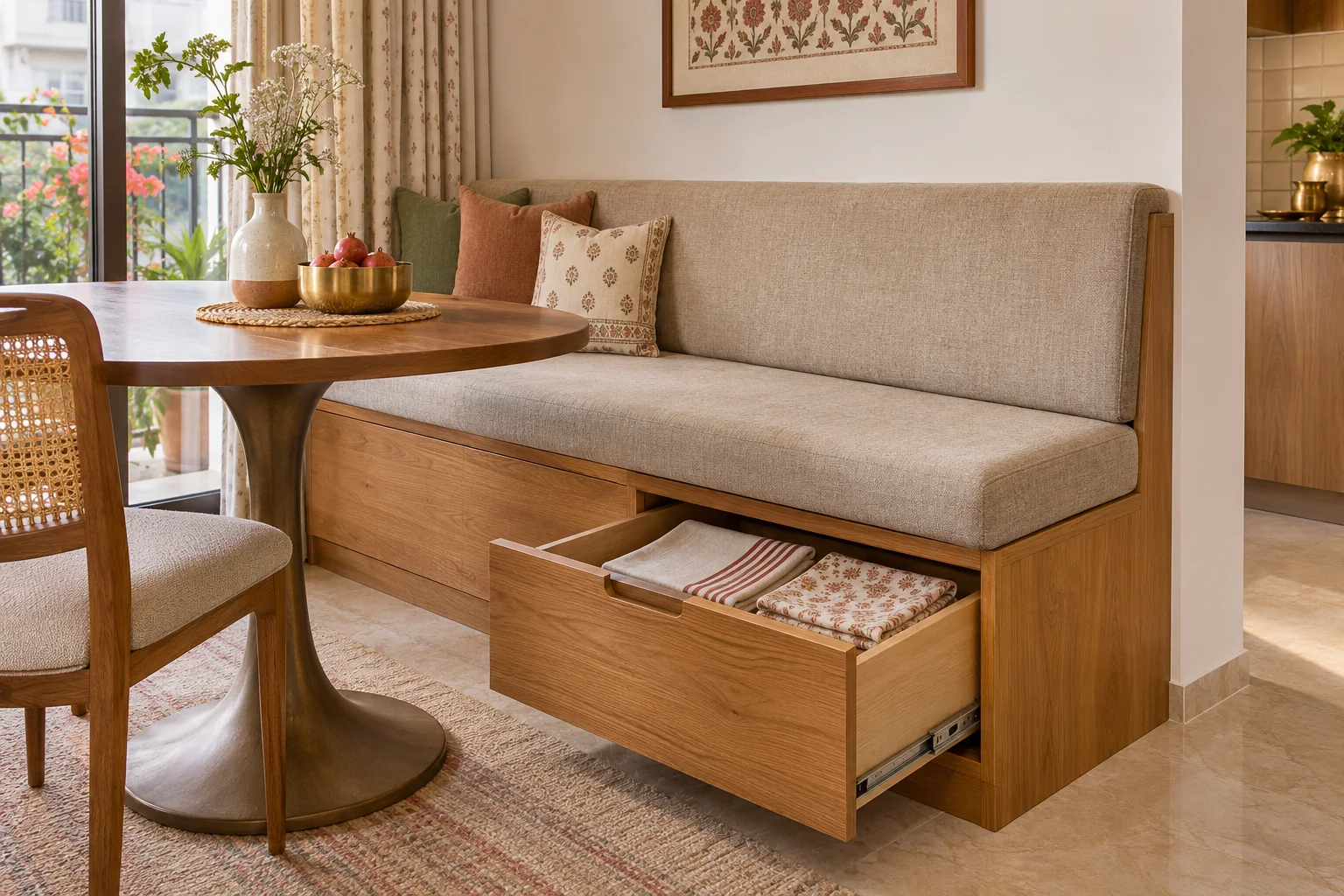
Use front-access storage for everyday items
Front drawers can hold placemats or table linen without lifting the whole seat. A lift-up top may suit occasional storage, provided the cushion and lid are manageable and the support hardware is appropriate. Do not rely on a heavy loose lid that has to be balanced while reaching inside.
Keep storage clear of table legs and chair positions. Decide whether a drawer opens during meals or only when the table is moved. IKEA India’s dining-bench category is a useful reference for comparing ready-made bench formats before commissioning joinery.
Make the seat comfortable enough for a full meal
Approve the finished seat with its cushion, backrest and table height together. A deep lounging cushion can push someone too far from the table; a very upright hard back may become uncomfortable. Choose removable covers or a cleaning method that suits the household.
Use one or two cushion colours already present in the living room. A patterned back cushion can bring character without adding another large visual block. For wider planning, compare the dining-table size guide and space-saving dining ideas.
Which option suits your space?
| Option | Useful for | Check before choosing |
|---|---|---|
| Straight bench | Flexible access along one wall | Usable route past the outer chairs |
| L-shaped banquette | A dedicated corner with regular seating | Access to the innermost seat |
| Loose bench | Rental homes or changing layouts | Stability and comfortable table pairing |
Before you approve the design
- Mark the occupied seating footprint and main walking route.
- Test the final seat, cushion and table as a combination.
- Open each storage drawer with the table in position.
- Specify upholstery cleaning and hardware maintenance.
Frequently asked questions
Does banquette seating always save space?
No. It can remove the need to pull chairs out along one wall, but a deep bench or oversized table can cancel that benefit. Compare full layouts with people seated.
Can a banquette work in a rented flat?
A freestanding bench can give a similar arrangement without permanent joinery. Check the lease before attaching anything to walls or changing finishes.
Are drawers better than lift-up bench storage?
Drawers are convenient when their fronts remain accessible. Lift-up storage can suit occasional items, but the cushion and lid arrangement must be practical.
Turn this idea into a plan for your home
Visualise your space, understand the likely budget, or find a professional who can bring the idea to life.