
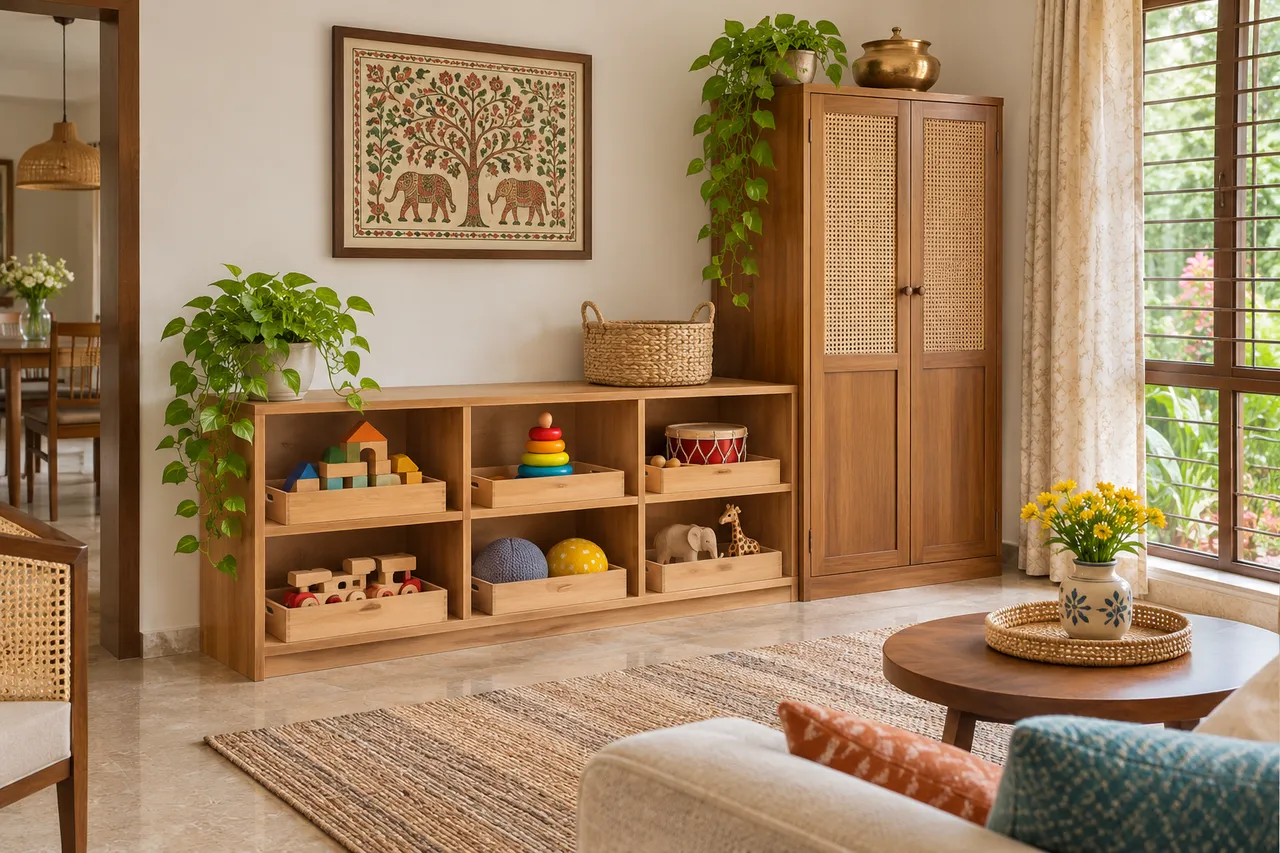
Toy-Rotation Storage in Yeshwanthpur Homes: Keep Play Accessible Without Filling Every Shelf
Toy-rotation storage in a Yeshwanthpur home separates a manageable active set from reserve toys, with access appropriate to the children using it. Begin by sorting the actual collection and testing simple trays. Choose suitable furniture and storage products, preserve the play area and make the return routine easy before adding fitted cabinetry.
Prepare the brief
The current toy inventory, age and supervision needs, suitable open trays, a reserve-storage position and the chosen furniture’s installation and use guidance.
Sort by use rather than buying more boxes
Review the collection with the household and separate currently used toys, reserve items, damaged products and items that are no longer needed. Keep sets together with their relevant instructions. Do not make the system larger simply to postpone sorting. Toy rotation here is an organisation method, not a claim about developmental benefits or a requirement to remove a child’s preferred toy. Start with the activities the child actually chooses and the adult supervision they require.
Make the active set reachable and understandable
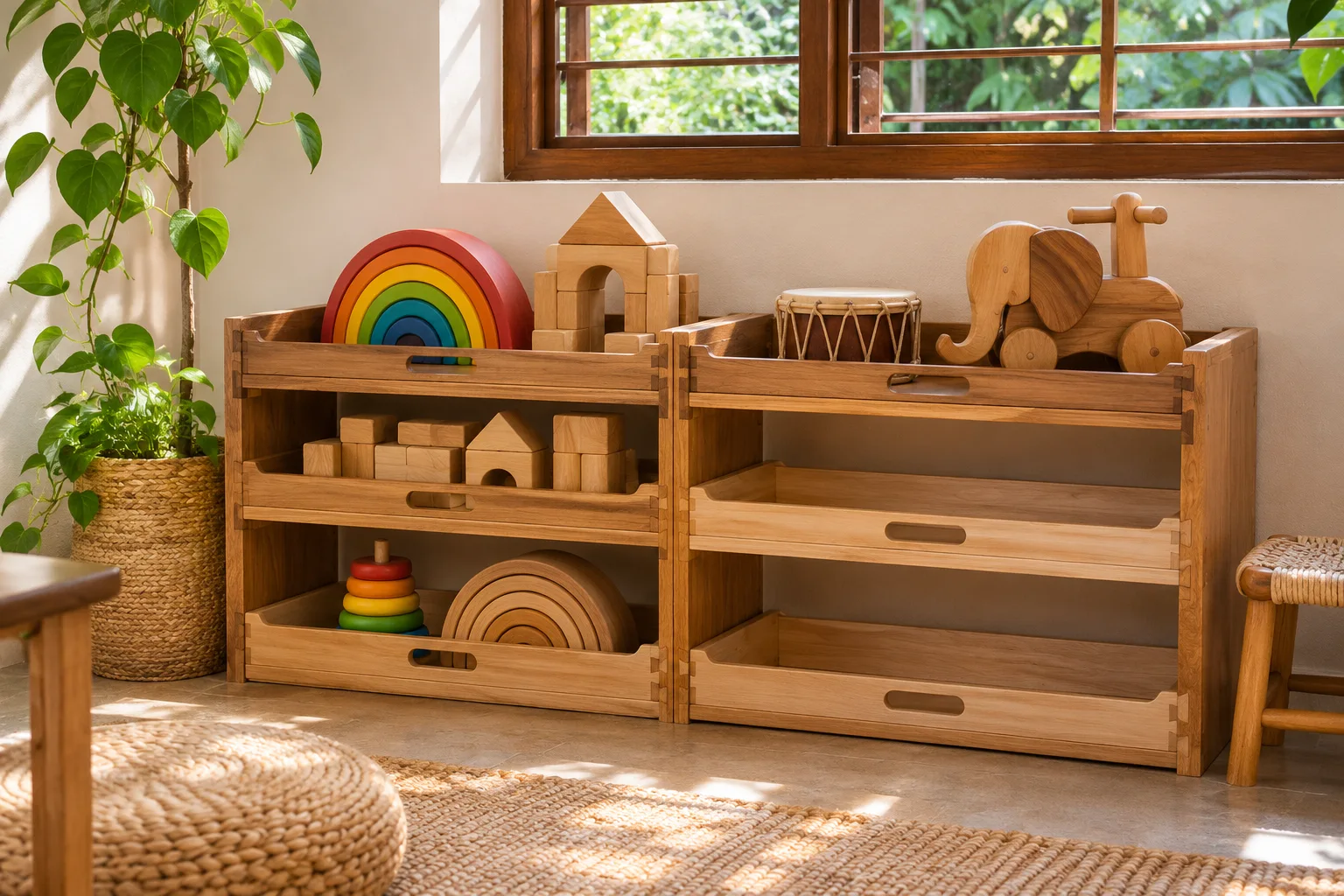
Choose a small number of destinations suited to the child’s age and abilities. Open trays can make a category easy to recognise, but their size, contents and product suitability matter. Keep items that require supervision appropriately stored. Test whether the child can return the toys without lifting an awkward heavy box or climbing. A display that looks simple to an adult may be difficult to use when the toy pieces and containers are considered together.
Keep reserve storage separate from the play route
Choose an appropriate cupboard or other suitable position for toys not currently offered. Record what is inside so the household does not buy duplicates. Make it accessible to the responsible adult without filling the child’s everyday shelves. Include any care or storage requirements for the products. The reserve should support an easy changeover, not become an inaccessible loft full of mixed parts that no one can identify at the next rotation.
Assess furniture and lids as products, not styling
Use furniture appropriate to its intended users and follow fixing and load guidance. Avoid assuming a heavy decorative chest is suitable toy storage. The CPSC warns about hazards from falling toy-chest lids; select storage with appropriate safety features and use instructions rather than adapting a household trunk casually. If an existing product raises concerns, follow the relevant authority or manufacturer guidance instead of inventing a hinge repair from a design photograph.
Leave actual floor space for play
Mark the storage with its doors, drawers and containers in use, then place a typical activity on the floor. A wall of cabinets can increase capacity while reducing the space the toys need. Keep routes to doors and other room functions usable. If the play corner shares a living room, decide which pieces remain accessible and what gets put away before other activities. The arrangement should work for the room’s whole routine, not just its tidied state.
Trial a simple rotation and return routine
Agree when the adult will review the active set and how a requested toy returns from reserve. Do not choose a rigid calendar that conflicts with the household’s actual use. Keep small components with their sets and follow age-related product guidance. At cleanup, review whether destinations are clear and containers manageable. If the same category is repeatedly left out, change the location or container before buying matching labels and another piece of furniture.
Design for the next stage without overbuilding
Adjustable shelves and removable trays may accommodate changing collections better than fitted compartments for today’s exact toy shapes. Review the furniture’s suitability as needs change and keep product and fixing information available. Avoid installing a large permanent unit based only on an imagined future collection. Expand when a clear storage need remains after sorting, and reassess play space at the same time rather than treating additional storage as a separate decision.
A practical layout trial
Try three suitable active categories in reachable trays and put the reserve in its agreed adult-managed position. Set out one ordinary play activity, then rehearse returning the toys and changing one category. If the child can find a toy but cannot return its container, the storage method needs revision. If the adult must empty several unrelated boxes to locate a reserve set, simplify the inventory and grouping. Use that trial to decide whether new furniture is actually required.
A useful supplier-briefing question
Ask: “Which active toys can the child return independently, and how will an adult retrieve the reserve?” Use the current collection and appropriate supervision requirements. Request suitable furniture and container information, including any lid and fixing guidance. Compare the usable play area after storage is installed, not only the number of compartments supplied. Keep the trial simple before ordering permanent cabinetry.
Compare the options
| Option | Useful when | Check first |
|---|---|---|
| Open suitable trays | A small active set needs visibility | Age suitability, weight and return routine |
| Adult-managed reserve cupboard | Rotation needs organised backup | Identification and appropriate access |
| Purpose-designed toy furniture | A proven system needs more capacity | Product safety, fixing and usable play area |
Budget planning
Separate sorting and inexpensive suitable containers from any new furniture and installation. Reuse products only when appropriate for the intended users and use. Compare a modest active shelf plus reserve storage with a large fitted unit, including how much play space remains. Keep safety-related product requirements in the essential specification rather than treating them as optional upgrades. Obtain actual product prices after the trial establishes the sizes needed.
Planning sequence and timing
Sort first, trial the active and reserve arrangement through ordinary use, then review what is difficult to find or return. Purchase furniture only after that review. Follow the installation and use instructions before children access the finished arrangement.
Prepare the next decision with WallsToWonder
Use Design My Room to explore visual direction with the room you already have. Take the measured layout, intended use and relevant product requirements into your supplier discussion before ordering. For a wider project, the interior cost planning tool can organise the work categories; replace assumptions with itemised quotations.
For a related planning decision, read Children’s Study Storage in Yelahanka: Plan Books, School Bags and Changing Needs. Apply the checks relevant to your own home rather than copying another property’s dimensions.
Frequently asked questions
How many toys should stay out?
Use a manageable set that suits the child, activities and space. There is no universal number for every household.
Does rotation require a fixed weekly schedule?
No. Agree a practical adult-managed review routine based on actual use.
Can any storage chest hold toys?
Do not assume so. Check product suitability and lid-related safety guidance.
Should every shelf be filled?
No. Reserve useful play space and choose capacity from the collection rather than a full elevation.
Reference for the technical decision
CPSC: toy-chest lid safety guidance. Guidance for a particular product or jurisdiction does not replace the requirements applicable to the actual selected system and site.
Turn this idea into a plan for your home
Visualise your space, understand the likely budget, or find a professional who can bring the idea to life.