
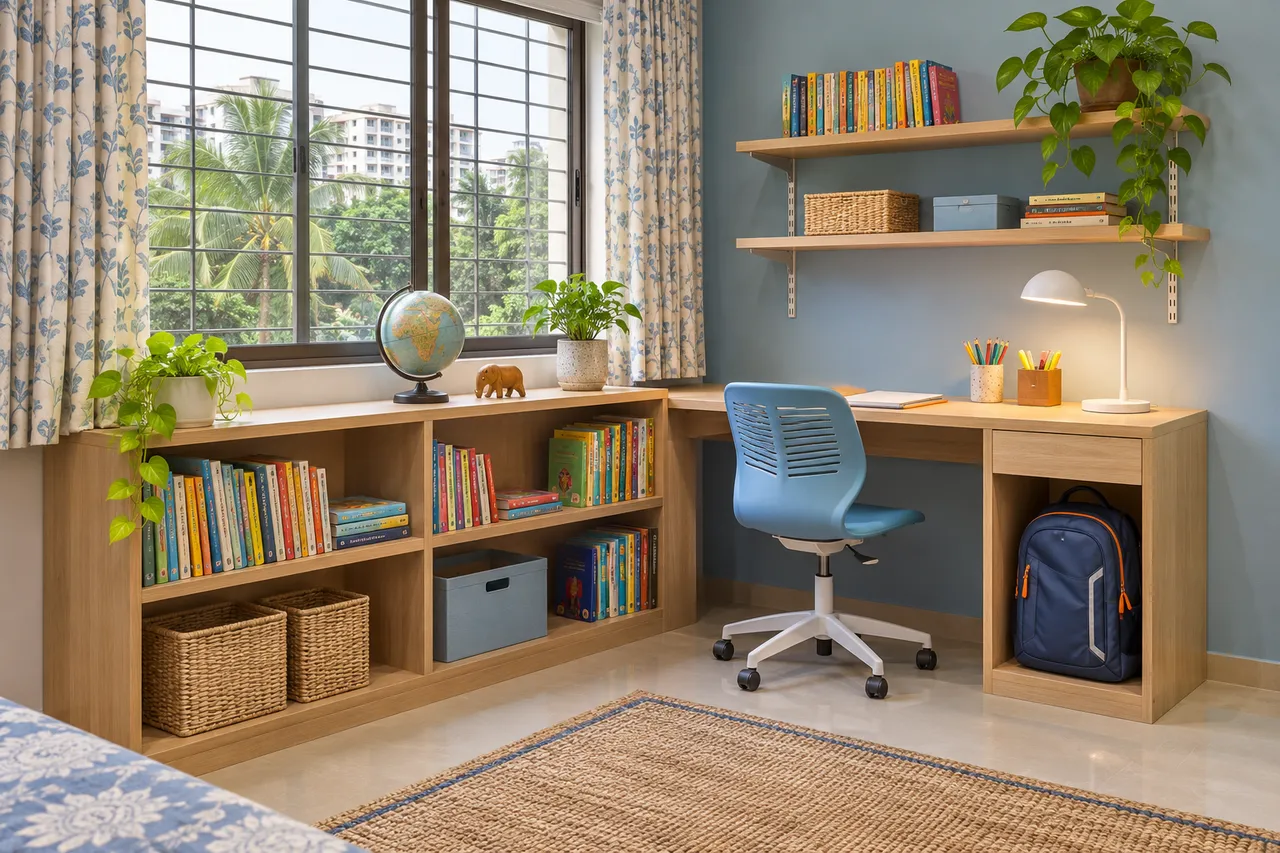
Children’s Study Storage in Yelahanka: Plan Books, School Bags and Changing Needs
Plan children’s study storage in Yelahanka by separating current books, stationery, school bags and unfinished work before choosing furniture. Use reachable storage for daily items and adjustable space for changing needs. Test the desk, chair and cupboard together so organising supplies does not reduce usable work space or obstruct the room.
Prepare the brief
A current school-material inventory, the largest books and bag, a tape measure, a temporary caddy or tray and the dimensions of the existing desk and chair.
Yelahanka: start with your own property
This is a flexible study-storage brief for a Yelahanka family home, not an assumption about the size of local bedrooms or a child’s future course requirements. Start with the child’s present routine, supervision needs and available room. If the area is shared, include the other users and the times when the surface must be cleared. Storage should respond to that pattern rather than dictate it.
Sort school materials by what happens next
Separate books used this week, items to return to school, unfinished work and occasional craft supplies. Count the real contents before buying matching boxes. A small active collection is easier to keep reachable than a single cupboard containing every year’s materials. Review old supplies with the child instead of making storage larger to avoid decisions. Keep important papers in a defined folder that an adult can check without searching through the stationery.
Measure books and the loaded school bag
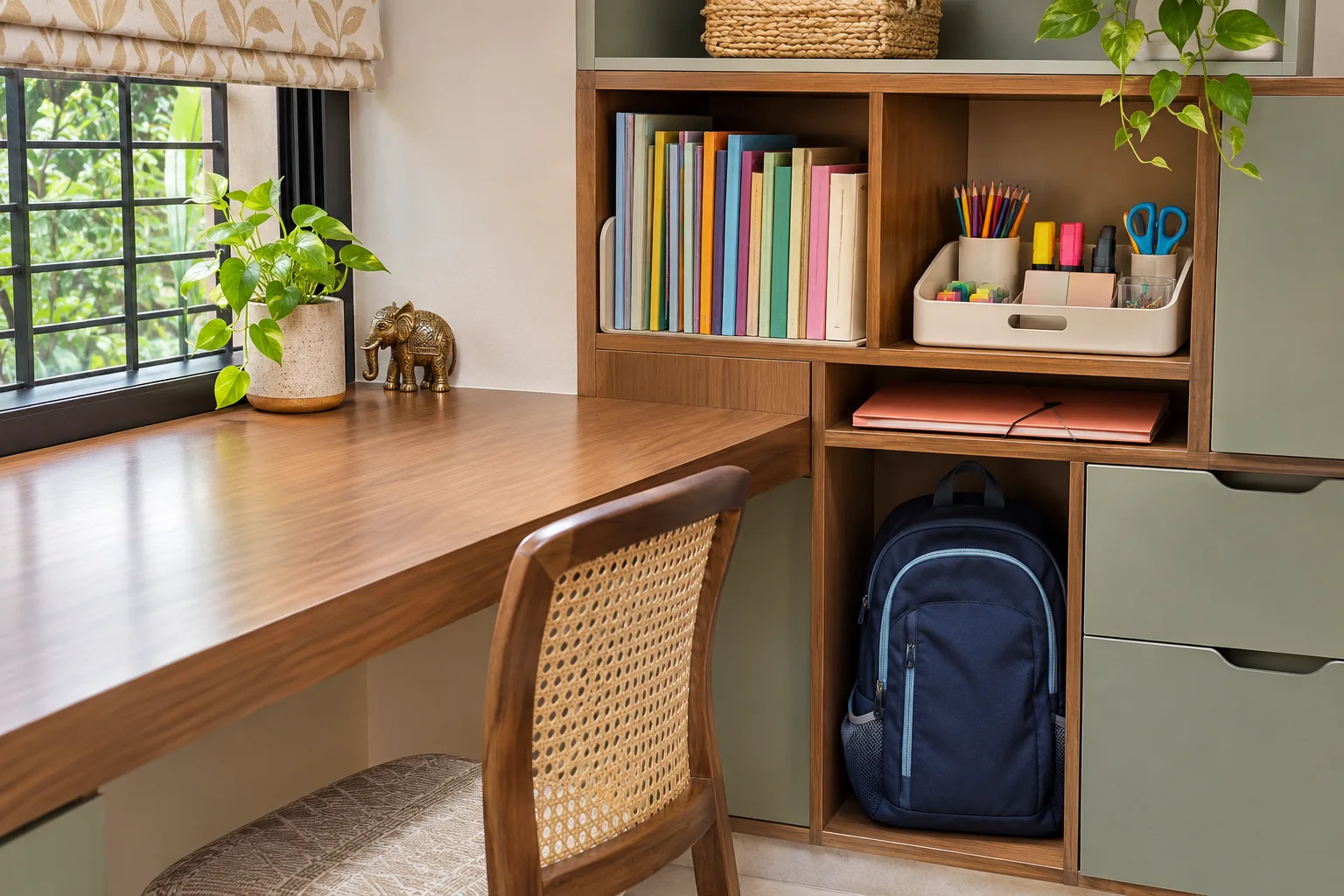
Use the tallest regular book and the filled bag to check proposed compartments. Include bag handles and the movement needed to lift it in or out. A decorative cubby that fits an empty bag may not work at the end of a school day. Avoid hanging a heavy bag on an unverified furniture knob. Choose the intended storage method and fittings for the actual use, following the product’s instructions and suitable installation.
Keep daily supplies within practical reach
Place regularly used materials where the intended user can retrieve and return them without climbing or clearing several other objects. Choose furniture and accessories suitable for the child’s age and follow their instructions. Keep tools or materials that require supervision stored appropriately. Reach changes as the child grows, so adjustable shelves and movable trays can be more useful than tightly fitted fixed compartments. Test access with the real desk and chair in position.
Protect the working surface
Give stationery a small caddy and unfinished pages a separate flat tray or folder. Do not let organisers consume most of the desk. If the same surface is used for another activity, design a one-trip removal routine to a nearby suitable shelf. Test the full setup during a normal assignment. A tidy photograph without an open book, task materials and a seated user does not reveal whether the usable work area is sufficient.
Review the desk and storage as one arrangement
Open drawers while the chair is in use and check neighbouring wardrobe doors. A bookshelf that looks convenient on the plan can occupy the place the chair needs to move. Review lighting at the time homework happens and keep access to controls practical. Use an appropriate seating arrangement rather than improvising unstable height adjustments. If sessions become longer or the present desk is unsuitable, assess the workstation as a whole instead of solving everything with another organiser.
Choose a format that can change
A separate low bookcase, adjustable cabinet or portable caddy can adapt as the balance between books, projects and devices changes. Fixed joinery may be worthwhile when the room and routine are settled, but ask which parts can be repositioned. Record shelf loads and fixing requirements for the actual product. Avoid specifying a narrow slot for every current textbook when a more flexible bay would accommodate the next year’s materials with less alteration.
Build a weekly reset into the system
Choose a consistent time to move completed work, restock supplies and empty the bag bay. Let the child manage an appropriate part while an adult checks papers and items requiring attention. Keep the number of destinations small enough to remember. If one category repeatedly overflows, ask whether its contents or location should change before adding furniture. The arrangement succeeds when materials can be found, used and returned without taking over the rest of the room.
A practical layout trial
Try a normal homework session using only a caddy, a book group and a flat unfinished-work folder. At the end, ask the child to return each category to its intended place. If the caddy can be returned but the school bag still lands on the chair, change the bag bay rather than adding stationery drawers. Repeat the trial on a day with extra books. The result gives the furniture brief a real capacity test before it becomes a permanent elevation.
Compare the options
| Option | Useful when | Check first |
|---|---|---|
| Portable caddy and tray | A shared desk or dining surface | Loaded weight and nearby storage |
| Adjustable low bookcase | Growing book collection | Reach, shelf rating and fixing |
| Built-in study storage | Stable room layout and measured brief | Chair movement and future adjustment |
Budget planning
Separate the essential desk or seating need from optional matching cabinetry. For an illustrative ₹15,000 organiser-and-storage envelope, reserve ₹7,000 for suitable shelving, ₹2,000 for trays and folders, ₹3,000 for a required lighting or fitting allowance and ₹3,000 uncommitted. These are spending allocations, not current Yelahanka prices, and exclude a new workstation or electrical work. Reuse suitable items before ordering a coordinated furniture set.
Planning sequence and timing
Take one evening to sort and measure, then test a temporary setup for a school week. Review what is actually used before purchasing storage. Custom drawings and manufacturing should follow the successful layout, with delivery and installation dates confirmed by the supplier.
Plan the next step with WallsToWonder
Use Design My Room to explore the visual direction alongside your existing room. Take actual measurements and the operating-space tests in this guide into the brief before ordering. For a wider project, use the interior cost planning tool to organise assumptions, then compare itemised supplier quotations.
For the next related decision, read 2 BHK Interior Design Cost in Yelahanka, Bengaluru. Use its relevant checks alongside your own room plan rather than assuming another home’s dimensions apply.
Frequently asked questions
How much study storage does a child need?
Begin with current materials and leave flexible capacity. There is no useful standard cabinet count for every child.
Should school bags hang on the study chair?
A separate suitable bay can keep the chair usable. Choose storage that supports the actual loaded bag and intended user.
Are open shelves better than closed cabinets?
Open shelves aid visibility; closed storage can simplify the room’s appearance. Compare reach, contents and the reset routine.
When should built-in storage be ordered?
After the desk, seating, lighting and daily routine work together in the actual room.
Turn this idea into a plan for your home
Visualise your space, understand the likely budget, or find a professional who can bring the idea to life.