
Under-Sink Kitchen Storage: 8 Checks Before Adding a Rack
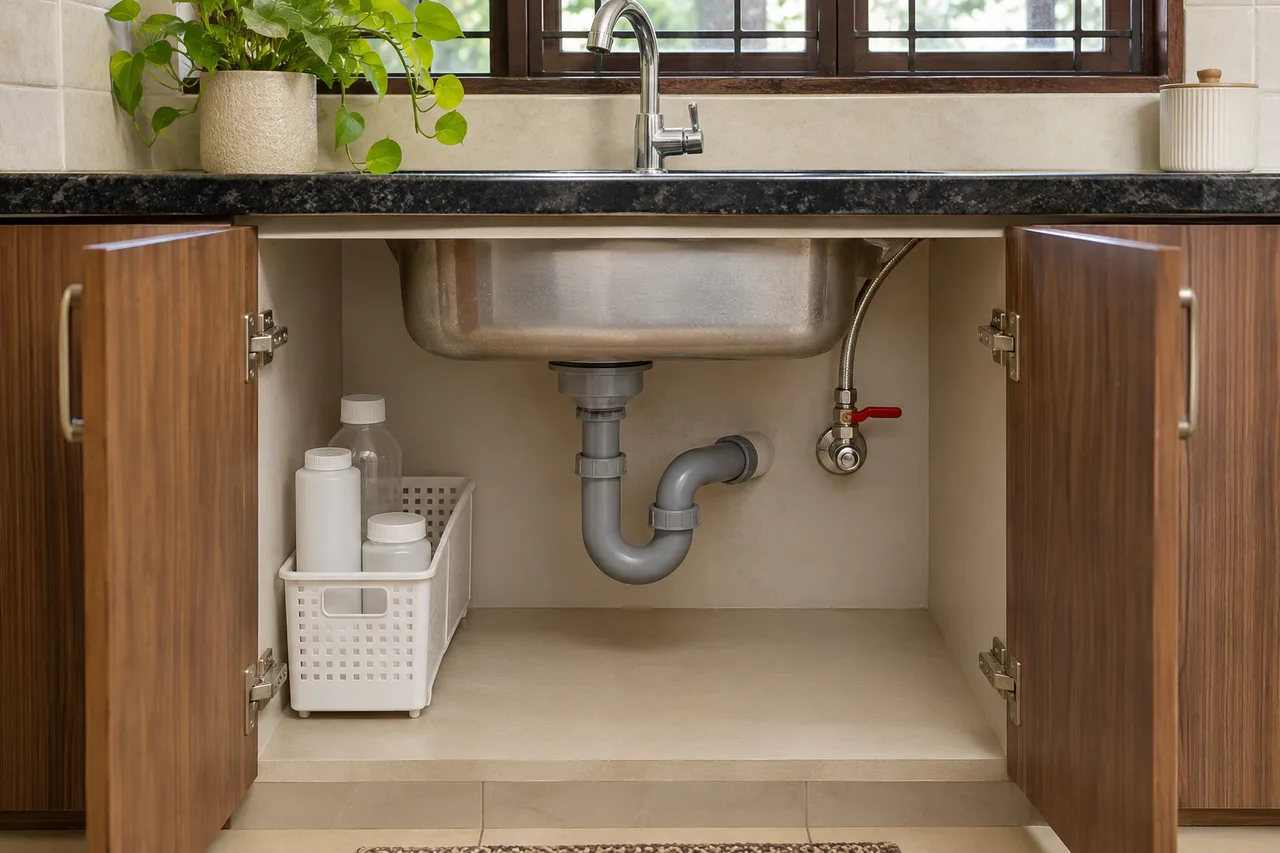
The cabinet below a sink often looks bigger from outside than it is inside. The bowl, waste connections, hinges and service points can take up the space a catalogue rack assumes is empty. This guide is for choosing storage, not installing or repairing plumbing.
Prepare a ten-minute record
Materials: tape measure, phone camera, paper and product dimensions. Prep time: allow 30–45 minutes to inspect visually, measure safely and compare one organiser. Illustrative accessory allowance: ₹300–₹1,500 for a small removable caddy or rack; repairs, plumbing and cabinet replacement are separate and require actual quotations.
Do not reach into unsafe conditions or disturb pipes and electrical equipment. If you find active moisture, damage, unusual smells or anything you cannot assess, stop the storage project and ask the appropriate professional.
Check these eight things
- Condition: the cabinet should be suitable for continued use. An organiser is not a treatment for a leak or damaged base.
- Usable width: allow for hinges and door hardware, not just the external cabinet measurement.
- Depth: record the space genuinely available without pressing against pipes or connections.
- Height: check the lowest obstruction, including the sink bowl and existing fittings.
- Valve access: keep controls accessible and ask the responsible professional what access is needed.
- Removal: ensure the organiser can be lifted out for inspection, cleaning and repairs without dismantling services.
- Product capacity: check the intended load, stability and environment for the actual organiser.
- Contents: follow product storage and household access requirements. Keep cleaning products in original labelled containers and separate from food.
Compare a caddy with a rack
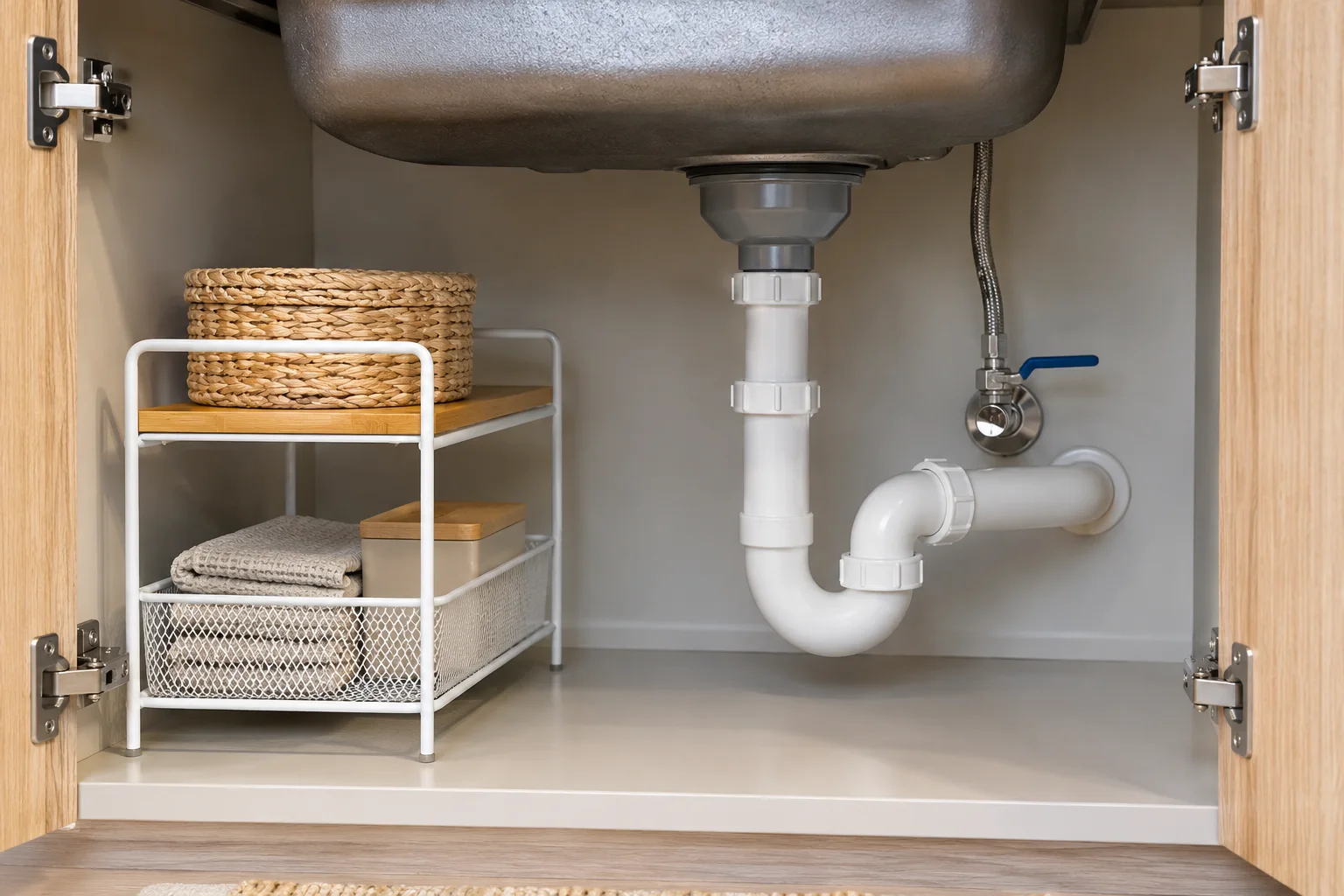
| Option | Useful when | Question to resolve |
|---|---|---|
| Small removable caddy | You have a few supplies and need easy removal | Can it be lifted out without catching hardware? |
| Freestanding rack | There is verified clear space and suitable support | Does every shelf clear the real pipework? |
| No extra accessory | The space is constrained or access matters more | Can some supplies be stored more suitably elsewhere? |
Use a physical outline before ordering
- Record the chosen product's full dimensions.
- Make a simple paper outline for the footprint without touching services.
- Check door movement and the intended removal path.
- Compare the proposed load with the product information.
- Choose another organiser or another storage location if access becomes awkward.
Keep the service record visible
Take a clear reference photo after arranging the space so you can notice changes later. Keep any relevant product and service information with the household records. Do not use a tray to hide recurring water or pack items so tightly that the cabinet cannot be inspected.
IKEA India's kitchen measurement guidance can help you begin recording a room, but the actual sink cabinet needs its own careful internal measurements. For the rest of the room, see the existing-cabinet kitchen improvements. An AI concept from WallsToWonder Design My Room cannot verify pipe clearances or storage safety.
Frequently asked questions
Can I move a pipe to fit an under-sink rack?
Do not alter plumbing as part of a storage workaround. Ask an appropriate professional to assess any service change and choose a rack that suits the existing verified space where possible.
Should I store food under the sink?
Keep food separate from cleaning supplies and follow the storage requirements for each product. Under-sink access and service conditions make it a space to assess carefully.
What should I do if the cabinet is damp?
Pause the storage project and have the moisture source and damage assessed. A liner, caddy or extra shelf does not resolve the cause.
Turn this idea into a plan for your home
Visualise your space, understand the likely budget, or find a professional who can bring the idea to life.