
7 Small Kitchen Interior Design Ideas Without Replacing Cabinets
A small kitchen interior design does not always need new shutters or a bigger budget. These seven changes focus on what happens between taking ingredients out and putting the kitchen back in order. They suit an existing apartment kitchen with serviceable cabinets; repair leaks, unstable fittings or damaged electrical equipment separately.
Budget figures below are illustrative small-item spending allowances, not surveyed retail prices or installation quotes. Reuse items where possible. Prep estimates assume materials are ready and exclude delivery, drying, fabrication and professional work. Check actual prices and product suitability before buying.
Before buying: a 20-minute kitchen audit
Empty one drawer and one worktop section, measure their usable interiors and list the objects you reach for during a normal meal. Note door hinges, pipes and drawer runners: the outside cabinet width is not its usable storage width. IKEA India’s kitchen measurement guidance is a useful starting point for recording the space accurately.
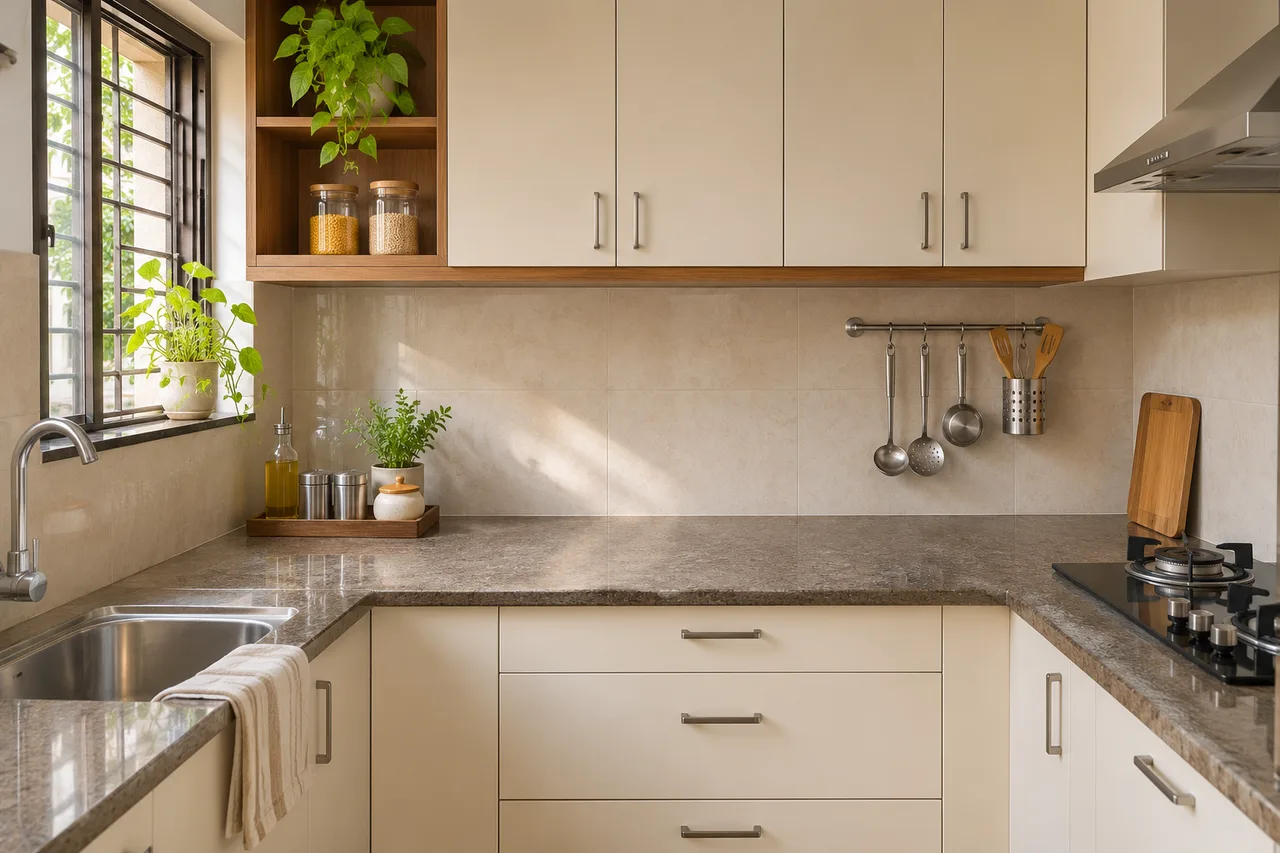
1. Create one uninterrupted preparation zone
Materials: Existing tray, suitable chopping board and cleaning cloth. Planning allowance: ₹0–₹800. Hands-on prep: 20–30 minutes.
- Remove non-cooking display pieces from your main preparation section.
- Group oil and everyday condiments on a cleanable tray away from heat.
- Prepare one meal and move back only the objects you genuinely missed.
Check before keeping it: The board should sit securely, and the tray must not obstruct hob controls, sockets or the sink.
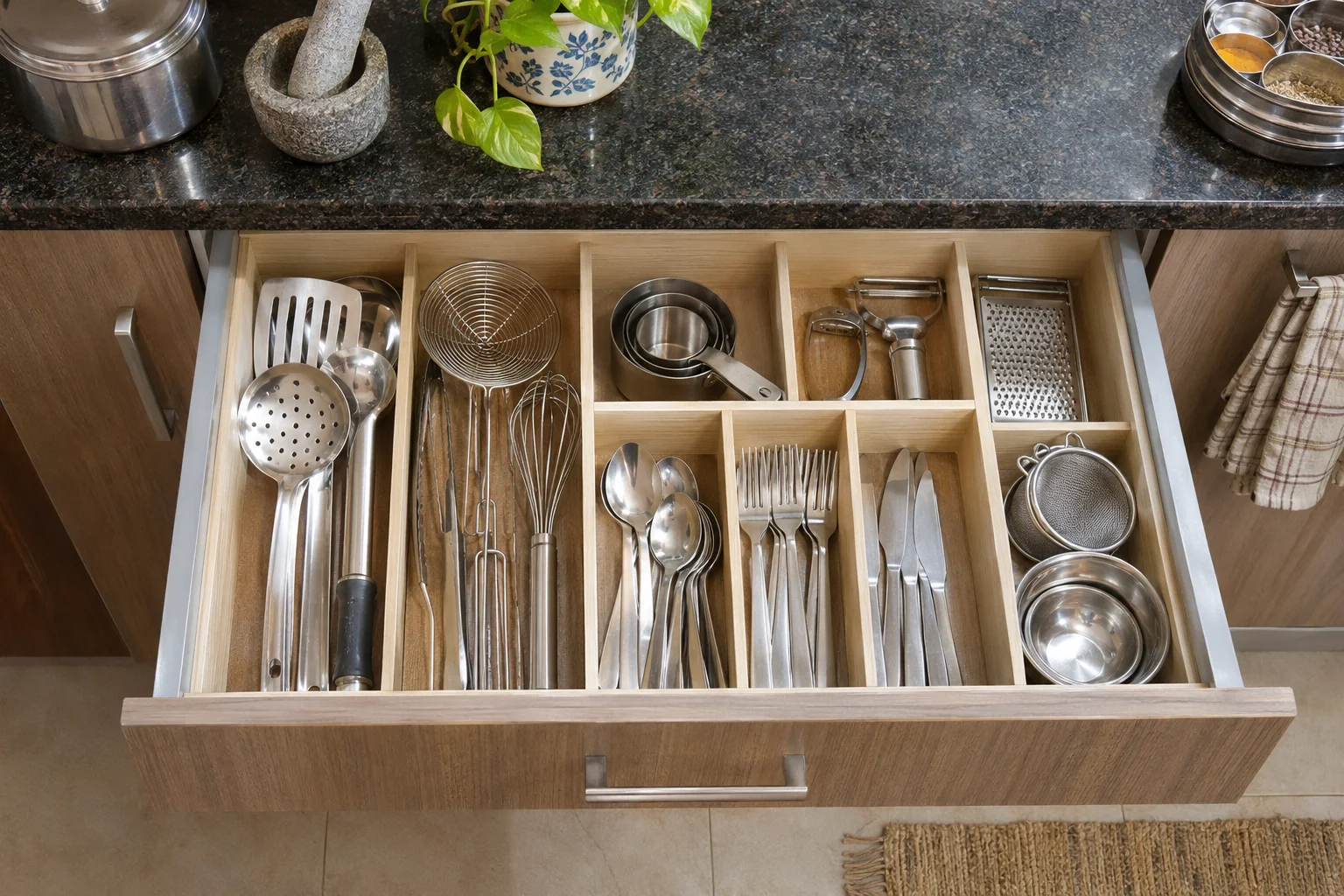
2. Add removable drawer dividers
Materials: Adjustable dividers and a tape measure. Planning allowance: ₹300–₹1,200. Hands-on prep: 25–40 minutes.
- Measure inside the drawer, allowing for hardware.
- Sort tools into cooking, serving and occasional-use groups.
- Fit dividers without forcing the drawer or reducing its ability to close.
Check before keeping it: Use the drawer several times before buying another organiser. A full-looking drawer is not necessarily a useful one.
3. Use a contained lid station
Materials: A freestanding lid organiser suitable for the shelf. Planning allowance: ₹300–₹1,000. Hands-on prep: 15–25 minutes.
- Measure the shelf height and depth.
- Group lids by the pans you actually keep.
- Try the arrangement with the cabinet door fully open and closed.
Check before keeping it: Glass lids must remain stable; do not stack heavy cookware on an accessory that is not designed for it.
4. Group the breakfast kit
Materials: A reusable tray and existing containers. Planning allowance: ₹0–₹700. Hands-on prep: 15–20 minutes.
- Collect tea, coffee and the cups used most mornings.
- Choose a reachable location outside the busiest preparation area.
- Return the kit there after breakfast for a week.
Check before keeping it: Keep food stored as its packaging requires, and keep the arrangement away from water and hot appliances.
5. Try one removable shelf riser
Materials: A shelf riser with suitable load capacity. Planning allowance: ₹400–₹1,500. Hands-on prep: 15–30 minutes.
- Measure usable height above and below the proposed riser.
- Place lighter everyday dishes where they can be lifted comfortably.
- Check stability with the actual dishes in position.
Check before keeping it: Do not assume a lightweight accessory can carry a stack of heavy pots. Follow its stated capacity.
6. Move rare-use items to a separate box
Materials: Existing lidded box and simple inventory note. Planning allowance: ₹0–₹500. Hands-on prep: 30–45 minutes.
- Identify items not used in ordinary weekly cooking.
- Store them together in an accessible location suited to their weight.
- Keep a note of the contents so they can be found without opening every box.
Check before keeping it: Do not move heavy objects to a high shelf that makes retrieval difficult.
7. Separate cleaning supplies from food storage
Materials: A suitable leak-resistant caddy. Planning allowance: ₹200–₹800. Hands-on prep: 20–30 minutes.
- Review storage instructions on cleaning products.
- Keep products in their original labelled containers.
- Arrange the caddy where household access controls and product instructions can be followed.
Check before keeping it: A caddy organises products; it does not make an unsafe or child-accessible location suitable.
Use the ideas as a sequence
Start with the preparation zone and one drawer, then reassess after a week. Buying every accessory at once makes it harder to see what actually helped. If you want a different visual direction as well, WallsToWonder Design My Room can explore an AI concept from a room photo. Confirm dimensions, storage loads and services separately; the generated image cannot check them.
Before adding new fixed work, review these kitchen design mistakes to avoid.
Frequently asked questions
Can I improve a small kitchen without changing cabinets?
Yes, if the cabinets are serviceable. Clearing the preparation area and reorganising drawers can improve daily use without new fixed work. Repairs and service problems need separate attention.
How much should I budget for these ideas?
Use the stated ranges as small-item allowances, not market quotes. Begin with one or two changes, reuse suitable items and confirm actual dimensions and prices before buying.
How do I know an organiser will fit?
Measure the usable internal space, allowing for hinges, runners and pipework. Check the product dimensions, load capacity and ability to remove it for cleaning.
Turn this idea into a plan for your home
Visualise your space, understand the likely budget, or find a professional who can bring the idea to life.