
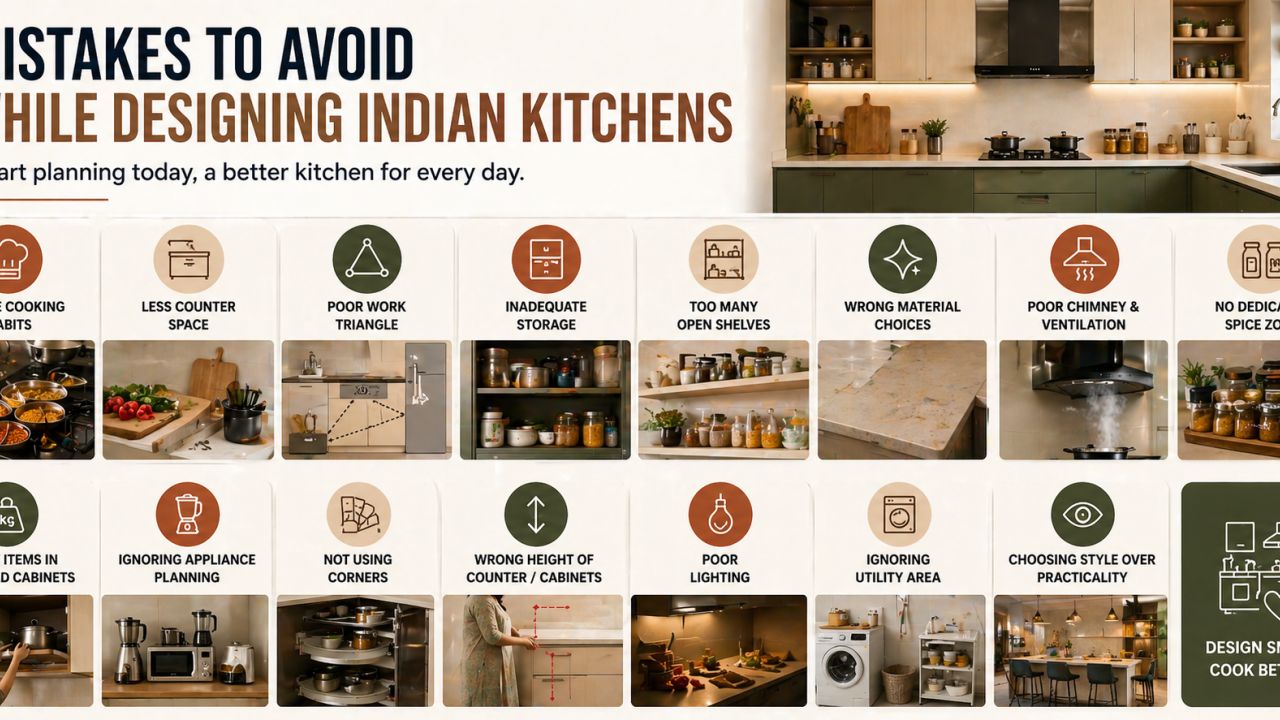
Mistakes to Avoid While Designing Indian Kitchens
Designing an Indian kitchen is very different from designing a kitchen only for visual appeal. In most Indian homes, the kitchen is one of the busiest and most hardworking spaces. It handles regular cooking, multiple utensils, spices, oil, storage, washing, preparation, and often more than one person using the space at the same time. Because of that, even a beautiful kitchen can become frustrating if the planning is not practical.
A well-designed Indian kitchen should feel efficient, easy to maintain, comfortable to work in, and suited to real daily habits. The biggest mistakes usually happen when design decisions are made only for looks and not for utility. This blog explains the most common mistakes to avoid while designing Indian kitchens, so the final result is both stylish and functional.
1. Ignoring Actual Cooking Habits
One of the biggest mistakes in kitchen design is copying a layout or style without thinking about how the household actually cooks. Indian cooking often involves frequent chopping, masala preparation, pressure cooking, frying, storing spices, and using multiple utensils in one session. A kitchen that looks sleek but does not support this routine quickly becomes inconvenient.
Before designing the kitchen, it is important to understand how often cooking happens, how elaborate it usually is, what appliances are used regularly, and how much preparation space is needed. A kitchen should fit the family's habits, not the other way around.
2. Not Planning Enough Counter Space
Counter space is one of the most valuable parts of an Indian kitchen. If the platform is too broken up or too small, even basic cooking can become uncomfortable. Many kitchens look neat in design drawings but fail in real use because there is not enough continuous workspace between the sink, stove, and storage zones.
Indian kitchens usually need enough room for chopping, mixing, keeping ingredients, and handling utensils during cooking. A cramped counter makes the kitchen stressful and cluttered. Good design always protects practical work surface area.
3. Poor Work Triangle Planning
The sink, hob, and refrigerator should work in a practical relationship. If these are placed too far apart or in awkward positions, the kitchen becomes tiring to use. In Indian kitchens, where movement between washing, cutting, cooking, and storing is frequent, this becomes even more important.
A badly planned work triangle increases unnecessary walking and makes the flow inefficient. The kitchen should support a natural movement pattern so daily work feels smoother and faster.
4. Inadequate Storage Planning
A common mistake in Indian kitchens is underestimating storage needs. Most Indian households need room for daily utensils, plates, cookers, pans, spices, containers, groceries, oils, lentils, appliances, and backup supplies. Without proper storage, countertops fill up quickly and the kitchen starts looking crowded.
Storage should be planned from the beginning, not added later. Deep drawers, pantry units, overhead cabinets, spice pull-outs, corner units, and under-sink organization all matter. A kitchen can only stay clean when everything has a proper place.
5. Using Too Many Open Shelves
Open shelves can look attractive in photos, but relying too much on them in Indian kitchens is often a mistake. Kitchens in India usually deal with more oil, dust, masala particles, and daily handling. Open shelves can quickly collect grime and make the kitchen look messy if not maintained constantly.
A few open shelves may work for display or everyday items, but most Indian kitchens function better with more closed storage. Closed cabinets help reduce dust, hide clutter, and make maintenance easier.
6. Choosing Materials Without Thinking About Maintenance
Another common mistake is selecting finishes only for appearance. Glossy surfaces, delicate laminates, fancy handles, or hard-to-clean textures may look great initially, but daily use in an Indian kitchen can wear them down quickly.
Kitchen materials should be chosen for durability, stain resistance, heat tolerance, and ease of cleaning. Countertops, cabinet shutters, wall finishes, and flooring should all handle real cooking conditions. A kitchen should stay practical long after the first day.
7. Poor Chimney and Ventilation Planning
Indian cooking often involves strong aromas, steam, and oil. If ventilation is weak or the chimney is badly planned, the kitchen starts feeling stuffy and grease builds up faster on surfaces. This affects both comfort and cleanliness.
A good chimney, proper ventilation, and suitable window planning are essential. This is not a luxury feature. It is a core part of making the kitchen work well.
8. Not Creating a Proper Spice and Condiment Zone
Spices, masalas, oils, and condiments are used frequently in Indian kitchens. One major design mistake is storing them in random places instead of planning a dedicated zone near the cooking area. This leads to inconvenience and constant searching during meal preparation.
A narrow pull-out, drawer insert, or organized cabinet close to the hob makes a big difference. Utility improves when the most-used items are the easiest to reach.
9. Storing Heavy Items in Overhead Cabinets
Overhead cabinets are useful, but putting heavy cookware or frequently used large items in high storage creates strain and inconvenience. In daily-use kitchens, heavy utensils should ideally stay in lower drawers or easily accessible cabinets.
Overhead cabinets should be used for lighter and less frequently used items. Storage must follow comfort, not just symmetry in design.
10. Ignoring Appliance Planning
Many kitchens become cluttered because there was no clear place planned for appliances. Mixers, microwaves, air fryers, toasters, blenders, and water purifiers need dedicated positions. If this is ignored, the countertop fills up and the kitchen loses working space.
Every kitchen should be designed with a clear plan for both built-in and countertop appliances. Good appliance planning keeps the kitchen looking cleaner and working better.
11. Not Using Corners Properly
Kitchen corners are often wasted when basic shelving is used without proper fittings. In Indian kitchens, where storage demand is usually high, this becomes a lost opportunity.
Corner solutions like carousel units, magic corners, or smart pull-out systems can make difficult areas highly usable. Ignoring corners often leads to reduced storage efficiency.
12. Wrong Height of Counter or Cabinets
Comfort matters a lot in kitchen design, especially in homes where cooking happens daily. If the counter height is too low or too high, it can make cooking tiring over time. The same applies to overhead cabinets placed too high to reach comfortably.
Kitchen dimensions should suit the users of the home. A kitchen that is uncomfortable to use every day will never feel truly functional, no matter how good it looks.
13. Poor Lighting Design
A kitchen needs proper lighting for both function and comfort. One ceiling light is not enough. If task areas are shadowed, cooking becomes harder and less safe. Indian kitchens especially need clear visibility in preparation zones, stove areas, and sinks.
Layered lighting works best. General lighting, task lighting under cabinets, and good brightness near work areas make the kitchen much more usable.
14. Ignoring the Utility Area
In many Indian homes, the utility zone is closely connected to the kitchen. Washing machines, cleaning supplies, drying clothes, extra groceries, and waste segregation often need a practical space. If utility planning is ignored, these functions start spilling into the kitchen and making it feel cluttered.
Even a small utility area should be organized properly. This helps keep the main kitchen cleaner and more focused.
15. Choosing Style Over Practicality
One of the most common mistakes of all is making decisions based only on trend or appearance. Handleless cabinets, minimal counters, delicate finishes, or ultra-modern layouts may look attractive, but if they do not support real Indian cooking and storage needs, the kitchen becomes difficult to live with.
A kitchen should absolutely look good, but style should support utility, not replace it. The best Indian kitchens are the ones that balance beauty with daily functionality.
Final Thoughts
A successful Indian kitchen is not just modern or stylish. It is practical, durable, easy to clean, and designed around real household needs. Most kitchen problems begin not because the space is too small, but because the planning misses important details like storage, countertop space, ventilation, material choice, and workflow.
Avoiding these mistakes can make a huge difference in how the kitchen feels every day. When the layout, cabinets, appliances, lighting, and storage all work together properly, the kitchen becomes a space that is not only attractive but genuinely comfortable to use.
FAQs
1. What is the biggest mistake people make while designing Indian kitchens?
The biggest mistake is designing only for appearance and not for actual cooking habits. Indian kitchens need strong storage, good ventilation, enough counter space, and easy-to-clean materials.
2. Why is storage planning so important in Indian kitchens?
Indian kitchens usually need to store more utensils, groceries, spices, appliances, and daily-use items than many standard kitchen layouts assume. Without proper storage, the kitchen quickly becomes cluttered.
3. Are open shelves good for Indian kitchens?
Open shelves can work in small amounts, but too many open shelves are usually not ideal for Indian kitchens because of dust, oil, and daily cooking residue.
4. What kind of countertop is best for Indian kitchens?
A countertop should be durable, easy to clean, and resistant to heat, stains, and daily wear. The best choice depends on budget and preference, but maintenance should always be considered.
5. Why is chimney planning important in Indian kitchens?
Indian cooking often creates more smoke, oil, and strong aromas, so a good chimney and proper ventilation are essential for comfort and cleanliness.
6. Should Indian kitchens have more drawers or cabinets?
In many cases, drawers are more practical for lower storage because they improve access to cookware, utensils, and containers. A mix of drawers and cabinets usually works best.
7. How do I make a small Indian kitchen more functional?
Focus on smart storage, tall units, corner solutions, clear countertop space, proper lighting, and dedicated zones for spices, utensils, and appliances.
8. What should be kept near the stove in an Indian kitchen?
Spices, oils, basic cooking utensils, and frequently used pans should ideally be kept near the stove for smoother daily cooking.
9. Is lighting important in kitchen design?
Yes, lighting is extremely important. A kitchen needs both general lighting and task lighting to support chopping, cooking, washing, and safe movement.
10. How can I design an Indian kitchen that is both modern and practical?
Choose a layout that supports your cooking routine, use durable materials, plan enough storage, keep the countertop functional, and avoid making trend-based choices that reduce daily comfort.