

Reusing Interior Doors in a Pashan Renovation: Inspect Before Replacing
Before reusing interior doors in a Pashan renovation, assess the leaf, frame, hardware and opening as one assembly. Separate cosmetic wear from faults that affect operation. Compare a defined repair with complete replacement, including finishing and making good, and retain any special performance requirements rather than choosing from the door’s appearance alone.
Prepare the brief
Photographs, an opening schedule, a list of operating faults, retained-finish samples and an assessment by the appropriate door or repair specialist.
Make a door-by-door record
Number the openings and photograph both faces, the frame, hinges and latch area. Describe observable faults such as rubbing, a loose handle or a damaged panel rather than diagnosing every cause yourself. Record what you like and want to retain separately from what needs correction. This creates a useful brief for comparing repair proposals. A single poor-looking door should not automatically lead to replacing every leaf before their individual conditions and roles have been reviewed.
Inspect the leaf and frame together
A sticking door may involve the frame, hardware, floor changes or the leaf itself. Ask a suitable professional to assess the complete assembly and any signs of moisture or deterioration. Do not assume shaving the edge or applying new finish is the correct response. Establish whether the cause is stable and what repair is proposed. A repaired front can look attractive while leaving the underlying movement or fixing problem unresolved.
Identify special requirements before alteration
Check whether an opening has requirements beyond ordinary internal privacy, such as a specified performance door assembly. Have those requirements identified by the appropriate professional before changing hardware, glazing, seals or the leaf. Do not treat every door as interchangeable timber furniture. Retaining an appearance does not prove that an altered assembly retains a specified performance, and a generic replacement is not automatically an equivalent. Keep the relevant records with the renovation scope.
Review hardware as a coordinated set
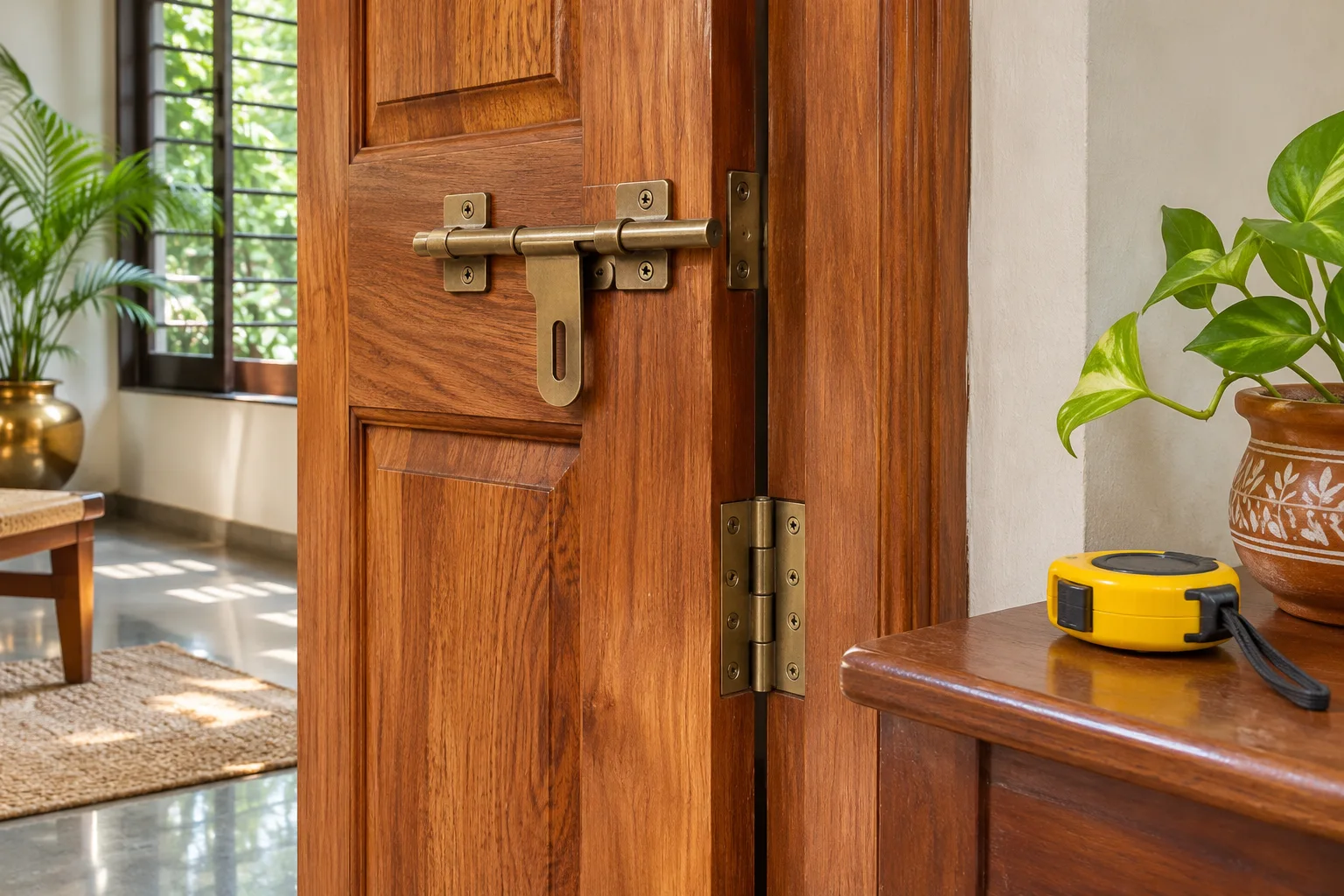
Inspect hinges, handles, latches, stops and locks for the intended use. Confirm that proposed replacements suit the door, frame, fixing conditions and users. A larger handle may cover old holes visually without solving a damaged fixing area. Ask how redundant holes, mismatched finishes and alignment will be addressed. Where existing hardware can remain, record it clearly so it is not removed casually during painting or replaced with an unspecified substitute at installation.
Plan refinishing around the existing material
Have the finish and surface condition assessed before preparation. Avoid casual sanding or stripping based only on a decorative reference, especially where an older coating or material is uncertain. Ask the specialist which system is compatible and how retained surfaces will be protected. Approve samples against adjacent flooring and frames. Matching a photograph is not a reliable basis for a finish order, and a newly finished leaf may look different from an untouched frame.
Include floor and room changes in the test
If flooring, thresholds, wardrobes or wall finishes will change, review their effect on the door before approving repair dimensions. Mark the full swing and check furniture in use. A door that worked before the renovation may conflict with a new cabinet or changed floor level. Keep the door schedule linked to the latest room drawing. Coordinate the sequence so a repaired assembly is not damaged or made unsuitable by later work.
Compare complete outcomes at handover
For repair, agree which faults will be corrected and which existing cosmetic differences remain. For replacement, specify the complete leaf, frame interfaces, hardware, installation and making good. Have the installer demonstrate operation and check the accepted finish and adjoining surfaces. Retain care and product information where relevant. A repair should have measurable completion criteria, just as replacement does, rather than closing the work because the face has been repainted.
A practical layout trial
Consider an existing bedroom door that rubs after a floor change. Request an assessment of the leaf, hinges, frame and finished floor interface before pricing a new leaf. Then compare the proposed repair with complete replacement, including frame work, hardware, painting and any wall repair. If the door will also meet a new wardrobe, show both movements on the plan. This prevents a cosmetic decision being made before the opening’s operational problem is understood.
A useful supplier-briefing question
Ask: “Which fault is being corrected, what is causing it and which parts can remain?” Give each opening a location reference and request a clear repair boundary. Compare the finished operation and appearance with a complete replacement scope. Include flooring and adjacent joinery changes in the review. This helps avoid paying for a new finish before the underlying door problem is addressed.
Compare the options
| Option | Useful when | Check first |
|---|---|---|
| Defined repair | The assembly is suitable to retain | Cause of fault and closure criteria |
| Refinish and hardware work | The main structure works | Compatible finish and fixing condition |
| Complete replacement | Repair cannot meet the agreed need | Whole assembly and making good |
Budget planning
Request separate lines for assessment, repairs, hardware, preparation, finishing, removal, installation and making good. Compare the same completed result rather than a bare replacement leaf with an installed repair. Keep uncertain concealed damage documented as an allowance until assessed. The Pashan location does not establish a price per door; condition, construction, scope and required performance determine what work is appropriate.
Planning sequence and timing
Assess before finalising decorative finishes. Coordinate any floor and cabinet changes, approve repair or replacement details and then confirm the work sequence. Include inspection after reinstatement rather than treating delivery of the leaf as completion.
Prepare the next decision with WallsToWonder
Use Design My Room to explore visual direction with the room you already have. Take the measured layout, intended use and relevant product requirements into your supplier discussion before ordering. For a wider project, the interior cost planning tool can organise the work categories; replace assumptions with itemised quotations.
For a related planning decision, read Refreshing a Malleshwaram Home Around Existing Timber Windows. Apply the checks relevant to your own home rather than copying another property’s dimensions.
Frequently asked questions
Should an old door always be replaced?
No. Assess the full assembly, required use and repair options before deciding.
Can new hardware solve every rubbing problem?
Not necessarily. The cause may involve the frame, leaf, floor or installation.
Can a performance door be altered like ordinary furniture?
Do not assume so. Have its specific requirements assessed before changing components.
What should a repair quote include?
The identified faults, retained parts, repair method, finishes, hardware, exclusions and completion checks.
Reference for the technical decision
SPAB: assessment and repair of doors. Guidance for a particular product or jurisdiction does not replace the requirements applicable to the actual selected system and site.
Turn this idea into a plan for your home
Visualise your space, understand the likely budget, or find a professional who can bring the idea to life.