
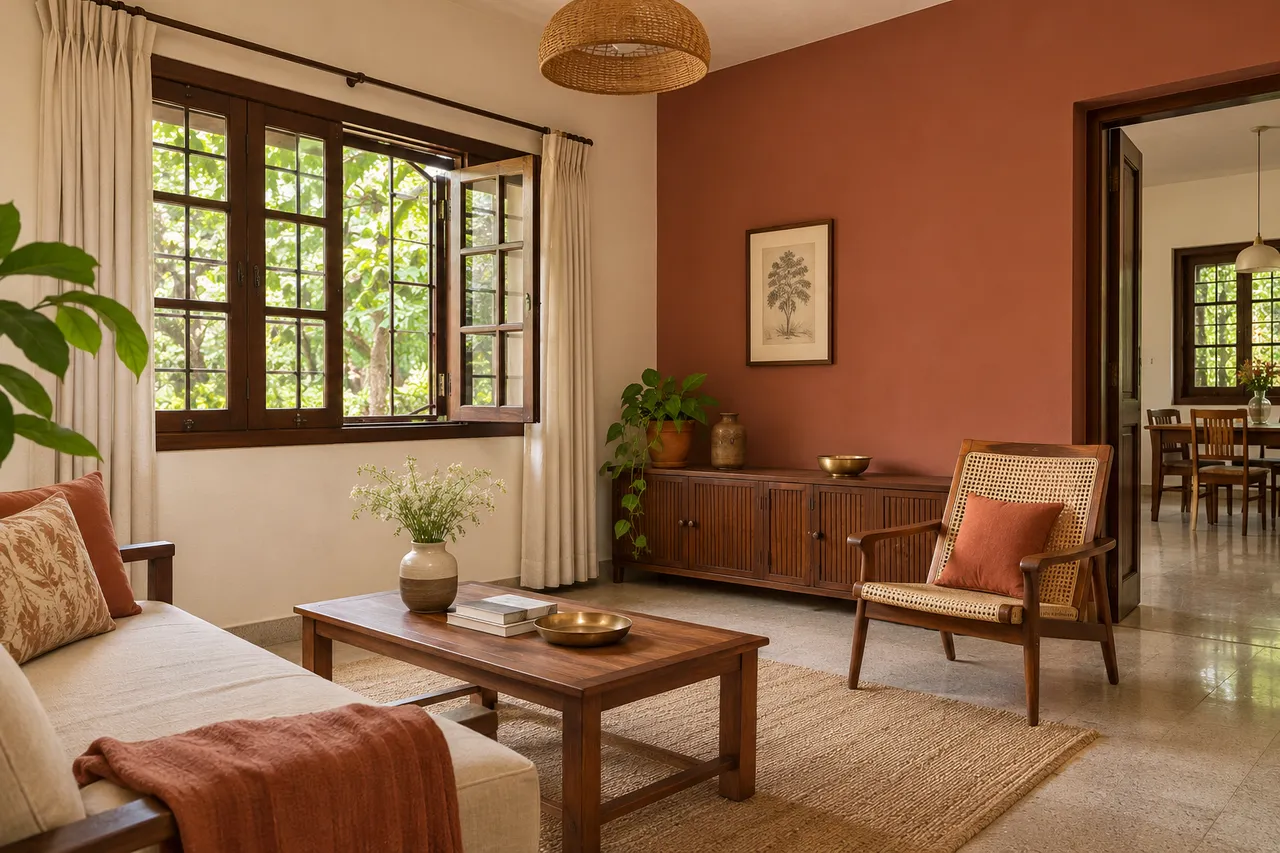
Refreshing a Malleshwaram Home Around Existing Timber Windows
Refresh a Malleshwaram room around existing timber windows by assessing their condition and operation before placing furniture or curtains. Keep opening leaves, latches and maintenance access usable. Repair and decorating decisions should follow the assessment, while the room’s colours and storage can be planned to complement retained timber rather than conceal it.
Prepare the brief
Photographs of each window, an opening-direction sketch, measurements of the frame and sill, proposed curtain details and an assessment by a suitable repair professional where needed.
Malleshwaram: start with your own property
For a Malleshwaram home that retains timber frames, begin by recording which windows will remain and what the room needs to do around them. The window condition, opening direction and furniture layout should be reviewed together. This brief does not assume that every property has the same age, construction or alteration permissions. Check requirements for your actual home before changing the external appearance, and keep repair assessment separate from decisions about decorative colour.
Record the window’s present condition
Photograph the whole window and details of joints, paint, glass and fittings. Note where operation is stiff and when water or draughts are observed. Do not conclude that a window needs complete replacement from an unattractive surface alone. Equally, do not treat a fresh coat of paint as a repair assessment. Ask a suitable specialist to identify what can remain, which repairs are proposed and whether any further investigation is required before the decorating scope is fixed.
Map each opening leaf and its controls
Open the window as normally intended and sketch the space its leaves and handles occupy. Mark the sill projection, nearby switches and any existing grille or screen. Test the position of a chair, desk or low cabinet against this movement. A piece can fit below the sill but still prevent someone reaching a latch. Keep the window usable after furnishing rather than measuring only the rectangular wall area around it.
Coordinate curtains with the actual frame
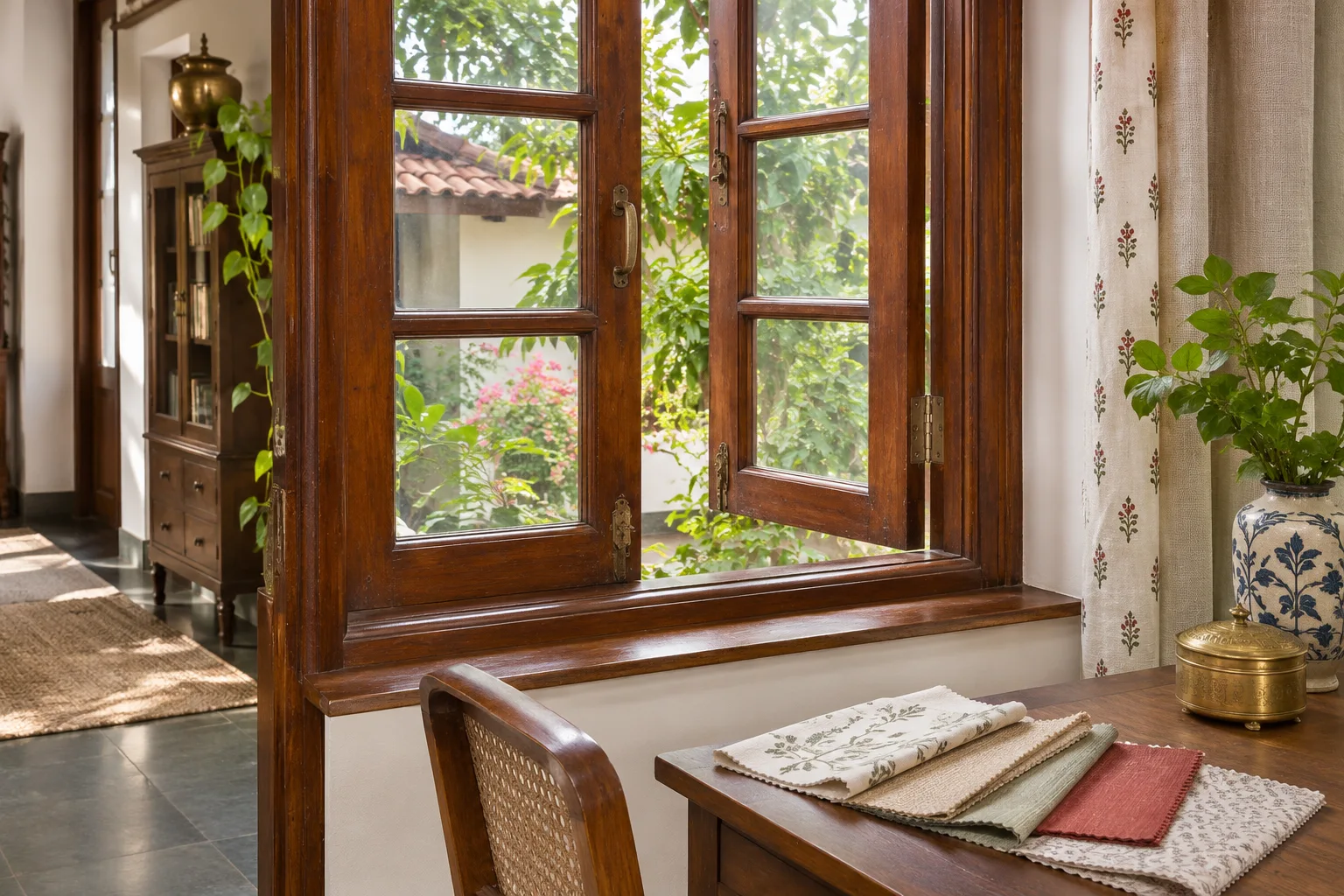
Check where curtain stacks will sit when open and whether the track, rod or blind interferes with an opening leaf. Include handles, pelmets and the depth of fabric folds. View samples beside the timber rather than selecting from a tiny image. A lightweight-looking curtain can still block a control when gathered. Confirm how coverings will be removed for cleaning and how the window can be inspected without taking down surrounding joinery.
Choose furniture that leaves a maintenance route
Leave the relevant frame and fittings reachable for cleaning and future repair. Avoid building a fixed cabinet tightly around a window that will need assessment or adjustment. If a desk or seat sits nearby, test the window from that occupied arrangement. Freestanding furniture can provide flexibility where the final repair scope is still uncertain. Do not hide a problem edge behind panelling to make the room appear finished before its cause has been understood.
Plan finishes after the repair approach
Review paint, timber treatment and surrounding wall finishes with the person responsible for repair. Historic finishes may require particular assessment; avoid casual sanding or stripping based on a styling tutorial. The proposed finish should suit the existing material and condition. Ask how the work area will be protected and when the room can be used again. Keep sample approval separate from permission to start surface preparation.
Balance old timber with the rest of the room
Retaining a window does not require every new piece to copy its style. Compare a simple storage unit, restrained wall colour and textiles that let the frame remain readable. View the combination in morning and evening light. Avoid darkening the whole room merely to match an aged timber tone. Start with one coordinated sample group and test it against the retained element before ordering large quantities of fabric or finish.
Inspect operation after decorating
Check the agreed opening and closing movement, accessible latches and the condition of adjacent finishes after the work. Ask the specialist to demonstrate any adjusted hardware and provide the maintenance guidance for the completed system. Retain before-and-after photographs and the repair scope. A visually refreshed room should still allow the window to work and be maintained; the final curtain and furniture positions need checking as part of that handover.
A practical layout trial
Suppose a low cabinet fits below the sill but projects into the path needed to reach the window latch. Try a shallower piece or move it to another wall before changing the window or adding a powered covering. Include the curtain stack in the test: it may occupy the remaining reach space. Keep the repair assessment independent from that furniture decision, then compare the whole composition using the confirmed frame, wall and curtain samples rather than ordering around unfinished timber work.
Compare the options
| Option | Useful when | Check first |
|---|---|---|
| Repair and redecorate | Existing window is suitable to retain | Specialist scope and compatible finishes |
| Change room furniture only | Window works but the room obstructs it | Opening leaves and latch reach |
| Replacement assessment | Repair limitations are identified | Permissions, full specification and making good |
Budget planning
Separate investigation, timber or hardware repairs, surface preparation, finishing, curtain work and making good in the quotation. Keep room décor outside the essential repair allowance so it does not consume money needed for the window itself. Compare repair and replacement only after their scopes are defined. No reliable cost per window follows from the locality name or a photograph; size, condition, access and the selected system determine the work.
Planning sequence and timing
Assess first, agree repairs second and coordinate decorating afterward. Obtain product-specific drying or curing guidance and the specialist’s schedule. Furniture and curtain orders should use the confirmed finished dimensions where repairs may change interfaces.
Plan the next step with WallsToWonder
Use Design My Room to explore the visual direction alongside your existing room. Take actual measurements and the operating-space tests in this guide into the brief before ordering. For a wider project, use the interior cost planning tool to organise assumptions, then compare itemised supplier quotations.
For the next related decision, read Choosing Interior Materials: Where They Work and Where They Don't. Use its relevant checks alongside your own room plan rather than assuming another home’s dimensions apply.
Frequently asked questions
Should old timber windows always be replaced?
No. Assess condition and repair options first. The right decision depends on the actual window and property requirements.
Can a curtain track be fixed without checking the opening?
Check the complete window movement and stack position before choosing or installing the covering.
Can I build storage immediately below a window?
Only after checking leaf movement, sill projections, controls and the access needed for maintenance.
Does retaining timber require matching traditional furniture?
No. Simple contemporary pieces can work alongside retained timber when the room’s proportions and materials are coordinated.
References for the planning decisions
SPAB: assessing and maintaining timber windows. Product and installation guidance applies to the specified system; assess the actual home separately.
Turn this idea into a plan for your home
Visualise your space, understand the likely budget, or find a professional who can bring the idea to life.