
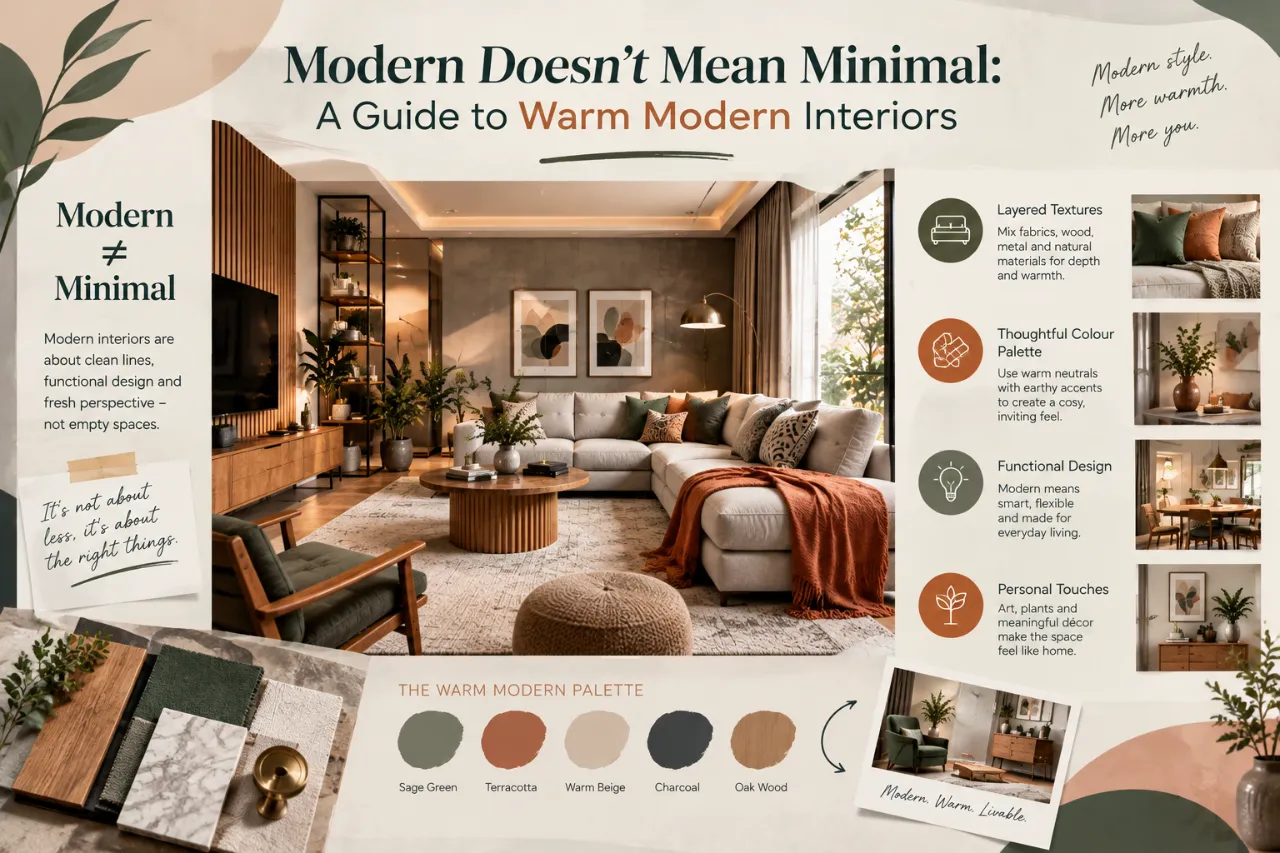
Modern Doesn't Mean Minimal: A Guide to Warm Modern Interiors
Modern interior design is often associated with minimalism: empty surfaces, neutral colours, sharp lines and very little decoration. But modern does not have to mean minimal, cold or impersonal.
A warm modern interior keeps the clarity and simplicity of contemporary design while introducing materials, textures, colours, lighting and furniture that make the space feel comfortable and lived-in. The result is a home that looks current without feeling sterile.
This guide explains how to create warm modern interiors that balance clean design with personality, comfort and visual depth.
Quick answer: Warm modern interiors combine modern forms with warmer materials, softer colours, layered textures, comfortable furniture, natural elements and carefully planned lighting. The goal is not to fill the room with decoration, but to introduce enough warmth and variation to make a contemporary space feel inviting.
- What warm modern interiors actually mean
- Why modern does not have to mean minimal
- How to choose a warm modern colour palette
- Using natural materials for warmth
- Adding texture without creating clutter
- The role of furniture and proportion
- Why lighting matters so much
- How to use artwork and accessories
- Warm modern interiors for Indian homes
- Common mistakes to avoid
- A practical warm modern checklist
- Frequently asked questions
What Does “Warm Modern” Actually Mean?
Warm modern design sits between two extremes. It retains the clean geometry, functional planning and uncluttered appearance associated with modern interiors, but avoids making every surface feel overly stark.
Instead of relying only on white, grey, glass and polished finishes, a warm modern home might combine those elements with wood, linen, muted earthy colours, soft upholstery, stone, textured walls and warm lighting.
The idea is simple: keep the architecture and layout visually clean while making the experience of the room feel softer and more comfortable.
Modern Structure
Clean lines, simple forms, functional layouts, controlled detailing and uncluttered visual composition.
Warm Character
Natural wood, tactile fabrics, soft lighting, muted colours, artwork, plants and carefully chosen decorative elements.
Why Modern Does Not Have to Mean Minimal
Minimalism is one design approach, but modern interior design is much broader. A contemporary home can contain layered materials, artwork, books, decorative objects and expressive furniture while still maintaining a modern visual language.
The important question is not how many things are visible. It is whether those things have a clear relationship with one another.
A room can therefore be visually rich without becoming visually chaotic. Consistency in colour, proportion, materials and spacing is what keeps a warm modern interior feeling intentional.
Design principle: Do not remove everything in an attempt to make a room modern. Instead, remove unnecessary visual noise and keep the elements that add function, comfort, texture or personality.
Start With a Warm Modern Colour Palette
Colour is one of the easiest ways to change the emotional quality of a modern room. Instead of depending only on bright white or cool grey, consider warmer, more nuanced tones.
Warm Neutrals
Shades such as ivory, cream, beige, taupe, mushroom, greige and warm off-white create a softer foundation without losing the clean appearance associated with modern interiors.
Muted Accent Colours
Warm modern spaces can also include muted olive, terracotta, dusty blue, caramel, clay, muted green or deep brown. These colours can appear through a single wall, upholstery, curtains, rugs, artwork or smaller accessories.
Dark Colours in Controlled Doses
Charcoal, espresso, deep green and navy can create contrast and depth. They work particularly well when balanced with lighter walls, natural materials and sufficient lighting.
Try this approach: Start with one warm neutral base, add one supporting colour and then introduce a darker accent through furniture, lighting, artwork or smaller details.
Use Natural Materials to Add Warmth
Materials can completely change how a modern room feels. Two spaces can have the same layout and furniture arrangement but feel very different depending on the surfaces and finishes used.
Natural and tactile materials are especially useful when a modern interior feels too cold. Wood, stone, cane, linen, cotton, jute and textured plaster can soften harder modern surfaces.
Wood
Use wood through furniture, wall panelling, cabinetry, flooring or smaller architectural details to introduce visual warmth.
Stone
Stone and stone-inspired finishes can add depth and sophistication when paired with softer materials rather than used across every surface.
Natural Fabrics
Linen, cotton and other tactile fabrics help soften the sharper visual quality of modern furniture and architecture.
Woven Details
Cane, jute and woven accents can introduce subtle texture while keeping the overall design contemporary.
Layer Texture Instead of Adding Clutter
One of the biggest differences between a cold modern room and a warm modern room is often texture.
Imagine a space with a smooth painted wall, glossy cabinetry, glass and polished flooring. The design may be visually clean, but it can lack softness. Introducing a textured rug, upholstered seating, timber, curtains or softly finished walls creates another layer of visual information.
Texture is particularly useful when your colour palette is neutral. When there are fewer colours, variations in material become more important.
Keep it controlled: Mix a few contrasting textures rather than choosing a different finish for every surface. Too many competing materials can make a room feel fragmented.
Furniture Should Look Comfortable, Not Just Sculptural
Modern furniture often focuses on clean silhouettes, but warm modern interiors benefit from pieces that also feel comfortable and usable.
Sofas can have softer upholstery and deeper cushions. Dining chairs can introduce fabric or curved details. Beds can use upholstered headboards. Lounge chairs can have rounded edges that soften a room dominated by straight architectural lines.
Proportion also matters. A room does not automatically become sophisticated because the furniture is expensive. The scale of the sofa, coffee table, rug, dining table and storage should relate to the room and to one another.
Let Lighting Create the Warmth
Even a beautifully planned warm modern interior can feel cold when it relies on a single harsh ceiling light.
Layered lighting gives a room more depth and lets you change its mood throughout the day.
Ambient Lighting
Provides the general illumination of the room and creates the overall brightness level.
Task Lighting
Supports specific activities such as reading, cooking, working or dressing.
Accent Lighting
Highlights artwork, wall treatments, shelves, architectural features or decorative objects.
Decorative Lighting
Adds visual character through pendants, sconces, table lamps or statement fixtures.
Warm modern interiors usually benefit from lighting that supports the material palette rather than competing with it. A textured wall, wooden cabinet or upholstered chair can appear considerably different under carefully positioned light.
Curves Can Soften a Modern Interior
Modern design is often associated with straight horizontal and vertical lines. Introducing a few curved forms can create visual softness without changing the overall style of the room.
Consider a rounded coffee table, curved accent chair, circular mirror, softly shaped pendant or curved furniture edge.
Curves work best when used selectively. You do not need every piece of furniture to have a rounded shape. One or two carefully placed elements can be enough to balance a strongly geometric room.
Artwork and Accessories Should Feel Personal
A warm modern interior should not look as though every object was purchased from the same showroom.
Artwork, books, photographs, ceramics, plants and collected objects give a home personality. They also help make a contemporary space feel lived-in rather than staged.
The key is editing. A few meaningful objects usually have more impact than a large collection of unrelated accessories.
Warm Modern Interiors for Indian Homes
Warm modern design can work particularly well in Indian homes because it allows contemporary planning to coexist with materials, colours and details that feel familiar and practical.
Wood tones can be paired with warm neutrals, textured fabrics and subtle brass or bronze details. Traditional objects, Indian artwork or handcrafted accents can also become part of a modern interior without making the whole room feel traditional.
Practical realities also matter. Dust, maintenance, natural light, ventilation, cooking, family routines and storage requirements should all be considered before selecting finishes or decorative elements.
For more ideas suited to Indian homes, explore the Walls to Wonder design ideas collection .
Modern Can Still Be Layered
A layered interior does not necessarily mean a cluttered interior.
You can create depth by layering different qualities rather than simply adding more objects. For example:
| Element | Modern Approach | Warm Modern Addition |
|---|---|---|
| Walls | Clean painted surfaces | Warm neutral tones or subtle texture |
| Furniture | Simple silhouettes | Soft upholstery and comfortable forms |
| Materials | Glass, metal and polished finishes | Wood, stone and tactile fabrics |
| Lighting | Functional overhead lighting | Layered ambient, task and accent lighting |
| Accessories | Very limited decoration | Curated artwork, plants and meaningful objects |
Common Mistakes That Make Modern Interiors Feel Cold
Using Only Cool Neutrals
A room dominated by cool grey, bright white and black can feel visually hard, particularly when combined with glossy finishes and limited texture.
Making Every Surface Minimal
Removing all accessories, textiles and artwork may create an uncluttered room, but it can also remove personality.
Using Too Many Finishes
Warm design is not about adding a different material to every wall. Excessive variation can make a space look busy instead of layered.
Ignoring Lighting
Even the right materials and furniture can appear flat or harsh under poorly planned lighting.
Buying Everything as a Matching Set
Perfectly matching furniture can make a room feel predictable. A more considered combination of complementary pieces often creates greater character.
How to Create a Warm Modern Interior: A Simple Formula
You do not need to redesign every part of a room at once. A useful starting formula is:
1. Keep the Structure Clean
Start with a functional layout, clear circulation and simple architectural lines.
2. Add a Warm Base
Introduce warm white, beige, taupe, muted earthy colours or natural wood.
3. Layer Texture
Add upholstery, rugs, curtains, timber, stone or subtle wall texture.
4. Soften With Lighting
Combine functional lighting with ambient and accent sources.
5. Add Personality
Introduce artwork, plants, books or objects that make the room feel personal.
6. Edit Before You Add More
Step back and remove anything that does not contribute to comfort, function or the visual story of the room.
Warm Modern vs. Minimal Modern
| Feature | Warm Modern | Minimal Modern |
|---|---|---|
| Colour | Warm neutrals and controlled accents | Often very restrained neutrals |
| Materials | Wood, stone, fabrics and mixed textures | Fewer, cleaner material expressions |
| Furniture | Clean but comfortable and inviting | Highly simplified forms |
| Accessories | Curated and personal | Typically kept to a minimum |
| Atmosphere | Contemporary, layered and welcoming | Quiet, restrained and uncluttered |
A Practical Warm Modern Design Checklist
Before finalising your design, ask:
Does the colour palette feel warm enough for the room's natural light? Are there enough different textures to create depth? Does the furniture feel comfortable as well as visually clean? Have you layered your lighting? Are natural materials visible? Does the room contain something personal? Is there enough storage to prevent everyday clutter? Are the accessories supporting the design rather than competing with it?
The Goal Is Not Minimalism. It Is Clarity.
Warm modern interiors prove that contemporary design does not require a completely empty room. You can have colour, texture, artwork, books, wood, soft fabrics and decorative pieces while still maintaining a clean and modern environment.
The difference comes from intention. Each element should have a reason to be there, whether it provides comfort, function, texture, contrast or personality.
Instead of asking, “How can I make this room more minimal?”, ask: “How can I make this room feel modern, comfortable and considered?”
Turn Your Interior Ideas Into a Real Design
Explore your room, experiment with different modern styles and build a clearer design direction before making bigger interior decisions.
Design My Room with AI Explore Interior DesignersFrequently Asked Questions
Does a modern interior have to be minimalist?
No. Modern design can include layered textures, artwork, accessories, natural materials and comfortable furniture while still maintaining a clean contemporary look.
What colours work best for warm modern interiors?
Warm whites, cream, beige, taupe, greige, muted green, terracotta, brown and other softly balanced earthy shades can work well depending on the room's lighting and existing materials.
How can I make a modern living room feel warmer?
Start with warmer colours, natural wood, soft upholstery, layered lighting, textured rugs, curtains and a small number of personal accessories or artwork.
Can warm modern design work in a small home?
Yes. The approach can work particularly well in compact homes when texture, colour and decorative details are carefully controlled so the room remains visually organised.
How do I avoid making a warm modern room look cluttered?
Limit the number of competing colours and finishes, prioritise useful or meaningful objects, and maintain clear circulation and visual hierarchy.
What is the main difference between warm modern and minimalist design?
Warm modern design focuses on combining contemporary simplicity with comfort, material richness and personality, while minimalist design generally places greater emphasis on reduction and restraint.
Final Takeaway
Modern does not mean minimal. A modern home can still be warm, expressive, comfortable and personal when clean forms are balanced with natural materials, thoughtful lighting, layered textures, carefully chosen colours and meaningful details.
The best warm modern interiors are not defined by how little they contain. They are defined by how intentionally everything works together.
Turn this idea into a plan for your home
Visualise your space, understand the likely budget, or find a professional who can bring the idea to life.