

Material Sample Approval Checklist Before Interior Production
Approve interior samples as a documented set: exact product, code, finish, thickness where relevant, edge treatment, intended location and approved reference. View the combination in the room’s light and record any permitted variation. Confirm the sample matches the quotation and keep a reference copy before production, rather than approving from a small photograph alone.
Before you start
- Collect: Current quotation, drawings, physical samples, product information and a dated decision sheet.
- People: Identify who can approve the selection and who must confirm production matches it.
- Boundary: An appearance sample does not establish structural performance or suitability for a particular application.
1. Identify what the sample represents
Give each sample a room and item reference, such as bedroom wardrobe shutter or living-room curtain. Record manufacturer, range, code and finish as supplied, together with relevant thickness or specification. Distinguish the visible finish from the substrate underneath it. A woodgrain laminate sample is not proof of the board grade behind the finished shutter. Ask the supplier to connect every sample to an item in the specification.
2. Look at a combination, not isolated swatches
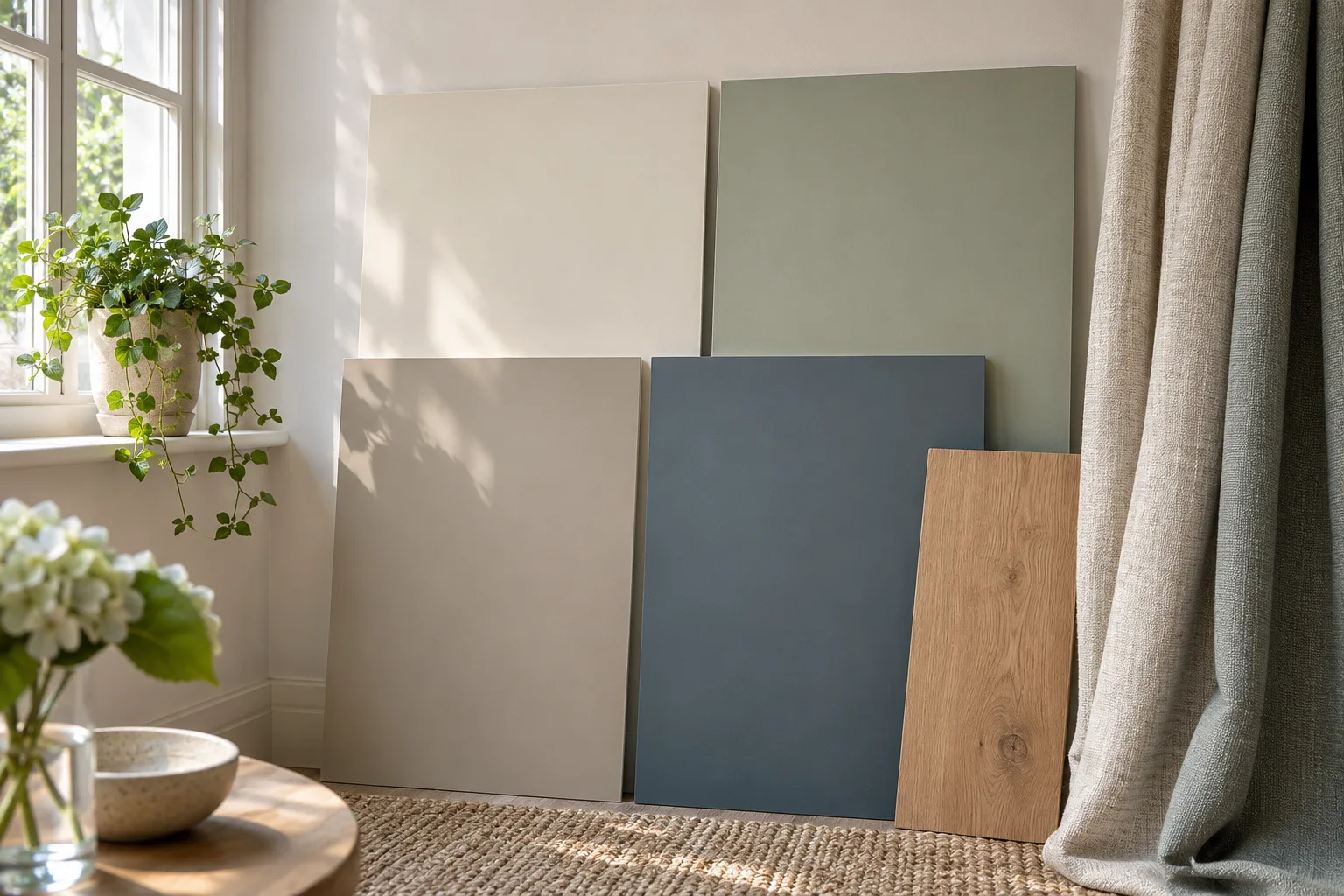
View the proposed surface beside the neighbouring paint, floor, fabric and hardware. Check the combination in daylight and under the planned artificial lighting where possible. A small digital photograph may change apparent colour and scale. For a large repeating pattern, ask to see enough material to understand the repeat and grain direction. If the area is visually important, discuss a suitable mock-up before approving a full installation.
3. Review the finished edge and junction
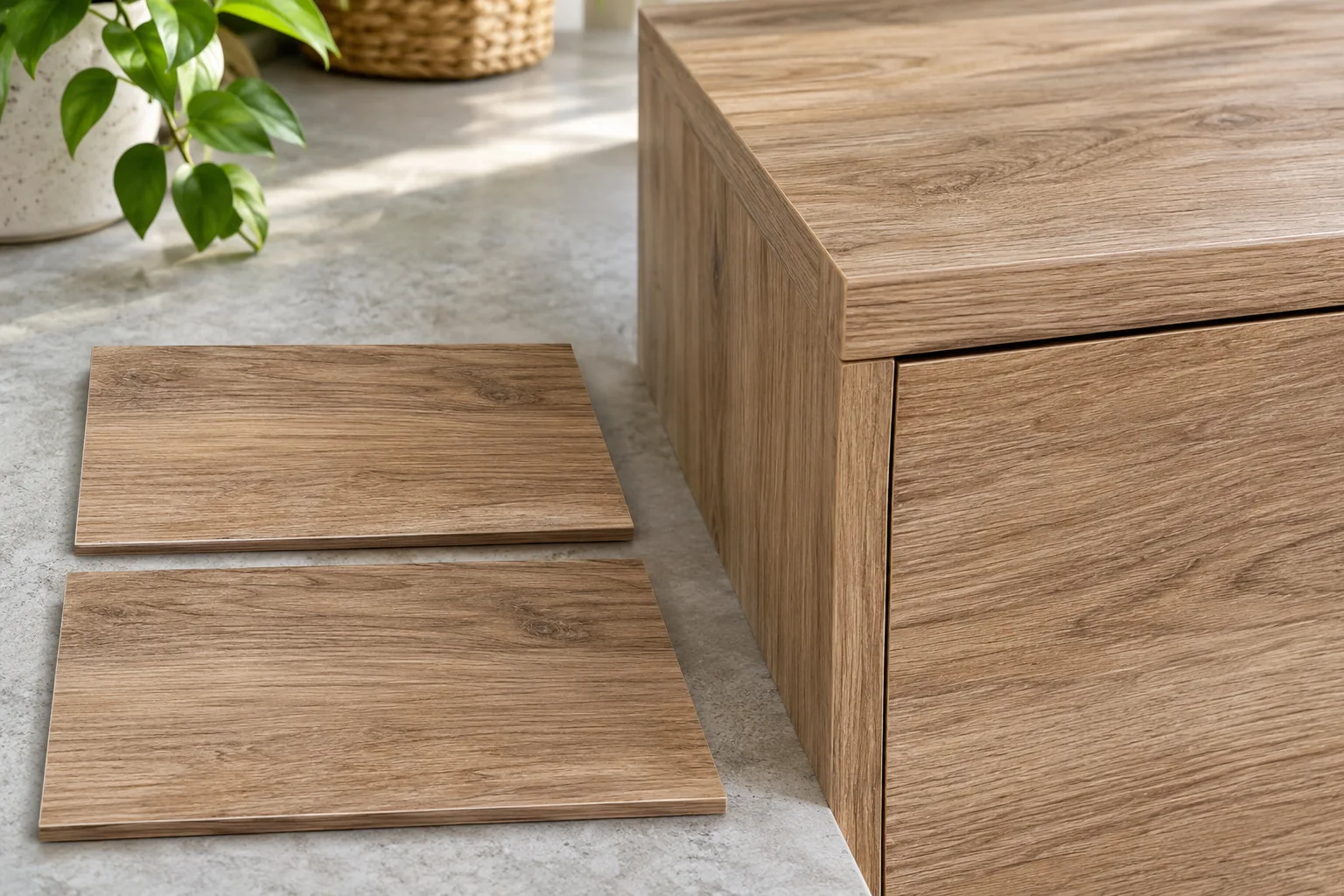
Ask how an exposed edge, corner, handle cut-out or joint will be made. The broad sample face may look good while an edge detail remains unresolved. Record the agreed edging and junction on the relevant drawing or mock-up reference. For natural materials, discuss the acceptable range of variation and the selection process. Do not write “same as sample” when the supplier needs a more precise standard to produce or select the material.
4. Compare the choice with scope and price
Confirm whether the sample is already included in the quote or represents a change. Record effects on quantity, lead time, labour, maintenance and adjacent details. If a replacement product is proposed later, treat it as a fresh approval rather than assuming a similar colour makes it equivalent. Technical suitability, warranty terms and installation instructions should be checked using the actual product information for its intended location.
5. Keep a traceable approval record
Use one row per selection: room/item, product/code, finish, reference drawing, sample identifier, date, approver and open questions. Mark whether the decision is approved, rejected or still pending. Keep photographs for reference and retain an agreed physical sample where practical. Send the final record to the responsible parties through the agreed project channel. Before manufacture, ask for confirmation that only approved selections have been released.
A record you can use
| Approval field | What to record |
|---|---|
| Room / item | Exact installed location and drawing reference |
| Product identity | Manufacturer, range, code and relevant specification |
| Appearance | Finish, pattern direction and agreed variation |
| Detail | Edge treatment or mock-up reference |
| Commercial effect | Included price or approved change reference |
| Decision | Approved / pending / rejected, approver and date |
Plan the next step with WallsToWonder
Keep this checklist with your project brief. The WallsToWonder quotation checker can help identify questions about scope and exclusions; your agreed documents and the actual product records define the work. Browse interior companies or designers when you need professional help implementing the plan.
Frequently asked questions
Is a WhatsApp photo enough to approve a finish?
It can document a discussion, but a photograph may not reliably show colour, texture or scale. Pair the decision with product identification and a clear approval record; inspect physical samples where practical.
Should I approve samples before the final quote?
Connect each approval to the agreed specification and price. If a choice changes the quote, record the cost and schedule effect before authorizing it.
Does a material sample confirm durability?
No. Appearance and technical suitability are different checks. Use the actual product data, intended application, installation requirements and warranty information.
What if the selected product becomes unavailable?
Request an identified alternative and review appearance, specification, price and lead time again. Keep the substitution approval with the project records.
Related practical guides
Turn this idea into a plan for your home
Visualise your space, understand the likely budget, or find a professional who can bring the idea to life.