
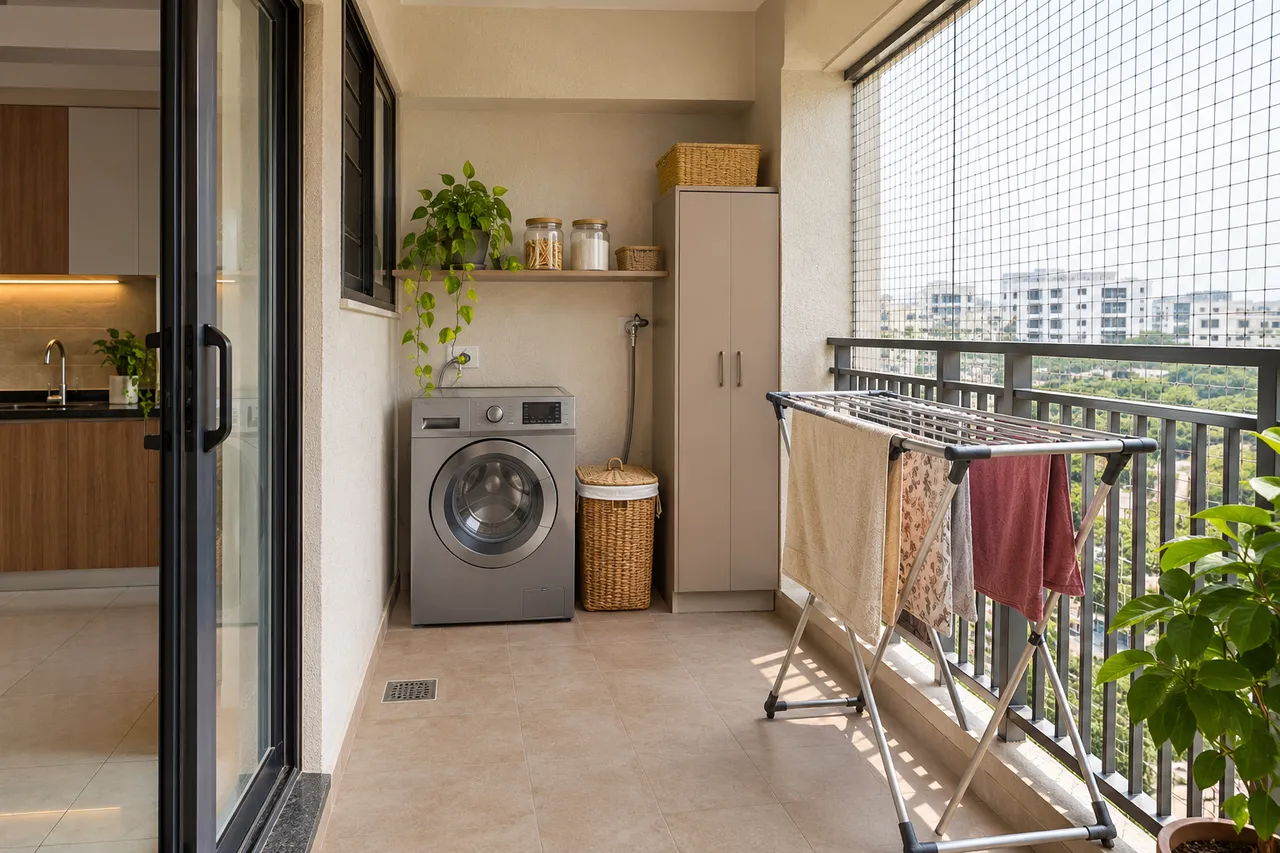
Balcony Laundry Planning in Manikonda: Drying Space, Drain Access and Storage
For balcony laundry planning in Manikonda, measure the washing machine, drying arrangement and storage with the door, drain and service connections accessible. Keep drying equipment within a suitable usable area and confirm building restrictions before fixed changes. A balcony should not gain storage at the cost of drainage, maintenance or the walking route.
Prepare the brief
The appliance’s exact installation instructions, balcony dimensions, a sketch of the floor drain and connections, proposed drying-rack dimensions and applicable building guidance.
Manikonda: start with your own property
This guide applies only where the property has a balcony or utility area suitable for the proposed use. A Manikonda address does not establish floor loading, waterproofing, permission for drilling or appliance provisions. Confirm those conditions for the actual home. Keep external alterations and structural or waterproofing questions with the relevant property authority and competent professional rather than deciding them from an inspiration photograph.
Map the door and drain before adding equipment
Record the balcony opening, threshold, floor drain and any inspection access. Walk the route with an empty laundry basket and check where the basket can stand without obstructing movement. Do not hide the drain under a fixed storage base. A small movable item can still become a persistent obstruction if there is no agreed parking position. Keep the drainage and access plan visible on the layout given to the supplier.
Use the exact appliance installation document
Measure the machine with its door, connections and required clearances. Front and top loading models operate differently, and hose space is part of the installation. Confirm that the location and electrical and plumbing provisions suit the chosen appliance. Do not extend services casually to make a floor-plan idea work. Have the responsible installer assess any changes and keep water and electrical requirements coordinated. Appliance body dimensions alone do not determine whether the area is suitable.
Trial the drying arrangement fully loaded
Use the rack’s open dimensions and the laundry you normally dry. Check airflow, movement and whether hanging clothes interfere with the door or service points. Keep the arrangement within its intended installation and use conditions. Avoid extending equipment outside the balcony simply to recover floor space. A folding rack is useful only when there is somewhere suitable to store it and when moving it is realistic in the household’s routine.
Assess fixed drying systems separately
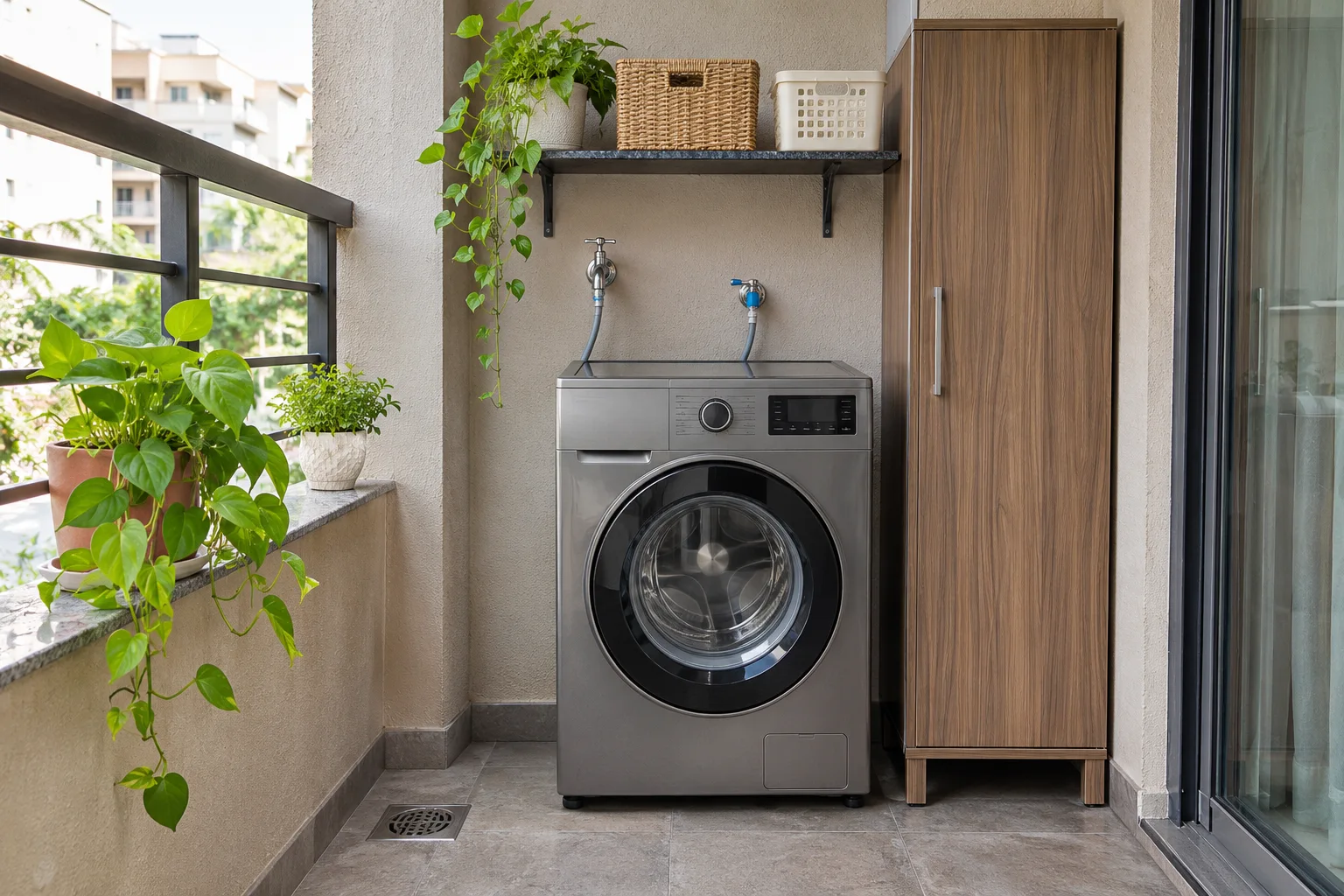
A ceiling-mounted or wall-fixed system introduces fixing, loading and operating requirements beyond a freestanding rack. Check the actual substrate, product instructions and property permissions with the relevant installer. Do not assume an existing ceiling finish can support the equipment. Include the lowered position and hanging laundry in the movement test. The proposed system should have a maintenance and replacement route, not just a clean appearance when raised and empty.
Separate dry supplies from wet activity
Give detergents and cleaning products appropriate storage according to their instructions, separate from food and items requiring other protection. Keep the cabinet out of repeated splashing where the selected material is unsuitable. Do not treat a moisture-resistant label as a substitute for resolving leaks or exposure. Check that the storage can be cleaned and that its doors do not interfere with the machine. Keep items needing supervision or secure storage appropriately protected.
Preserve inspection and maintenance access
Plan how valves, hoses, the appliance and the drain can be reached after furniture is installed. A removable panel needs a usable removal path, not simply a note on a drawing. Ask whether the machine can be moved for service without dismantling unrelated fixed cabinetry. Keep the model and installation information with the handover file. If a later replacement appliance is larger, reassess the layout rather than assuming the original cupboard remains compatible.
Review the whole routine after a trial
Run a normal laundry cycle and drying setup before commissioning permanent storage where possible. Note where the basket waits, where dry clothes are folded and how the rack returns to its stored position. If one task blocks another, change the sequence or reduce equipment. The practical solution may be a smaller storage unit and a clearer service route rather than a fully fitted balcony that has no spare operating space.
A practical layout trial
Run the trial with a normal load on the drying rack and a laundry basket beside the machine. Open the appliance door and the balcony door, then check access to the drain and water connections. Fold or store the rack using its intended method and note where it waits between uses. If the cabinet can open only when the rack is removed, decide whether that is workable for the supplies inside. Change the layout when an everyday task depends on repeated awkward rearrangement.
Compare the options
| Option | Useful when | Check first |
|---|---|---|
| Freestanding folding rack | Flexibility is useful | Open size and storage position |
| Fixed drying system | Substrate and permission are suitable | Loaded operating envelope and installation |
| Small dry-storage cabinet | Supplies need a defined home | Exposure, product care and service access |
Budget planning
Break the budget into the suitable drying system, storage, professional fitting, service work and any required repair. Resolve leaks and installation suitability before spending on decorative cabinetry. For an illustrative ₹18,000 accessory-and-storage envelope, you could reserve ₹7,000 for drying equipment, ₹6,000 for suitable storage and ₹5,000 for fitting and contingency. This is not a Manikonda market estimate and excludes appliance purchase or major service and waterproofing work.
Planning sequence and timing
Check suitability and building requirements first, then trial the equipment footprint. Installation dates depend on the approved product and any service work. Allow time to verify drainage and appliance operation with the responsible installers before filling the area with storage.
Plan the next step with WallsToWonder
Use Design My Room to explore the visual direction alongside your existing room. Take actual measurements and the operating-space tests in this guide into the brief before ordering. For a wider project, use the interior cost planning tool to organise assumptions, then compare itemised supplier quotations.
For the next related decision, read Balcony Seating in New Town: Measure Doors, Drainage Access and Furniture Storage. Use its relevant checks alongside your own room plan rather than assuming another home’s dimensions apply.
Frequently asked questions
Can a washing machine go on any balcony?
No. Confirm location suitability and the exact appliance’s installation requirements, services and exposure before placing it there.
Can a cabinet cover the floor drain?
Keep drainage and inspection access usable. Design the layout around the actual drain and maintenance route.
Is a ceiling dryer always the best option?
No. Compare fixing conditions, permissions, loaded movement and maintenance with a suitable freestanding arrangement.
Should the balcony be fully enclosed for laundry?
Do not assume enclosure is permitted or suitable. Assess the property rules and relevant technical implications separately.
Turn this idea into a plan for your home
Visualise your space, understand the likely budget, or find a professional who can bring the idea to life.