
Pisoli Pune Interior Handover: Four Decisions Before Final Payment
Before accepting interior handover in Pisoli, compare the installed work with approved drawings, test everyday operation with the responsible team, and record defects with owners and dates. Collect warranties, specifications and maintenance information. Resolve payment and any pending-work conditions through the signed agreement instead of assuming a verbal promise changes the agreed terms.
Use this interior handover checklist for Pisoli Pune projects as a decision guide, not merely a list of cosmetic defects. The right question is not “Does the home look finished?” but “Can I operate, maintain and document everything I have paid for?” If you are still comparing designers, review their service scope and process through the WallsToWonder designer directory, then ask each candidate how handover is recorded.
First decision: accept visual completion, or test the work?
A home can look ready while important work remains untested. Shutters may be aligned but rub after opening several times. A countertop may appear level while water collects near the sink. Fresh paint can conceal an uneven patch that becomes obvious in daylight. Final handover should therefore combine a visual walk-through with repeated operation and basic functional tests.
What you gain by testing properly
You identify defects while the installation team, tools and material records are still accessible. Small corrections—such as adjusting hinges, tightening a handle or replacing a damaged edge—are easier before the final account is closed.
What you sacrifice
A serious inspection takes time and may delay payment or move-in. You may need to return at different times of day to observe paint touch-ups, daylight glare, ventilation and water behaviour.
When this choice works
It is especially worthwhile for modular kitchens, wardrobes, TV units, false ceilings, bathroom storage and any area containing several moving or concealed components.
When it becomes expensive
It becomes costly to postpone testing when a defect is discovered only after appliances are installed, walls are occupied, or the contractor’s team has demobilised. Treat “we will fix it later” as a request for a written date and responsibility, not as acceptance.
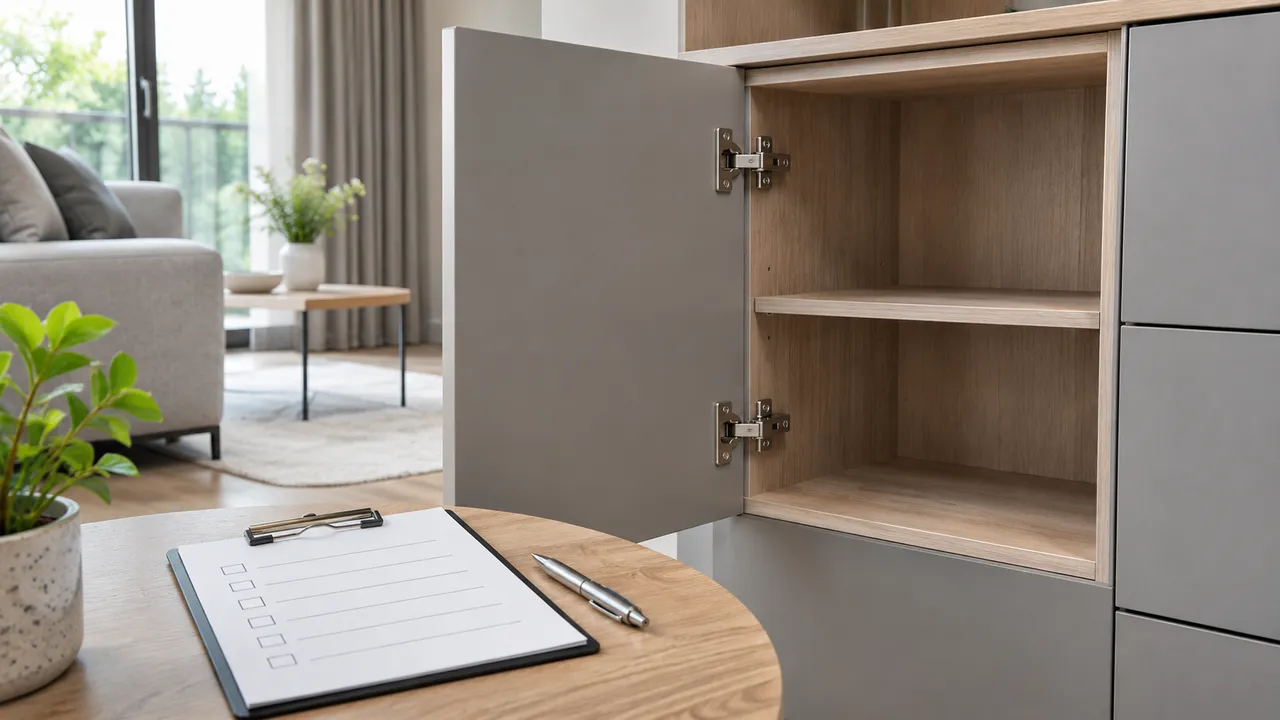
Open every shutter and drawer fully. Check that reveals are reasonably consistent, carcasses sit square, shutters do not collide, and handles are fixed at a consistent height where the design requires it. Inspect laminate edges, acrylic or veneer joins, exposed plywood edges, corner beading and cut-outs around sockets. Run drawers with a practical load if possible; empty movement can hide sagging or poor adjustment.
Second decision: accept the specified material, or accept a substitute?
Quotation language often compresses several different decisions into one line: “wardrobe,” “kitchen,” “hardware” or “finish.” At handover, compare the installed work against the approved drawings, material schedule, brand or grade descriptions and any written change approvals. A substitute is not automatically poor workmanship, but it must be visible in the documentation and reflected in the agreed scope.
What you gain from strict material matching
You preserve the performance, appearance and maintenance expectations used when the quotation was accepted. It also makes warranty conversations clearer because the supplied product can be identified.
What you sacrifice
Strict matching can delay handover if a specified finish or hardware item is unavailable. It may also expose approved changes that were discussed verbally but never added to the final drawing.
When a substitute works
A replacement can be reasonable when its relevant specification is recorded, the homeowner approves it, and the change does not reduce the intended use. For example, a revised handle or finish may be acceptable if appearance, fixing method and warranty implications are clear.
When it becomes expensive
It becomes expensive when a lower or different specification is discovered after final payment, especially for hinges, drawer channels, lift-up fittings, sink cut-outs, moisture-exposed boards or electrical accessories that are difficult to replace without dismantling.
Inspect finishes under both natural and artificial light. Look for bubbling, chipped laminate, open veneer joints, uneven polish, visible screw heads, silicone smears and unsealed exposed edges. In wet zones, silicone should form a continuous, neat seal at relevant junctions—not a thick patch applied to hide a gap. Check the sink rim, countertop-wall junction, backsplash edges, bathroom vanity and any area where water can reach a board or wall.

Third decision: release the balance, or retain a documented snag hold?
The fairest handover is not one with zero observations; it is one where every observation has an owner and a closure method. Separate minor cosmetic touch-ups from defects that affect safety, water protection, operation or appliance installation. A paint mark and a leaking trap do not belong in the same category.
| Observation at handover | Reasonable response | Why the distinction matters |
|---|---|---|
| Paint touch-up, small visible scuff or uneven caulk line | Record location and finish expected; schedule a touch-up | Usually localised, but still needs closure under suitable lighting |
| Misaligned shutter, loose hardware or drawer movement | Adjust or replace before sign-off where practical | Repeated use can worsen the problem and damage adjacent panels |
| Leak, non-working socket, exposed wire or unsafe edge | Do not accept as a minor snag; require correction and retesting | Function and safety take priority over appearance |
| Missing appliance clearance or inaccessible service point | Resolve against the appliance dimensions and approved layout | Later changes may require cutting, shifting or re-making cabinetry |
Photograph each snag with a wider room view and a close-up. Mark it on a room-wise list using a location, description, responsible party, agreed action and closure date. If a balance is being retained, record the amount or payment condition in writing according to the signed agreement. Do not assume that a verbal promise changes the payment terms.
Fourth decision: close the site, or close the paperwork as well?
Keys and a clean floor do not complete the project record. Ask for the final approved drawings, updated measurements where changes were made, material and hardware details, appliance cut-out information, electrical circuit references if available, cleaning and maintenance guidance, invoices, warranties and contact details for warranty claims. The exact documents depend on the scope and agreement, but the principle is constant: you should be able to identify what was installed and whom to contact later.
Have the responsible qualified electrician carry out electrical testing and demonstrate the installed switches, sockets, lights and relevant appliance provisions. Check that the final appliance models match the approved cabinetry and that their service points remain accessible. Homeowners should record observations without opening electrical equipment or testing unfamiliar circuits.
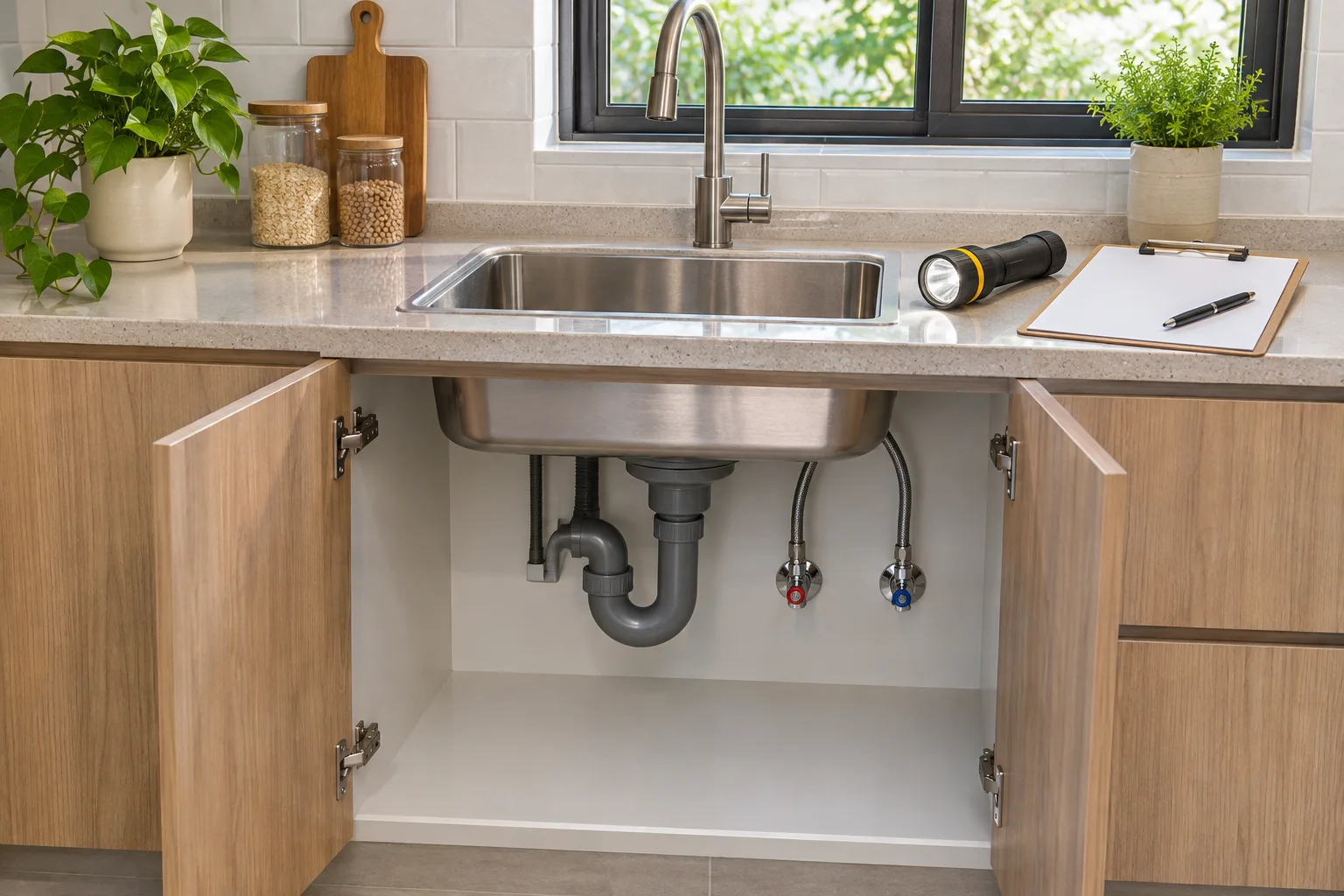
For plumbing, run the sink and basin, inspect traps and flexible connections, check drainage speed, and look below the counter for dampness. Operate taps, flush points and any water-filter provision. Water should not be left standing against cabinetry. If a concealed leak is suspected, ask for investigation before closing the wall or cabinet access.
Check the scope against the budget
Use the interior design cost estimator as a planning reference when comparing inclusions, exclusions and change orders. It cannot replace your signed quotation or site measurement.
Review quotation language
The quotation checker can help identify unclear line items and missing scope questions before they become handover disputes.
Make the room-wise inspection concrete
Walk the home in a fixed direction rather than moving randomly between defects. In the kitchen, inspect shutter alignment, drawer loading, edge sealing, sink plumbing, countertop joints, backsplash silicone, hob and chimney clearances, socket access and service openings. In bedrooms, check wardrobe backs, loft access, sliding tracks, handles, internal shelves, light points and whether doors open without striking beds or walls.
In the living and dining areas, examine TV-unit ventilation, cable routes, drawer operation, panel joints, ceiling lights, fan clearance and wall touch-ups. In bathrooms, inspect vanity alignment, mirror fixing, silicone, drainage, accessories, exhaust operation and the condition of adjacent walls. At the entrance, check shoe storage doors, hooks, electrical points, pooja-area ventilation if included, and floor or wall damage caused during installation.
Balconies and utility areas deserve a separate look. Confirm that storage does not obstruct drainage, washing-machine connections or ventilation. Check that any installed cabinetry is protected from likely moisture and that access to valves, meters or service points has not been blocked.
Questions to settle before the final payment
- Which items are complete, which are pending, and who owns each pending item?
- Have approved changes been reflected in the final quotation and drawings?
- Which warranties apply to hardware, appliances, finishes and installation, and from what date?
- What is the procedure if a shutter, channel, silicone joint or plumbing connection fails after handover?
- Have all keys, remotes, spare hardware, touch-up material and maintenance instructions been handed over?
WallsToWonder can help homeowners compare designers and companies serving Pisoli and surrounding Pune localities through design references, planning tools and quotation questions. It does not replace a physical inspection or the terms of your contract. For additional locality context, browse the designer directory for available service options and compare scope rather than relying on a headline package.
A compact release decision
- Release: work operates correctly, finishes are accepted, utilities are tested, and documents are received.
- Record and schedule: cosmetic snags have owners, dates and written closure conditions.
- Pause: there is a leak, unsafe electrical issue, major material mismatch, inaccessible appliance service point or missing critical documentation.
- Keep: approved drawings, final quotation, payment receipts, photographs, warranties and the closed snag list.
The best handover record is boringly specific. It tells you what was installed, what remains, who will return, and what evidence proves the work is closed.
Use a snag record that proves closure
Give every observation a unique number and a precise location. Take a wider photograph for orientation and a close-up for the detail. Write the observable problem, the agreed action, its owner and a proposed closure date. Mark an item closed only after checking the result, rather than after someone reports that the visit is complete. Keep an acknowledged copy of the record with the approved scope and final drawings.
| Field | Example entry | Closure evidence |
|---|---|---|
| Location | Bedroom wardrobe, left drawer | Wider room photograph |
| Observation | Drawer rubs on the adjacent front | Close-up or short operation video |
| Action and owner | Adjustment by installing team | Named contact and agreed date |
| Recheck | Drawer operates without rubbing | Dated verification against the same item |
Worked planning example
A local paint touch-up and a leaking sink trap require different responses. Record both, but arrange the relevant competent person to address the plumbing issue before treating it as closed. Homeowners can observe operation; electrical testing and technical commissioning belong with qualified personnel. Do not insert a tester into an unfamiliar circuit or dismantle connections during a cosmetic inspection.
Budget and scheduling decisions
Book time for inspection after cleaning, then allow a separate opportunity to check corrections. Reconcile the final account with approved variations and the agreement’s payment terms. The snag record documents the work; it does not create a new right to withhold a payment or replace professional advice on a dispute.
Frequently asked questions
When should the final inspection happen?
Inspect after major installation and cleaning, but before the final payment and before appliances or heavy furniture hide access points. A second check may be needed after snag corrections.
Can I make the final payment if only paint touch-ups remain?
Possibly, if the touch-ups are clearly recorded with an agreed closure date and payment condition. Do not treat electrical, plumbing, safety or appliance-clearance issues as cosmetic.
What should I do if the installed material differs from the quotation?
Compare the approved schedule and written change records. Ask for the difference to be documented and resolved before accepting the work or releasing the balance.
How do I test a modular kitchen before handover?
Open and close every shutter and drawer repeatedly, inspect edge sealing and hardware, run water through the sink, check silicone, and verify appliance clearances and service access.
Is a snag list useful after I receive the keys?
Yes, but it is stronger when created before final payment and signed or acknowledged by the responsible party. Add dated photographs and mark each item closed only after checking the correction.
Related planning guide: Spare Tiles, Paint Codes and Hardware: What to Keep After Renovation. Use it for the next relevant decision alongside your own site measurements.
Turn this idea into a plan for your home
Visualise your space, understand the likely budget, or find a professional who can bring the idea to life.