

Diwali Decoration Items You Can Reuse Throughout the Year
Choose reusable Diwali decoration items by giving each purchase an everyday job before you buy it. A tray can organise a console, a plain vase can hold weekly flowers and washable cushion covers can refresh seating. Measure their normal location, check care requirements and decide where seasonal pieces will be stored.
Before you start
- Time: Allow 30 minutes to audit existing items and 20–40 minutes to restyle them.
- Planning budget: A small reuse-first refresh can stay within ₹500–2,000; larger baskets, textiles and branded items may cost more.
- Prepare: Phone photos, measuring tape, a storage box, existing accessories and a written spending limit.
Start with an inventory, not a shopping cart
Bring out trays, vases, cloth runners, cushion covers and battery lights you already own. Group them by condition: ready to use, needs cleaning, needs repair and no longer useful. Make this decision before browsing new collections; otherwise a replacement purchase can become a duplicate.
Write three columns on a sheet: festive use, everyday use and storage location. An item with two blank columns is unlikely to be a sensible purchase for a small flat. A dramatic object is not automatically wasteful, but it should earn the space it occupies after the event.
Five useful categories and their second jobs
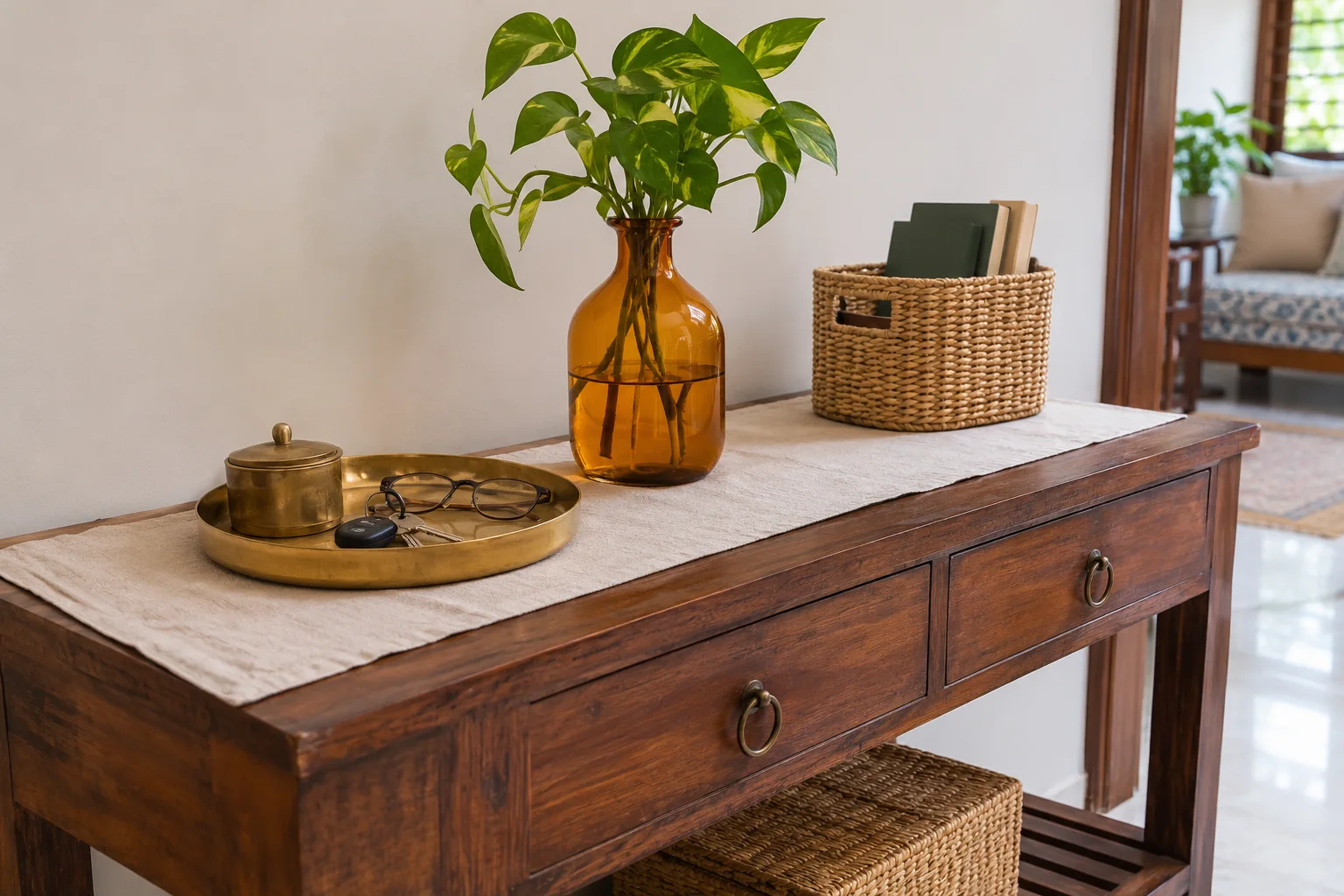
- Plain trays: arrange LED diyas for the festival, then use the tray for keys or a compact coffee setup.
- Simple vases: hold festive flowers now and a few stems later. Choose a size that fits your normal shelf.
- Washable cushion covers: add colour to the sofa, then rotate them with your everyday set.
- A plain runner: dress a console, then use it for an occasional meal if the fabric and care instructions suit that job.
- A lidded basket: hold spare festive textiles, then serve as practical household storage.
Battery lights also need a plan. Keep their instructions, check the battery type and follow the product’s storage guidance between uses.
Avoid purchases with no realistic place to live
Oversized lanterns, bulky backdrops and a large collection of miniature objects can be difficult to store. Before buying, measure the shelf or box they would occupy. Include protruding handles and fragile stems, not only the main body.
Consider cleaning as part of the design. A highly textured object may require more dusting than a smooth one. A pale runner used near food needs a care method you can manage. If you will not follow the care instructions, choose a simpler item rather than treating frequent replacement as inevitable.
Build a small coordinated set
- Choose a base finish already present in the room: wood, clear glass, brass or another existing finish.
- Add one seasonal colour through flowers or covers rather than buying every accessory in that colour.
- Use one tray and one vase before adding a second grouping.
- Photograph the arrangement in the room’s usual light.
- Remove anything that blocks serving, seating or access.
For a ₹1,500 personal spending cap, you might allocate ₹600 to one useful object, ₹500 to textiles and ₹400 to flowers or small supplies. These are allocation examples, not product-price promises. Rebalance them around what you already own.
Pack by the next use, not by shopping bag
After the celebration, clean items before packing. Put fragile pieces in suitable protection and do not stack heavy trays on delicate objects. Label a storage box with its actual contents so you do not repurchase them next year.
Keep everyday items out of that box. Move the tray to the console and return the vase to a visible shelf immediately. A reusable purchase becomes useful through this transition; keeping everything packed away for eleven months defeats the point of choosing flexible pieces.
Plan your space with WallsToWonder
Use WallsToWonder’s Interior Style Finder to explore a consistent direction, then shortlist pieces that work with your existing furniture. Use your measured room, rather than the product photograph, as the final test.
Frequently asked questions
Which Diwali decoration items are easiest to reuse?
Plain trays, simple vases, washable covers and suitable runners often have clear everyday roles. The best choice depends on your room sizes, existing items and care preferences.
Are battery lights reusable?
They can be, provided the product remains in good condition and is stored according to its instructions. Check the lights and batteries before each use.
How do I avoid buying too much?
Give each item an everyday location and a storage location before buying. Limit the first shopping list to items that complete an existing arrangement.
Should all decorations match?
No. Repeating a finish and one colour is often enough. Different shapes can work together when their sizes and uses fit the room.
Related practical guides
Turn this idea into a plan for your home
Visualise your space, understand the likely budget, or find a professional who can bring the idea to life.