
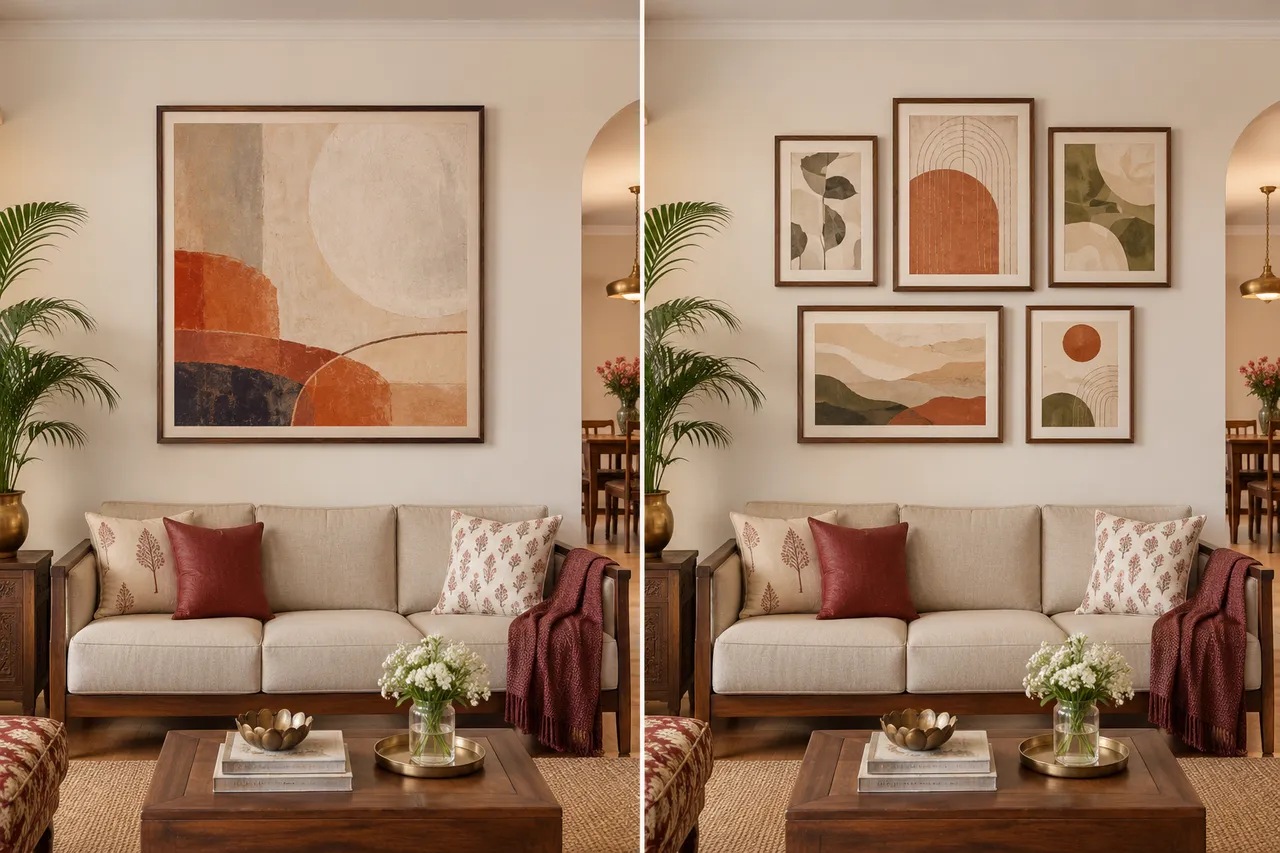
Living Room Wall Decor: One Large Artwork or a Gallery Wall?
Choose one large artwork when you want a clear focal point and a simpler arrangement. Choose a gallery wall when you have several related pieces and time to plan their spacing. Measure the sofa and usable wall, test paper templates, and check the fixing requirements before committing to either layout.
Before you start
- Time: Allow 60–90 minutes for measuring and paper layouts; installation is separate.
- Planning budget: Paper planning can use existing supplies. Set a separate allowance for frames, art and suitable installation before shopping.
- Materials: Tape measure, plain paper, pencil, low-tack tape suitable for your surface, and photographs of the room.
Start with the furniture, not an empty wall
Measure the sofa or console beneath the art, then note switches, curtains and shelving. Draw the available area on paper. The goal is an arrangement that belongs to the seating area and leaves breathing space around nearby features. A wall can be physically wide while the usable space above a sofa is much narrower.
Take a straight-on photograph from the normal viewing position. A close-up can make a small picture look substantial; the wider room view shows whether it holds its place in the composition.
When one large artwork works well
A single piece is useful when the room already contains patterned fabrics, open shelves or many small objects. Compare a paper rectangle in two possible sizes before buying. Include the outer frame in the measurement, not just the printed image. Ask how the piece is supplied, how much it weighs and what hanging hardware it requires.
One picture is not automatically cheaper or easier to install. Large glazing, delivery access and a heavy frame can add cost. Check lift, staircase and doorway access for oversized pieces.
When a gallery wall earns its space
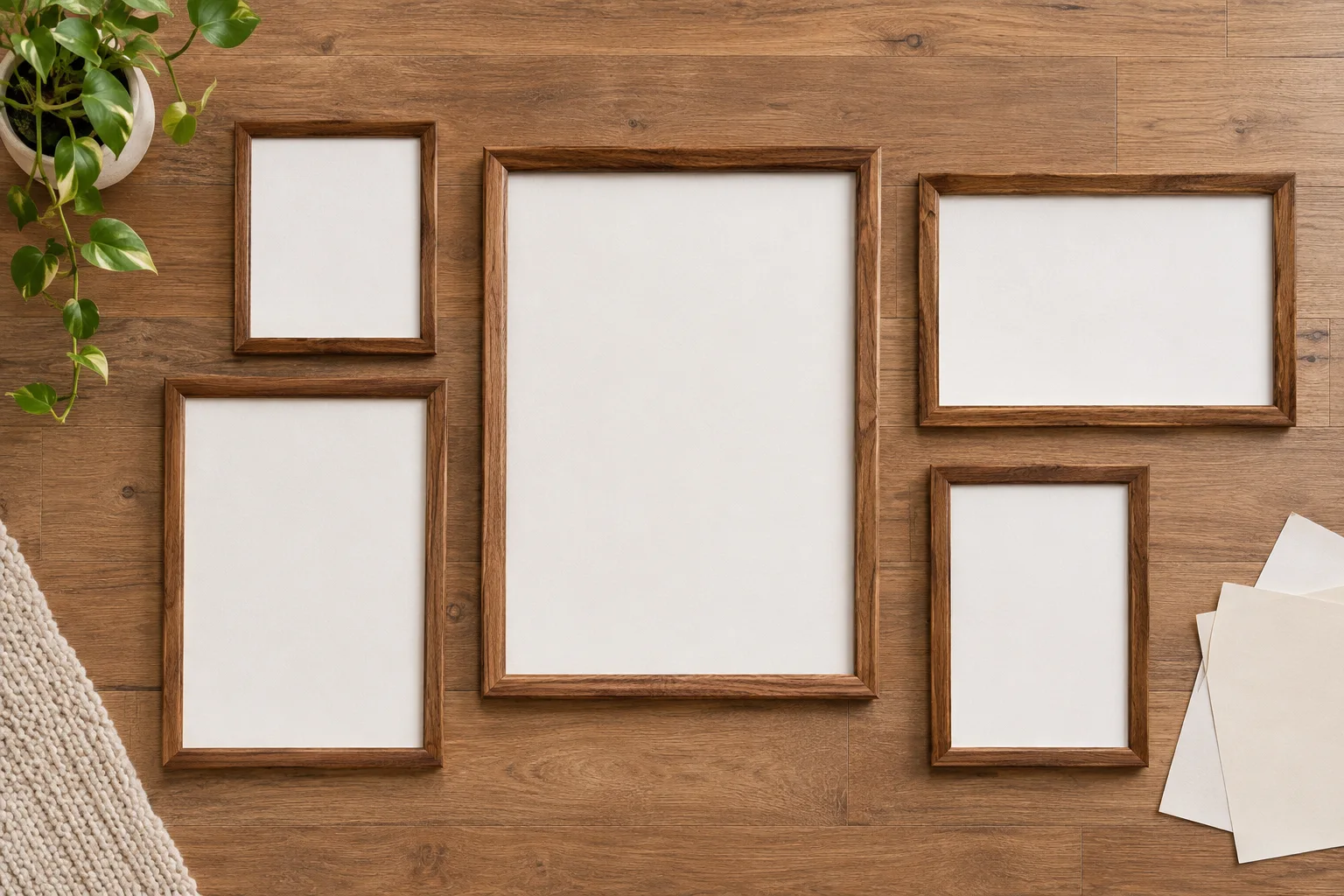
A gallery wall suits a collection with something in common: subject, palette, frame finish or personal meaning. Begin with the largest piece on the floor and place smaller works around it. Photograph the arrangement, remove one unnecessary item and compare the result. You do not need to buy enough frames to fill every gap.
- Measure every outer frame.
- Cut a paper template for each one.
- Choose a spacing you can repeat consistently.
- Test the whole group on the wall before making fixing marks.
Check glare, height and fixing points
Look at the templates from a seated position and from the entrance. Avoid treating any single hanging-height rule as universal: furniture height and the artwork itself affect the result. Check reflected window light at the time you usually use the room. Move the proposed arrangement if glare will hide the image.
Use hardware appropriate to the wall and the total item weight. Plan each fixing individually; the centre of the frame is not necessarily where its hook sits. Seek help for heavy pieces or uncertain wall construction.
Make the final decision before ordering
Compare your two paper layouts using the same room photograph. Ask which one relates better to the sofa, is easier to keep visually calm and fits the installation budget. If the gallery needs several new purchases but you already own a suitable large piece, start with that. If meaningful smaller works are ready, a planned grouping may be the better use of your collection.
Keep the chosen template measurements with your shopping list. Recheck the frame size on the product page and save the seller’s installation information.
Plan your space with WallsToWonder
Compare the layouts with WallsToWonder Design My Room using a photograph of your living room. Treat the visual as a planning aid and verify the actual frame dimensions and fixings yourself.
Frequently asked questions
Should a gallery wall use matching frames?
Matching frames can unify mixed artwork, but they are optional. Repeating one finish, colour or spacing can also make the arrangement feel coherent.
How far apart should gallery frames be?
Choose a gap that looks deliberate with your frame sizes, test it with paper templates and repeat it consistently. There is no single spacing that suits every collection.
Can I mix family photos and prints?
Yes. Use a shared palette, frame treatment or subject to connect them, then test the whole group before installation.
Is one large picture better for a small room?
It can simplify a busy room, but scale matters more than the number of pieces. Compare full-size templates from the usual viewing position.
Related practical guides
Turn this idea into a plan for your home
Visualise your space, understand the likely budget, or find a professional who can bring the idea to life.