
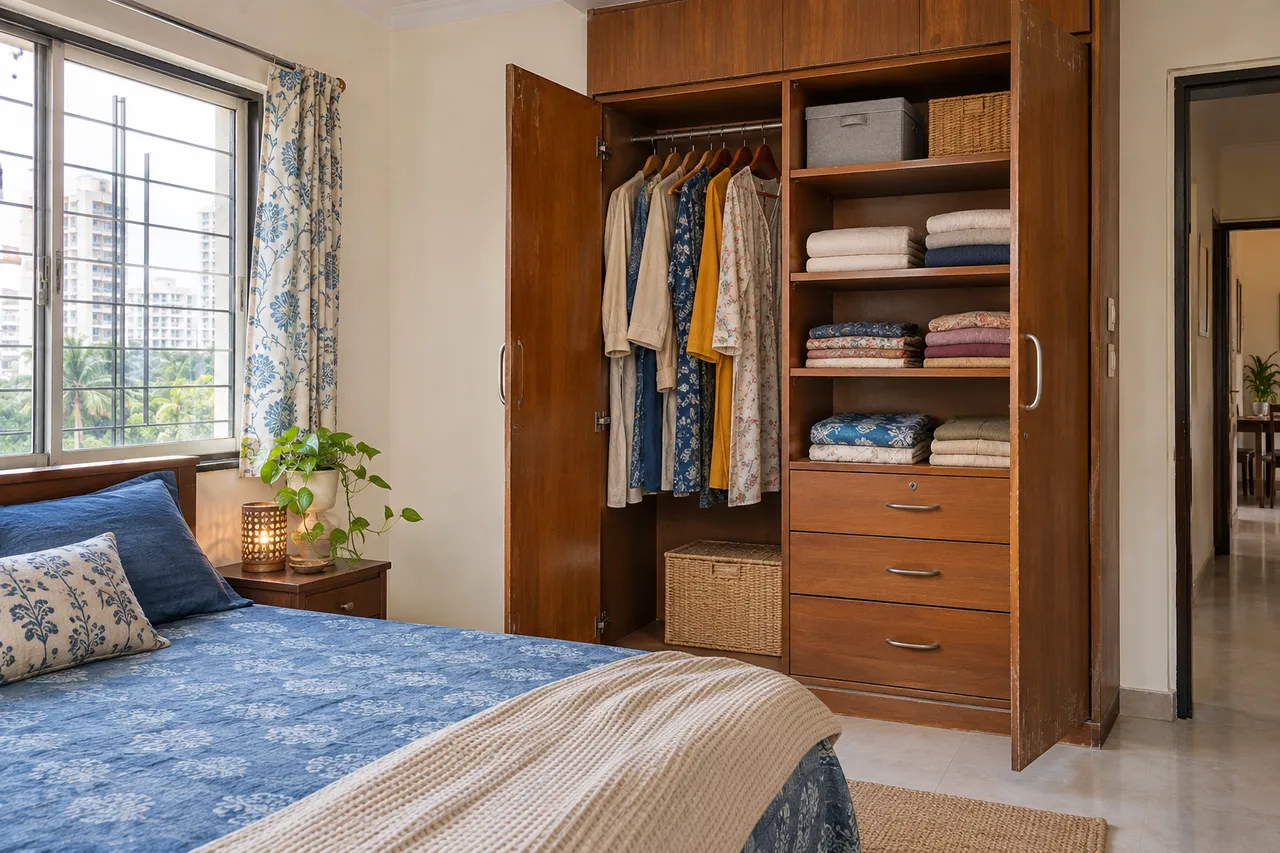
Wardrobe Replacement in Bhandup: Compare Internal Repairs With a New Unit
Before replacing a wardrobe in Bhandup, inspect the carcass, doors, hardware and internal layout as separate items. Repairs may be worthwhile when the structure is suitable and the main problem is access or worn fittings. Replacement becomes a different decision when damage, dimensions or an unsuitable arrangement cannot be resolved through a defined repair.
Prepare the brief
A wardrobe inventory, photographs, a tape measure, the existing product or hardware details where available, and separate written scopes for repair and replacement.
Bhandup: start with your own property
This is a repair-versus-replacement brief for a Bhandup homeowner, not a fixed-price renovation package. An existing wardrobe needs an on-site assessment: a photograph of its front cannot establish the condition behind the back panel or the quality of its fixings. Keep any discussion of moisture, movement or damaged supports with the appropriate specialist before selecting replacement shutters or decorative finishes.
Document what is wrong before discussing finishes
List observable issues in plain language: a drawer catches, a shelf bows, a shutter rubs or hanging space is too short. Photograph each issue with its location. Separate a disliked colour from a functional defect. This helps the professional price the necessary repair rather than treating every complaint as an argument for a new unit. Avoid repeatedly forcing a jammed mechanism while assessing it; ask the installer to inspect components that are loose or not operating as intended.
Ask for a carcass and fixing assessment
The existing structure determines whether new fronts or internals make sense. Have the appropriate person inspect joints, back panels, shelf supports, plinth condition and attachment to the wall. Note evidence of dampness or persistent swelling and investigate its cause. A fresh laminate does not correct a structural or moisture problem. Request a written description of the parts that can remain and the assumptions behind that recommendation, especially where inspection requires access behind the unit.
Compare hardware repair with a layout change
Replacing a worn hinge is different from adding drawers or changing the way the wardrobe opens. New hardware must suit the door, material, dimensions and fixing conditions. Ask for the exact proposed fitting rather than a promise of premium channels. If your complaint is poor access, a like-for-like hardware replacement may not solve it. Review a sketch of the intended internals and check that each drawer or rail will be reachable after the bedroom furniture is in place.
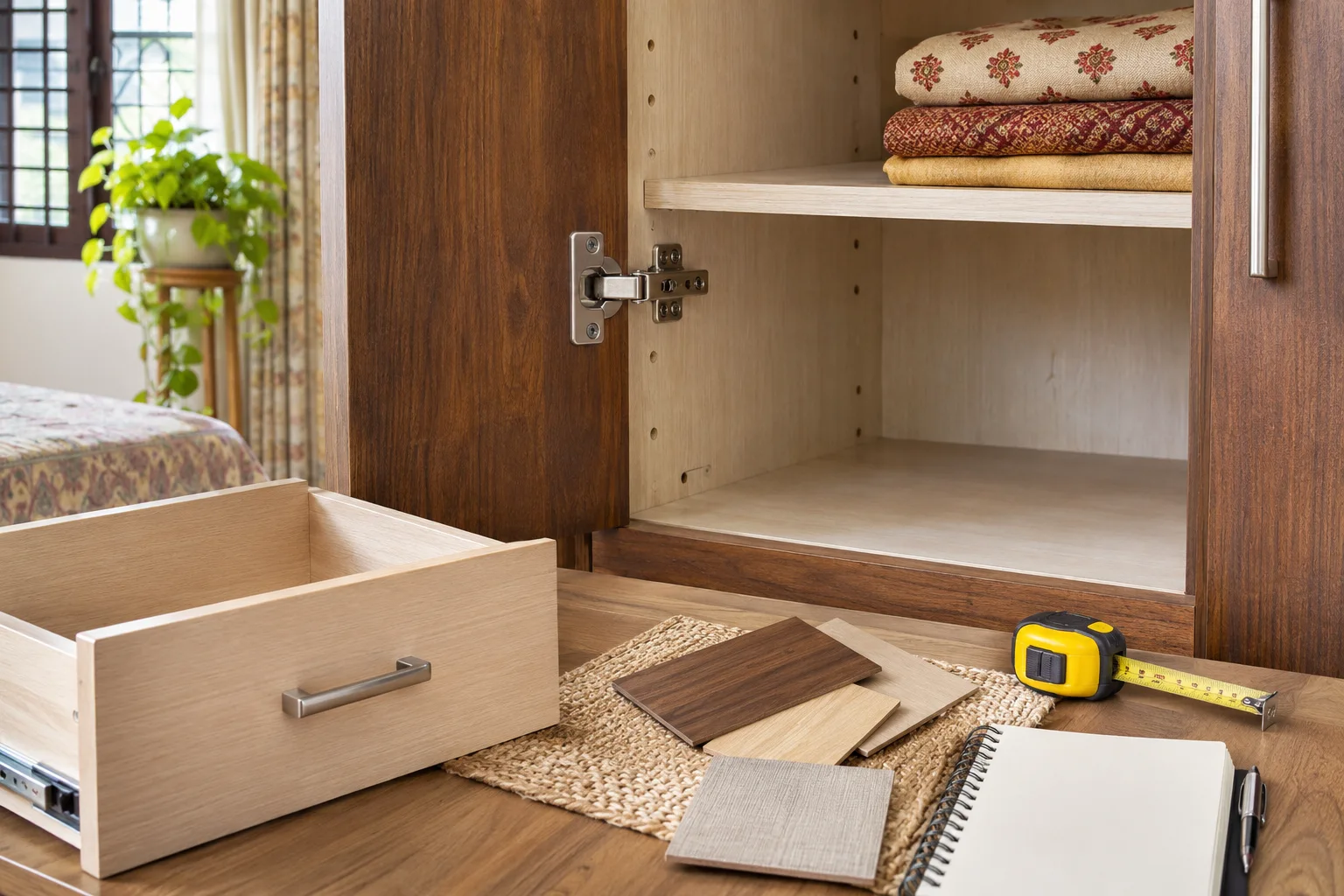
Check the inventory against the existing shell
Measure hanging garments, folded stacks, luggage and accessories. See whether suitable repositioned shelves or removable organisers can solve the problem without altering the carcass. Do not specify extra compartments only because an empty elevation looks tidy. An insert that reduces the clear opening may make retrieval harder. Trial a removable tray or revised shelf position first where the furniture permits it, following the product’s assembly and load guidance.
Understand the implications of new shutters
New shutters can change weight, hinge requirements, alignment and the appearance of exposed sides. Confirm that the retained carcass is suitable for the proposed assembly. Ask whether existing fixing holes need repair and how the supplier will match edges and internal finishes. A new front beside a faded side panel may create a second cosmetic project. View samples against the retained material before agreeing a finish intended to look identical.
Price the full disruption of replacement
A replacement quotation should include dismantling boundaries, removal, floor protection, delivery, assembly and making good where relevant. Check whether existing skirting, switchboards or curtains will be affected. Plan where clothes will go during the work. Keep reusable components separate only when the installer confirms they are suitable to retain. Compare that complete scope with the repair proposal rather than comparing a new-unit headline with a fully installed repair figure.
Choose a defined outcome and inspect it
Agree what successful repair means: specified drawers operate, shelves fit the inventory and the accepted fronts align. Record remaining cosmetic differences rather than assuming everything will look new. For replacement, approve final dimensions and construction details before manufacture. At completion, check the agreed operations with the installer and retain product and hardware information. A repair should have a clear scope and closure process just as a larger replacement does.
A practical layout trial
Consider a wardrobe whose drawers catch but whose hanging space already meets the inventory. Ask the assessor whether the cause is a worn fitting, misalignment or a damaged supporting component. A hardware-only quote is meaningful only after that distinction. If the shell is suitable, price corrective work first and optional new fronts separately. If the supporting structure needs major work, compare the full repair with replacement, including how long clothes must be stored elsewhere and what finishes need making good.
Compare the options
| Option | Useful when | Check first |
|---|---|---|
| Hardware repair | Sound assembly with a specific worn fitting | Compatibility and retained fixing condition |
| Internal reorganisation | Poor access but suitable shell | Usable opening after inserts |
| Complete replacement | Retained unit cannot meet the agreed need | Dismantling, making good and new layout |
Budget planning
Request one itemised repair quotation and one complete replacement quotation using the same inventory. Separate essential corrective work from optional refinishing. Add temporary clothing storage, dismantling, disposal and making good where required. Do not compare only the cost per shutter or an unmeasured per-square-foot rate. Keep uncertain concealed damage as a documented allowance until assessed rather than treating it as a confirmed cost.
Planning sequence and timing
Start with the assessment, then approve either a repair schedule or replacement drawings. Order compatible parts only after identification. Agree when the wardrobe must be emptied and when it can be used again; repair and fabrication lead times depend on the findings and selected products.
Plan the next step with WallsToWonder
Use Design My Room to explore the visual direction alongside your existing room. Take actual measurements and the operating-space tests in this guide into the brief before ordering. For a wider project, use the interior cost planning tool to organise assumptions, then compare itemised supplier quotations.
For the next related decision, read Choosing Interior Materials: Where They Work and Where They Don't. Use its relevant checks alongside your own room plan rather than assuming another home’s dimensions apply.
Frequently asked questions
Is repair always cheaper than replacement?
Not necessarily once damage, incompatible hardware or extensive making good is included. Compare complete written scopes.
Can I replace only the shutters?
Sometimes, if the retained carcass and fixing system suit the new doors. Have their weight, dimensions and hardware assessed first.
What if the wardrobe smells damp?
Investigate the source and condition before covering it with new finishes or moving clothes back.
What should a repair quote include?
List retained parts, replacements, fittings, finishing, labour, exclusions and how the completed repair will be checked.
Get a personalised estimate for your home
Choose your rooms, materials and preferences to understand a practical interior budget before you commit.