

Interior Studio Sample Library Ideas for a Small Office
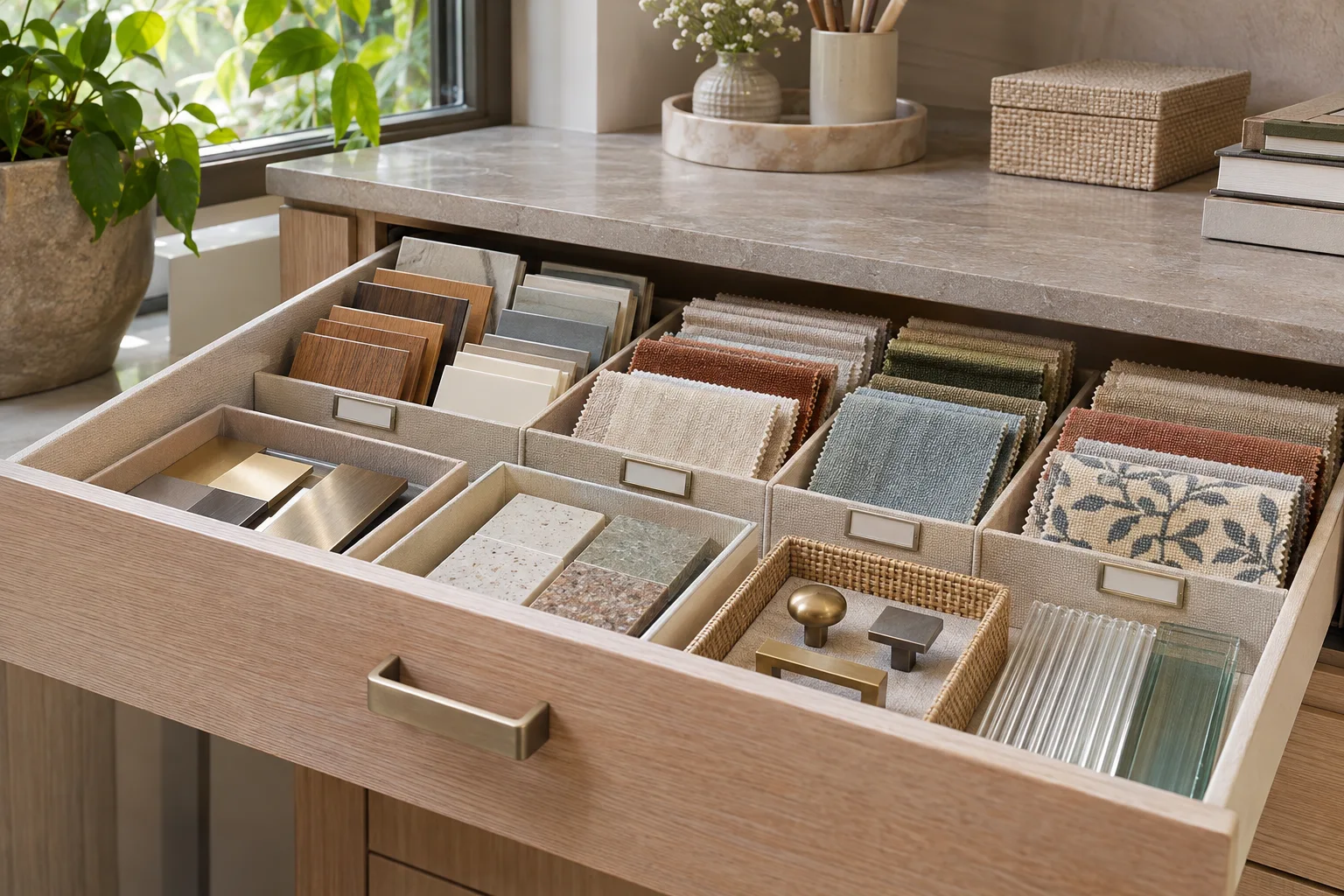
A small interior studio sample library works best when samples are easy to find, compare and return. Organise by material and current project, keep heavy items appropriately supported, and leave a clear work surface for client reviews. Start with an inventory and a retrieval test before ordering new drawers or shelving.
What to prepare
Sample inventory, tape measure, existing boxes or dividers, removable labels, project folders, supplier product references and furniture load and installation guidance. Include a record of samples that are borrowed or need returning.
Separate the library from active project samples
List the fabrics, boards, hardware and finish pieces you already hold. Mark which are part of a general reference library and which are approved or shortlisted for a live project. Keeping those groups separate reduces the risk of a display sample being mistaken for an approved product.
Create a simple inventory with material type, supplier reference, size and location. It does not need to begin as a complicated software system. A shared sheet or consistent index can work if the team actually maintains it and knows which record is current.
Measure the samples before the drawers
Record representative sizes and the largest items you intend to keep. Test shallow trays, upright dividers and boxes using existing containers before commissioning storage. A neat grid of identical compartments may waste space if your sample collection varies widely.
Check retrieval with a person standing or seated at the unit. Ask whether a sample can be removed without unloading several others. Keep enough separation to identify and handle edges. The storage should support comparison and return, not merely make the collection look uniform when every drawer is closed.
Plan weight and support deliberately
Identify heavy, brittle and sharp-edged items separately. Ask the furniture supplier about the actual load and intended storage method. Avoid placing large stone or other heavy samples on unverified overhead shelves simply to free the desk.
Use appropriate containers and handling procedures for the objects. Keep access and support requirements visible in the joinery brief. A photograph of a sample wall cannot confirm its capacity or fixing. Review the furniture, wall and stored contents together with the responsible provider before fabrication or installation.
Use two useful ways to find an item
A material-based library helps with exploration: fabric, board, surface, hardware and other defined groups. A project-based tray helps with current decisions. Use both without creating duplicate uncontrolled collections. Return general samples to their library location after a review.
Choose labels that describe the actual product reference and storage location. Avoid vague terms such as “premium beige” when several suppliers offer similar-looking samples. If the product is discontinued or no longer matches current supply, mark that status so it does not enter a proposal by mistake.
Make a comparison surface available
Leave a table or clear counter where a small coordinated set can be laid out. Check the lighting used for reviews and note when samples need to be viewed at the client’s site. A studio comparison does not reproduce every room’s daylight or adjacent finishes.
Keep unrelated office items off the review surface during a meeting. Use one project tray to gather the relevant samples, drawings and unresolved questions. This makes the conversation easier to follow than opening every drawer or adding new options before the previous decision is recorded.
Keep approvals separate from inspiration
Record which sample is a reference, which is shortlisted and which has been approved for a specified use. Link approval to the product, location, date and person responsible. An attractive photograph or a saved mood board is not the same as an agreed material schedule.
For an approved sample that must remain available during supply or execution, establish where it will be stored and who may remove it. If a supplier proposes a substitution, record the review separately rather than placing a similar-looking sample into the same tray without explanation.
Fit the library into the office route
Plan the unit with drawer extension, chairs and the client table represented. Test the door and circulation route while the library is being used. A wall of shallow storage may suit one room, while a smaller mobile unit or existing cabinet may suit another.
Keep accessible surfaces for frequent use and place occasional references elsewhere if needed. Avoid treating every sample as equally valuable. A smaller, current collection can be more useful than a large library filled with damaged, duplicated or unidentified products.
Create a return and review routine
Assign responsibility for returning samples after meetings and updating the index. Establish a regular review of discontinued products, duplicates and borrowed items. Start with a short routine the team can follow consistently rather than a system requiring perfect administration from the first day.
Check the library after a real project review. Time how long it takes to locate, compare and return a few specified items. Use that evidence to adjust labels or dividers before investing in more joinery. The useful measure is retrieval and decision clarity, not the number of boxes displayed.
Compare the practical options
| Option | What to check |
|---|---|
| Existing cabinet with dividers | Test the inventory before new joinery |
| Shallow drawer library | Match compartments to measured samples |
| Project trays plus reference shelves | Separate active approvals from general exploration |
Build a useful budget
List containers, labels, any new furniture, appropriate support, installation and lighting changes separately. Retaining an existing cabinet may reduce initial purchases, but only if it suits the samples and required load. Obtain a measured quotation for custom work and compare usable capacity rather than the number of drawers alone. Include staff time for the initial inventory.
Planning time and supplier schedule
Allow a focused half-day for a small collection’s first inventory and trial organisation; larger libraries need more. Test the arrangement through several real reviews before commissioning permanent changes. Fabrication and installation need supplier-specific dates after dimensions and support requirements are agreed.
Frequently asked questions
Should samples be sorted only by project?
Use project trays for active decisions and a consistent material-based reference library. Keep their roles distinct so items can be found and returned.
Can heavy samples go on any shelf?
No. Review the actual load, support, furniture and fixing with the responsible supplier or professional.
Is a mood board an approved material schedule?
No. Record the exact product, use and approval separately, including any later substitution.
Plan the next step with WallsToWonder
Read Material Sample Approval Checklist Before Interior Production for the related planning checks. Explore the overall look with Design My Room, keeping your retained furniture and measured requirements in the brief. Use physical samples and product information for final choices.
Turn this idea into a plan for your home
Visualise your space, understand the likely budget, or find a professional who can bring the idea to life.